
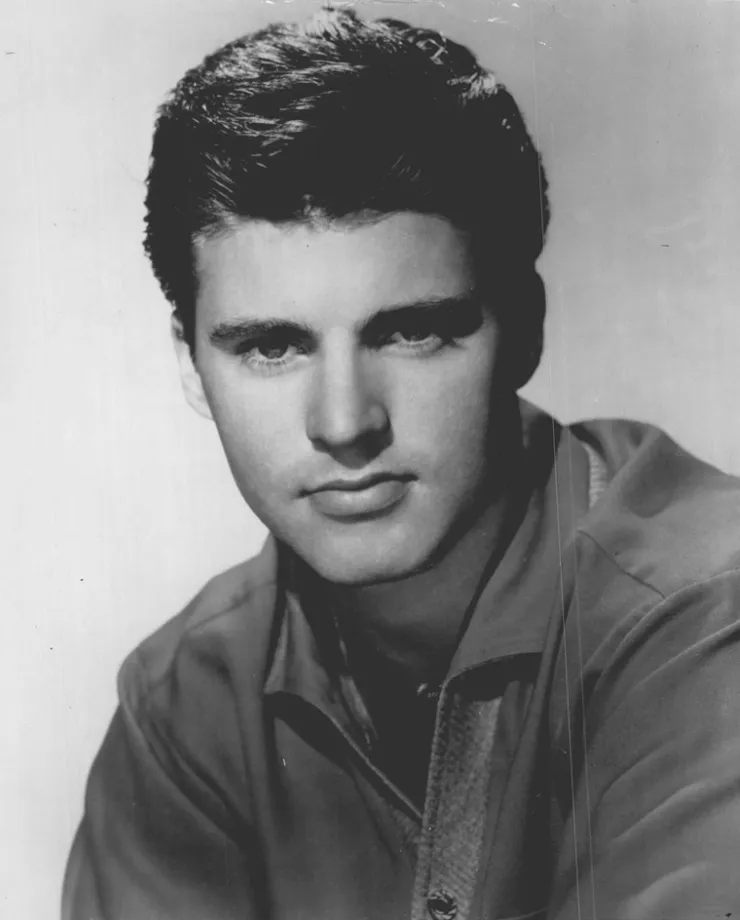
Photo by Decca Records , licensed under Public domain · Wikimedia Commons
Rank #209
Ricky Nelson
From Wikipedia
Eric Hilliard "Ricky" or “Rick” Nelson was an American musician and actor. From age eight, he starred alongside his family in the radio and television series The Adventures of Ozzie and Harriet. In 1957, he began a long and successful career as a popular recording artist.
Discography & Previews
Browse through and click an album to open and play 30-second previews streamed from Apple Music.

Ricky
1957 · 15 tracks
- 1 Honeycomb (Remastered) ↗ 2:55
- 2 Boppin' the Blues (Remastered) ↗ 1:57
- 3 Be-Bop Baby (Remastered) ↗ 2:02
- 4 Have I Told You Lately That I Love You (Remastered) ↗ 1:58
- 5 Teenage Doll (Remastered) ↗ 1:41
- 6 If You Can't Rock Me (Remastered) ↗ 1:54
- 7 Whole Lotta Shakin' Goin' On (Remastered) ↗ 2:12
- 8 Baby I'm Sorry (Remastered) ↗ 2:22
- 9 Am I Blue? (Remastered) ↗ 1:40
- 10 I'm Confessin' (Remastered) ↗ 2:17
- 11 Your True Love (Remastered) ↗ 1:59
- 12 True Love (Remastered) ↗ 2:17
- 13 Be-Bop Baby (Remastered / Single Version) ↗ 2:04
- 14 Have I Told You Lately That I Love You (Remastered / Single Version) ↗ 1:59
- 15 If You Can't Rock Me (Remastered / Alternate Version) ↗ 1:59

Ricky Nelson
1958 · 16 tracks
- 1 Shirley Lee (Remastered) ↗ 2:00
- 2 Someday (You'll Want Me To Want You) [Remastered] ↗ 2:52
- 3 There's Good Rockin' Tonight (Remastered) ↗ 1:50
- 4 I'm Feelin' Sorry ↗ 2:20
- 5 Down the Line (Remastered) ↗ 2:34
- 6 Unchained Melody (Remastered) ↗ 2:21
- 7 I'm In Love Again (Remastered) ↗ 2:20
- 8 Don't Leave Me This Way (Remastered) ↗ 2:29
- 9 My Babe (Remastered) ↗ 2:34
- 10 I'll Walk Alone (Remastered) ↗ 2:39
- 11 There Goes My Baby (Remastered) ↗ 2:15
- 12 Poor Little Fool (Remastered) ↗ 2:34
- 13 Stood Up (Remastered) ↗ 1:53
- 14 Waitin' In School (Remastered) ↗ 2:03
- 15 Believe What You Say (Remastered) ↗ 2:06
- 16 My Bucket's Got a Hole In It (Remastered) ↗ 2:02

Songs by Ricky
1959 · 15 tracks
- 1 You'll Never Know What You're Missin' (Remastered) ↗ 2:34
- 2 That's All (Remastered) ↗ 2:05
- 3 Just a Little Too Much (Remastered) ↗ 2:12
- 4 One Minute to One (Remastered) ↗ 2:05
- 5 Half Breed (Remastered) ↗ 2:05
- 6 You're So Fine (Remastered) ↗ 2:26
- 7 Don't Leave Me (Remastered) ↗ 2:16
- 8 Sweeter Than You (Remastered) ↗ 2:19
- 9 A Long Vacation (Remastered) ↗ 2:08
- 10 So Long (Remastered) ↗ 2:01
- 11 Blood from a Stone (Remastered) ↗ 2:12
- 12 I've Been Thinkin' (Remastered) ↗ 2:06
- 13 Just a Little Too Much (Alternate Version) [Remastered] ↗ 1:57
- 14 Sweeter Than You (Alternate Version) [Remastered] ↗ 2:12
- 15 I've Been Thinkin' (Alternate Take) [Remastered] ↗ 1:46

Ricky Sings Again
1959 · 17 tracks
- 1 It's Late (Remastered) ↗ 2:00
- 2 One of These Mornings (Remastered) ↗ 1:54
- 3 Believe What You Say (Remastered) ↗ 2:05
- 4 Lonesome Town (Remastered) ↗ 2:14
- 5 Tryin' To Get To You (Remastered) ↗ 2:15
- 6 Be True To Me (Remastered) ↗ 2:23
- 7 Old Enough To Love (Remastered) ↗ 2:18
- 8 Never Be Anyone Else But You (Remastered) ↗ 2:16
- 9 I Can't Help It (If I'm Still In Love With You) [Remastered] ↗ 2:21
- 10 You Tear Me Up (Remastered) ↗ 2:22
- 11 It's All In the Game (Remastered) ↗ 1:59
- 12 Restless Kid (Remastered) ↗ 1:57
- 13 I Got a Feeling (Remastered) ↗ 2:05
- 14 Never Be Anyone Else But You (Remastered) [Alternate Version] ↗ 2:21
- 15 Lonesome Town (Remastered) [Alternate Version] ↗ 2:13
- 16 Gloomy Sunday (Remastered) ↗ 2:06
- 17 Brand New Girl (Remastered) ↗ 2:07

More Songs by Ricky
1960 · 12 tracks
- 1 I'm Not Afraid (Remastered) ↗ 2:38
- 2 Baby, Won't You Please Come Home (Remastered) ↗ 2:11
- 3 Here I Go Again (Remastered) ↗ 2:11
- 4 I'd Climb the Highest Mountain (Remastered) ↗ 2:09
- 5 Make Believe (Remastered) ↗ 2:11
- 6 Ain't Nothin' But Love (Remastered) ↗ 2:21
- 7 When Your Lover Has Gone (Remastered) ↗ 2:24
- 8 Proving My Love (Remastered) ↗ 2:04
- 9 Hey Pretty Baby (Remastered) ↗ 2:18
- 10 Time After Time (Remastered) ↗ 2:13
- 11 I'm All Through With You (Remastered) ↗ 2:45
- 12 Again (Remastered) ↗ 1:52

Rick Is 21
1961 · 12 tracks
- 1 My One Desire (Remastered) ↗ 2:15
- 2 That Warm Summer Night (Remastered) ↗ 2:10
- 3 Break My Chain (Remastered) ↗ 1:53
- 4 Do You Know What It Means To Miss New Orleans (Remastered) ↗ 2:32
- 5 I'll Make Believe (Remastered) ↗ 2:19
- 6 Travelin' Man (Remastered) ↗ 2:21
- 7 Oh Yeah, I'm In Love (Remastered) ↗ 2:09
- 8 Everybody But Me (Remastered) ↗ 2:12
- 9 Lucky Star (Remastered) ↗ 2:17
- 10 Sure Fire Bet (Remastered) ↗ 2:07
- 11 Stars Fell On Alabama (Remastered) ↗ 2:34
- 12 Hello Mary Lou, Goodbye Heart (Remastered) ↗ 2:18

Album Seven by Rick
1962 · 20 tracks
- 1 Summertime ↗ 2:18
- 2 Congratulations ↗ 2:19
- 3 Baby You Don't Know ↗ 1:57
- 4 I Can't Stop Lovin' You ↗ 2:42
- 5 Excuse Me Baby ↗ 2:40
- 6 History Of Love ↗ 2:08
- 7 Today's Teardrops ↗ 2:07
- 8 Mad Mad World ↗ 2:04
- 9 Thank You Darling ↗ 1:40
- 10 Poor Loser ↗ 2:22
- 11 Stop Sneakin' 'Round ↗ 2:36
- 12 There's Not A Minute ↗ 2:27
- 13 Everlovin' ↗ 2:07
- 14 A Wonder Like You ↗ 2:37
- 15 Young World ↗ 2:27
- 16 I've Got My Eyes On You (And I Like What I See) ↗ 2:06
- 17 It's Up To You ↗ 2:59
- 18 Teenage Idol ↗ 2:29
- 19 I Need You ↗ 2:27
- 20 Sweet Little Lovable You ↗ 2:34

It's Up to You
1963 · 12 tracks
- 1 It's Up to You ↗ 2:47
- 2 Yes Sir, That's My Baby (Remastered) ↗ 1:57
- 3 Everlovin' ↗ 2:08
- 4 A Wonder Like You ↗ 2:38
- 5 Mighty Good (Remastered) ↗ 2:21
- 6 I Wanna Be Loved ↗ 2:46
- 7 I Need You ↗ 2:32
- 8 Young Emotions (Remastered) ↗ 2:35
- 9 Right by My Side (Remastered) ↗ 2:44
- 10 Young World ↗ 2:28
- 11 Teenage Idol ↗ 2:29
- 12 I've Got My Eyes on You (And I Like What I See) ↗ 2:06

For Your Sweet Love
1963 · 12 tracks
- 1 For Your Sweet Love ↗ 2:17
- 2 Gypsy Woman ↗ 2:34
- 3 You Don't Love Me Anymore (And I Can Tell) ↗ 2:03
- 4 Everytime I See You Smiling ↗ 1:58
- 5 Pick Up the Pieces ↗ 2:10
- 6 String Along ↗ 2:22
- 7 One Boy Too Late ↗ 2:08
- 8 Everytime I Think About You ↗ 2:43
- 9 Let's Talk the Whole Thing Over ↗ 2:00
- 10 I Got a Woman ↗ 2:25
- 11 What Comes Next? ↗ 2:08
- 12 I Will Follow You ↗ 2:26

Rick Nelson Sings "For You"
1963 · 12 tracks
- 1 For You ↗ 2:18
- 2 Fools Rush In ↗ 2:34
- 3 Down Home ↗ 2:44
- 4 That Same Old Feeling ↗ 2:09
- 5 You're Free To Go ↗ 2:01
- 6 I Rise, I Fall ↗ 2:18
- 7 That's All She Wrote ↗ 2:14
- 8 A Legend In My Time ↗ 2:35
- 9 Just Take a Moment ↗ 2:10
- 10 Hello Mister Happiness ↗ 2:10
- 11 Hey There, Little Miss Tease ↗ 2:19
- 12 The Nearness of You ↗ 2:08

Spotlight on Rick
1964 · 12 tracks
- 1 I'm a Fool ↗ 1:57
- 2 I Tried ↗ 2:43
- 3 I'm Talking About You ↗ 2:07
- 4 Yesterday's Love ↗ 2:12
- 5 A Happy Guy ↗ 2:15
- 6 From a Distance ↗ 3:00
- 7 Stop, Look, Listen ↗ 2:11
- 8 Don't Breathe a Word ↗ 2:08
- 9 That's Why I Love You Like I Do ↗ 2:38
- 10 In My Dreams ↗ 2:25
- 11 Just Relax ↗ 2:04
- 12 Live and Learn ↗ 2:20

The Very Thought of You
1964 · 12 tracks
- 1 My Old Flame ↗ 2:10
- 2 Just a Little Bit Sweet ↗ 2:12
- 3 The Loneliest Sound ↗ 2:37
- 4 You'll Never Fall In Love Again ↗ 3:03
- 5 The Very Thought of You ↗ 1:58
- 6 I Don't Wanna Love You ↗ 2:10
- 7 I'll Get You Yet ↗ 3:00
- 8 I Wonder (If Your Love Will Ever Belong To Me) ↗ 2:30
- 9 Be My Love ↗ 2:20
- 10 I Love You More Than You Know ↗ 2:49
- 11 Love Is the Sweetest Thing ↗ 2:17
- 12 Dinah ↗ 3:57

Best Always
1965 · 12 tracks
- 1 I'm Not Ready For You Yet ↗ 2:05
- 2 You Don't Know Me ↗ 2:24
- 3 Ladies Choice ↗ 2:17
- 4 Lonely Corner ↗ 2:03
- 5 Only the Young ↗ 2:23
- 6 Mean Old World ↗ 2:18
- 7 I Know a Place ↗ 2:48
- 8 Since I Don't Have You ↗ 2:33
- 9 It's Beginning To Hurt ↗ 1:58
- 10 My Blue Heaven ↗ 2:17
- 11 How Does It Go ↗ 3:01
- 12 When the Chips Are Down ↗ 2:01

Love and Kisses
1965 · 12 tracks
- 1 Love and Kisses ↗ 1:46
- 2 I Catch Myself Crying ↗ 1:59
- 3 Love Is Where You Find It ↗ 2:17
- 4 Try To Remember ↗ 2:19
- 5 Our Own Funny Way ↗ 2:01
- 6 Liz ↗ 2:26
- 7 Say You Love Me ↗ 2:24
- 8 More (Theme From "Mondo Cane") ↗ 1:59
- 9 Raincoat In the River ↗ 2:21
- 10 Come Out Dancin' ↗ 2:03
- 11 I Should Have Loved You More ↗ 2:41
- 12 I Paid For Loving You ↗ 2:08

Bright Lights & Country Music
1966 · 12 tracks
- 1 Truck Drivin' Man ↗ 2:08
- 2 You Just Can't Quit ↗ 2:23
- 3 Louisiana Man ↗ 3:07
- 4 Welcome To My World ↗ 2:13
- 5 Kentucky Means Paradise ↗ 2:14
- 6 Here I Am ↗ 2:26
- 7 Bright Lights and Country Music ↗ 2:30
- 8 Hello Walls ↗ 2:23
- 9 No Vacancy ↗ 2:23
- 10 I'm a Fool To Care ↗ 2:32
- 11 Congratulations ↗ 3:02
- 12 Night Train To Memphis ↗ 2:16

Another Side of Rick
1967 · 12 tracks
- 1 Dream Weaver ↗ 2:51
- 2 Marshmallow Skies ↗ 2:15
- 3 Don't Blame It On Your Wife ↗ 2:36
- 4 Reason To Believe ↗ 3:43
- 5 Suzanne On a Sunday Morning ↗ 1:55
- 6 Baby Close Its Eyes ↗ 1:39
- 7 Barefoot Boy ↗ 2:35
- 8 Don't Make Promises ↗ 2:48
- 9 Promenade In Green ↗ 2:12
- 10 Georgia On My Mind ↗ 2:39
- 11 Daydream ↗ 2:39
- 12 I Wonder If Louise Is Home ↗ 2:18

Country Fever
1967 · 12 tracks
- 1 Take a City Bride ↗ 1:57
- 2 Funny How Time Slips Away ↗ 2:56
- 3 The Bridge Washed Out ↗ 1:47
- 4 Alone ↗ 2:38
- 5 Big Chief Buffalo Nickel (Desert Blues) ↗ 2:14
- 6 Mystery Train ↗ 2:26
- 7 Things You Gave Me ↗ 1:52
- 8 Take These Chains From My Heart ↗ 2:36
- 9 (I Heard That) Lonesome Whistle Blow ↗ 2:39
- 10 Walkin' Down the Line ↗ 2:23
- 11 You Win Again ↗ 2:50
- 12 Salty Dog ↗ 2:35

Perspective
1969 · 11 tracks
- 1 When the Sun Shined Its Face On Me ↗ 2:19
- 2 Without Her ↗ 2:32
- 3 The Lady Stayed With Me ↗ 2:19
- 4 Three Day Eternity ↗ 2:22
- 5 For Emily, Whenever I May Find Her ↗ 2:43
- 6 Stop By My Window ↗ 2:52
- 7 Hello To the Wind ↗ 3:05
- 8 Wait Till Next Year ↗ 2:29
- 9 Love Story ↗ 2:59
- 10 So Long Dad / Love Story (Reprise) [Medley] ↗ 3:57
- 11 I Think It's Gonna Rain Today ↗ 3:19

Garden Party
1974 · 10 tracks

Playing to Win
1981 · 16 tracks
- 1 Almost Saturday Night (Remastered 2001) ↗ 2:35
- 2 Believe What You Say (Remastered 2001) ↗ 2:57
- 3 Little Miss American Dream (Remastered 2001) ↗ 4:04
- 4 The Loser Babe Is You (Remastered 2001) ↗ 3:46
- 5 Back To Schooldays (Remastered 2001) ↗ 2:44
- 6 It Hasn't Happened Yet (Remastered 2001) ↗ 3:32
- 7 Call It What You Want (Remastered 2001) ↗ 3:06
- 8 I Can't Take It No More (Remastered 2001) ↗ 3:45
- 9 Don't Look At Me (Remastered 2001) ↗ 2:57
- 10 Do the Best You Can (Remastered 2001) ↗ 4:13
- 11 No Fair Falling In Love (Remastered 2001) ↗ 3:11
- 12 Give 'Em My Number (Remastered 2001) ↗ 3:47
- 13 Tired of Toeing the Line (Remastered 2001) ↗ 3:32
- 14 Rave On (Remastered 2001) ↗ 2:59
- 15 Doll Hospital (Remastered 2001) ↗ 4:03
- 16 Radio Girl (Remastered 2001) ↗ 3:05
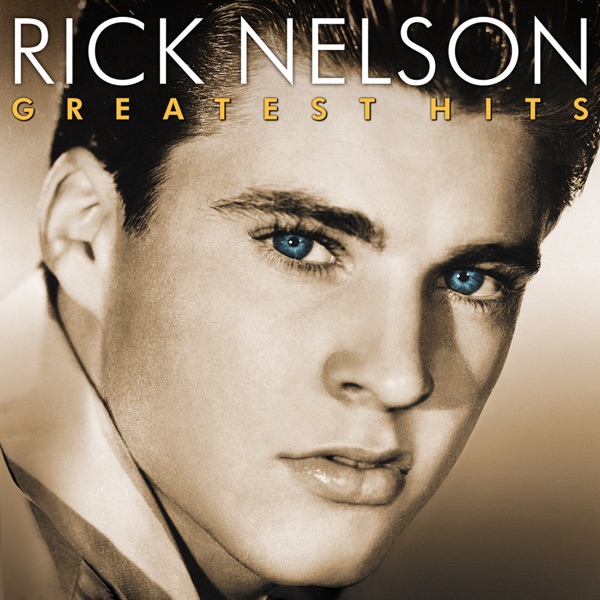
Greatest Hits
1996 · 20 tracks
- 1 I'm Walkin' ↗ 1:59
- 2 Be-Bop Baby (Single Version) ↗ 2:01
- 3 Stood Up ↗ 1:52
- 4 Believe What You Say (Single Version) ↗ 2:04
- 5 Poor Little Fool ↗ 2:32
- 6 Lonesome Town ↗ 2:13
- 7 I Got a Feeling ↗ 2:05
- 8 Never Be Anyone Else but You ↗ 2:16
- 9 It's Late ↗ 1:59
- 10 Just a Little Too Much ↗ 2:12
- 11 Sweeter Than You ↗ 2:18
- 12 Travelin' Man ↗ 2:22
- 13 Hello Mary Lou ↗ 2:18
- 14 Everlovin' ↗ 2:06
- 15 Young World ↗ 2:26
- 16 Teenage Idol ↗ 2:28
- 17 Fools Rush In ↗ 2:32
- 18 For You ↗ 2:16
- 19 She Belongs to Me ↗ 3:03
- 20 Garden Party ↗ 3:46
-
 RickyRicky Nelson195715 tracks
 -
 Ricky NelsonRicky Nelson195816 tracks
 -
 Songs by RickyRicky Nelson195915 tracks
 -
 Ricky Sings AgainRicky Nelson195917 tracks
 -
 More Songs by RickyRicky Nelson196012 tracks
 -
 Rick Is 21Ricky Nelson196112 tracks
 -
 Album Seven by RickRicky Nelson196220 tracks
 -
 It's Up to YouRicky Nelson196312 tracks
 -
 For Your Sweet LoveRicky Nelson196312 tracks
 -
 Rick Nelson Sings "For You"Ricky Nelson196312 tracks
 -
 Spotlight on RickRicky Nelson196412 tracks
 -
 The Very Thought of YouRicky Nelson196412 tracks
 -
 Best AlwaysRicky Nelson196512 tracks
 -
 Love and KissesRicky Nelson196512 tracks
 -
 Bright Lights & Country MusicRicky Nelson196612 tracks
 -
 Another Side of RickRicky Nelson196712 tracks
 -
 Country FeverRicky Nelson196712 tracks
 -
 PerspectiveRicky Nelson196911 tracks
 -
 Garden PartyRicky Nelson197410 tracks
 -
 Playing to WinRicky Nelson198116 tracks
 -
 Greatest HitsRicky Nelson199620 tracks
Deep Dive
Overview
Ricky Nelson was an American musician and actor whose career as a recording artist began in 1957 and extended for nearly three decades until his death in 1985. He emerged from one of the earliest and most widely watched family television shows in American broadcasting history, The Adventures of Ozzie and Harriet, where he had appeared since age eight. Nelson became one of the first teen idols of the rock and roll era while maintaining a legitimate foothold in rockabilly and country music, a dual identity that set him apart from purely manufactured pop acts of his generation.
Formation Story
Ricky Nelson was born Eric Hilliard Nelson in 1940 in the United States. His entry into entertainment came through family rather than personal ambition; as a child performer on The Adventures of Ozzie and Harriet—which began as a radio series and transitioned to television—he grew up under the public eye. The show, centered on his real family, became a cultural touchstone and provided Nelson with unparalleled exposure to American audiences during the early days of television. By the mid-1950s, Nelson had become a recognizable figure to millions of households, a foundation that would allow him to pivot into music at precisely the moment when rock and roll was beginning its ascent.
Breakthrough Moment
Nelson’s transition from television personality to recording artist crystallized in 1957. Appearing on The Adventures of Ozzie and Harriet, he performed a song on the show, which led directly to a recording contract. This televised performance functioned as both showcase and promotional vehicle—a luxury few musicians could claim. His early recordings for Imperial Records capitalized on his teenage appeal and coincided with the rise of Elvis Presley and other early rock pioneers, positioning Nelson within the rockabilly movement even as his television platform granted him mainstream pop radio access that pure rockabilly acts could not always secure. The combination of youth, television fame, and genuine musical credibility allowed Nelson to accumulate both chart presence and artistic legitimacy from the outset of his recording career.
Peak Era
Nelson’s most commercially and creatively vital period extended from the late 1950s through the 1960s. During these years, he recorded for multiple labels including Imperial, Verve Records, Decca, and others, demonstrating both the demand for his work and his status as a valuable property across the industry. He navigated the transition from teenage heartthrob to serious musician with more success than many of his contemporaries, partly because his musical instincts and his choice of collaborators—including skilled session musicians who understood both country and rock idioms—allowed him to evolve beyond novelty status. His willingness to work within rockabilly, country, and pop frameworks simultaneously prevented the narrow typecasting that ended many 1950s teen idols’ careers.
Musical Style
Ricky Nelson’s sound drew equally from country music traditions, rockabilly’s rhythmic drive, and pop music’s melodic accessibility. His voice was warm and controlled rather than powerful, suitable for intimate ballads as well as uptempo rockers. Instrumentation on his recordings typically included electric guitar, upright bass, and drums arranged in configurations that emphasized clarity and swing—a rockabilly foundation—while allowing room for vocal harmonies and orchestral sweetening common in 1950s pop production. Over his career, Nelson’s approach shifted to reflect changing tastes, incorporating folk and country influences that became increasingly central to American rock music in the 1960s. Unlike rock performers who adopted country as a late-career pivot, Nelson had worked in country-adjacent idioms from his earliest recordings, making his evolution appear organic rather than opportunistic.
Major Albums
While specific album titles and dates from the supplied discography were not provided, Nelson’s recording output spanned multiple decades and labels, with material released through Imperial, Verve, Decca, Epic Records, MCA Records, and Charly Records. His catalogue encompasses recordings from his debut period through reissues and retrospectives released after his death in 1985. The breadth of his label history reflects both his commercial value and the fragmentation of his catalogue across decades of industry consolidation and licensing.
Signature Songs
- Early rockabilly recordings that established his credibility as a performer beyond his television fame.
- Pop ballads that showcased his vocal warmth and emotional restraint.
- Country-inflected material that demonstrated his authentic connection to American roots music.
- Television performances that were often released as recordings, blurring the line between broadcast entertainment and commercial music.
Influence on Rock
Ricky Nelson’s significance in rock history lies partly in his demonstration that a performer could straddle multiple genres and commercial contexts without losing credibility. He proved that television stardom and rock authenticity were not mutually exclusive, a lesson that would influence generations of musician-actors. His understanding of and respect for rockabilly and country music traditions, even while operating in the pop mainstream, helped legitimize those idioms for audiences who might otherwise have dismissed them as regional or rustic. Nelson’s career arc—from child star to serious recording artist—also established a template (for better and worse) for young performers transitioning from television to music during the rock era.
Legacy
Ricky Nelson’s death in 1985 marked the end of a career that had spanned three decades and seen him work with numerous labels and producers. His catalogue remains in circulation through various reissue campaigns, and his recordings continue to be streamed on modern platforms, ensuring accessibility to both longtime listeners and younger audiences discovering 1950s and 1960s rock history. Nelson’s example—a performer who balanced commercial appeal with musical substance—remains relevant to discussions of authenticity and career longevity in popular music. His status as both television pioneer and rockabilly-influenced recording artist secures his place in the history of early rock music.
Fun Facts
- Nelson’s transition from The Adventures of Ozzie and Harriet into recording music was one of the earliest and most successful crossovers from family television entertainment to rock and roll stardom.
- His recording career encompassed five major record labels across different eras, reflecting both his value as an artist and the shifting landscape of the music industry over three decades.
- Nelson’s ability to work credibly in rockabilly, country, and pop idioms simultaneously set him apart from many of his teenage contemporary peers, whose careers often foundered when tastes shifted.