
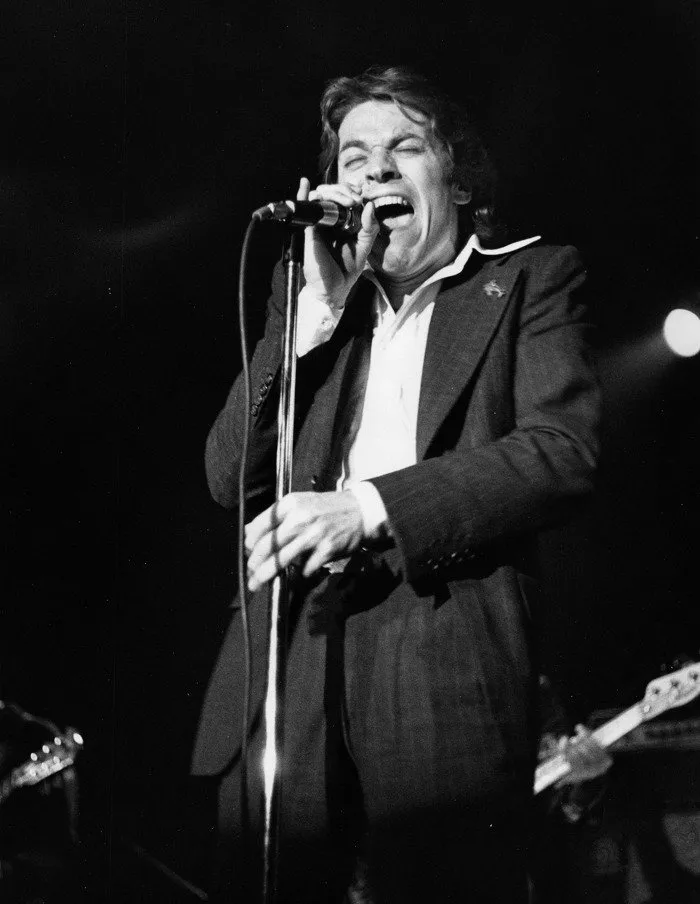
Photo by Nathan Callahan from Southern California, USA , licensed under CC BY 2.0 · Wikimedia Commons
Rank #240
Robert Palmer
From Wikipedia
Robert Allen Palmer was an English singer and songwriter. He was known for his powerful and soulful voice, sartorial elegance, and stylistic explorations, combining soul, funk, jazz, rock, pop, reggae, and blues. His 1986 single "Addicted to Love" and its accompanying video came to "epitomise the glamour and excesses of the 1980s".
Discography & Previews
Browse through and click an album to open and play 30-second previews streamed from Apple Music.


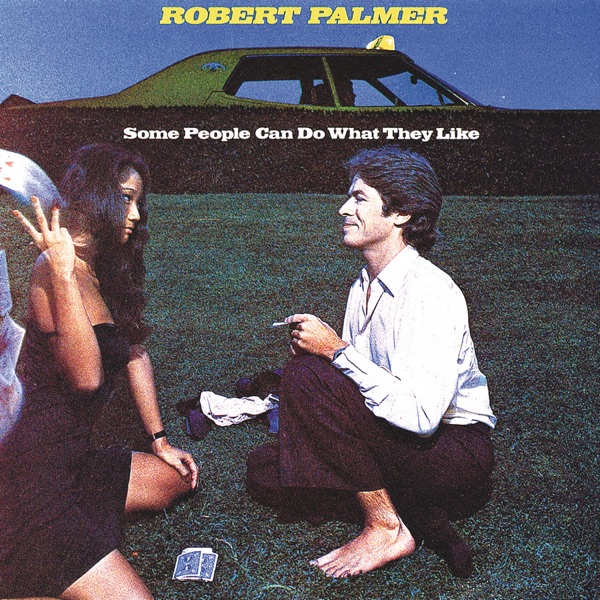
Some People Can Do What They Like
1976 · 10 tracks


Secrets
1979 · 12 tracks
- 1 Bad Case of Loving You (Doctor, Doctor) ↗ 3:16
- 2 Too Good to Be True ↗ 2:55
- 3 Can We Still Be Friends? ↗ 3:39
- 4 In Walks Love Again ↗ 2:49
- 5 Mean Old World ↗ 3:36
- 6 Love Stop ↗ 3:00
- 7 Jealous ↗ 3:18
- 8 Under Suspicion ↗ 3:26
- 9 Woman You're Wonderful ↗ 4:01
- 10 What's It Take? ↗ 3:31
- 11 Remember to Remember ↗ 3:34
- 12 Bad Case of Loving You (Doctor, Doctor) [Remix] ↗ 3:16

Clues
1980 · 11 tracks
- 1 Looking for Clues ↗ 4:52
- 2 Sulky Girl ↗ 4:07
- 3 Johnny and Mary ↗ 3:59
- 4 What Do You Care ↗ 2:49
- 5 I Dream of Wires ↗ 4:33
- 6 Woke Up Laughing ↗ 3:35
- 7 Not a Second Time ↗ 2:48
- 8 Found You Now ↗ 4:36
- 9 Good Care of You ↗ 3:41
- 10 Johnny and Mary (Alternate Take) ↗ 4:11
- 11 What Do You Care (Alternate Mix) ↗ 3:42


Heavy Nova
1988 · 10 tracks

Ridin’ High
1992 · 16 tracks
- 1 Love Me or Leave Me ↗ 3:44
- 2 (Love Is) The Tender Trap ↗ 2:36
- 3 You're My Thrill ↗ 3:57
- 4 Want You More ↗ 4:07
- 5 Baby It's Cold Outside ↗ 3:31
- 6 Aeroplane ↗ 3:01
- 7 Witchcraft ↗ 3:17
- 8 What a Little Moonlight Can Do (Road House) ↗ 2:41
- 9 Don't Explain ↗ 2:28
- 10 Chance ↗ 2:41
- 11 Goody Goody ↗ 2:51
- 12 Do Nothin' Till You Hear from Me ↗ 3:45
- 13 Honeysuckle Rose ↗ 2:49
- 14 No Not Much ↗ 2:23
- 15 Ridin' High ↗ 2:15
- 16 Hard Head ↗ 3:06

Rhythm & Blues
1998 · 12 tracks
- 1 True Love ↗ 4:18
- 2 No Problem ↗ 3:23
- 3 Let's Get It On (1999 Version) ↗ 4:07
- 4 Stone Cold ↗ 4:20
- 5 Sex Appeal ↗ 4:34
- 6 Work To Make It Work (1999 Version) ↗ 3:34
- 7 All The Will In The World ↗ 4:58
- 8 You're Not The Only One ↗ 3:41
- 9 Mr. Wise Guy ↗ 3:33
- 10 I Choose You ↗ 4:19
- 11 Dance For Me (1999 Version) ↗ 3:52
- 12 Twenty Million Things ↗ 3:02
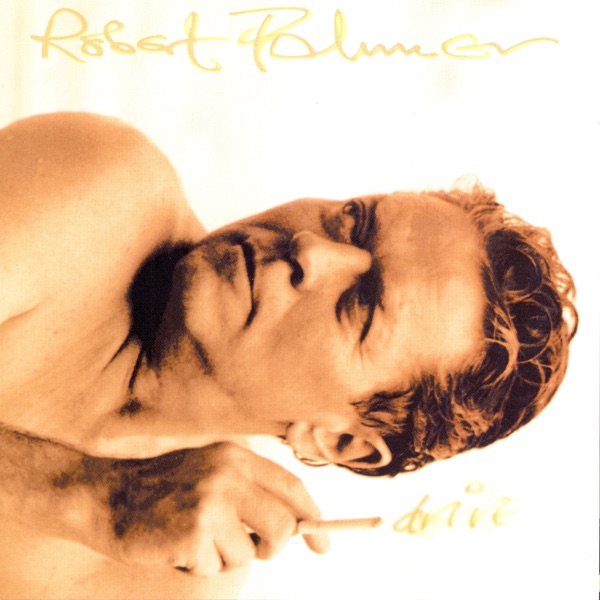
Drive
2003 · 12 tracks
- 1 Mama Talk to Your Daughter ↗ 2:27
- 2 Why Get Up? ↗ 3:01
- 3 Who's Fooling Who? ↗ 2:49
- 4 Am I Wrong? ↗ 2:03
- 5 TV Dinners ↗ 3:24
- 6 Lucky ↗ 2:22
- 7 Stella ↗ 3:58
- 8 Dr. Zhivago's Train ↗ 3:58
- 9 Ain't That Just Like a Woman ↗ 1:59
- 10 Hound Dog ↗ 2:02
- 11 Crazy Cajun Cake Walk Band ↗ 3:08
- 12 I Need Your Love So Bad ↗ 2:17
-
 Sneakin’ Sally Through the AlleyRobert Palmer19748 tracks
 -
 Pressure DropRobert Palmer19759 tracks
 -
 Some People Can Do What They LikeRobert Palmer197610 tracks
 -
 Double FunRobert Palmer19789 tracks
 -
 SecretsRobert Palmer197912 tracks
 -
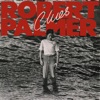 CluesRobert Palmer198011 tracks
 -
 PrideRobert Palmer198310 tracks
 -
 RiptideRobert Palmer19859 tracks
 -
 Heavy NovaRobert Palmer198810 tracks
 -
 Ridin’ HighRobert Palmer199216 tracks
 -
 Rhythm & BluesRobert Palmer199812 tracks
 -
 DriveRobert Palmer200312 tracks
Deep Dive
Overview
Robert Palmer was an English singer-songwriter whose career spanned nearly three decades and whose musical reach extended across soul, funk, jazz, rock, pop, reggae, and blues. Born in 1949, Palmer built a reputation for his powerful, soulful voice paired with an unusual commitment to sartorial elegance and stylistic restlessness. He became a fixture on radio and MTV throughout the 1970s and 1980s, but his cultural peak arrived in 1986 with “Addicted to Love,” a single and accompanying video that came to epitomise the glamour and excesses of the 1980s. His willingness to move between genres and reinvent his aesthetic across different eras set him apart from peers who locked into a single formula.
Formation Story
Robert Allen Palmer entered the music world during the late 1960s and early 1970s as rock was fragmenting into countless substyles. His early years saw him absorbing influences across soul, reggae, and rock—genres that would surface repeatedly throughout his work. By the early 1970s, he had begun recording for Island Records, the label that would remain his primary home for most of his career. Palmer’s artistic foundation was built on a genuine eclecticism: he did not limit himself to the rock guitar tradition or to one vocal approach, instead drawing from Jamaican rhythms, Motown grooves, and the sophisticated arrangements of jazz and soul music.
Breakthrough Moment
Palmer’s first major-label album, Sneakin’ Sally Through the Alley (1974), introduced his mature sound and earned him immediate credibility among critics and FM-radio programmers. The record showcased his ability to blend soul and rock sensibilities with reggae undertones, establishing him as more than a standard-issue rock vocalist. This debut success led to continued album output throughout the mid-to-late 1970s—Pressure Drop (1975), Some People Can Do What They Like (1976), Double Fun (1978), Secrets (1979), and Clues (1980)—each one refining his craft and broadening his audience. By 1980, Palmer had secured a steady position on album-rock radio and had become known to a dedicated international fanbase, yet he had not yet achieved the mainstream pop crossover that would define his later decade.
Peak Era
The 1985–1990 period marked Palmer’s greatest commercial and cultural visibility. Riptide (1985) began the shift toward a more synth-inflected, production-forward sound that aligned with 1980s studio technology. The follow-up, Heavy Nova (1988), consolidated this direction and demonstrated that Palmer’s sophisticated approach could command major chart positions and MTV rotation. Between Riptide and Heavy Nova, the 1986 single “Addicted to Love” became a phenomenon—its sleek, New Wave-adjacent production, Palmer’s sardonic vocal delivery, and the iconic video featuring a lineup of identically dressed backup dancers created a watershed moment in 1980s pop culture. The song’s success established Palmer as a crossover artist who could appeal equally to rock, pop, and R&B audiences. Albums released after this peak—Don’t Explain (1990), Ridin’ High (1992), and Honey (1994)—continued to explore soul and funk idioms, though with diminishing commercial momentum.
Musical Style
Palmer’s sound was defined by a restless approach to arrangement and genre. Where many rock singers locked into a particular production style, Palmer moved fluidly between synth-pop, reggae-inflected funk, Motown-influenced soul, and straight-ahead rock. His voice—powerful, emotionally direct, and capable of both sweetness and menace—became his signature across all these contexts. The 1980s albums in particular leaned on synthesizers, drum machines, and crisp production that placed his vocals front and center without the layering and reverb that dominated much 1980s pop. His songwriting, whether original or through covers, favored lyrics with wit and sophistication, often addressing adult romantic themes with a knowing tone rather than teenage earnestness. The evolution from the rootsy funk of Sneakin’ Sally Through the Alley to the electronic polish of Heavy Nova showed an artist willing to follow production trends while maintaining vocal and tonal consistency.
Major Albums
Sneakin’ Sally Through the Alley (1974)
Palmer’s debut introduced his fusion of soul, rock, and reggae influences. The album established his credibility with critics and FM radio, proving he could sustain an entire record with sophisticated arrangements and genuine vocal depth.
Clues (1980)
By his seventh album, Palmer had refined his approach to balancing funk grooves with introspective songwriting. Clues marked a turning point toward more production-conscious work while retaining the soulful core that defined his early output.
Riptide (1985)
This album signaled Palmer’s full embrace of 1980s synth-pop and electronic production without sacrificing his soul-music sensibility. It set the stage for the commercial breakthrough that followed and demonstrated his adaptability to contemporary studio trends.
Heavy Nova (1988)
Heavy Nova capitalized on the “Addicted to Love” phenomenon and established Palmer as a major crossover artist. The album’s polished production and radio-friendly songs reinforced his status as a sophisticated 1980s pop figure while maintaining enough funk and soul DNA to satisfy his earlier fanbase.
Rhythm & Blues (1998)
Released near the end of his career, Rhythm & Blues represented a return to the genre roots that had always animated his work. The album affirmed Palmer’s ongoing engagement with soul and funk traditions even as mainstream rock and pop had moved in other directions.
Signature Songs
- “Addicted to Love” (1986) — The defining single of Palmer’s career; its synth-pop production and accompanying video made it a cultural touchstone of the 1980s.
- “Simply Irresistible” (1988) — A funk-influenced pop-rock track from Heavy Nova that became a major radio hit and further cemented his crossover appeal.
- “Johnny and Mary” (1980) — A deeply soulful, synth-driven track that showcased Palmer’s ability to embed emotional depth within contemporary electronic production.
- “Mercy Mercy Me” (1974) — Palmer’s cover of the Marvin Gaye classic from his debut, demonstrating his vocal power and respect for soul tradition.
Influence on Rock
Robert Palmer’s career illustrated that rock music could coexist comfortably with soul, funk, and electronic production without sacrificing artistic credibility. His 1980s success showed a generation of rock musicians that synth-pop and sophisticated studio production were viable tools rather than threats to authenticity. The broad stylistic range of his albums—from reggae-funk grooves to synth-driven pop—modeled an approach that prioritized the song and the production over genre purity. His success on MTV and radio helped establish that sophisticated, non-guitar-driven pop-rock could command mainstream attention and critical respect. The visual and sartorial dimension of his 1980s work, particularly the “Addicted to Love” era, also demonstrated that rock artists could engage with pop visual culture and fashion without losing credibility.
Legacy
Robert Palmer died in 2003, but his influence persisted through both his extensive catalog and the way he had expanded rock music’s stylistic boundaries. His albums remained in print and available on streaming platforms, ensuring that new listeners could discover his evolution across nearly three decades. The 1986–1988 period, anchored by “Addicted to Love” and Heavy Nova, remained his most visible cultural touchpoint—the video and song continued to circulate in 1980s revival contexts and nostalgia media. His work demonstrated that an artist could maintain commercial relevance across multiple decades by taking creative risks rather than repeating a formula. Palmer’s engagement with soul, funk, reggae, and electronic music influenced artists who sought to move beyond rigid genre boundaries and who recognized that sophistication in arrangement and production could enhance rather than diminish rock authenticity.
Fun Facts
- Palmer recorded one album of Baroque vocal music, Alexander Balus: 1748 English Oratorio in Three Acts (1998), alongside his mainstream pop and rock output, showcasing an unexpected classical music interest.
- His final studio album, Drive (2003), was released in the year of his death, representing a career-long engagement with recording despite changing tastes in the music industry.
- Palmer’s visual presentation—tailored suits, distinctive grooming, and careful attention to his appearance—became as much a part of his brand as his music, influencing how male rock and pop artists approached image and style during the 1980s.