

Photo by PHOTO BY MATT BECKER www.melodicrockconcerts.com [email protected] , licensed under CC BY 3.0 · Wikimedia Commons
Rank #342
Sammy Hagar
From Wikipedia
Samuel Roy Hagar, also known as the Red Rocker, is an American singer, songwriter, guitarist, entrepreneur, and philanthropist. He rose to prominence in the early 1970s with the hard rock band Montrose before launching a successful solo career, scoring a hit in 1984 with "I Can't Drive 55". He enjoyed further commercial success as the second lead vocalist of Van Halen from 1985 through 1996, and from 2003 to 2005.
Discography & Previews
Browse through and click an album to open and play 30-second previews streamed from Apple Music.


Musical Chairs
1977 · 10 tracks
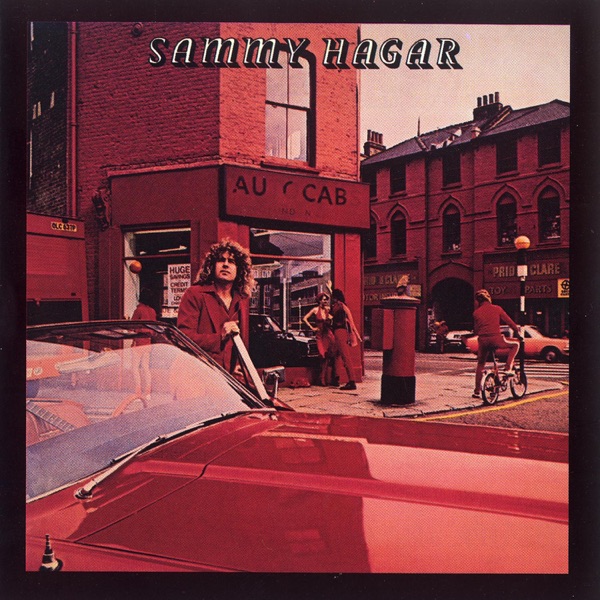

Street Machine
1979 · 10 tracks

Danger Zone
1980 · 10 tracks


Marching to Mars
1997 · 11 tracks
- 1 Little White Lie ↗ 2:53
- 2 Salvation On Sand Hill ↗ 5:00
- 3 Who Has the Right? ↗ 5:20
- 4 Would You Do It for Free? ↗ 4:31
- 5 Leaving the Warmth of the Womb ↗ 5:06
- 6 Kama ↗ 5:19
- 7 On the Other Hand ↗ 2:42
- 8 Both Sides Now ↗ 4:27
- 9 The Yogi's So High (I'm Stoned) ↗ 6:02
- 10 Amnesty Is Granted ↗ 4:23
- 11 Marching to Mars ↗ 5:09


Cosmic Universal Fashion
2008 · 10 tracks
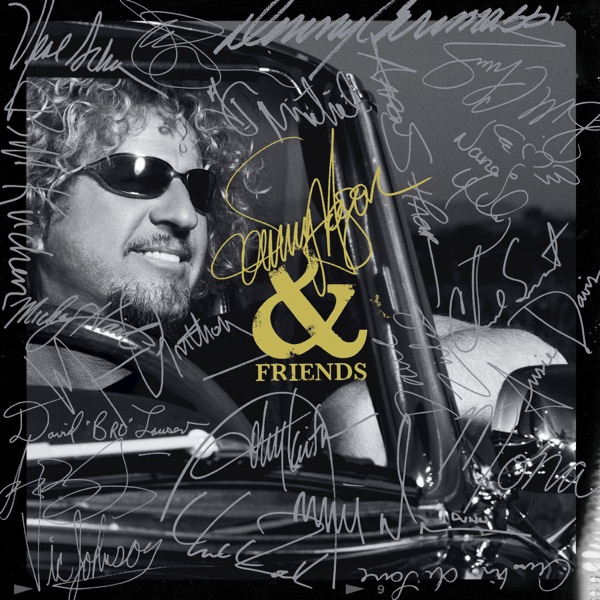
Sammy Hagar & Friends
2013 · 11 tracks
- 1 Winding Down (feat. Taj Mahal) ↗ 2:30
- 2 Not Going Down (feat. Bill Church & Denny Carmassi) ↗ 4:57
- 3 Personal Jesus (feat. Neal Schon, Michael Anthony & Chad Smith) ↗ 4:50
- 4 Father Sun (feat. Denny Carmassi & Aaron Hagar) ↗ 3:41
- 5 Knockdown Dragout (feat. Kid Rock, Joe Satriani & Denny Carmassi) ↗ 2:17
- 6 Ramblin' Gamblin' Man (feat. David Lauser, Mona Gnader & Vic Johnson) ↗ 2:36
- 7 Bad On Fords and Chevrolets (feat. Ronnie Dunn) ↗ 3:21
- 8 Margaritaville (feat. Toby Keith) ↗ 4:53
- 9 All We Need Is an Island (feat. Nancy Wilson & Mickey Hart) ↗ 2:43
- 10 Going Down (feat. Neal Schon, Michael Anthony & Chad Smith) [Live In Studio—Take 1] ↗ 4:26
- 11 Space Station #5 (feat. Denny Carmassi, Bill Church & Joe Satriani) [Live from Ronnie Montrose Tribute Concert] ↗ 5:35

-
 Nine on a Ten ScaleSammy Hagar19769 tracks
 -
 Musical ChairsSammy Hagar197710 tracks
 -
 Sammy HagarSammy Hagar197710 tracks
 -
 Street MachineSammy Hagar197910 tracks
 -
 Danger ZoneSammy Hagar198010 tracks
 -
 Standing HamptonSammy Hagar198110 tracks
 -
 Three Lock BoxSammy Hagar198210 tracks
 -
 VOASammy Hagar19848 tracks
 - Sammy HagarSammy Hagar198710 tracks
-
 Marching to MarsSammy Hagar199711 tracks
 -
 Ten 13Sammy Hagar200011 tracks
 -
 Cosmic Universal FashionSammy Hagar200810 tracks
 -
 Sammy Hagar & FriendsSammy Hagar201311 tracks
 -
 Lite RoastSammy Hagar201411 tracks
Deep Dive
Overview
Sammy Hagar, known as the Red Rocker, is an American hard rock vocalist, guitarist, and songwriter whose career spans five decades. Born in 1947, Hagar rose to prominence in the early 1970s as the frontman of the hard rock band Montrose, then built a solo career in the late 1970s and 1980s that culminated in mainstream crossover success with the 1984 single “I Can’t Drive 55.” His career trajectory shifted dramatically when he joined Van Halen as the band’s second lead vocalist in 1985, a tenure that would define his public identity for the remainder of the decade and beyond. Hagar’s presence in rock spans multiple formations and eras, making him one of the genre’s more persistent and commercially successful figures.
Formation Story
Hagar emerged from the California hard rock scene of the early 1970s, where he cut his teeth as the vocalist for Montrose, a power trio that played aggressive, blues-inflected hard rock. That early apprenticeship in a band context established the vocal authority and guitar-driven sensibilities that would characterize his solo work. By the mid-1970s, Hagar had begun recording solo albums, initially while still associated with Montrose. His first solo album, Nine on a Ten Scale, appeared in 1976, followed by two more releases in 1977—Musical Chairs and a self-titled Sammy Hagar—that showed him eager to establish an independent identity beyond his band role. These early records were released on Capitol Records, the major label that would remain his primary home through much of his career.
Breakthrough Moment
Hagar’s commercial breakthrough as a solo artist came in 1984 with the album VOA and its signature single “I Can’t Drive 55,” a novelty-tinged hard rock protest song about the federal speed limit that crossed over to mainstream radio and became his first major hit. The song’s accessibility and radio-friendly production marked a significant shift in his approach, moving beyond the harder-edged material of his mid-1970s output. The success of VOA positioned Hagar as a radio-friendly hard rock vocalist at a moment when MTV and FM radio were reshaping the genre’s commercial landscape. This momentum made him a logical candidate for one of rock’s highest-profile vacancies: the lead vocalist position in Van Halen, who parted ways with David Lee Roth in 1985.
Peak Era
Hagar’s commercial and cultural peak arrived during his initial tenure with Van Halen from 1985 to 1996. That eleven-year period saw him front one of hard rock’s most successful and visible bands, appearing on stadium tours and major label releases that reached millions of listeners. The partnership lasted until 1996, after which Hagar continued his solo career, returning to Van Halen for a second stint from 2003 to 2005. By the time of his Van Halen years, Hagar had already established himself as a capable frontman with radio appeal and staying power—qualities that made him invaluable to a band seeking to maintain its commercial relevance in the latter half of the 1980s and into the 1990s.
Musical Style
Hagar’s style is rooted in hard rock and blues-rock lineage, with an emphasis on straightforward, powerful vocals delivered in a tenor register. His guitar work, when he performed it, reflected the blues-based soloing of classic hard rock; his role as a vocalist, however, increasingly dominated his solo identity as his career progressed. His songwriting tends toward anthemic, radio-accessible hard rock—driving rhythms, major-key melodies, and lyrics centered on themes of partying, independence, and social commentary (as evidenced by “I Can’t Drive 55”). Unlike the theatrical or operatic vocal styles of some 1980s hard rock contemporaries, Hagar’s approach is direct and unadorned, prioritizing clarity and melodic hook over technical display. This clarity and accessibility made him an effective fit in the Van Halen context, where his presence brought a different vocal timbre and songwriting sensibility to the band’s established sound.
Major Albums
Nine on a Ten Scale (1976)
Hagar’s debut solo album, establishing his voice and guitar-driven hard rock approach independent of Montrose. The record showcased his early songwriting and vocal range within a straightforward hard rock framework.
Standing Hampton (1981)
One of Hagar’s most accomplished pre-crossover albums, Standing Hampton refined his hard rock formula and demonstrated growing confidence as a solo artist heading into the 1980s. The album stands as a landmark in his discography before the “I Can’t Drive 55” era.
Three Lock Box (1982)
Continuing his momentum through the early 1980s, Three Lock Box showed Hagar deepening his songwriting craft and production sophistication. The album positioned him firmly in the hard rock mainstream before his Van Halen recruitment.
VOA (1984)
The album that changed Hagar’s commercial trajectory, VOA delivered the crossover hit “I Can’t Drive 55” and demonstrated his ability to craft radio-friendly hard rock without sacrificing the genre’s power. The album’s success validated a more populist approach to hard rock song structure and production.
Marching to Mars (1997)
Released after his first Van Halen tenure ended, Marching to Mars signaled Hagar’s return to independent solo recording and his continued relevance as a solo artist separate from his role in the band.
Signature Songs
- “I Can’t Drive 55” — Hagar’s signature solo hit and his entry into mainstream radio, a novelty-edged hard rock protest that became inextricable from his public identity.
- “Your Love Is Driving Me Crazy” — An early solo composition that established his ability to write accessible hard rock hooks.
- “Right Now” — A collaboration within Van Halen that became one of the band’s defining songs of the 1991 era.
- “Heavy Metal Is a Language” — A statement of intent from his earlier solo period, crystallizing his commitment to hard rock’s visceral appeal.
Influence on Rock
Hagar’s influence on rock music operates primarily through his role in Van Halen, where his presence and songwriting shaped the band’s late-1980s and 1990s output, and secondarily through his long solo career as a model of sustained commercial viability in hard rock. His willingness to embrace radio-friendly production and melodic songwriting without abandoning hard rock’s fundamental power anticipated and helped legitimize the mainstream crossover of hard rock in the 1980s. His “I Can’t Drive 55” remains a touchstone of novelty-rock crossover, proving that hard rock could incorporate humor and social commentary while maintaining chart presence. Hagar’s accessibility and vocal clarity offered an alternative vocal template within hard rock, distinct from both the histrionic styles of theatrical rock and the raw-throat approaches of classic blues-rock, making him influential to vocalists seeking a middle ground between power and clarity.
Legacy
Sammy Hagar remains a fixture in hard rock heritage and classic rock radio, with his catalog continuing to reach audiences through streaming and legacy broadcasts. His decades-long career—spanning from the early 1970s Montrose era through multiple Van Halen tenures and continuous solo recording into the 2010s—marks him as one of hard rock’s most durable figures. Though less universally canonized than some of his contemporaries, his commercial success, particularly the staying power of “I Can’t Drive 55” and his institutional presence in Van Halen, ensures his place in the hard rock narrative. His brand—the Red Rocker—has become synonymous with a particular flavor of 1980s hard rock accessibility, and his solo albums from the late 1970s through the 1980s remain touchstones of that era’s production and sensibility. The breadth of his discography, from Nine on a Ten Scale in 1976 through Lite Roast in 2014, demonstrates an artist who refused to retire or rest on past laurels.
Fun Facts
- Hagar recorded a self-titled album Sammy Hagar in 1977 and again in 1987, showing his willingness to circle back to the clean slate of a self-titled statement across different career moments.
- His album Bakersfield, California 1982 represents a specific geographical and temporal snapshot, suggesting concept or live recording elements tied to location.
- Hagar’s entrepreneurial and philanthropic work extended his cultural footprint well beyond recording and touring, making him a rare crossover figure between rock celebrity and business community.
- The span from his 1976 debut to Lite Roast in 2014 represents thirty-eight years of continuous solo recording, underscoring his commitment to independent work even during his most prominent years with Van Halen.