

Photo by Atlantic Records , licensed under Public domain · Wikimedia Commons
Rank #428
Stacey Q
From Wikipedia
Stacey Lynn Swain, known by her stage name Stacey Q, is an American pop singer, songwriter, dancer and actress. Her best-known single, "Two of Hearts", released in 1986, reached number one in Canada, number three on the US Billboard Hot 100 and the top ten in five other countries.
Discography & Previews
Browse through and click an album to open and play 30-second previews streamed from Apple Music.
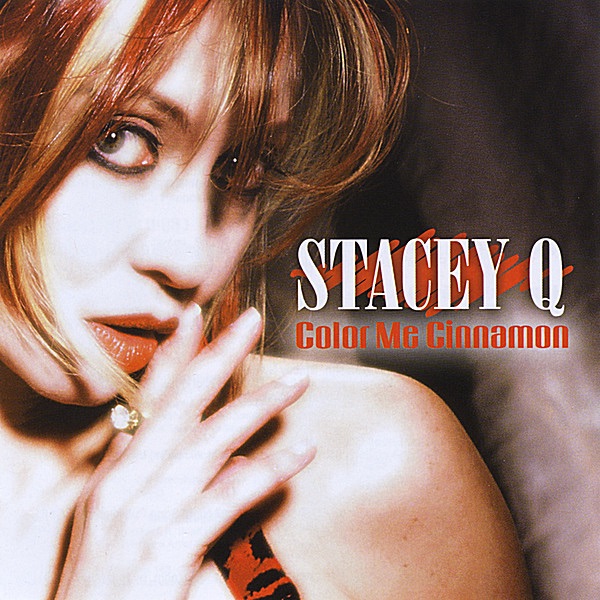
Color Me Cinnamon
2010 · 14 tracks
- 1 Prelude ↗ 1:22
- 2 Trip ↗ 3:30
- 3 Below the Surface ↗ 3:08
- 4 Pandora's Box ↗ 4:51
- 5 Masquerade ↗ 5:46
- 6 Candy Apple ↗ 3:16
- 7 Euphoria ↗ 5:27
- 8 Behind the Eight Ball ↗ 3:22
- 9 The Lion's Den ↗ 4:17
- 10 Going Goth ↗ 3:31
- 11 Voices In My Head ↗ 5:40
- 12 Cinnamon Girl ↗ 5:10
- 13 Where I Am ↗ 3:04
- 14 Sad Cafe ↗ 5:02
-
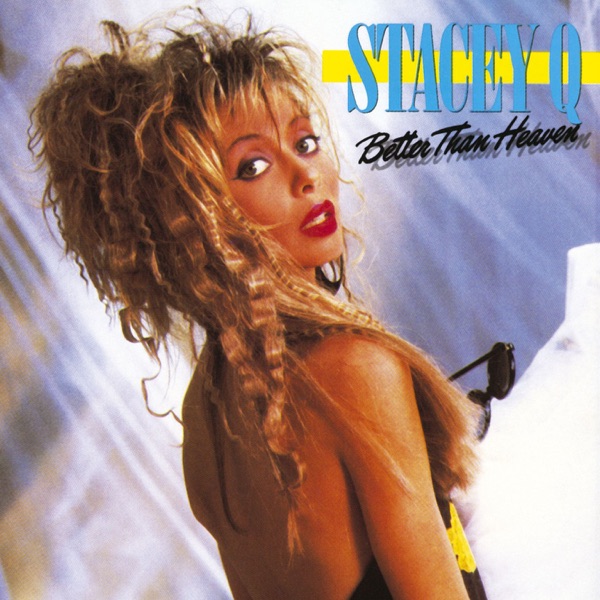
 Better Than HeavenStacey Q198610 tracks
 -
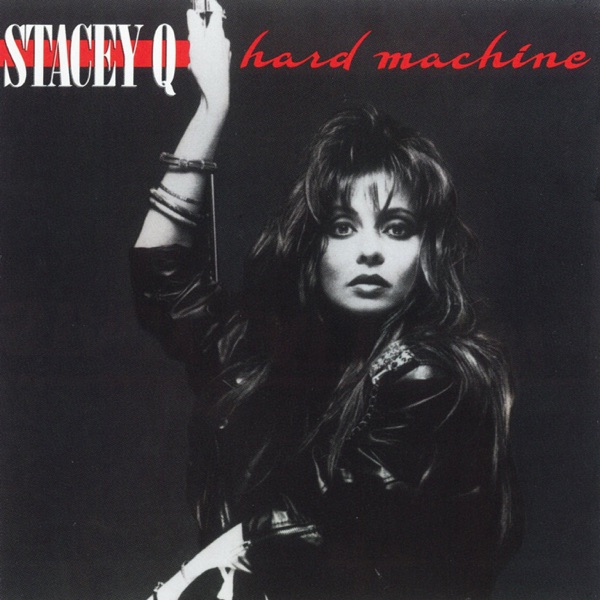
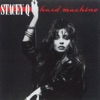 Hard MachineStacey Q198810 tracks
 -
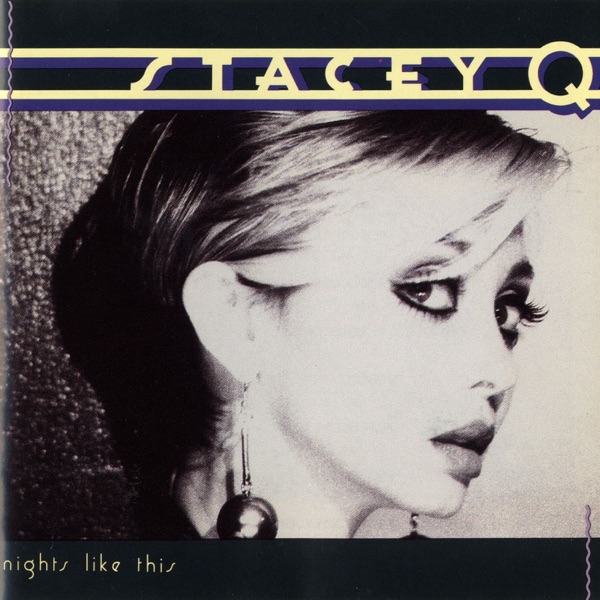
 Nights Like ThisStacey Q198910 tracks
 -
 Color Me CinnamonStacey Q201014 tracks
Deep Dive
Overview
Stacey Q, born Stacey Lynn Swain, emerged in the mid-1980s as one of pop music’s most distinctive voices, blending new wave aesthetics with dance-floor energy and theatrical flair. Best known for the smash single “Two of Hearts” (1986), she built a career that spanned pop, new wave, and house music across four decades of recording. Her work exemplified the playful, synth-driven sensibility of mid-1980s pop while incorporating the precision and electronic experimentation that defined the new wave movement.
Formation Story
Stacey Lynn Swain was born in 1958, arriving as a child of the postwar American cultural moment that would later produce the synth-pop and new wave movements of the 1980s. By the early 1980s, she had begun assembling her artistic identity as a pop singer and dancer in Los Angeles, a city that had become a crucial incubator for new wave and electronic pop. Working initially with the band Transition in the mid-1980s, Swain refined her approach to songwriting and performance, drawing on the electronic production techniques and theatrical sensibilities that had come to dominate mainstream pop in the decade. When she launched her solo career under the stage name Stacey Q, she was positioned at the intersection of multiple strands of contemporary pop: the synth-driven melodicism of new wave, the rhythmic precision of house music, and the accessibility of mainstream pop radio.
Breakthrough Moment
Stacey Q’s breakthrough arrived swiftly with her debut album Better Than Heaven in 1986, which introduced “Two of Hearts” to the world. The single became a defining track of the mid-1980s pop landscape, climbing to number three on the US Billboard Hot 100 chart and reaching number one in Canada, while earning top-ten placements in five additional countries. “Two of Hearts” combined a driving synthesizer hook with Swain’s distinctive vocal delivery—playful yet precise—and showcased the song’s clever production, which balanced new wave sparseness with accessible pop melody. The track’s success opened radio and MTV to her work and established her as a significant figure in 1980s pop during a moment when synthesizer-driven music was approaching its commercial and cultural peak.
Peak Era
The period from 1986 through 1989 represented Stacey Q’s most commercially active and creatively focused era. Following Better Than Heaven, she released Hard Machine in 1988 and Nights Like This in 1989, albums that consolidated her position within the new wave and pop-house continuum. During these years, she recorded for Atlantic Records, one of the major labels instrumental in promoting new wave and synth-pop to mainstream audiences. While none of her subsequent singles matched the cultural penetration of “Two of Hearts,” these albums allowed her to explore variations on her core sound and to establish herself as a capable songwriter and performer rather than a one-hit phenomenon. Her work during this period demonstrated technical facility with synthesizer-based production and a commitment to the melodic and rhythmic innovations that had defined new wave.
Musical Style
Stacey Q’s sound emerged from the intersection of new wave’s electronic experimentalism, house music’s four-on-the-floor rhythmic foundation, and pop music’s emphasis on hook-driven melody. Her vocals—characterized by precision, a slight nasal edge, and an almost conversational delivery in places—distinguished her from many of her contemporaries, lending an intimate quality to otherwise synthesizer-heavy arrangements. Her production style relied heavily on synthesizers as the dominant textural and melodic element, with drum machines providing the propulsive rhythmic backbone typical of 1980s pop and new wave. Lyrically, Swain favored accessible themes centered on romance, desire, and urban life, treated with a touch of humor and self-awareness rather than heavy sentiment. As she evolved across her albums from the late 1980s into the 1990s, she incorporated house music’s more explicit rhythmic and production vocabulary, reflecting broader shifts in electronic pop and dance music.
Major Albums
Better Than Heaven (1986)
Her debut and most commercially successful record, anchored by “Two of Hearts” and introducing listeners to Swain’s vocal identity and the synth-pop aesthetic that would define her career.
Hard Machine (1988)
The follow-up deepened her exploration of synthesizer-driven pop and new wave, demonstrating her commitment to the electronic production style that had brought her initial success.
Nights Like This (1989)
Released at the tail end of the 1980s, this album represented the final statement of her primary creative period and showed continued investment in the new wave and electronic pop idiom.
Boomerang (1997)
A return to recording after an eight-year gap, Boomerang marked her reconnection to music after a period focused on other endeavors.
Signature Songs
- “Two of Hearts” — The undisputed centerpiece of her catalog, a new wave-inflected pop single that became an international hit and remains her most recognized work.
- “Automatik” — A showcase for her synth-driven production style and her ability to craft rhythmically propulsive pop songs.
- “My Heart Belongs to You” — A mid-1980s track that exemplified her approach to romantic themes with new wave precision.
Influence on Rock
While Stacey Q did not establish herself as a foundational figure in rock’s development, her work contributed to the 1980s expansion of new wave and synth-pop into the mainstream pop and dance markets. Her success with “Two of Hearts” demonstrated the commercial viability of synthesizer-based pop at a moment when such music was transitioning from underground and college-radio status into the mainstream. By helping to sustain new wave and electronic pop in the mid-to-late 1980s, she was part of a broader movement—alongside artists working in similar registers—that normalized synthesizer production and electronic songwriting as standard elements of pop music. Her incorporation of house music elements in her later work anticipated the 1990s convergence of pop and dance music that would reshape the commercial landscape.
Legacy
Stacey Q remains best known for “Two of Hearts,” a song that has proven durable in pop memory and continues to appear on 1980s retrospectives and nostalgia-driven playlists. Though her recording career became less consistent after the 1980s, the durability of her signature hit—its presence in films, television, and streaming catalogs—ensures that her name remains recognizable within the landscape of 1980s pop. Her work serves as a useful touchstone for understanding how new wave and electronic pop penetrated mainstream American radio in the mid-1980s, and how synthesizer-driven songwriting became a central ingredient in pop radio during that era. She remained active as an artist into the 2010s, releasing Color Me Cinnamon in 2010, and her official website indicates ongoing involvement in music, maintaining a presence that extends across more than six decades of her life.
Fun Facts
- Stacey Q was also trained as a dancer and actress, bringing a multimedia performance sensibility to her work in addition to her singing and songwriting.
- “Two of Hearts” was released in 1986, the same year that synthesizer-driven pop reached some of its highest saturation on mainstream American radio.
- Her stage name condensed her first name and last initial into a concise, memorable moniker typical of 1980s pop branding conventions.
- She recorded her debut and most successful period of work under Atlantic Records, one of the major labels championing new wave and electronic pop throughout the 1980s.