
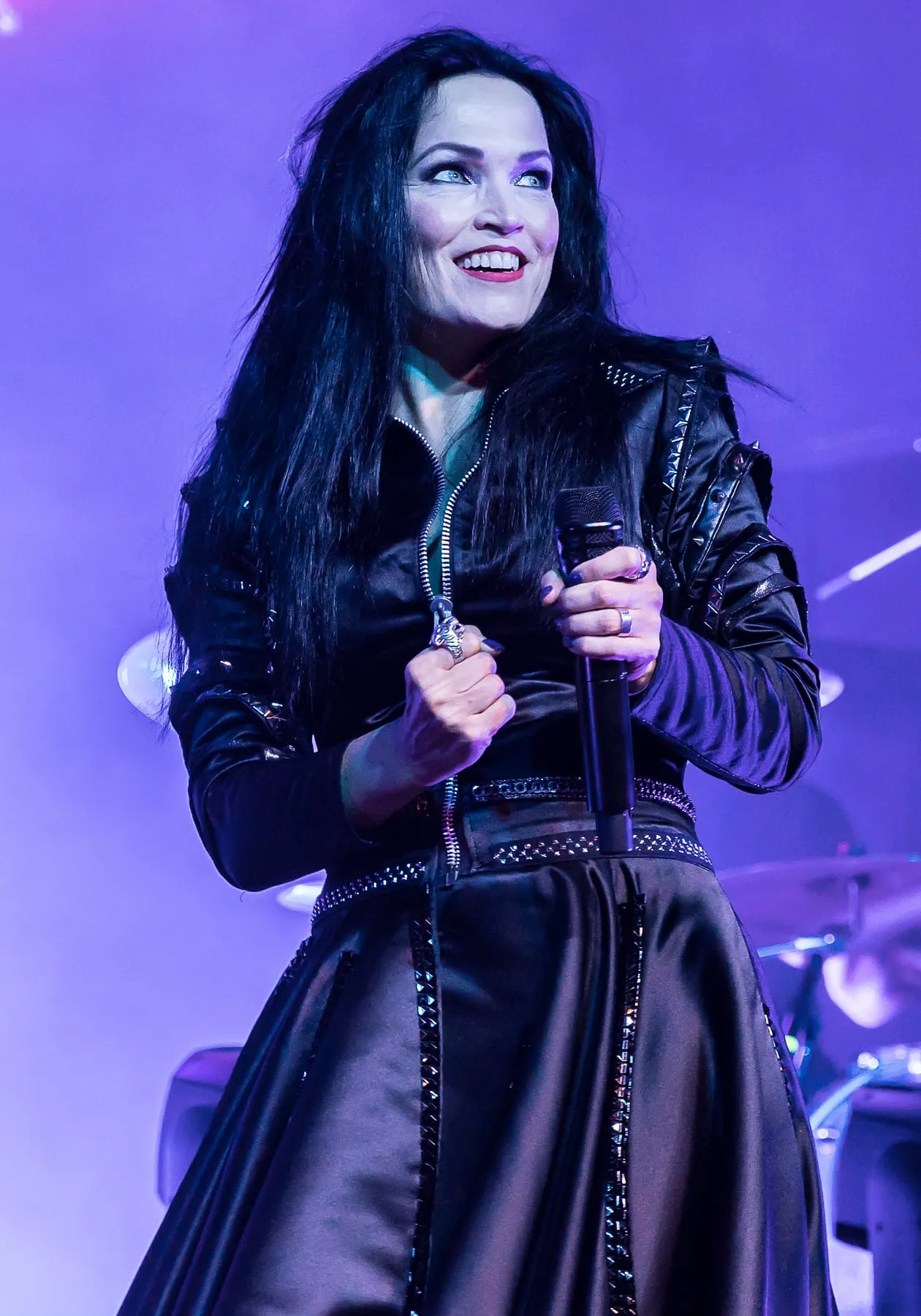
Photo by S. Bollmann , licensed under Attribution · Wikimedia Commons
Rank #419
Tarja Turunen
From Wikipedia
Tarja Soile Susanna Turunen-Cabuli, known professionally as Tarja Turunen or simply Tarja, is a Finnish heavy metal singer best known as the former lead vocalist of the symphonic metal band Nightwish.
Discography & Previews
Browse through and click an album to open and play 30-second previews streamed from Apple Music.

Henkäys ikuisuudesta
2006 · 14 tracks
- 1 Kuin henkäys ikuisuutta ↗ 4:29
- 2 You Would Have Loved This ↗ 3:58
- 3 Happy New Year ↗ 4:04
- 4 En etsi valtaa, loistoa ↗ 3:27
- 5 Happy Xmas (War Is Over) ↗ 4:29
- 6 Varpunen jouluaamuna ↗ 3:24
- 7 Ave Maria ↗ 6:10
- 8 The Eyes Of A Child ↗ 4:22
- 9 Mökit nukkuu lumiset ↗ 4:15
- 10 Jo joutuu ilta ↗ 3:06
- 11 Marian poika ↗ 3:26
- 12 Magnificat: Quia Respexit ↗ 3:34
- 13 Walking In The Air ↗ 4:36
- 14 Jouluyö, juhlayö ↗ 3:47

My Winter Storm
2007 · 18 tracks
- 1 Ite, Missa Est ↗ 0:27
- 2 I Walk Alone (Single Cut) ↗ 3:53
- 3 Lost Northern Star ↗ 4:23
- 4 Seeking for the Reign ↗ 0:59
- 5 The Reign ↗ 4:08
- 6 The Escape of the Doll ↗ 0:33
- 7 My Little Phoenix ↗ 4:01
- 8 Boy and the Ghost ↗ 4:37
- 9 Sing for Me ↗ 4:13
- 10 Oasis ↗ 5:11
- 11 Poison ↗ 3:59
- 12 Our Great Divide ↗ 5:06
- 13 Sunset ↗ 0:36
- 14 Damned and Divine (Short Version) ↗ 4:19
- 15 Die Alive ↗ 4:06
- 16 Minor Heaven ↗ 3:54
- 17 Ciarán's Well ↗ 3:33
- 18 Calling Grace ↗ 2:47

What Lies Beneath
2010 · 28 tracks
- 1 Anteroom of Death (feat. Van Canto) ↗ 4:45
- 1 Dark Star (Tarja Lead Vocals Version) ↗ 4:42
- 2 Until My Last Breath ↗ 4:26
- 2 Montañas de Silencio ↗ 4:28
- 3 Naiad (feat. Marzi Nyman) ↗ 7:09
- 3 If You Believe ↗ 6:55
- 4 Dark Star (feat. Phil Labonte) ↗ 4:43
- 4 The Crying Moon ↗ 3:57
- 5 Underneath ↗ 5:28
- 5 Underneath (Orchestral Version) ↗ 5:03
- 6 Little Lies ↗ 4:38
- 6 I Feel Immortal (Single Version) ↗ 4:29
- 7 Still of the Night (feat. Toni Turunen & Timo Turunen) ↗ 6:36
- 7 Falling Awake (feat. Jason Hook) ↗ 4:43
- 8 Rivers of Lust ↗ 4:25
- 8 Naiad (Instrumental Extended Version) ↗ 11:36
- 9 In for a Kill ↗ 4:41
- 9 Underneath (feat. Jyrki 69) ↗ 4:27
- 10 I Feel Immortal ↗ 4:42
- 10 If You Believe (Piano Version) ↗ 4:14
- 11 We Are ↗ 4:18
- 11 Falling Awake (feat. Julian Barrett) ↗ 5:05
- 12 Falling Awake (feat. Joe Satriani) ↗ 5:17
- 12 Underneath (Radio Version) ↗ 4:27
- 13 The Archive of Lost Dreams ↗ 4:53
- 13 I Feel Immortal (Radio Remix) ↗ 4:32
- 14 Crimson Deep ↗ 7:35
- 14 Until My Last Breath (Single Version) ↗ 3:52

Colours in the Dark
2013 · 12 tracks
- 1 Victim of Ritual ↗ 5:54
- 2 500 Letters ↗ 4:22
- 3 Lucid Dreamer ↗ 7:29
- 4 Never Enough ↗ 5:20
- 5 Mystique Voyage ↗ 7:15
- 6 Darkness ↗ 5:38
- 7 Deliverance ↗ 7:27
- 8 Neverlight ↗ 4:33
- 9 Until Silence ↗ 5:04
- 10 Medusa ↗ 8:12
- 11 Neverlight (Full Orchestral Version Bonus Track) [Live] ↗ 4:29
- 12 Until Silence (Orchestral Version Bonus Track) [Live] ↗ 4:32


The Brightest Void
2016 · 9 tracks

From Spirits and Ghosts (Score for a Dark Christmas)
2017 · 12 tracks
- 1 O Come, O Come, Emmanuel ↗ 4:57
- 2 Together ↗ 3:21
- 3 We Three Kings ↗ 3:54
- 4 Deck the Halls ↗ 2:45
- 5 Pie Jesu ↗ 3:28
- 6 Amazing Grace ↗ 4:43
- 7 O Tannenbaum ↗ 3:38
- 8 Have Yourself a Merry Little Christmas ↗ 3:40
- 9 God Rest Ye Merry Gentlemen ↗ 4:14
- 10 Feliz Navidad ↗ 5:49
- 11 What Child Is This ↗ 4:56
- 12 We Wish You a Merry Christmas ↗ 4:07

Dark Christmas
2023 · 12 tracks
- 1 The First Noel ↗ 3:18
- 2 Frosty The Snowman ↗ 3:07
- 3 O Holy Night ↗ 4:30
- 4 Dark Christmas ↗ 4:36
- 5 Jingle Bell Rock ↗ 3:53
- 6 White Christmas ↗ 3:43
- 7 All I Want For Christmas Is You ↗ 5:19
- 8 Wonderful Christmastime ↗ 5:32
- 9 Last Christmas ↗ 4:30
- 10 Jingle Bells ↗ 4:34
- 11 Rudolph The Red-Nosed Reindeer ↗ 4:20
- 12 Angels We Have Heard On High ↗ 4:41
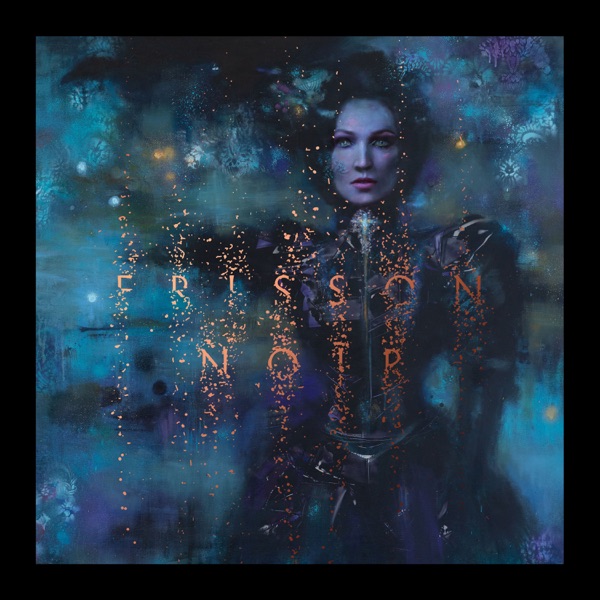
Frisson Noir
2026 · 12 tracks
- 1 Intro ↗ 0:46
- 2 Frisson Noir ↗ 6:35
- 3 The Eternal Return ↗ 4:51
- 4 Leap of Faith (feat. Marko Hietala) ↗ 6:54
- 5 At Sea ↗ 10:18
- 6 Blaze Forever ↗ 6:32
- 7 The Trace Outlives ↗ 5:00
- 8 Tango (feat. Apocalyptica) ↗ 4:47
- 9 Anemoia ↗ 5:19
- 10 I Don't Care (feat. Dani Filth) ↗ 5:26
- 11 Against the Odds (feat. Chad Smith) ↗ 6:27
- 12 Outro ↗ 1:06
-
 Henkäys ikuisuudestaTarja Turunen200614 tracks
 -
 My Winter StormTarja Turunen200718 tracks
 -
 What Lies BeneathTarja Turunen201028 tracks
 -
 Colours in the DarkTarja Turunen201312 tracks
 -
 The Shadow SelfTarja Turunen201611 tracks
 -
 The Brightest VoidTarja Turunen20169 tracks
 -
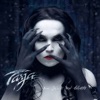 From Spirits and Ghosts (Score for a Dark Christmas)Tarja Turunen201712 tracks
 -
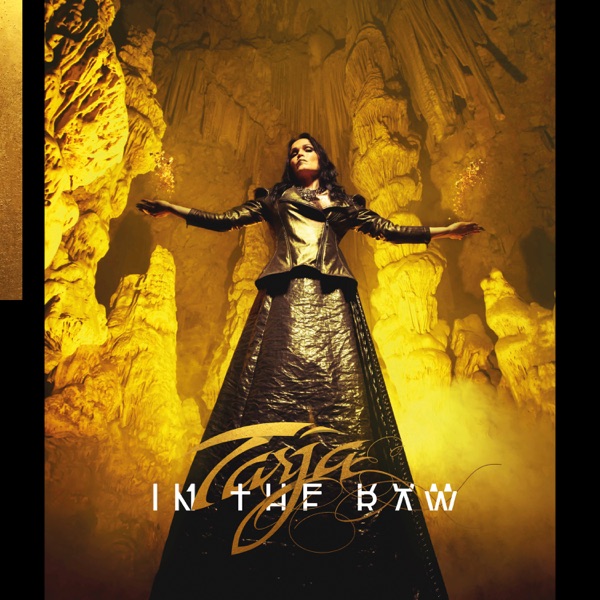
 In the RawTarja Turunen201910 tracks
 -
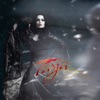 Dark ChristmasTarja Turunen202312 tracks
 -
 Frisson NoirTarja Turunen202612 tracks
Deep Dive
Overview
Tarja Soile Susanna Turunen-Cabuli, known professionally as Tarja Turunen, is a Finnish heavy metal vocalist whose voice—operatic, classically trained, and commanding—became synonymous with symphonic metal in the late 1990s and 2000s. Born in 1977, she emerged from Finland’s metal underground to achieve international recognition as the original lead vocalist of Nightwish, the band that crystallized symphonic metal as a distinct subgenre. Since launching her solo career in 2006, Turunen has pursued a wide-ranging artistic vision spanning traditional heavy metal, operatic pop, power metal, and classical music, resisting easy categorization while maintaining the theatrical ambition that defined her early work.
Formation Story
Tarja’s path into rock and metal was rooted in classical training and Finland’s particularly fertile metal scene of the 1990s. Growing up in a country where symphonic and progressive tendencies ran deep across all popular music, she developed technical vocal discipline and an affinity for dramatic, orchestral arrangements early in her career. In the mid-1990s, she became the lead vocalist for Nightwish, a band formed in Tampere that would marry classical composition, gothic aesthetics, and heavy metal instrumentation into a sound that had no direct precedent. The pairing proved transformative: Turunen’s soprano voice, operatic training, and stage presence became the focal point of Nightwish’s identity, allowing the band to transcend typical metal conventions and appeal to audiences across multiple genres.
Breakthrough Moment
Tarja’s emergence as a major voice in metal coincided with Nightwish’s rise throughout the late 1990s and 2000s. The band’s theatrical symphonic sound, anchored by her soaring, classically inflected vocals, attracted a global fanbase and established symphonic metal as a viable commercial genre. By the time of her departure from Nightwish in 2005, she had become one of the most recognizable voices in European metal, known for her ability to sustain operatic technique while fronting a heavy band. This profile positioned her as a solo artist of considerable artistic credibility when she released her debut solo album, Henkäys ikuisuudesta, in 2006.
Peak Era
Tarja’s solo career has unfolded across two decades of sustained creative activity, producing eleven studio albums between 2006 and 2026. Her most productive and commercially visible period came in the 2010s, when she released Colours in the Dark (2013), Ave Maria – En plein air (2015), and The Shadow Self (2016), albums that showcased her continued ambition to blend metal, classical, and operatic traditions. The early solo period, from 2006 to 2010, established her artistic independence with My Winter Storm (2007) and What Lies Beneath (2010), proving that her voice and sensibility could sustain projects beyond her tenure with Nightwish. Her willingness to experiment across genres—including orchestral Christmas albums and raw, introspective projects—underscored an artist committed to exploring the full range of her technical and emotional capabilities rather than repeating a single successful formula.
Musical Style
Tarja’s voice is her defining instrument: a classically trained soprano with operatic projection, vibrato control, and the capacity to sustain notes with clarity across multiple octaves. Her approach to heavy metal vocalism incorporated techniques from European operatic and classical traditions, giving symphonic metal a vocal sophistication that distinguished it from power metal and other European metal subgenres. Across her solo albums, she has moved fluidly between full-band metal arrangements, orchestral backing, and sparse acoustic settings, always maintaining rigorous vocal discipline and dramatic phrasing. Her albums have drawn from traditional heavy metal, symphonic metal (the style she helped define), glam metal, power metal, and classical music, suggesting an artist more interested in exploring diverse instrumental and compositional contexts for her voice than in maintaining a consistent sonic formula. The production of her recordings—particularly on albums like The Shadow Self and In the Raw (2019)—has ranged from lush orchestration to deliberately minimal and intimate arrangements, indicating an ongoing conversation between her training and the different sonic possibilities available to a solo metal vocalist.
Major Albums
My Winter Storm (2007)
Tarja’s second solo album, released just one year after her debut, established her solo voice as distinct from Nightwish’s sound, featuring more straightforward metal compositions alongside operatic arrangements.
What Lies Beneath (2010)
This album deepened her solo identity, blending traditional heavy metal structures with her classical vocal approach and marking a period of consolidation after her initial solo releases.
Colours in the Dark (2013)
A major solo statement that showcased Turunen’s maturity as a songwriter and interpreter, balancing symphonic metal elements with a broader emotional and sonic palette.
The Shadow Self (2016)
Released alongside The Brightest Void, this album represented a particularly prolific moment and explored darker, more introspective themes within her established metal and classical framework.
In the Raw (2019)
Turunen’s most deliberately stripped-down album to that point, emphasizing vocal performance and raw emotional content over orchestration, demonstrating her continued willingness to challenge her own aesthetic conventions.
Signature Songs
- “Poisoned” — A standout from her solo catalogue showcasing her capacity to convey dramatic intensity within a traditional metal song structure.
- “The Seer” — Demonstrates her ability to merge operatic vocal technique with symphonic metal arrangements.
- “9.7” (from In the Raw) — An example of her stripped, intimate approach to songwriting and vocal performance.
Influence on Rock
Tarja Turunen’s career has shaped the trajectory of symphonic metal and expanded the possibilities for female vocalists in heavy metal. Her classical training and operatic sensibility elevated symphonic metal from a curiosity to a globally recognized subgenre, proving that metal could incorporate the full technical and expressive range of trained classical singing. Her post-Nightwish solo work has demonstrated that a heavy metal vocalist could sustain a long-term career rooted in artistic exploration rather than nostalgia or brand repetition. Younger symphonic and operatic metal vocalists have followed in her wake, inheriting a template in which classical training and metal instrumentation reinforce rather than contradict each other. Beyond metal, her work has influenced crossover artists and contemporary classical composers working in popular idioms, establishing a precedent for the serious musical integration of metal and classical traditions.
Legacy
Tarja Turunen’s legacy is inseparable from her role in Nightwish’s creation of symphonic metal as a distinct and commercially viable genre, but her solo career has ensured that her artistic identity extends well beyond any single band or era. Across more than two decades as a solo artist, she has maintained consistent output and artistic ambition, refusing to remain defined by her most famous association. Her eleven studio albums to date represent one of the most comprehensive explorations of the intersection between classical music, metal, and operatic traditions by any single artist. The breadth of her catalog—encompassing orchestral albums, raw acoustic projects, Christmas recordings, and symphonic metal albums—positions her as a restless, intellectually engaged musician rather than a legacy act. Her ongoing presence in rock and metal music, continuing to record and perform into her late forties, underscores the enduring appeal of her voice and her commitment to artistic growth.
Fun Facts
- Tarja released From Spirits and Ghosts (Score for a Dark Christmas) in 2017 and returned to the Christmas album format with Dark Christmas in 2023, demonstrating her interest in exploring classical and seasonal repertoire beyond her primary metal work.
- Her debut solo album, Henkäys ikuisuudesta (2006), was released in Finnish, affirming her connection to her native country’s language and music scene despite her international fame.
- The 2016 period saw Tarja release two solo albums—The Shadow Self and The Brightest Void—within the same calendar year, a notably prolific moment in her post-2006 solo catalogue.
- Her record label affiliation with Universal Music Group reflects her status as a major-label artist despite the niche positioning of symphonic metal within the broader metal industry.