

Photo by Conall from Downpatrick, Northern Ireland , licensed under CC BY 2.0 · Wikimedia Commons
Rank #213
Buzzcocks
Manchester punks who bottled tuneful angst into perfect three-minute songs.
From Wikipedia
Buzzcocks are an English punk rock band formed by singer-songwriter and guitarist Pete Shelley and singer-songwriter Howard Devoto in Bolton in 1976. They achieved commercial success with singles that fuse pop with rapid-fire punk energy, inspiring the power pop and pop punk movements; these singles were later collected on Singles Going Steady, an acclaimed compilation album music journalist and critic Ned Raggett described as a "punk masterpiece".
Members
- Pete Shelley (1976–2018)
- Steve Diggle (1976–present)
- Danny Farrant (2006–present)
Discography & Previews
Browse through and click an album to open and play 30-second previews streamed from Apple Music.

Another Music in a Different Kitchen
1978 · 11 tracks
- 1 Fast Cars (2018 Remastered Version) ↗ 2:28
- 2 No Reply (2018 Remastered Version) ↗ 2:18
- 3 You Tear Me Up (2018 Remastered Version) ↗ 2:30
- 4 Get on Our Own (2018 Remastered Version) ↗ 2:31
- 5 Love Battery (2018 Remastered Version) ↗ 2:13
- 6 Sixteen (2018 Remastered Version) ↗ 3:48
- 7 I Don't Mind (2018 Remastered Version) ↗ 2:20
- 8 Fiction Romance (2018 Remastered Version) ↗ 4:33
- 9 Autonomy (2018 Remastered Version) ↗ 3:49
- 10 I Need (2018 Remastered Version) ↗ 2:48
- 11 Moving Away from the Pulsebeat (2018 Remastered Version) ↗ 7:19
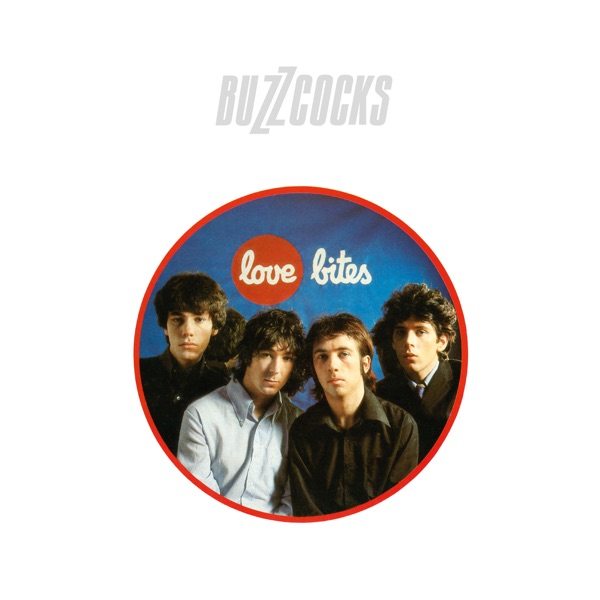
Love Bites
1978 · 11 tracks
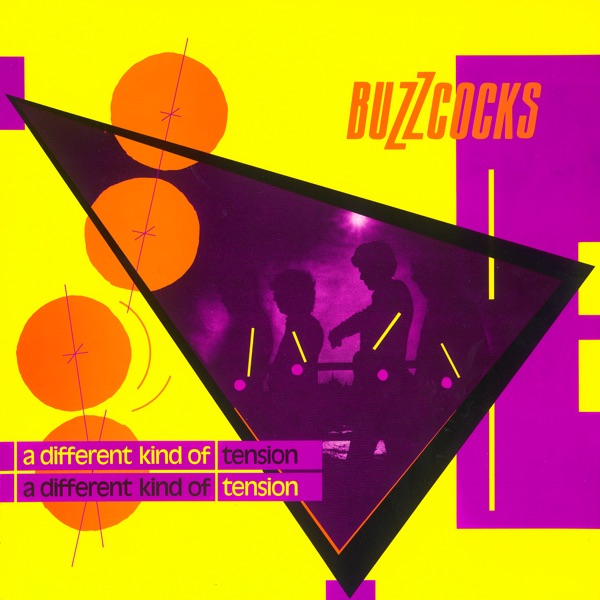
A Different Kind of Tension
1979 · 12 tracks
- 1 Paradise (2008 Remastered Version) ↗ 2:24
- 2 Sitting 'round at Home (2008 Remastered Version) ↗ 2:40
- 3 You Say You Don't Love Me (2008 Remastered Version) ↗ 2:54
- 4 You Know You Can't Help It (2008 Remastered Version) ↗ 2:22
- 5 Mad, Mad Judy (2008 Remastered Version) ↗ 3:35
- 6 Raison D'etre (2008 Remastered Version) ↗ 3:34
- 7 I Don't Know What to Do with My Life (2008 Remastered Version) ↗ 2:43
- 8 Money (2008 Remastered Version) ↗ 2:44
- 9 Hollow Inside (2008 Remastered Version) ↗ 4:47
- 10 A Different Kind of Tension (2008 Remastered Version) ↗ 4:38
- 11 I Believe (2008 Remastered Version) ↗ 7:08
- 12 Radio Nine (2008 Remastered Version) ↗ 0:42
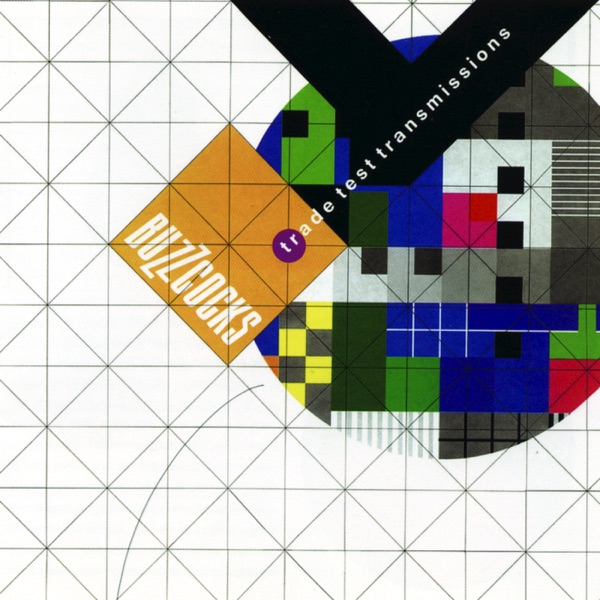
Trade Test Transmissions
1993 · 22 tracks
- 1 Do It ↗ 3:23
- 2 Innocent ↗ 3:34
- 3 T T T ↗ 3:18
- 4 Isolation ↗ 3:58
- 5 Smile ↗ 2:47
- 6 Last to Know ↗ 2:51
- 7 When Love Turns Around ↗ 2:25
- 8 Never Gonna Give It Up ↗ 2:47
- 9 Energy ↗ 3:35
- 10 Palm of Your Hand ↗ 3:22
- 11 Alive Tonight ↗ 3:48
- 12 Who'll Help Me to Forget? ↗ 2:57
- 13 Unthinkable ↗ 2:52
- 14 Crystal Night ↗ 3:19
- 15 369 ↗ 3:02
- 16 Inside ↗ 2:32
- 17 Do It (Single Version) ↗ 2:57
- 18 Trash Away (Live) ↗ 4:44
- 19 All Over You (Live) ↗ 3:25
- 20 Libertine Angel ↗ 2:57
- 21 Roll It Over ↗ 6:08
- 22 Excerpt from 'Prison Riot Hostage' ↗ 1:59
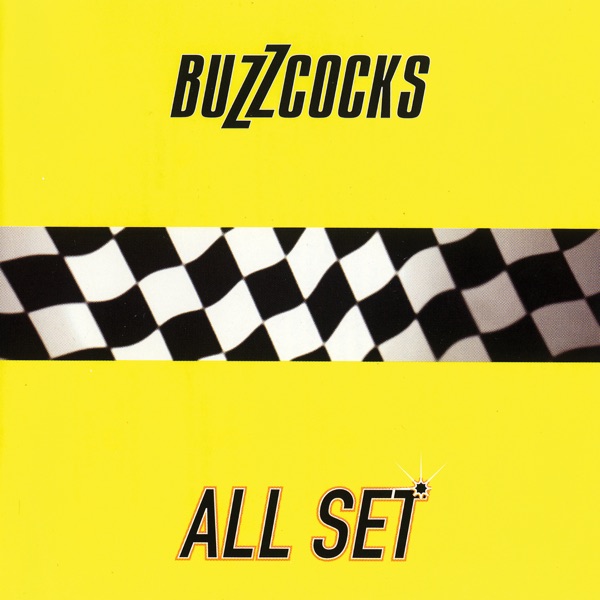
All Set
1996 · 13 tracks
- 1 Totally from the Heart ↗ 2:47
- 2 Without You ↗ 2:59
- 3 Give It to Me ↗ 3:23
- 4 Your Love ↗ 2:24
- 5 Point of No Return ↗ 2:20
- 6 Hold Me Close ↗ 4:03
- 7 Kiss 'n' Tell ↗ 2:35
- 8 What Am I Supposed to Do ↗ 3:21
- 9 Some Kinda Wonderful ↗ 2:19
- 10 What You Mean to Me ↗ 3:20
- 11 Playing for Time ↗ 3:43
- 12 Pariah ↗ 3:16
- 13 Back with You ↗ 4:12
Modern
1999 · 16 tracks
- 1 Soul on a Rock ↗ 4:00
- 2 Rendezvous ↗ 3:35
- 3 Speed of Life ↗ 4:33
- 4 Thunder of Hearts ↗ 2:57
- 5 Why Compromise? ↗ 3:32
- 6 Don’t Let the Car Crash ↗ 4:30
- 7 Runaround ↗ 3:27
- 8 Doesn't Mean Anything ↗ 2:48
- 9 Phone ↗ 3:03
- 10 Under the Sun ↗ 3:32
- 11 Turn of the Screw ↗ 2:38
- 12 Sneaky ↗ 2:20
- 13 Stranger in Your Town ↗ 2:24
- 14 Choices ↗ 3:32
- 15 Here Come the Nice ↗ 2:57
- 16 Autumn Stone (as Stevie's Buzz) ↗ 4:13

Flat‐Pack Philosophy
2006 · 22 tracks
- 1 Flat-Pack Philosophy ↗ 3:07
- 2 Wish I Never Loved You ↗ 2:38
- 3 Sell You Everything ↗ 2:25
- 4 Reconciliation ↗ 2:58
- 5 I Don't Exist ↗ 2:20
- 6 Soul Survivor ↗ 1:41
- 7 God, What Have I Done ↗ 2:16
- 8 Credit ↗ 3:23
- 9 Big Brother Wheels ↗ 2:40
- 10 Dreamin' ↗ 2:40
- 11 Sound of a Gun ↗ 2:27
- 12 Look at You Now ↗ 2:16
- 13 I've Had Enough ↗ 2:29
- 14 Between Heaven and Hell ↗ 3:17
- 15 See through You ↗ 2:37
- 16 Holding Me Down ↗ 3:37
- 17 Every Day and Every Night (Demo) ↗ 3:33
- 18 Don't Matter What You Say ↗ 2:57
- 19 Orion ↗ 3:14
- 20 Darker by the Hour ↗ 1:40
- 21 Love Battery (Live) ↗ 2:10
- 22 Sixteen (Live) ↗ 3:23

The 1991 Demo Album
2020 · 21 tracks
- 1 Dreamin ↗ 4:06
- 2 Alive Tonight ↗ 3:22
- 3 Never Gonna Give It Up ↗ 3:06
- 4 Wallpaper World ↗ 3:51
- 5 Successful Street ↗ 4:23
- 6 Who'll Help Me To Forget ↗ 3:18
- 7 Serious Crime ↗ 3:31
- 8 Why Compromise ↗ 3:58
- 9 Last To Know ↗ 2:44
- 10 Run Away From Home ↗ 2:42
- 11 Searching For Your Love ↗ 3:00
- 12 Tranquillizer ↗ 3:25
- 13 When Love Turns Around You ↗ 2:30
- 14 All Over You (Demo) ↗ 3:17
- 15 Isolation (Demo) ↗ 3:59
- 16 Trash Away (Demo) ↗ 3:06
- 17 Inside (Demo) ↗ 2:52
- 18 Alive Tonight (Alternate Version) ↗ 3:52
- 19 Serious Crime (Alternate Version) ↗ 3:31
- 20 Last To Know (Alternate Version) ↗ 2:57
- 21 Successful Street (Alternate Version) ↗ 5:31
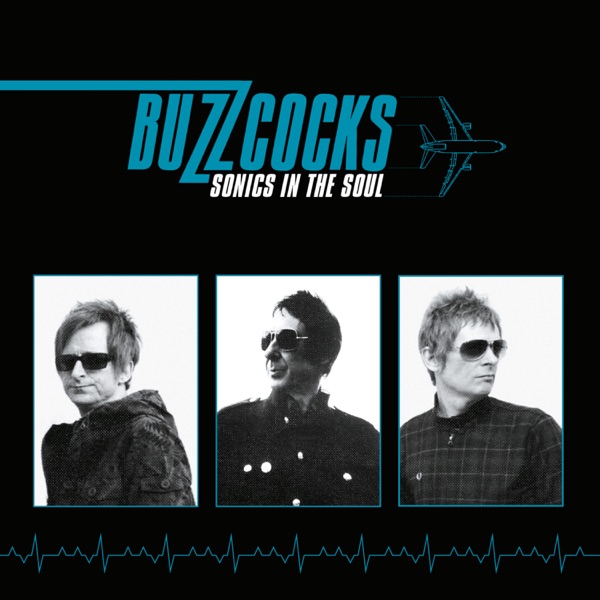
Sonics in the Soul
2022 · 11 tracks
- 1 Senses Out Of Control ↗ 2:35
- 2 Manchester Rain ↗ 2:39
- 3 You've Changed Everything Now ↗ 2:58
- 4 Bad Dreams ↗ 3:21
- 5 Nothingless World ↗ 3:02
- 6 Don't Mess With My Brain ↗ 3:09
- 7 Just Got To Let It Go ↗ 2:27
- 8 Everything Is Wrong ↗ 2:57
- 9 Experimental Farm ↗ 3:51
- 10 Can Your Hear Tomorrow ↗ 4:13
- 11 Venus Eyes ↗ 4:23

Attitude Adjustment
2026 · 14 tracks
- 1 Queen Of The Scene ↗ 2:59
- 2 Games ↗ 3:12
- 3 Seeing Daylight ↗ 3:40
- 4 Poetic Machine Gun ↗ 2:34
- 5 Tear Of A Golden Girl ↗ 2:32
- 6 Heavy Streets ↗ 4:02
- 7 One Of The Universe, Pt. 1 ↗ 0:56
- 8 All Gone To War ↗ 2:42
- 9 One Of The Universe, Pt. 2 ↗ 0:56
- 10 Jesus At The Wheel ↗ 3:33
- 11 Just A Dream I Followed ↗ 3:43
- 12 Feeling Uptight ↗ 4:35
- 13 Break That Ball And Chain ↗ 3:41
- 14 The Greatest Of Them All ↗ 4:06
-
 Another Music in a Different KitchenBuzzcocks197811 tracks
 -
 Love BitesBuzzcocks197811 tracks
 -
 A Different Kind of TensionBuzzcocks197912 tracks
 -
 Trade Test TransmissionsBuzzcocks199322 tracks
 -
 All SetBuzzcocks199613 tracks
 -
 ModernBuzzcocks199916 tracks
 -
 BuzzcocksBuzzcocks20031 track
 -
 Flat‐Pack PhilosophyBuzzcocks200622 tracks
 -
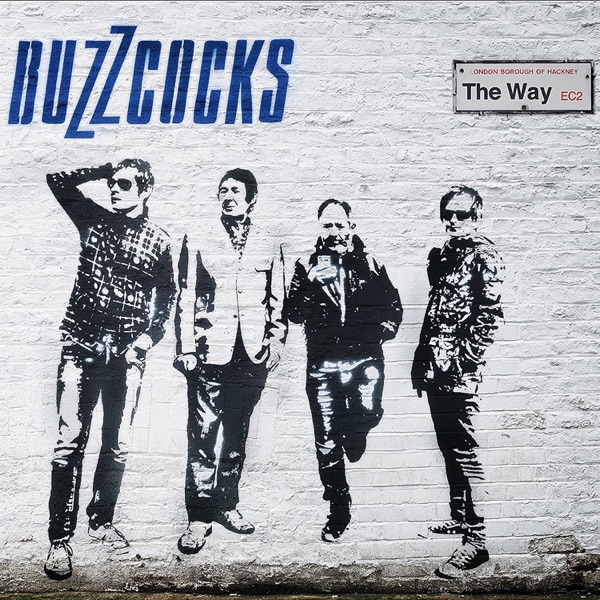
 The WayBuzzcocks201410 tracks
 -
 The 1991 Demo AlbumBuzzcocks202021 tracks
 -
 Sonics in the SoulBuzzcocks202211 tracks
 -
 Attitude AdjustmentBuzzcocks202614 tracks
Deep Dive
Overview
Buzzcocks are an English punk rock band formed in Bolton in 1976 by singer-songwriter and guitarist Pete Shelley and singer-songwriter Howard Devoto. Emerging from the post-punk ferment of mid-1970s England, Buzzcocks distinguished themselves by refusing the genre’s customary austerity. Where many punk acts of their era channeled raw alienation and minimalist aggression, Buzzcocks proved that punk could contain melody—infectious, three-minute melodies wound tightly around lyrics of romantic and existential anxiety. Their singles fused pop hooks with the velocity and attitude of punk, a synthesis that would eventually spawn the power pop and pop punk movements. The band’s influence rippled outward from their compact, perfectly formed songs, establishing a template that countless acts would follow.
Formation Story
Pete Shelley and Howard Devoto founded Buzzcocks in Bolton, Lancashire, in 1976, just as the first wave of British punk was cresting. The band crystallized around Shelley’s gift for angular guitarwork and Devoto’s deadpan vocal delivery, both of whom wrote the band’s earliest material. Steve Diggle, who would become the band’s second guitarist and co-vocalist, joined in the same year, solidifying the classic lineup. Bolton, while less celebrated than Manchester’s Factory Records scene or London’s King’s Road epicenter, proved fertile ground for the young band. They absorbed the punk ethos—DIY philosophy, three-chord urgency, disdain for progressive excess—but refused to abandon pop sensibility. That willingness to marry melody to aggression set them apart from their contemporaries almost immediately.
Breakthrough Moment
Buzzcocks’ commercial breakthrough arrived with their early singles, which radio and music press alike seized upon as proof that punk need not be hostile to the ear. The release of their first two albums in 1978—Another Music in a Different Kitchen and Love Bites—demonstrated that the band could sustain an album-length argument for their hybrid approach. These records moved copies and generated significant critical attention, establishing Buzzcocks as one of the era’s essential new acts. The band’s singles, with their sharp lyrics and immediate melodic payoff, circulated rapidly through alternative radio and the British music press. By 1979, with the release of A Different Kind of Tension, Buzzcocks had secured a place in punk’s mainstream; they were no longer a novelty or a local phenomenon, but a proven commercial and artistic force.
Peak Era
The years 1978 to 1979 represent Buzzcocks’ initial peak, a period when the band released three studio albums in rapid succession and established themselves as the missing link between punk’s energy and pop’s emotional directness. Another Music in a Different Kitchen, Love Bites, and A Different Kind of Tension formed a trio of records that showed the band refining their craft while maintaining their core identity. The rapid turnover of material—three albums in less than two years—reflected both the band’s prolific songwriting and the punk ethos of constant forward momentum. During this stretch, Buzzcocks appeared on television, toured extensively, and became fixtures of the British music establishment. Their lyrics, penned primarily by Shelley and Devoto, tackled mundane and intimate subjects with wit and precision, refusing the grandiose posturing of rock tradition. This was punk rock for the cerebral and the lovesick alike.
Musical Style
Buzzcocks’ sound rested on the tension between melodic restraint and rhythmic aggression. Shelley’s guitar work was rhythmic and percussive, favoring tight, interlocking riffs over flashy soloing. Diggle complemented him with his own sharp playing and, crucially, vocal harmony—his higher-register counterpoint to Shelley’s spoken-sung delivery created a dialogue within songs, a sense of conflicting emotions held in balance. The band’s rhythm section drove forward with mechanical precision, and production choices were typically clean and direct, allowing the tightness of arrangement and the sharpness of melodic writing to shine. Vocally, both Shelley and Devoto adopted an ironic detachment, singing about desire and frustration without melodrama. The lyrics paired pop-song subject matter—attraction, rejection, alienation in the modern world—with punk’s characteristic terseness and occasional absurdity. Theirs was a sound that worked within punk’s confines while subtly expanding them from within.
Major Albums
Another Music in a Different Kitchen (1978)
The debut established the template: tight, melodically sophisticated punk rock that could anchor both radio-friendly singles and more experimental B-sides. Its release signaled that Buzzcocks had something substantive to say beyond punk’s initial shock value.
Love Bites (1978)
A follow-up released the same year that deepened the band’s exploration of pop-punk synthesis, Love Bites featured some of Shelley’s sharpest hooks and most acidly witty lyrics, proving the prolific rush was no accident.
A Different Kind of Tension (1979)
The third album in two years consolidated the band’s approach while hinting at the musical cul-de-sacs they were approaching; it stands as a logical capstone to their initial era of creativity.
Modern (1999)
After a lengthy gap, Modern demonstrated that Shelley and Diggle retained their songwriting instincts and melodic sensibility, updating their approach for a late-1990s context without wholesale stylistic reinvention.
Buzzcocks (2003)
A self-titled album released after the band’s reunion, it signaled continued creative engagement and a willingness to revisit their core sound with contemporary production methods.
Signature Songs
- “Why Can’t I Touch It?” — A hymn to desire and frustration rendered in exactly three minutes, with Shelley’s deadpan vocal and a guitar riff that lodges immediately in memory.
- “Ever Fallen in Love (With Someone You Shouldn’t’ve)” — Pop-punk in its purest form, a study of romantic complication disguised as a bouncy singalong.
- “Autonomy” — A tightly coiled examination of independence and isolation, with Diggle’s harmony vocals adding emotional depth to Shelley’s more detached delivery.
- “What Do I Get?” — A showcase for the band’s ability to house genuine despair within an irresistibly catchy frame.
Influence on Rock
Buzzcocks’ fusion of punk energy and pop melody proved to be one of the late 1970s’ most generative ideas. The power pop movement—which emerged in the late 1970s as punk’s melodic counterweight—traced a direct line to their work. Bands in the 1980s and 1990s that sought to speed up pop without surrendering hooks found in Buzzcocks a template and a proof of concept. The eventual emergence of pop punk as a distinct genre in the 1990s and beyond owes substantially to the foundations Buzzcocks laid. Their insistence that punk could accommodate irony, introspection, and genuine melody without sacrificing urgency influenced acts across genres. From indie rock to alternative pop, musicians recognized in Buzzcocks a model for how to reconcile opposing impulses—the cerebral and the visceral, the catchy and the challenging. The band demonstrated that punk rock need not be artistically limiting; it could be a starting point rather than an endpoint.
Legacy
Buzzcocks disbanded for a period but reunited and continued recording into the 21st century. The band released new albums through the 2000s, 2010s, and 2020s—Trade Test Transmissions (1993), All Set (1996), Modern (1999), Buzzcocks (2003), Flat-Pack Philosophy (2006), The Way (2014), and Sonics in the Soul (2022)—demonstrating sustained creative engagement across five decades of rock history. Music journalist and critic Ned Raggett has described Singles Going Steady, a compilation drawing from their early singles, as a “punk masterpiece,” a characterization that has become standard in rock critical discourse. Pete Shelley’s death in 2018 marked the end of an era, though Steve Diggle has continued the project with new members, most notably drummer Danny Farrant, who joined in 2006. Streaming platforms and digital reissues have ensured that Buzzcocks’ catalogue remains continuously available to successive generations of listeners. Their influence persists across contemporary indie rock, alternative pop, and punk revival movements, a testament to the durability of their core ideas.
Fun Facts
- The band recorded three studio albums within eighteen months (1978–1979), a pace that reflected both punk’s ethos of constant productivity and the band’s apparently inexhaustible melodic inventiveness.
- Howard Devoto, the band’s co-founder and original singer-songwriter, departed the band after their early period, leaving Pete Shelley and Steve Diggle as the core creative engine moving forward.
- Buzzcocks remained active and recording across multiple decades, with new studio albums released as recently as 2022, nearly fifty years after the band’s formation in 1976.