
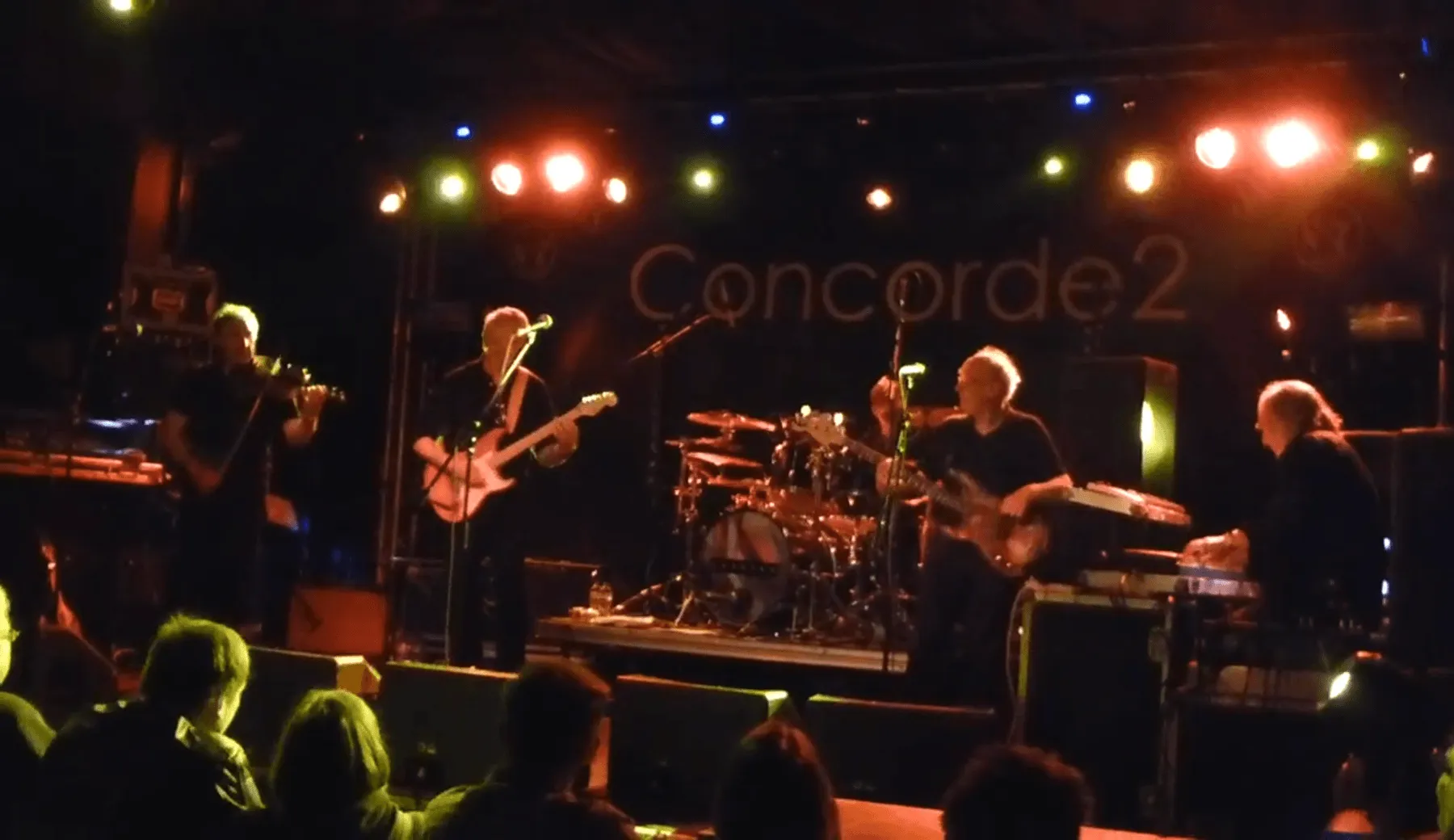
Photo by Alex Chureev , licensed under CC BY 3.0 · Wikimedia Commons
Rank #283
Caravan
Canterbury-scene mainstays of warm prog whimsy.
From Wikipedia
Caravan are an English rock band from the Canterbury area, founded by former Wilde Flowers members David Sinclair, Richard Sinclair, Pye Hastings, and Richard Coughlan in 1968. The band have never achieved the great commercial success that was widely predicted for them at the beginning of their career, but are nevertheless considered a key part of the Canterbury scene of progressive rock acts, blending psychedelic rock, jazz, and classical influences to create a distinctive sound.
Members
- Dave Sinclair
- Pye Hastings
Discography & Previews
Browse through and click an album to open and play 30-second previews streamed from Apple Music.


Blind Dog at St. Dunstans
1976 · 9 tracks
- 1 Here I Am (Remastered) ↗ 6:19
- 2 Chiefs and Indians (Remastered) ↗ 5:16
- 3 A Very Smelly, Grubby Little Oik (Remastered) ↗ 4:13
- 4 Bobbing Wide (Remastered) ↗ 2:31
- 5 Come on Back (Remastered) ↗ 3:56
- 6 Oik (Reprise) [Remastered] ↗ 2:27
- 7 Jack and Jill (Remastered) ↗ 6:29
- 8 Can You Hear Me? (Remastered) ↗ 6:19
- 9 All the Way (Remastered) ↗ 8:52
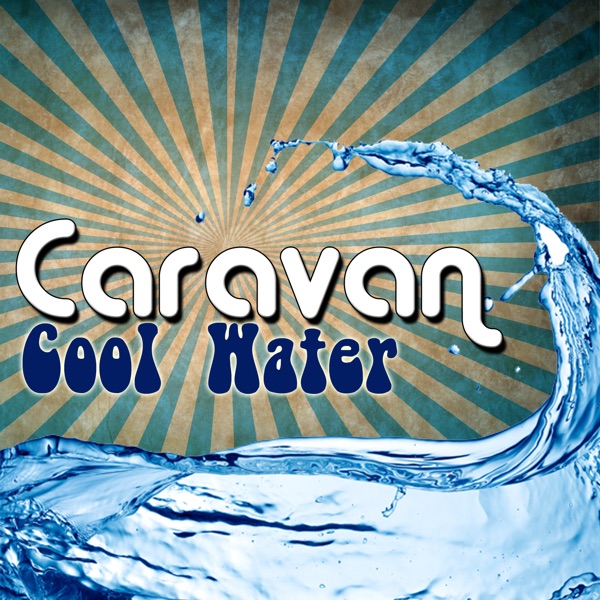
Cool Water
1995 · 11 tracks
- 1 Cool Water ↗ 4:07
- 2 Just The Way You Are ↗ 3:41
- 3 Tuesday Is Rock And Roll Nite ↗ 4:20
- 4 The Crack Of The Willow ↗ 5:36
- 5 Ansaphone ↗ 4:57
- 6 Cold Fright ↗ 5:21
- 7 Side By Side ↗ 4:36
- 8 You Won't Get Me Up In One Of Those ↗ 3:55
- 9 To The Land Of My Fathers ↗ 4:55
- 10 Poor Molly ↗ 5:54
- 11 Send Reinforcements ↗ 4:46

The Battle of Hastings
1995 · 11 tracks
- 1 It's a Sad, Sad Affair ↗ 3:24
- 2 Somewhere in Your Heart ↗ 5:43
- 3 Cold As Ice ↗ 4:10
- 4 Liar ↗ 6:07
- 5 Don't Want Love ↗ 6:49
- 6 Travelling Ways ↗ 3:51
- 7 This Time ↗ 5:19
- 8 If It Wasn't for Your Ego ↗ 3:36
- 9 It's Not Real ↗ 5:30
- 10 Wendy Wants Another 6'' Mole ↗ 2:26
- 11 I Know Why You're Laughing ↗ 5:32

All Over You
1996 · 13 tracks
- 1 If I Could Do It All Over Again, I'd Do It All Over You ↗ 3:31
- 2 Place of My Own ↗ 4:06
- 3 The Love In Your Eye / to Catch Me a Brother ↗ 4:16
- 4 In the Land of Grey and Pink ↗ 3:43
- 5 Golf Girl ↗ 4:34
- 6 Disassociation (Nine Feet Underground) ↗ 3:50
- 7 Hello, Hello ↗ 3:13
- 8 Asforteri ↗ 2:45
- 9 For Richard / Can't Be Long Now / Francoise / For Richard / Warlock ↗ 8:11
- 10 Memory Lain, Hugh ↗ 5:02
- 11 Headloss ↗ 4:51
- 12 Be All Right, Chance of a Lifetime ↗ 4:40
- 13 If I Could Do It All Over Again, I'd Do It All Over You (Single Mix) ↗ 3:24


It’s None of Your Business
2021 · 10 tracks
-
 In the Land of Grey and PinkCaravan19715 tracks
 -
 Cunning StuntsCaravan19757 tracks
 -
 Blind Dog at St. DunstansCaravan19769 tracks
 -
 Cool WaterCaravan199511 tracks
 -
 The Battle of HastingsCaravan199511 tracks
 -
 All Over YouCaravan199613 tracks
 -
 All Over You… TooCaravan20009 tracks
 -
 It’s None of Your BusinessCaravan202110 tracks
Deep Dive
Overview
Caravan are an English progressive rock band formed in Canterbury in 1968, emerging from the fertile musical landscape that would become known as the Canterbury scene. Founded by former Wilde Flowers members Dave Sinclair, Richard Sinclair, Pye Hastings, and Richard Coughlan, the band crafted a distinctive approach to progressive rock by weaving together psychedelic rock, jazz, and classical influences into warm, whimsical arrangements. Though commercial success eluded them despite early predictions of stardom, Caravan became foundational figures in one of rock’s most idiosyncratic regional movements, sustaining their vision across multiple decades and maintaining an active presence into the 2020s.
Formation Story
Caravan crystallized in 1968 when four musicians with shared roots in the Wilde Flowers—a loose Canterbury collective—decided to formalize their collaboration. The quartet of Dave Sinclair, Richard Sinclair, Pye Hastings, and Richard Coughlan represented a generation of musicians steeped in the post-psychedelic experimentation and jazz curiosity that defined late-1960s progressive rock. The Canterbury area, a modest city in Southeast England, became an unexpected epicenter for idiosyncratic progressive acts, and Caravan’s formation signaled the beginning of their reign as one of the scene’s most enduring ensembles. The band’s roots in the Wilde Flowers proved crucial: that earlier outfit had already established the musical cross-pollination between rock, jazz, and classical traditions that would define Caravan’s entire catalog.
Breakthrough Moment
Caravan’s initial releases in 1969 and 1970 introduced their sound to a growing audience of progressive rock enthusiasts, but their third album, In the Land of Grey and Pink (1971), crystallized their artistic vision and established them as serious contenders within the Canterbury scene. The album showcased the band’s ability to balance intricate instrumental passages with memorable melodic themes, a formula that resonated with the underground rock audience of the early 1970s. By the time they released Waterloo Lily (1972) and For Girls Who Grow Plump in the Night (1973), Caravan had earned a devoted following and recognition as masters of a particular strain of British progressive rock that valued warmth and whimsy over the bombast and technical austerity favored by some of their contemporaries.
Peak Era
Caravan’s most creatively fertile and commercially visible period spanned from 1970 to the mid-1970s, encompassing albums such as If I Could Do It All Over Again, I’d Do It All Over You (1970), In the Land of Grey and Pink (1971), Waterloo Lily (1972), For Girls Who Grow Plump in the Night (1973), Cunning Stunts (1975), and Blind Dog at St. Dunstans (1976). During these years, the band achieved their most cohesive sound, with each member contributing fully realized instrumental and compositional ideas to a collective aesthetic that remained distinctively Caravan. The band’s albums from this period became touchstones for progressive rock listeners seeking an alternative to the stadium-scaled ambitions of bands like Yes or Emerson, Lake & Palmer, offering instead a more intimate, jazz-inflected approach to extended compositional forms.
Musical Style
Caravan’s sound emerged from the intersection of three distinct musical traditions: the psychedelic rock experimentalism of the late 1960s, the harmonic sophistication and improvisational spirit of jazz, and the structural ambitions of classical composition. Dave Sinclair’s organ and keyboard work provided the band’s harmonic foundation, often moving through unexpected chord progressions and registrations that recalled both rock and European concert music. Pye Hastings’ guitar contributions ranged from delicate folk-influenced passages to more assertive rock textures, while Richard Sinclair’s bass playing—melodic and often inventive—drove the rhythm section alongside Richard Coughlan’s drumming. The band favored extended compositional forms that allowed for instrumental development and ensemble interplay without sacrificing accessibility or thematic coherence. Vocally, the band maintained a more understated presence than many progressive rock acts, allowing instrumental textures to carry much of the emotional weight. This approach positioned Caravan within a broader Canterbury genealogy that prized musicianship, eclecticism, and a certain dry humor in titling and conceptual approach.
Major Albums
In the Land of Grey and Pink (1971)
Caravan’s third album stands as their most fully realized early statement, demonstrating complete command of their blended musical vocabulary and establishing the band’s reputation as serious progressive composers.
Waterloo Lily (1972)
This album deepened the band’s exploration of longer compositional forms and refined their balance between melody and instrumental sophistication, solidifying their standing in the early-1970s progressive rock pantheon.
For Girls Who Grow Plump in the Night (1973)
The album’s boldly whimsical title announced Caravan’s refusal to take themselves with the gravity of some contemporaries, while the music inside demonstrated undiminished compositional ambition and ensemble cohesion.
Cunning Stunts (1975)
Released during the mid-1970s shift in rock music, this album saw Caravan navigating changing musical tastes while maintaining their distinctive identity and continuing to produce substantial instrumental compositions.
Blind Dog at St. Dunstans (1976)
The band’s final studio album of the 1970s captured them at a point of mature artistic command, with each member’s voice clearly defined within the group’s collaborative framework.
Signature Songs
- “In the Land of Grey and Pink” — The album’s title track showcased the band’s ability to sustain complex instrumental passages while maintaining melodic accessibility and emotional warmth.
- “Golf Girl” — A frequently performed composition that exemplified Caravan’s knack for blending whimsy with genuine musical sophistication across extended forms.
- “The Dabsong Connotations” — Demonstrated the band’s jazz-influenced harmonic palette and their comfort with instrumental-driven arrangements that eschewed conventional verse-chorus structures.
- “Lady Let It Lie” — Typified Caravan’s approach to melody and arrangement, balancing pop sensibility with progressive complexity.
Influence on Rock
Caravan’s influence within progressive rock circles remained substantial despite their lack of mainstream commercial success. Their synthesis of psychedelic rock, jazz harmony, and classical forms provided a blueprint for subsequent generations of English progressive musicians who sought alternatives to the grandiosity of stadium rock. The Canterbury scene’s broader impact on progressive rock—an influence that extended through peers like Soft Machine and Gong—owed much to Caravan’s willingness to prioritize musicality and ensemble interplay over technical showmanship. Bands working in progressive and art rock contexts through subsequent decades inherited Caravan’s lesson that complexity and accessibility need not be mutually exclusive, and that whimsy and humor could coexist with serious musical ambition.
Legacy
Caravan’s legacy rests primarily on their status as architects of the Canterbury sound and as a band that sustained its artistic vision across five decades. Though they never achieved the commercial profile that early career momentum suggested possible, their consistent output and live presence ensured their continued relevance within progressive rock communities. The band’s decision to continue recording and performing into the 2020s—with albums including Paradise Filter (2013), It’s None of Your Business (2021), and Amougies (2023)—demonstrated a commitment to their original principles without pretense or retrospective mythologizing. Their catalog remains in circulation through major streaming platforms, introducing new listeners to the Canterbury sound and its particular blend of musicianship, restraint, and imaginative arrangement. For serious students of 1970s progressive rock, Caravan represents an essential point of reference: a band that proved it was possible to create substantial, lasting art within the progressive idiom without pursuing the commercial or critical validation that often drives longer-term career decisions.
Fun Facts
- The band’s 1995 double release of Cool Water and The Battle of Hastings marked their return to the studio after a fifteen-year gap, demonstrating enduring commitment to their original lineup and musical principles.
- Caravan’s album titles frequently displayed the same dry, playful humor evident in their musical approach: For Girls Who Grow Plump in the Night, Cunning Stunts, Blind Dog at St. Dunstans, and The Unauthorised Breakfast Item announced the band’s refusal to adopt the grandiose tone of many progressive contemporaries.
- The band maintained active touring and recording presence through the 1990s and 2000s, with releases including All Over You (1996) and All Over You… Too (2000) demonstrating their continued creative engagement.
- Caravan’s longevity—spanning from 1968 into the 2020s—places them among the most durable acts in the Canterbury scene and progressive rock broadly, having survived multiple era shifts without fundamental aesthetic compromise.