
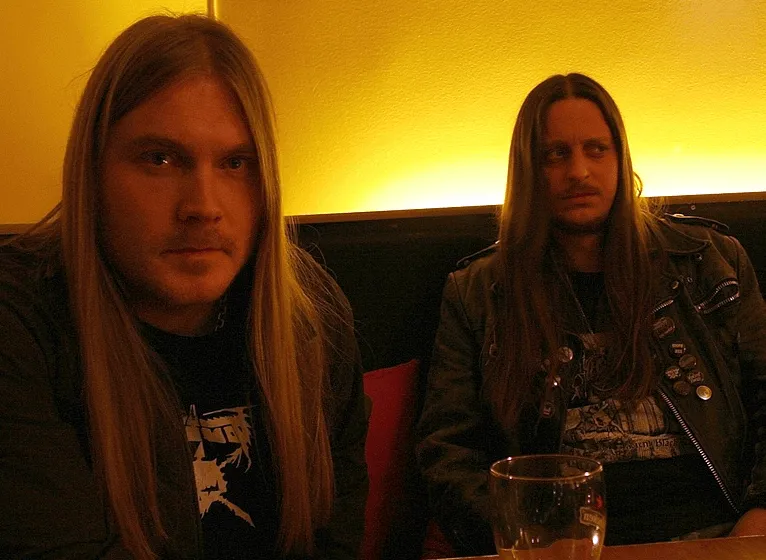
Photo by Dan A. Nachtnebel ( flickr profile) , licensed under CC BY 2.0 · Wikimedia Commons
Rank #244
Darkthrone
Norwegian duo whose 'A Blaze in the Northern Sky' is a black-metal touchstone.
From Wikipedia
Darkthrone is a Norwegian black metal band from Kolbotn, Akershus. Formed in 1986 as a death metal band named Black Death, in 1991, Darkthrone transitioned to a black metal style influenced by Bathory and Celtic Frost and emerged as one of the leading bands in the Norwegian black metal scene.
Members
- Fenriz (1986–present)
- Ivar Enger (1987–1993)
- Nocturno Culto (1988–present)
Discography & Previews
Browse through and click an album to open and play 30-second previews streamed from Apple Music.

Soulside Journey
1991 · 11 tracks
- 1 Cromlech ↗ 4:11
- 2 Sunrise Over Locus Mortis ↗ 3:31
- 3 Soulside Journey ↗ 4:36
- 4 Accumulation of Generalization ↗ 3:17
- 5 Neptune Towers ↗ 3:14
- 6 Sempiternal Sepulchrality ↗ 3:32
- 7 Grave with a View ↗ 3:27
- 8 Iconoclasm Sweeps Cappadocia ↗ 4:00
- 9 Nor the Silent Whispers ↗ 3:18
- 10 The Watchtower ↗ 4:58
- 11 Eon ↗ 3:41

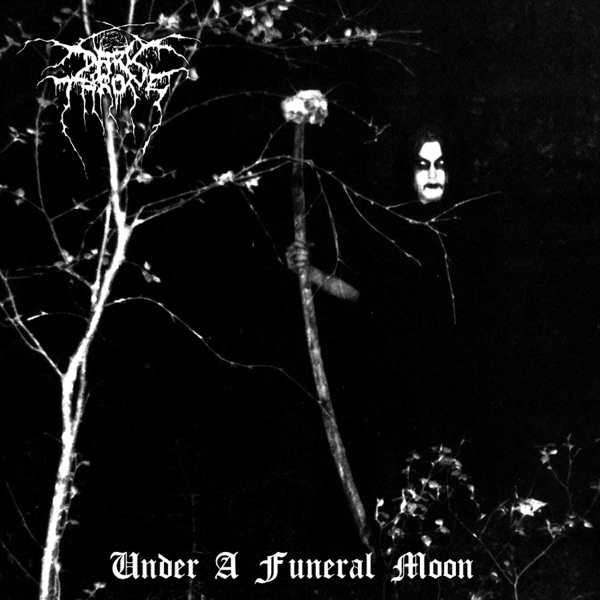
Under a Funeral Moon
1993 · 8 tracks

Transilvanian Hunger
1994 · 8 tracks


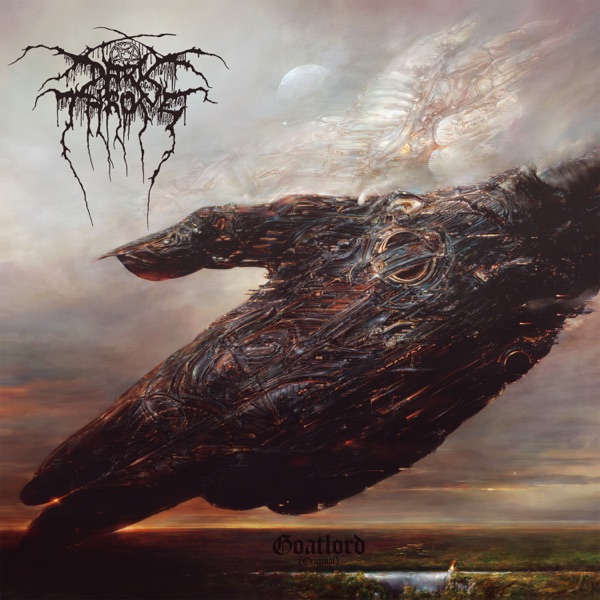
Goatlord
1996 · 11 tracks
- 1 Phantasm (Instrumental Demo) ↗ 4:10
- 2 Hearses (Instrumental Demo) ↗ 2:46
- 3 Possessed (Instrumental Demo) ↗ 4:38
- 4 Below (Instrumental Demo) ↗ 4:03
- 5 Blasphemer (Instrumental Demo) ↗ 4:56
- 6 Rise (Instrumental Demo) ↗ 3:56
- 7 Eclipse (Instrumental Demo) ↗ 3:52
- 8 Wings (Instrumental Demo) ↗ 3:50
- 9 Wolf (Instrumental Demo) ↗ 3:47
- 10 A Blaze In the Northern Sky (Instrumental Demo) ↗ 4:49
- 11 Trident (Instrumental Demo) ↗ 4:06


Sardonic Wrath
2004 · 18 tracks
- 1 Order of the Ominous ↗ 2:33
- 1 Order of the Ominous (With Commentary) ↗ 2:33
- 2 Information Wants to Be Syndicated ↗ 3:44
- 2 Information Wants to Be Syndicated (With Commentary) ↗ 3:44
- 3 Sjakk matt Jesu Krist ↗ 4:04
- 3 Sjakk matt Jesu Krist (With Commentary) ↗ 4:04
- 4 Straightening Sharks In Heaven ↗ 3:27
- 4 Straightening Sharks In Heaven (With Commentary) ↗ 3:26
- 5 Alle gegen alle ↗ 3:21
- 5 Alle gegen alle (With Commentary) ↗ 3:21
- 6 Man tenker sitt ↗ 3:05
- 6 Man tenker sitt (With Commentary) ↗ 3:05
- 7 Sacrificing to the God of Doubt ↗ 4:34
- 7 Sacrificing to the God of Doubt (With Commentary) ↗ 4:34
- 8 Hate Is the Law ↗ 3:22
- 8 Hate Is the Law (With Commentary) ↗ 3:22
- 9 Rawness Obsolete ↗ 6:12
- 9 Rawness Obsolete (With Commentary) ↗ 6:12

The Cult Is Alive
2006 · 10 tracks
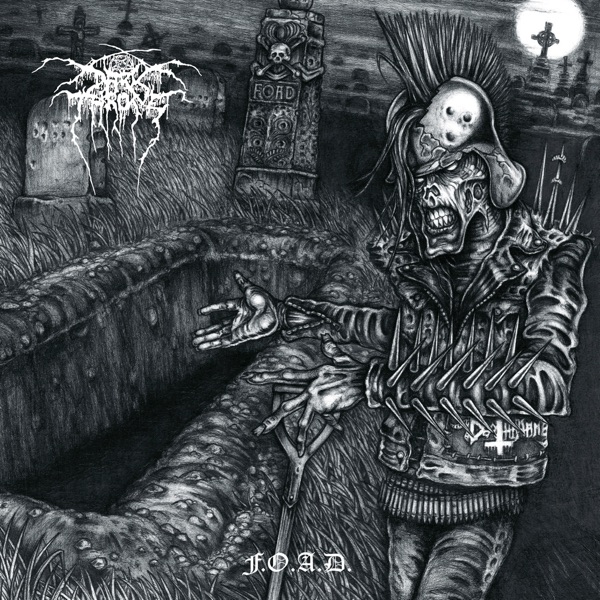
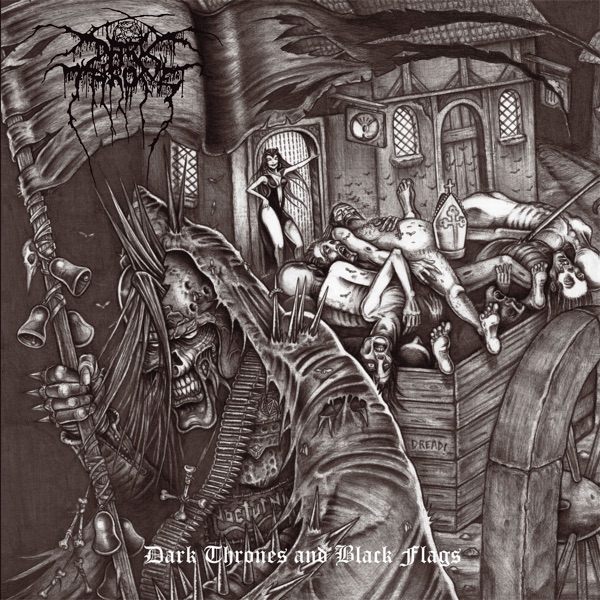
Dark Thrones and Black Flags
2008 · 10 tracks
- 1 The Winds They Called the Dungeon Shaker ↗ 3:53
- 2 Death of All Oaths (Oath Minus) ↗ 4:16
- 3 Hiking Metal Punks ↗ 3:22
- 4 Blacksmith of the North (Keep That Ancient Fire) ↗ 3:14
- 5 Norway In September ↗ 5:47
- 6 Grizzly Trade ↗ 4:17
- 7 Hanging Out In Haiger ↗ 3:23
- 8 Dark Thrones and Black Flags ↗ 2:25
- 9 Launchpad to Nothingness ↗ 4:31
- 10 Witch Ghetto ↗ 3:57
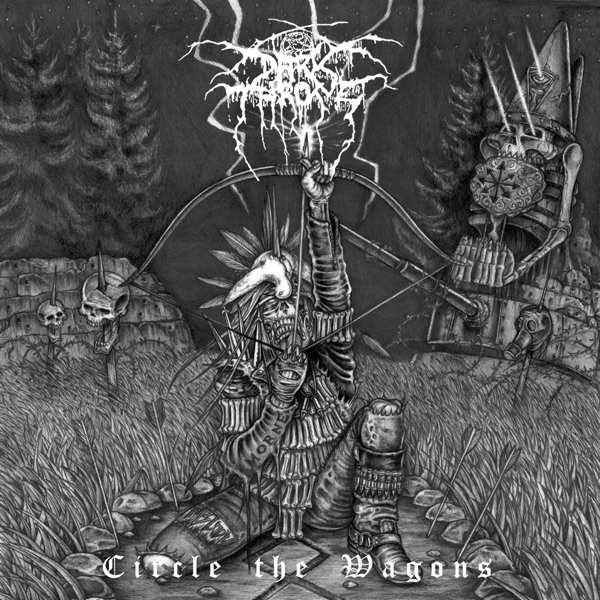
Circle the Wagons
2010 · 9 tracks




-
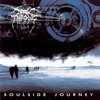 Soulside JourneyDarkthrone199111 tracks
 -
 A Blaze in the Northern SkyDarkthrone19926 tracks
 -
 Under a Funeral MoonDarkthrone19938 tracks
 -
 Transilvanian HungerDarkthrone19948 tracks
 -
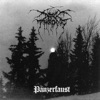 PanzerfaustDarkthrone19957 tracks
 -
 Total DeathDarkthrone19969 tracks
 -
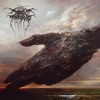 GoatlordDarkthrone199611 tracks
 -
 Ravishing GrimnessDarkthrone19996 tracks
 -
 Hate ThemDarkthrone20037 tracks
 -
 Sardonic WrathDarkthrone200418 tracks
 -
 The Cult Is AliveDarkthrone200610 tracks
 -
 F.O.A.D.Darkthrone20079 tracks
 -
 Dark Thrones and Black FlagsDarkthrone200810 tracks
 -
 Circle the WagonsDarkthrone20109 tracks
 -
 The Underground ResistanceDarkthrone20136 tracks
 -
 Arctic ThunderDarkthrone20168 tracks
 -
 Old StarDarkthrone20196 tracks
 -
 Eternal Hails......Darkthrone20215 tracks
 -
 Astral FortressDarkthrone20227 tracks
 -
 It Beckons Us AllDarkthrone20247 tracks
 -
 Pre-Historic MetalDarkthrone20261 track
Deep Dive
Overview
Darkthrone is a Norwegian black metal band from Kolbotn, Akershus, that emerged as one of the defining acts of the early 1990s Norwegian black metal scene. Beginning as a death metal outfit before a stylistic shift in 1991, the band consolidated a sound influenced by Bathory and Celtic Frost that became foundational to black metal’s aesthetic and approach. Their 1992 album A Blaze in the Northern Sky stands as a touchstone of the genre, establishing templates that countless bands would follow.
Formation Story
Darkthrone was formed in 1986 under the original name Black Death. The founding duo of Fenriz and Nocturno Culto established themselves in Kolbotn, with Ivar Enger joining on drums in 1987. Operating within the Norwegian metal underground, the trio began as a death metal band, recording and developing their craft through the late 1980s. The period marked the band’s apprenticeship in extreme metal, though they would soon undertake a dramatic compositional and aesthetic reorientation.
Breakthrough Moment
The band’s transition from death metal to black metal, crystallized in 1991, positioned them at the vanguard of Norway’s emerging black metal movement. Their 1992 album A Blaze in the Northern Sky announced this shift to the wider metal community and established Darkthrone as a leading force in the scene. The album’s raw production, tremolo-picked riffing, and Norwegian sensibility influenced by international acts like Bathory and Celtic Frost made it a blueprint for subsequent black metal bands. A Blaze in the Northern Sky demonstrated that technical refinement was not a prerequisite for black metal’s emotional and atmospheric power—a lesson that defined the genre’s early character.
Peak Era
Darkthrone’s creative peak extended through the mid-1990s, a period that saw the release of Under a Funeral Moon (1993), Transilvanian Hunger (1994), and Panzerfaust (1995). These albums consolidated the band’s aesthetic and expanded their influence across the global metal underground. By this time, Ivar Enger had departed the band in 1993, leaving Fenriz and Nocturno Culto as the core duo that would continue Darkthrone’s evolution. The consistency and prolific output during these years—including Total Death and Goatlord, both released in 1996—established Darkthrone as architects of black metal’s fundamental sound and ideology.
Musical Style
Darkthrone’s black metal style hinges on lo-fi production values, rapid tremolo-picked guitar lines, and deliberately raw vocal delivery. The band draws from the influence of Bathory’s primitive grandeur and Celtic Frost’s atmospheric darkness, filtering these elements through a distinctly Norwegian lens. The production on their early albums embraced tape hiss, limited overdubs, and minimal polish, becoming a signature aspect of Scandinavian black metal. Fenriz and Nocturno Culto’s songwriting prioritizes hypnotic repetition and mood over conventional song structures, using tremolo riffs, blast-beat drumming, and synth textures to create immersive, often lengthy compositions. This approach contradicted the technical maximalism that dominated much 1980s metal, establishing a new aesthetic hierarchy in which raw expression and atmosphere took precedence over instrumental virtuosity.
Major Albums
A Blaze in the Northern Sky (1992)
Darkthrone’s transition point and one of black metal’s foundational texts, establishing the band’s tremolo-riff language and raw production signature that influenced thousands of subsequent bands.
Under a Funeral Moon (1993)
Extending and refining the approach of A Blaze in the Northern Sky, this album deepened Darkthrone’s command of atmospheric black metal while consolidating their position as Norwegian scene leaders.
Transilvanian Hunger (1994)
A landmark of stripped-down black metal, featuring some of Darkthrone’s most hypnotic riffwork and demonstrating the power of minimalist composition within the genre’s constraints.
Panzerfaust (1995)
Expanding slightly on Darkthrone’s palette while maintaining their core aesthetic, Panzerfaust showed the band capable of sustained innovation within their established framework.
The Cult Is Alive (2006)
Released a decade into the band’s mature period, this album demonstrated Darkthrone’s continued commitment to black metal tradition and their ability to produce vital work outside their early 1990s peak.
Signature Songs
- Snowfall — A defining tremolo-picked composition that exemplifies the hypnotic, repetitive approach central to Darkthrone’s black metal language.
- Transilvanian Hunger — The title track that became synonymous with Norwegian black metal’s minimalist aesthetic and proved the potency of stripped-down riffing.
- Accumulation of Generative Decay — A showcase of the band’s ability to construct lengthy, atmospheric compositions that reward deep listening.
Influence on Rock
Darkthrone’s influence on extreme metal cannot be overstated. Their early 1990s albums provided a template and legitimacy for the Norwegian black metal wave, directly inspiring countless bands to pursue low-fidelity aesthetics and raw, atmospheric songwriting. By proving that commercial polish was unnecessary for emotional impact, they democratized black metal’s production approach, enabling bedroom musicians and underground groups to create compelling work without major-label resources. Their influence extends beyond black metal into death metal, grindcore, and other subgenres that incorporated Darkthrone’s lessons about production minimalism and compositional focus. Fenriz and Nocturno Culto’s sustained commitment to the band’s original vision—continuing to release albums and tour decades after their debut—established a model of artistic consistency that influenced how subsequent metal bands approached longevity and creative integrity.
Legacy
Darkthrone remains active into the 2020s, with recent releases including Old Star (2019), Astral Fortress (2022), and It Beckons Us All (2024), demonstrating remarkable creative continuity. Their consistent presence in the catalog and touring circuit has ensured that new generations of metal listeners encounter their foundational work. A Blaze in the Northern Sky and Transilvanian Hunger have achieved near-canonical status within black metal discourse, studied by musicians and critics as exemplary texts. The band’s catalog on streaming platforms and through Peaceville Records maintains broad accessibility, allowing their influence to compound across decades. Darkthrone’s unwillingness to compromise or modernize their approach—maintaining their aesthetic integrity through shifts in metal fashion and industry expectations—has cemented them as foundational figures whose early work continues to define how black metal is understood.
Fun Facts
- Darkthrone recorded Soulside Journey (1991) as a death metal album before their stylistic pivot, making it a document of their pre-black metal identity and a rarity in their discography.
- The band’s origin in Kolbotn, a suburb of Oslo, became emblematic of the Norwegian black metal scene’s emergence from smaller cities rather than major metropolitan centers.
- Darkthrone’s creative partnership between Fenriz and Nocturno Culto has endured since 1988, making them one of extreme metal’s longest-lasting creative duos.