
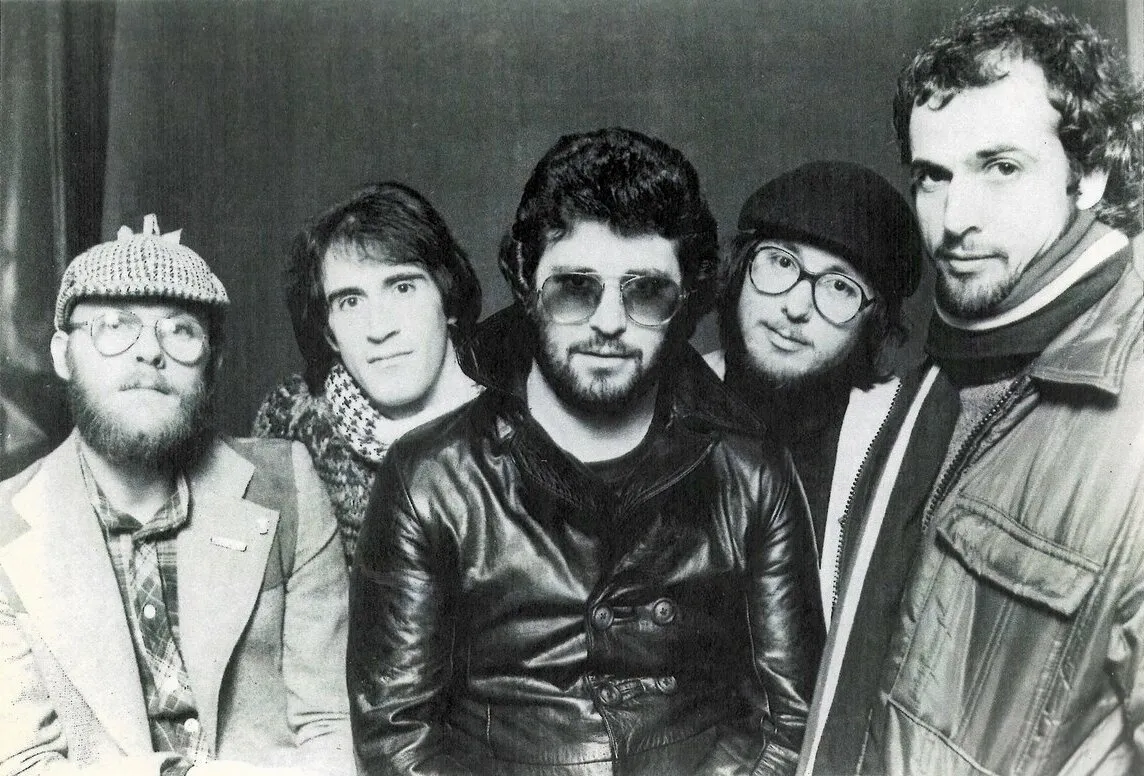
Photo by Richard Aaron; distributed by Capitol Records , licensed under Public domain · Wikimedia Commons
Rank #287
Gentle Giant
British prog virtuosos of medieval polyphony and complex arrangements.
From Wikipedia
Gentle Giant were a British progressive rock band active between 1970 and 1980. They were known for the complexity and sophistication of their music and for the varied musical skills of the members. All of the band members were multi-instrumentalists. Although not commercially successful, the band achieved a cult following.
Members
- Martin Smith
Discography & Previews
Browse through and click an album to open and play 30-second previews streamed from Apple Music.



Octopus
1972 · 9 tracks
- 1 The Advent of Panurge (2011 Remaster) ↗ 4:43
- 2 Raconteur, Troubadour (2011 Remaster) ↗ 4:04
- 3 A Cry for Everyone (2011 Remaster) ↗ 4:06
- 4 Knots (2011 Remaster) ↗ 4:12
- 5 The Boys in the Band (2011 Remaster) ↗ 4:36
- 6 Dog's Life (2011 Remaster) ↗ 3:13
- 7 Think of Me with Kindness (2011 Remaster) ↗ 3:35
- 8 River (2011 Remaster) ↗ 5:59
- 9 Excerpts from Octopus (2011 Remaster Bonus Track) [Live 1976] ↗ 15:24



Free Hand
1975 · 10 tracks

The Missing Piece
1977 · 12 tracks
- 1 Two Weeks in Spain ↗ 3:07
- 2 I'm Turning Around ↗ 4:02
- 3 Betcha Thought We Couldn't Do It ↗ 2:26
- 4 Who Do You Think You Are ↗ 3:37
- 5 Mountain Time ↗ 3:27
- 6 As Old as You're Young ↗ 4:27
- 7 Memories of Old Days ↗ 7:19
- 8 Winning ↗ 4:18
- 9 For Nobody ↗ 4:03
- 10 Two Weeks in Spain (Bonus Track) [Live 1978] ↗ 3:25
- 11 I'm Turning Around (Bonus Track) [Live 1978] ↗ 4:09
- 12 For Nobody (Bonus Track) [Live 1978] ↗ 4:25

Giant for a Day
1978 · 11 tracks

-
 Gentle GiantGentle Giant19707 tracks
 -
 Acquiring the TasteGentle Giant19718 tracks
 -
 OctopusGentle Giant19729 tracks
 -
 Three FriendsGentle Giant19726 tracks
 -
 In a Glass HouseGentle Giant19738 tracks
 -
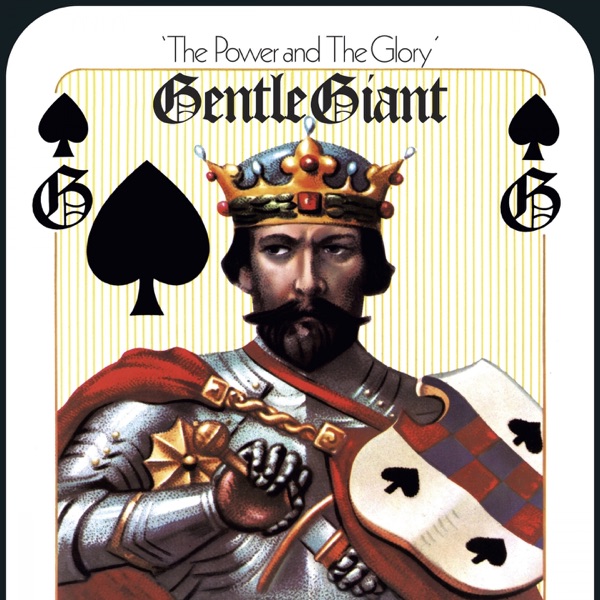
 The Power and the GloryGentle Giant197410 tracks
 -
 Free HandGentle Giant197510 tracks
 -
 The Missing PieceGentle Giant197712 tracks
 -
 Giant for a DayGentle Giant197811 tracks
 -
 CivilianGentle Giant19809 tracks
Deep Dive
Overview
Gentle Giant were a British progressive rock band formed in London in 1970 and active through 1980. They occupied a singular niche within progressive rock: virtuoso instrumentalists who built their sound around intricate arrangements, baroque and medieval polyphonic influences, and the technical command of multiple instruments by every band member. Though they never achieved mainstream commercial success, they cultivated a dedicated cult following and remain a touchstone for musicians and listeners who value compositional complexity and instrumental sophistication over radio accessibility.
Formation Story
Gentle Giant emerged from London in 1970 at the crest of progressive rock’s expansion. The band was built on a foundation of musicianship that extended across classical training and folk traditions; every member was a multi-instrumentalist capable of switching between guitars, keyboards, bass, percussion, flutes, and recorders during both recordings and live performance. This versatility became their defining trademark and permitted the dense, layered textures that characterized their sound from the first album onward. The early 1970s British progressive scene had already begun to embrace classical reference points and instrumental excess, but few bands matched Gentle Giant’s commitment to genuine polyphonic construction.
Breakthrough Moment
Gentle Giant’s initial three albums—Gentle Giant (1970), Acquiring the Taste (1971), and Octopus (1972)—established the band’s reputation within the progressive rock underground. Octopus in particular signaled their creative maturity; the record’s intricate arrangements and fearless dissonance attracted the attention of serious listeners while remaining inaccessible to pop radio. By 1972–1973, with Three Friends (1972) and In a Glass House (1973), the band had consolidated a loyal following in the UK and among prog enthusiasts internationally. Their music demanded active listening and rewarded repeated engagement; casual consumption was not the point.
Peak Era
The mid-1970s represented Gentle Giant’s most prolific and creatively assured period. Between 1974 and 1977, the band released four albums—The Power and the Glory (1974), Free Hand (1975), Interview (1976), and The Missing Piece (1977)—that showcased their command of form and harmony at full maturity. Free Hand in particular is regarded as a statement of their artistic vision in its purest form: a record of tightly constructed compositions that moved fluidly between aggressive dissonance and moments of restraint, always anchored by the band’s ability to execute complex meters and harmonic ideas in real time. These years saw the band touring and building their cult reputation in both Europe and North America, even as the broader market’s appetite for experimental progressive rock began to contract.
Musical Style
Gentle Giant’s sound was built on the combination of classical and medieval musical influences with the electric instrumentation and energy of rock. Polyphony—the interweaving of independent melodic lines—was their compositional core. Rather than anchor their music in the individual lead instrument (guitar or keyboard) that dominated most rock and prog bands, Gentle Giant treated the ensemble as a single organism in which every musician contributed equally to the harmonic and melodic architecture. Flutes, recorders, and vibraphone sat alongside electric guitars and synthesizers; bass and drums operated with the precision of a classical rhythm section rather than rock’s typical groove foundation. Vocals, when present, were often treated as another textural element rather than as a focal point. The effect was sometimes austere, sometimes playful, but always intellectually demanding: songs moved through key changes and time signatures that required genuine musicianship to execute and sustained attention to perceive fully.
Major Albums
Free Hand (1975)
Free Hand stands as Gentle Giant’s most focused and widely respected work, demonstrating their mastery of polyphonic arrangement and compositional discipline at a peak moment.
In a Glass House (1973)
This album cemented the band’s reputation for uncompromising creativity, with each track presenting intricate harmonic and structural ideas developed across multiple instrumental voices.
The Power and the Glory (1974)
Released during the band’s most productive period, the album showcases their command of dynamics and their ability to sustain complex formal structures across an entire LP.
Octopus (1972)
The third album deepened the band’s exploration of dissonance and polyphonic texture, signaling their emergence as serious compositional thinkers within progressive rock.
Signature Songs
- “The Advent of Panurge” — A showcase for the band’s ability to layer multiple melodic threads into a coherent, propulsive whole.
- “Octopus” — The title track exemplifies their use of shifting meters and harmonic density to create forward momentum without relying on conventional rock rhythm.
- “Free Hand” — Demonstrates their talent for moving fluidly between restraint and intensity within a single composition.
- “Interview” — A piece built around their command of varied instrumental timbres and the precision required to execute complex arrangements.
Influence on Rock
Gentle Giant’s impact was concentrated but significant within progressive and experimental rock circles. Their insistence on polyphonic writing and multi-instrumental fluency influenced musicians working in progressive metal and art rock throughout the 1980s and beyond. Bands that followed—particularly those seeking to integrate classical compositional techniques with rock electricity—looked to Gentle Giant as a model for how to achieve structural sophistication without sacrificing instrumental power. Their refusal to pursue commercial accessibility or conventional song structures made them a reference point for musicians who valued artistic integrity over market positioning. While they remained marginal in mainstream rock history, their technical achievements and compositional ambition secured their place within the progressive rock canon.
Legacy
Gentle Giant disbanded in 1980, leaving behind a catalog of eleven studio albums that have remained in steady circulation among progressive rock listeners and musicians. The band never achieved major critical reassessment or mainstream rediscovery in the manner of some prog peers; instead, their reputation has been sustained by a dedicated audience of listeners and musicians who recognize their harmonic sophistication and technical execution. Their recordings have remained available through digital platforms and specialty reissues, ensuring that new generations of prog enthusiasts encounter their work. The band’s emphasis on ensemble musicianship and compositional complexity—values that run counter to much of popular music—has secured their reputation as uncompromising artists who prioritized their own musical vision above commercial considerations.
Fun Facts
- Every member of Gentle Giant was a proficient multi-instrumentalist, capable of playing and switching between a wide variety of instruments including guitars, keyboards, bass, percussion, flutes, and recorders both in the studio and during live performances.
- The band released their debut and five subsequent albums within three years (1970–1972), establishing their fundamental sound and reputation at a remarkable pace.
- Gentle Giant signed to Chrysalis Records and later Columbia Records, demonstrating that major labels were willing to support their experimental approach despite limited commercial potential.