
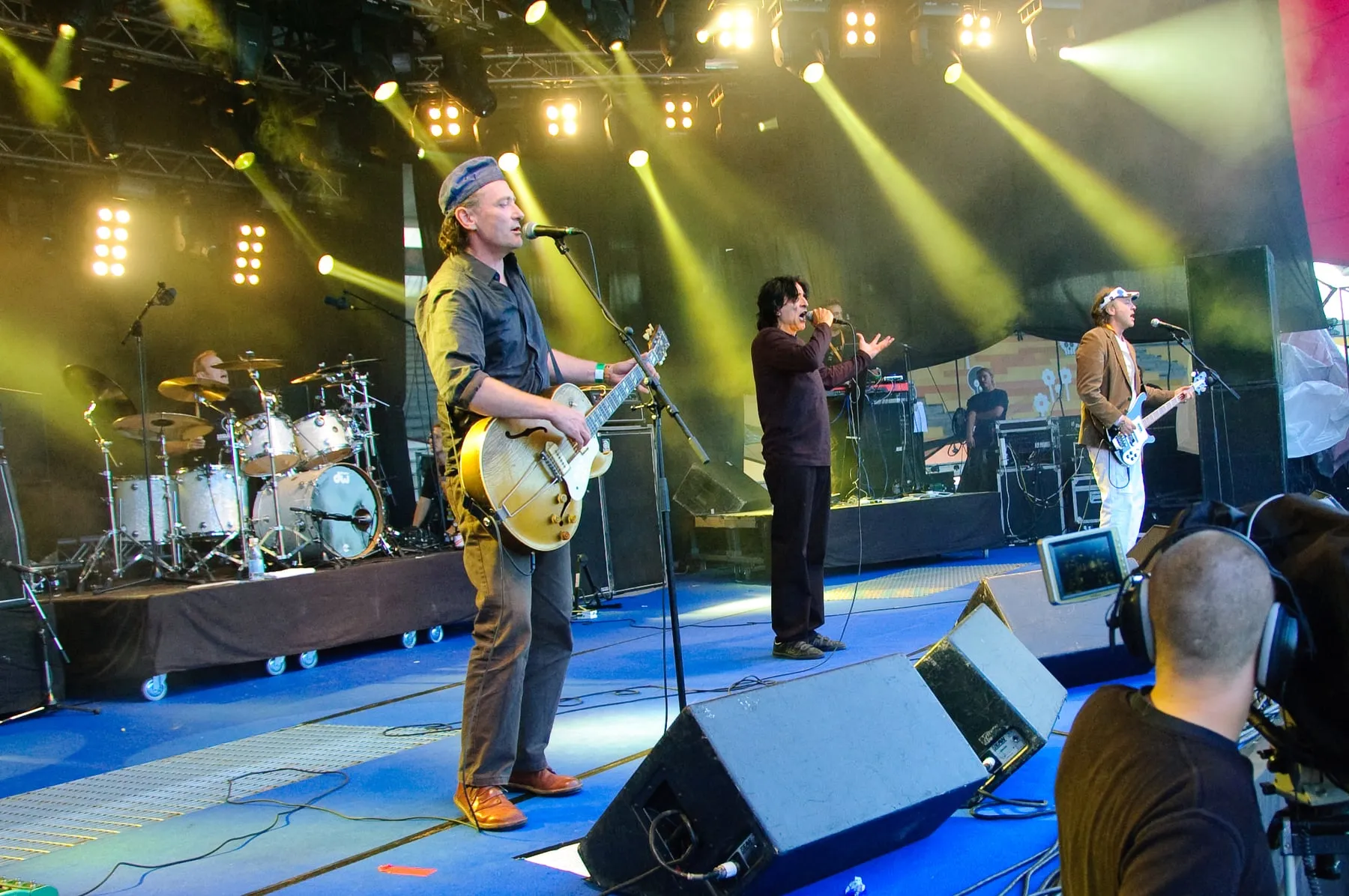
Photo by Tuomas Vitikainen , licensed under CC BY-SA 3.0 · Wikimedia Commons
Rank #199
Killing Joke
London post-punks who pre-dated industrial rock and influenced metal alike.
From Wikipedia
Killing Joke are an English post-punk band formed in Notting Hill, London, in 1979 by Jaz Coleman, Paul Ferguson (drums), Geordie Walker (guitar) and Youth (bass).
Members
- Geordie Walker
- Jaz Coleman
- Paul Ferguson
- Paul Raven
- Reza Udhin
- Youth
Discography & Previews
Browse through and click an album to open and play 30-second previews streamed from Apple Music.

Killing Joke
1980 · 13 tracks
- 1 Requiem (2005 Digital Remaster) ↗ 3:45
- 2 Wardance (2005 Digital Remaster) ↗ 3:46
- 3 Tomorrow's World (2005 Digital Remaster) ↗ 5:29
- 4 Bloodsport (2005 Digital Remaster) ↗ 4:45
- 5 The Wait (2005 Digital Remaster) ↗ 3:42
- 6 Complications (2005 Digital Remaster) ↗ 3:07
- 7 S.O.36 (2005 Digital Remaster) ↗ 6:53
- 8 Primitive (2005 Digital Remaster) ↗ 3:36
- 9 Change (2005 Digital Remaster) ↗ 4:00
- 10 Requiem (Single Version; 2005 Digital Remaster) ↗ 3:47
- 11 Change (Dub) ↗ 3:58
- 12 Primitive (Rough Mix) ↗ 3:35
- 13 Bloodsport (Rough Mix) ↗ 4:51

What’s THIS For…!
1981 · 11 tracks
- 1 The Fall of Because (2005 Digital Remaster) ↗ 5:13
- 2 Tension (2005 Digital Remaster) ↗ 4:34
- 3 Unspeakable (2005 Digital Remaster) ↗ 5:19
- 4 Butcher (2005 Digital Remaster) ↗ 6:14
- 5 Follow the Leaders (2005 Digital Remaster) ↗ 5:38
- 6 Madness (2005 Digital Remaster) ↗ 7:44
- 7 Who Told You How? (2005 Digital Remaster) ↗ 3:37
- 8 Exit (2005 Digital Remaster) ↗ 3:44
- 9 Follow the Leaders (Dub; 2005 Digital Remaster) ↗ 4:07
- 10 Madness (Dub) ↗ 7:28
- 11 Brilliant (2005 Digital Remaster) ↗ 3:59

Revelations
1982 · 11 tracks
- 1 The Hum (2005 Digital Remaster) ↗ 4:58
- 2 Empire Song (2005 Digital Remaster) ↗ 3:18
- 3 We Have Joy (2005 Digital Remaster) ↗ 2:56
- 4 Chop Chop (2005 Digital Remaster) ↗ 4:18
- 5 The Pandys Are Coming (2005 Digital Remaster) ↗ 4:26
- 6 Chapter Three (2005 Digital Remaster) ↗ 3:13
- 7 Have a Nice Day (2005 Digital Remaster) ↗ 3:13
- 8 Land of Milk and Honey (2005 Digital Remaster) ↗ 2:36
- 9 Good Samaritan (2005 Digital Remaster) ↗ 3:29
- 10 Dregs (2005 Digital Remaster) ↗ 4:53
- 11 We Have Joy (Alternate Mix) ↗ 4:22

Fire Dances
1983 · 18 tracks
- 1 The Gathering (2007 Digital Remaster) ↗ 3:12
- 2 Fun and Games (2007 Digital Remaster) ↗ 4:06
- 3 Rejuvenation (2007 Digital Remaster) ↗ 4:01
- 4 Frenzy (2007 Digital Remaster) ↗ 3:47
- 5 Harlequin (2007 Digital Remaster) ↗ 3:57
- 6 Feast of Blaze (2007 Digital Remaster) ↗ 3:34
- 7 Song and Dance (2007 Digital Remaster) ↗ 5:12
- 8 Dominator (2007 Digital Remaster) ↗ 4:28
- 9 Let's All Go (To the Fire Dances) [2007 Digital Remaster] ↗ 3:20
- 10 Lust Almighty (2007 Digital Remaster) ↗ 3:57
- 11 Me Or You (2007 Digital Remaster) ↗ 3:13
- 12 Wilful Days (2007 Digital Remaster) ↗ 5:03
- 13 Dominator (Version;2007 Digital Remaster) ↗ 5:35
- 14 The Gathering (Original Alt Version) ↗ 3:27
- 15 Dominator (John Peel Session) ↗ 5:30
- 16 Frenzy (John Peel Session) ↗ 3:39
- 17 Wilful Days (John Peel Session) ↗ 5:59
- 18 Harlequin (John Peel Session) ↗ 3:55

Night Time
1985 · 17 tracks
- 1 Night Time (2007 Digital Remaster) ↗ 4:57
- 2 Darkness Before Dawn (2007 Digital Remaster) ↗ 5:19
- 3 Love Like Blood ↗ 6:49
- 4 Kings and Queens (2007 Digital Remaster) ↗ 4:38
- 5 Tabazan (2007 Digital Remaster) ↗ 4:34
- 6 Multitudes (2007 Digital Remaster) ↗ 4:57
- 7 Europe (2007 Digital Remaster) ↗ 4:34
- 8 Eighties (2007 Digital Remaster) ↗ 3:59
- 9 Eighties (Kid Jensen Session) ↗ 2:51
- 10 New Culture (Kid Jensen Session) ↗ 3:10
- 11 Blue Feather (Kid Jensen Session) ↗ 4:29
- 12 All Play Rebel (Kid Jensen Session) ↗ 3:18
- 13 A New Day (7" / 2007 Digital Remaster) ↗ 4:11
- 14 The Madding Crowd (2007 Digital Remaster) ↗ 5:14
- 15 Blue Feather (Joke Mix) ↗ 4:00
- 16 Love Like Blood (Gestalt Mix / 2007 Digital Remaster) ↗ 5:13
- 17 Kings and Queens (Geordie's Dub Mix) ↗ 4:58

Brighter Than a Thousand Suns
1986 · 14 tracks
- 1 Adorations (Chris Kimsey Mix) ↗ 4:28
- 2 Sanity (Chris Kimsey Mix) ↗ 4:15
- 3 Chessboards (Chris Kimsey Mix) ↗ 5:47
- 4 Twilight of the Mortal (Chris Kimsey Mix;2007 Digital Remaster) ↗ 4:14
- 5 Love of the Masses (Chris Kimsey Mix) ↗ 6:07
- 6 A Southern Sky (2007 Digital Remaster) ↗ 4:39
- 7 Victory (2007) ↗ 3:57
- 8 Wintergardens (Chris Kimsey Mix) ↗ 5:32
- 9 Rubicon (Chris Kimsey Mix;2007 Digital Remaster) ↗ 6:35
- 10 Goodbye To the Village (Chris Kimsey Mix) ↗ 5:18
- 11 Exile (Chris Kimsey Mix) ↗ 6:27
- 12 Ecstasy (2007 Digital Remaster) ↗ 4:10
- 13 Adorations (The Supernatural Mix;2007 Digital Remaster) ↗ 6:41
- 14 Sanity (The Insane Mix;2007 Digital Remaster) ↗ 6:16
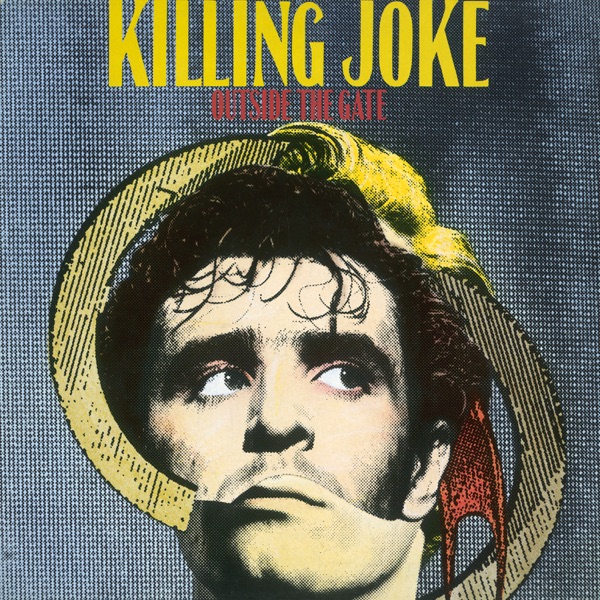
Outside the Gate
1988 · 15 tracks
- 1 America (2007 Digital Remaster) ↗ 3:48
- 2 My Love of This Land (2007 Digital Remaster) ↗ 4:12
- 3 Stay One Jump Ahead (2007 Digital Remaster) ↗ 3:11
- 4 Unto the Ends of the Earth (2007 Digital Remaster) ↗ 6:08
- 5 The Calling (2007 Digital Remaster) ↗ 4:45
- 6 Obsession (2007 Digital Remaster) ↗ 3:35
- 7 Tiahuanaco (2007 Digital Remaster) ↗ 3:27
- 8 Outside the Gate (2007 Digital Remaster) ↗ 8:57
- 9 May Day ↗ 3:53
- 10 My Love of This Land (Early Version) ↗ 4:17
- 11 Obsession (Early Version) ↗ 3:50
- 12 Unto the Ends of the Earth (Instrumental) ↗ 6:09
- 13 Jihad (2007 Digital Remaster) ↗ 6:04
- 14 America (Extended Mix;2007 Digital Remaster) ↗ 6:48
- 15 Stay One Jump Ahead (Dub) ↗ 3:33

Extremities, Dirt and Various Repressed Emotions
1990 · 16 tracks
- 1 Money Is Not Our God ↗ 5:15
- 2 Age Of Greed ↗ 7:22
- 3 The Beautiful Dead ↗ 5:56
- 4 Extremities ↗ 5:20
- 5 Intravenous ↗ 7:02
- 6 Inside The Termite Mound ↗ 7:50
- 7 Solitude ↗ 4:58
- 8 North Of The Border ↗ 5:52
- 9 Slipstream ↗ 7:07
- 10 Kaliyuga ↗ 2:09
- 11 Struggle ↗ 6:14
- 12 The Party (Demo) ↗ 5:10
- 13 The Fanatic (Demo) ↗ 4:22
- 14 Solitude (Demo) ↗ 5:10
- 15 Jubiliation (Demo) ↗ 4:37
- 16 Age of Greed (Live in Lyon 92) ↗ 12:05


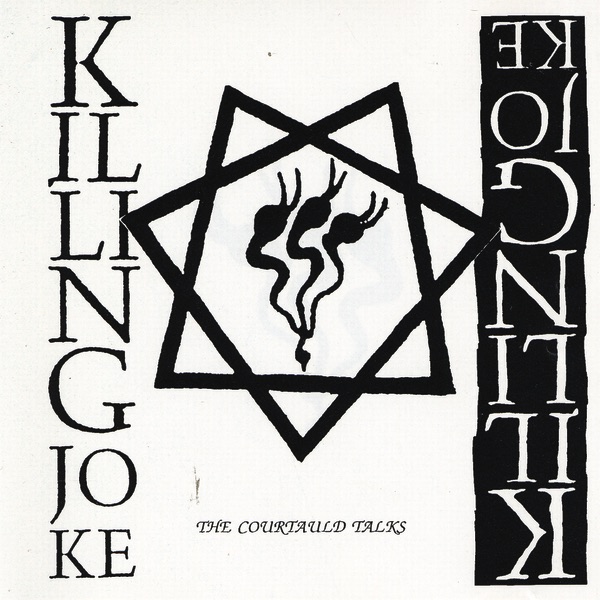
The Courtauld Talks
1997 · 1 track
- 1 The Courtauld Talks (Courtauld Institute, London, September 19, 1987) ↗ 66:22
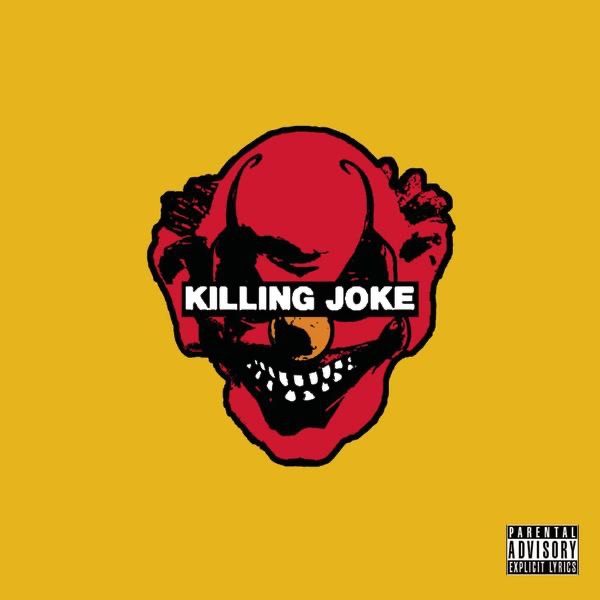
Killing Joke
2003 · 10 tracks

Hosannas From the Basements of Hell
2006 · 3 tracks

Absolute Dissent
2010 · 12 tracks
- 1 Absolute Dissent ↗ 6:16
- 2 The Great Cull ↗ 5:58
- 3 Fresh Fever From the Skies ↗ 3:24
- 4 In Excelsis ↗ 4:04
- 5 European Super State ↗ 4:42
- 6 This World Hell ↗ 5:28
- 7 Endgame ↗ 4:41
- 8 The Raven King ↗ 6:34
- 9 Honour the Fire ↗ 5:51
- 10 Depthcharge ↗ 4:17
- 11 Here Comes the Singularity ↗ 5:05
- 12 Ghosts of Ladbroke Grove ↗ 6:33

-
 Killing JokeKilling Joke198013 tracks
 -
 What’s THIS For…!Killing Joke198111 tracks
 -
 RevelationsKilling Joke198211 tracks
 -
 Fire DancesKilling Joke198318 tracks
 -
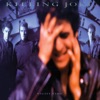 Night TimeKilling Joke198517 tracks
 -
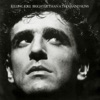 Brighter Than a Thousand SunsKilling Joke198614 tracks
 -
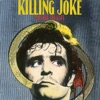 Outside the GateKilling Joke198815 tracks
 -
 Extremities, Dirt and Various Repressed EmotionsKilling Joke199016 tracks
 -
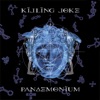 PandemoniumKilling Joke199410 tracks
 -
 DemocracyKilling Joke199610 tracks
 -
 The Courtauld TalksKilling Joke19971 track
 -
 Killing JokeKilling Joke200310 tracks
 -
 Hosannas From the Basements of HellKilling Joke20063 tracks
 -
 Absolute DissentKilling Joke201012 tracks
 -
 PylonKilling Joke201510 tracks
Deep Dive
Overview
Killing Joke are an English post-punk band formed in Notting Hill, London, in 1979. Emerging from the UK post-punk ferment at a moment when punk’s initial explosion had fractured into a hundred smaller movements, Killing Joke distinguished themselves through a sound that married the raw aggression and angular guitars of post-punk with proto-industrial textures—layers of synthesizer, heavily processed drums, and a vocal approach rooted in both punk fury and operatic menace. Their significance lies not in inventing any single genre but in synthesizing existing elements in ways that prefigured industrial rock and heavy metal’s late-1980s and 1990s evolution, proving that post-punk’s intellectual rigor and sonic experimentalism could coexist with overwhelming physical power.
Formation Story
Killing Joke coalesced around founding members Jaz Coleman (vocals), Geordie Walker (guitar), Paul Ferguson (drums), and Youth (bass) in Notting Hill during 1979. The London of that moment was fracturing rapidly: the Sex Pistols had imploded; post-punk bands like Wire, Gang of Four, and Throbbing Gristle were pushing punk’s skeleton into radically different shapes. Killing Joke arrived at the intersection of punk’s do-it-yourself ethos and a fascination with industrial and electronic music’s mechanical coldness. Their self-titled debut arrived in 1980, a compact statement of intent that announced a band comfortable with dissonance, heavy reverb, and lyrics that surveyed social and political wreckage with bleak intensity.
Breakthrough Moment
The band’s reputation solidified across their early albums, particularly What’s THIS For…! (1981) and Revelations (1982), which demonstrated their ability to evolve their sound without surrendering the core elements that made them recognizable. By Fire Dances (1983), Killing Joke had begun attracting listeners beyond the post-punk faithful—the album showed a band willing to incorporate melody and structural clarity while maintaining their abrasive sonic signature. The combination of Jaz Coleman’s commanding, often unsettling vocal delivery, Geordie Walker’s heavily textured guitar work, Youth’s propulsive bass lines, and Paul Ferguson’s precise, intricate drumming created a formula that proved increasingly influential in underground and alternative circles.
Peak Era
The mid-to-late 1980s represented Killing Joke’s peak period of creative ambition and commercial traction. Night Time (1985) and Brighter Than a Thousand Suns (1986) consolidated their standing as major alternative acts, with the latter particularly notable for its integration of synthesizer-driven arrangements and an almost cinematic approach to production. By the late 1980s and into the 1990s, the band had cultivated a devoted international following, particularly among metal fans and industrial music enthusiasts who recognized in their work a kind of intellectual heaviness that matched metal’s physical intensity. Albums like Pandemonium (1994) and Democracy (1996) showed the band remaining creatively engaged even as the musical landscape shifted around them, proof that their initial synthesis of post-punk and industrial elements had proven durable enough to sustain interest across changing trends.
Musical Style
Killing Joke’s sound emerged from a collision of influences that the band synthesized into something distinctive. At the core lay post-punk’s refusal of conventional verse-chorus-bridge structure and its embrace of tension, dissonance, and lyrical abstraction. Over this foundation, they layered synthesizers that functioned not as mere accompaniment but as texturally central instruments—often producing sounds that were cold, mechanical, or deliberately unnatural. Geordie Walker’s guitar work combined post-punk’s angular picking patterns with a heavier approach to distortion and effects, while Paul Ferguson’s drumming displayed the precision and polyrhythmic complexity of progressive rock married to punk’s directness. Jaz Coleman’s vocals remained the most immediately striking element: a baritone with operatic training and theatrical instinct, capable of both melodic singing and primal shouting, lending the material an intensity and moral weight that elevated even the band’s most experimental moments. The overall effect was aggressive without being purely metal, intellectual without being bloodless, propulsive without surrendering to mainstream accessibility.
Major Albums
Killing Joke (1980)
The self-titled debut announced the band’s fully formed aesthetic—angular guitars, processed drums, and Coleman’s commanding vocal presence—in a compact, deliberately austere package that made clear post-punk need not be precious or art-school detached.
What’s THIS For…! (1981)
The second album demonstrated that Killing Joke could expand their sonic palette and increase the density of their production without losing the sharp edges that defined their appeal.
Brighter Than a Thousand Suns (1986)
The band’s most fully realized mid-period statement, integrating synthesizer arrangements and production sophistication while maintaining the intensity and darkness that characterized their work.
Pandemonium (1994)
A return to form following a period of relative commercial quiet, Pandemonium proved the band remained capable of crafting material that synthesized their original insights with contemporary production approaches.
Signature Songs
- “Eighties” — The title track from Fire Dances, exemplifying the band’s ability to combine dark lyrical matter with an almost anthemic melodic sensibility.
- “Love Like Blood” — A showcase for Jaz Coleman’s vocal range and the band’s skill at constructing tension and release across an extended composition.
- “Requiem” — Demonstrating the band’s capacity for quasi-orchestral ambition and their willingness to foreground Coleman’s more operatic vocal qualities.
- “The Wait” — A staple of the band’s live repertoire, highlighting the physical intensity and rhythmic precision that defined their stage presence.
Influence on Rock
Killing Joke’s influence extended far beyond post-punk’s immediate circle, reaching into industrial rock, gothic rock, and heavy metal lineages. Bands working in the industrial and alternative metal spaces of the late 1980s and 1990s found in Killing Joke’s catalog a proof of concept: that intellectual rigor, sonic experimentation, and overwhelming heaviness need not be mutually exclusive. Their approach to synthesizer integration and their refusal to accept genre boundaries influenced acts across multiple spheres, from the synth-informed approach of some 1990s alternative rock to the industrial metal bands that emerged in the 1990s. The band’s sustained career across changing musical fashions—they continued releasing new material through the 2000s and 2010s—also demonstrated that post-punk’s foundational ideas possessed sufficient depth to sustain indefinite elaboration and revision.
Legacy
Killing Joke remain active as of the 2010s, with albums like Absolute Dissent (2010), MMXII (2012), and Pylon (2015) continuing their long engagement with industrial textures, post-punk austerity, and heavy guitar-driven arrangements. Their influence on alternative and underground music remains significant, with the band receiving recognition from both critics and fellow musicians as architects of a crucial bridge between post-punk’s intellectual experimentalism and the heavier, more sonically aggressive approaches that would dominate alternative rock’s mainstream moments. The band’s catalog remains in print and actively streamed, a testament to the durability of their core aesthetic and the sustained interest in post-punk and industrial music among new generations of listeners.
Fun Facts
- Jaz Coleman’s vocal training included operatic instruction, a background that sets him apart from most post-punk and industrial vocalists and informed the unusual tonal qualities of his delivery.
- The band’s 1979 formation in Notting Hill placed them at the geographic and cultural center of London’s post-punk scene, though their musical direction quickly set them apart from more overtly political bands of the same era.
- Killing Joke maintained a working relationship with the record label Island Records during key periods of their career, providing them with resources and distribution that many post-punk and industrial contemporaries lacked.