
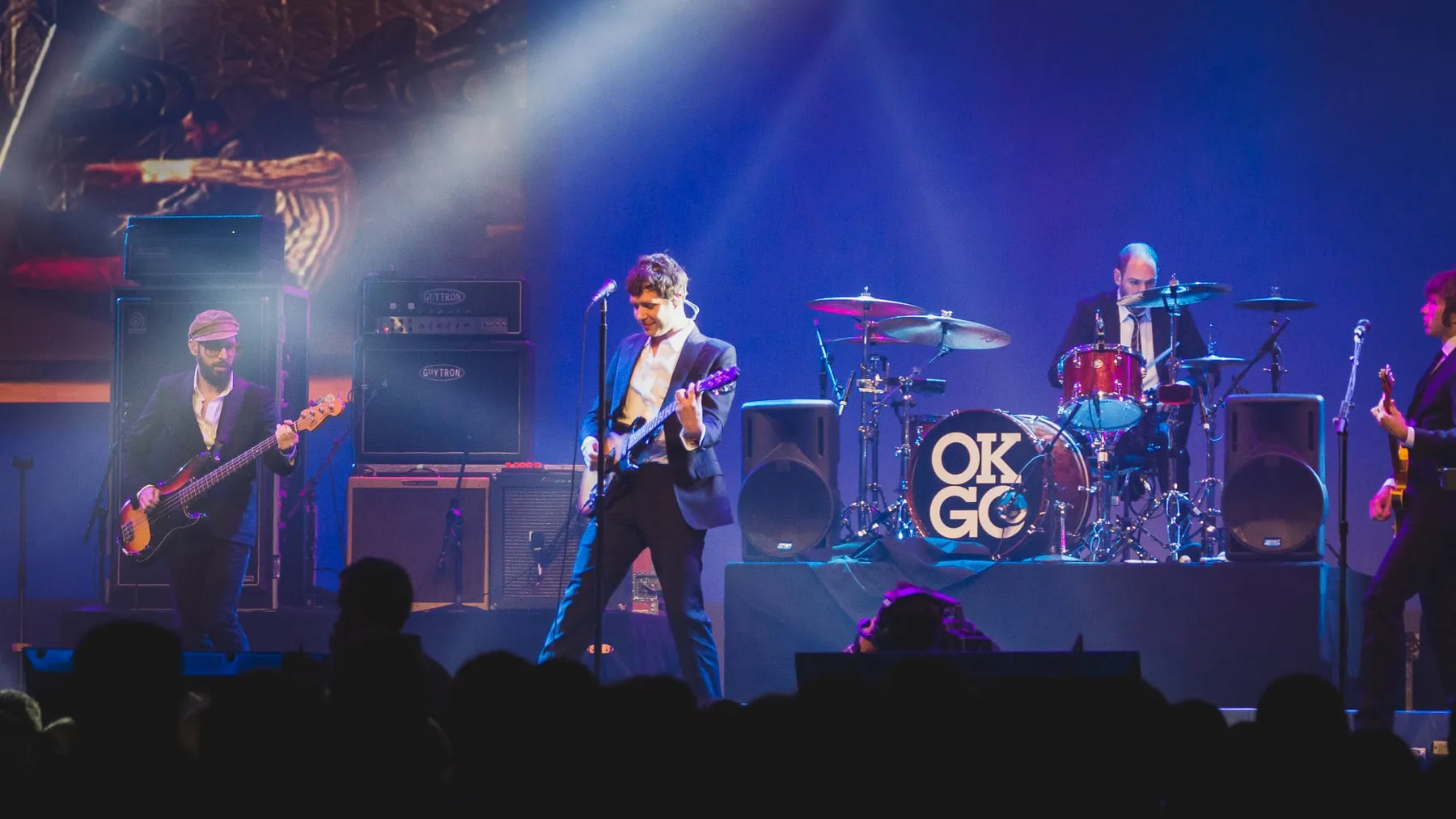
Photo by Paul Hudson , licensed under CC BY 2.0 · Wikimedia Commons
Rank #396
OK Go
From Wikipedia
OK Go is an American rock band formed in 1998 originally from Chicago, Illinois, now based in Los Angeles, California. The band is composed of Damian Kulash, Tim Nordwind, Dan Konopka, and Andy Ross, who joined the band in 2005 following the departure of original guitarist Andy Duncan.
Members
- Andy Ross (2005–present)
- Andy Duncan (?–2005)
- Damian Kulash
- Dan Kanopka
- Tim Nordwind
Discography & Previews
Browse through and click an album to open and play 30-second previews streamed from Apple Music.

OK Go
2002 · 12 tracks
- 1 Get Over It ↗ 3:17
- 2 Don't Ask Me ↗ 2:46
- 3 You're So Damn Hot ↗ 2:39
- 4 What to Do ↗ 3:59
- 5 1000 Miles Per Hour ↗ 3:34
- 6 Shortly Before the End ↗ 4:19
- 7 Return ↗ 3:51
- 8 There's a Fire ↗ 3:51
- 9 C-C-C-Cinnamon Lips ↗ 3:26
- 10 The Fix Is In ↗ 3:54
- 11 Hello, My Treacherous Friends ↗ 2:59
- 12 Bye Bye Baby ↗ 2:14

Oh No
2005 · 14 tracks
- 1 Invincible ↗ 3:31
- 2 Do What You Want ↗ 3:06
- 3 Here It Goes Again ↗ 3:00
- 4 A Good Idea At the Time ↗ 3:15
- 5 Oh Lately It's So Quiet ↗ 3:01
- 6 It's a Disaster ↗ 3:21
- 7 A Million Ways ↗ 3:13
- 8 No Sign of Life ↗ 3:48
- 9 Let It Rain ↗ 2:56
- 10 Crash the Party ↗ 2:25
- 11 Television, Television ↗ 2:39
- 12 Maybe, This Time ↗ 3:16
- 13 The House Wins ↗ 4:15
- 14 9027 Km ↗ 34:47
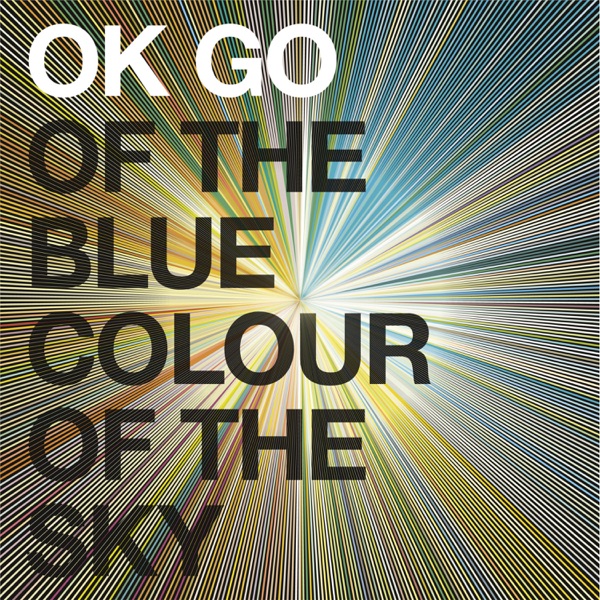
Of the Blue Colour of the Sky
2010 · 13 tracks
- 1 WTF? ↗ 3:25
- 2 This Too Shall Pass ↗ 3:08
- 3 All Is Not Lost ↗ 2:44
- 4 Needing / Getting ↗ 5:14
- 5 Skyscrapers ↗ 4:38
- 6 White Knuckles ↗ 3:19
- 7 I Want You So Bad I Can't Breathe ↗ 3:23
- 8 End Love ↗ 4:05
- 9 Before the Earth Was Round ↗ 4:09
- 10 Last Leaf ↗ 2:34
- 11 Back From Kathmandu ↗ 4:13
- 12 While You Were Asleep ↗ 4:25
- 13 In the Glass ↗ 6:04

Hungry Ghosts
2014 · 12 tracks
- 1 Upside Down & Inside Out ↗ 3:08
- 2 The Writing's On the Wall ↗ 3:33
- 3 Another Set of Issues ↗ 3:58
- 4 Turn Up The Radio ↗ 2:56
- 5 Obsession ↗ 3:08
- 6 I'm Not Through ↗ 3:36
- 7 Bright As Your Eyes ↗ 2:55
- 8 I Won't Let You Down ↗ 3:43
- 9 The One Moment ↗ 3:43
- 10 If I Had a Mountain ↗ 3:19
- 11 The Great Fire ↗ 4:17
- 12 Lullaby ↗ 3:55

And the Adjacent Possible
2025 · 12 tracks
- 1 Impulse Purchase ↗ 2:40
- 2 A Stone Only Rolls Downhill ↗ 3:21
- 3 Love ↗ 3:51
- 4 A Good, Good Day at Last (feat. Ben Harper, Shalyah Fearing & BEGINNERS) ↗ 2:59
- 5 Fantasy vs. Fantasy ↗ 4:06
- 6 This Is How It Ends ↗ 4:06
- 7 Take Me with You ↗ 4:17
- 8 Better Than This ↗ 4:04
- 9 Golden Devils ↗ 4:51
- 10 Once More with Feeling ↗ 3:14
- 11 Going Home ↗ 3:30
- 12 Don't Give Up Now ↗ 4:49
-
 OK GoOK Go200212 tracks
 -
 Oh NoOK Go200514 tracks
 -
 Of the Blue Colour of the SkyOK Go201013 tracks
 -
 Hungry GhostsOK Go201412 tracks
 -
 And the Adjacent PossibleOK Go202512 tracks
Deep Dive
Overview
OK Go is an American rock band formed in Chicago in 1998 that built a sustained career across power pop, pop rock, and alternative rock. The band’s core lineup—Damian Kulash, Tim Nordwind, and Dan Konopka—solidified with guitarist Andy Ross joining in 2005, replacing founding guitarist Andy Duncan. Operating from their original home base of Chicago before relocating to Los Angeles, OK Go became known for energetic songwriting that synthesized post-punk influences with accessible melodic sensibilities and experimental production techniques. Over more than two decades of recording and touring, the band released six studio albums and maintained an active presence in rock music through constant innovation and reinvention.
Formation Story
OK Go emerged from the Chicago rock scene in 1998, assembling around the songwriting and vocal presence of Damian Kulash alongside bassist Tim Nordwind and drummer Dan Konopka. The formation occurred during a period of considerable creative ferment in Chicago’s underground and alternative rock communities, a scene with deep roots in post-punk and power pop traditions. The original guitarist Andy Duncan completed the initial lineup, establishing the instrumental foundation that would shape the band’s early recordings and live performances. The band’s name and approach reflected both the era’s tongue-in-cheek sensibility and their determination to pursue rock music with unironic energy and craft.
Breakthrough Moment
OK Go released their self-titled debut album in 2002, introducing their particular blend of propulsive rhythms, sharp melodic hooks, and unconventional song structures to a wider audience. The album established their identity within the power pop and alternative rock landscape, drawing on lineage stretching back through new wave and post-punk but filtered through a contemporary sensibility. By 2005, the band released their second studio album, Oh No, which expanded their reach and solidified their reputation as skilled songwriters and performers. The addition of Andy Ross as guitarist that same year marked a crucial lineup stabilization; Ross’s contributions helped develop the band’s sound into its mature form, allowing the rhythm section of Nordwind and Konopka to mesh more seamlessly with increasingly sophisticated arranging and textural experimentation.
Peak Era
The period between 2010 and 2014 represented OK Go’s most creatively adventurous and commercially prominent years. In 2010, they released Of the Blue Colour of the Sky, an album that deepened their exploration of studio production and arrangement while maintaining their core melodic sensibility. Four years later, Hungry Ghosts in 2014 continued that trajectory, showcasing the band’s willingness to push their sound in unexpected directions without abandoning their foundational commitment to hooks and rhythmic propulsion. During these years, OK Go toured extensively and became recognized as one of the more consistent and innovative rock bands of the 2010s, maintaining a devoted following while refusing to settle into formula or rely on past successes.
Musical Style
OK Go’s sound synthesizes power pop’s emphasis on hooky, propulsive songs with contemporary alternative rock’s interest in texture, production innovation, and genre hybridity. Tim Nordwind’s bass work provides rhythmic drive and often melodic counterpoint, while Dan Konopka’s drumming emphasizes precise, energetic patterns that create forward momentum. Andy Ross’s guitar work—developed after joining the band in 2005—ranges from angular post-punk textures to fuller, more atmospheric tones depending on the song’s requirements. Damian Kulash’s vocals are typically urgent and clear, well-suited to both uptempo rockers and more introspective material. The band’s production approach, especially evident on later albums, embraces studio techniques and electronic textures without sacrificing the live-playing energy that defines their rock identity. Over their career, their music evolved from the straighter power pop approach of early work toward more experimental and genre-blending arrangements, though the melodic sensibility and rhythmic drive remained constant.
Major Albums
OK Go (2002)
The self-titled debut established the band’s power pop credentials and caught attention in alternative rock circles for its sharp melodies and energetic delivery, marking their official introduction to the broader music world.
Oh No (2005)
The second album solidified the band’s growing reputation and marked the formal debut of new guitarist Andy Ross, whose contributions helped expand the sonic palette and arrangement sophistication.
Of the Blue Colour of the Sky (2010)
A creative peak that showcased the band’s willingness to experiment with studio production, layered textures, and ambitious arrangements while maintaining their core melodic and rhythmic identity.
Hungry Ghosts (2014)
Continuing their experimental trajectory, this album demonstrated the band’s sustained commitment to innovation and their ability to evolve their sound without losing recognizable identity or core strengths.
And the Adjacent Possible (2025)
The band’s most recent album represents their ongoing creative engagement and continuation of the exploration that has characterized their work since the early 2010s.
Signature Songs
- “WTF?” — An energetic power pop statement that exemplifies the band’s ability to craft memorable, propulsive rock songs with sharp melodic hooks.
- “Here It Goes Again” — One of the band’s most recognizable tracks, showcasing their gift for infectious melodies and driving rhythm work.
- “The One Moment” — Demonstrates the band’s capacity for sophisticated arrangement and emotional nuance within their energetic rock framework.
- “I Won’t Let You Down” — A testament to the band’s sustained ability to create engaging, hook-laden rock songs throughout their career.
Influence on Rock
OK Go’s most lasting contribution to rock music lies in their demonstration that power pop and alternative rock could coexist with experimental production and conceptual ambition without sacrificing accessibility or rock credibility. Their commitment to studio innovation and willingness to evolve their sound across multiple albums influenced a generation of indie and alternative rock bands who came of age in the 2000s and 2010s. The band proved that rock music could engage with digital-era production techniques and genre-blending without losing its essential identity or connection to live performance. Their sustained career over more than two decades, with relatively stable lineup and consistent output, provided a model for how rock bands could maintain relevance and creative engagement across shifting musical landscapes and industry conditions.
Legacy
OK Go’s legacy rests on their role as consistent innovators within rock music across the 2000s and 2010s, and their status as exemplars of the power pop and alternative rock traditions updated for contemporary contexts. The band’s ability to release new material as recently as 2025 demonstrates their continuing commitment to creative work and live performance. They remain a respected presence in alternative rock communities and maintain an active touring schedule. Their influence extends through bands and artists who have adopted their approach to combining melodic sophistication with production experimentation, and they are recognized as important figures in the evolution of power pop and alternative rock in the twenty-first century.
Fun Facts
- OK Go relocated from their original base in Chicago to Los Angeles, establishing themselves in one of North America’s primary rock music centers.
- The band has released material through multiple major labels including Capitol Records, EMI, and BMG Rights Management, as well as independent labels, reflecting their evolution through different phases of the music industry.
- Andy Ross’s addition to the band in 2005 followed the departure of founding guitarist Andy Duncan, marking a significant but ultimately successful transition in the band’s lineup.