
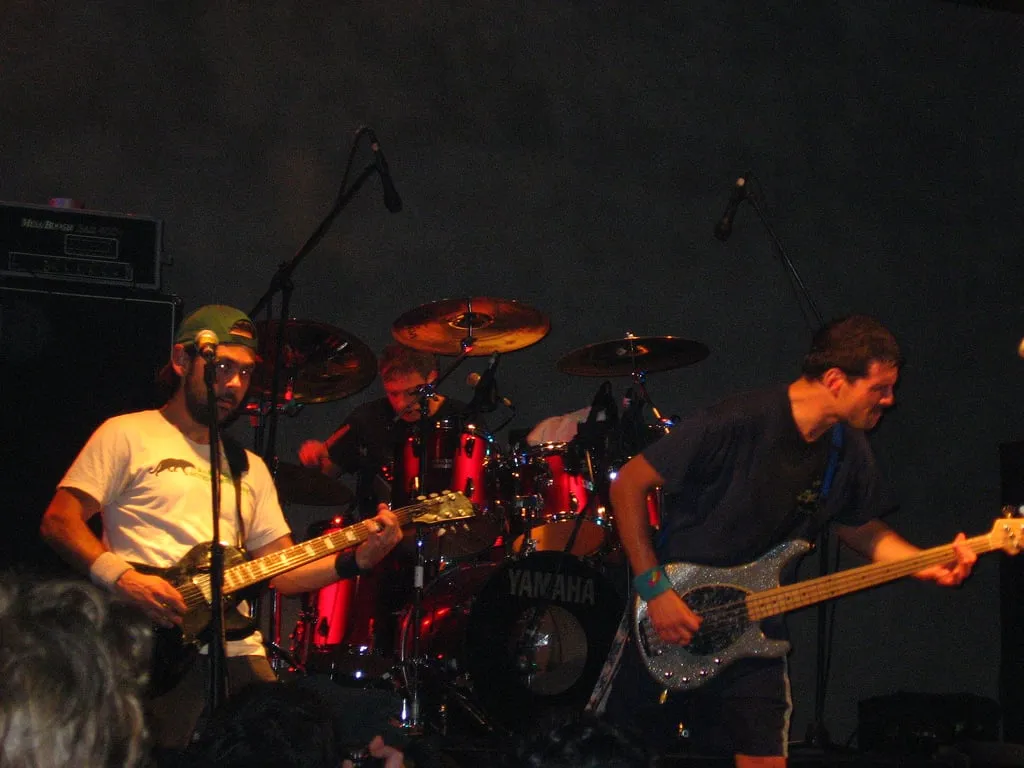
Photo by Carlos A. Restrepo V , licensed under CC BY 2.0 · Wikimedia Commons
Rank #351
Propagandhi
Winnipeg progressive punk-rockers known for political fire and metallic chops.
From Wikipedia
Propagandhi is a Canadian punk rock and metal band formed in Portage la Prairie, Manitoba, in 1986 by guitarist Chris Hannah and drummer Jord Samolesky. The band is currently located in Winnipeg, Manitoba, and completed by bassist Todd Kowalski and guitarist Sulynn Hago.
Discography & Previews
Browse through and click an album to open and play 30-second previews streamed from Apple Music.

How to Clean Everything
1993 · 11 tracks
- 1 Anti-Manifesto ↗ 3:33
- 2 Head? Chest? or Foot? ↗ 2:04
- 3 Hate, Myth, Muscle, Etiquette ↗ 2:43
- 4 Showdown (G.E.P.) ↗ 3:48
- 5 Ska Sucks ↗ 1:51
- 6 Middle Finger Response ↗ 2:24
- 7 Stick the F*****g Flag Up Your Goddamn Ass, You Sonofabitch ↗ 2:52
- 8 Hallie Sallasse, Up Your Ass ↗ 4:11
- 9 F**k Machine ↗ 3:06
- 10 This Might Be Satire ↗ 1:34
- 11 Who Will Help Me Make This Bread ↗ 2:41
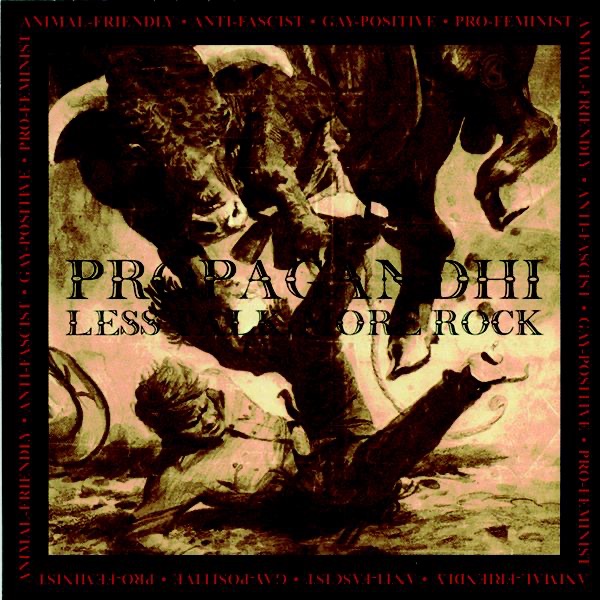
Less Talk, More Rock
1996 · 14 tracks
- 1 Apparently I’m a “P.C. Fascist” (Because I Care About Both Human and Non-Human Animals) ↗ 1:48
- 2 Nailing Descartes to the Wall / (Liquid) Meat Is Still Murder ↗ 1:04
- 3 Less Talk, More Rock ↗ 1:38
- 4 Anchorless ↗ 1:39
- 5 Rio de San Atlanta, Manitoba ↗ 0:40
- 6 A Public Dis-Service Announcement from Shell ↗ 1:26
- 7 ...And We Thought That Nation States Were a Bad Idea ↗ 2:25
- 8 I Was a Pre-teen McCarthyist ↗ 2:33
- 9 Resisting Tyrannical Government ↗ 2:15
- 10 Gifts ↗ 2:04
- 11 The Only Good Fascist Is a Very Dead Fascist ↗ 1:11
- 12 A People's History of the World ↗ 2:22
- 13 The State-Lottery ↗ 2:14
- 14 Refusing to Be a Man ↗ 2:40
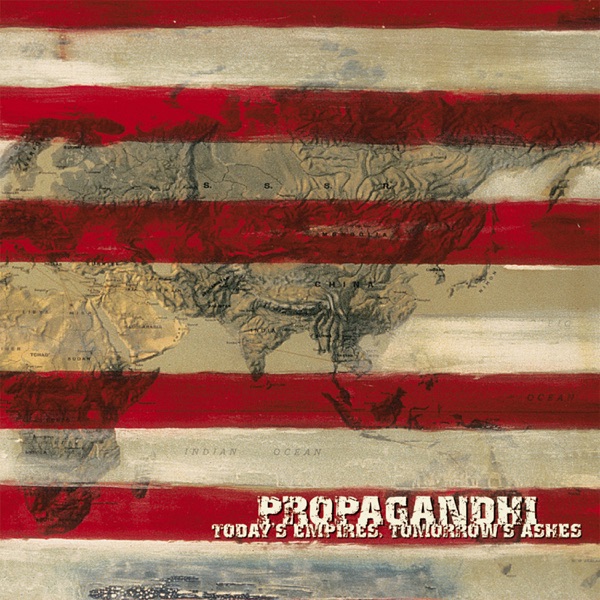
Today’s Empires, Tomorrow’s Ashes
2001 · 18 tracks
- 1 Mate Ka Moris Ukun Rasik An ↗ 2:27
- 2 F**k the Border ↗ 1:32
- 3 Today's Empires, Tomorrow's Ashes ↗ 2:39
- 4 Back to the Motor League ↗ 2:42
- 5 Natural Disasters ↗ 2:06
- 6 With Friends Like These Who the F**k Needs COINTELPRO? ↗ 3:23
- 7 Albright Monument, Baghdad ↗ 2:29
- 8 Ordinary People Do F****d-Up Things When F****d-Up Things Become Ordinary ↗ 2:19
- 9 Ladies Nite in Loserville ↗ 1:46
- 10 Ego Sum Papa (I Am the Pope) ↗ 1:05
- 11 New Homes for Idle Hands ↗ 1:45
- 12 B******t Politicians ↗ 1:34
- 13 March of the Crabs ↗ 1:57
- 14 Purina Hall of Fame ↗ 4:22
- 15 Back to the Motor League (Original Guitar Mix) ↗ 2:41
- 16 Mate Ka Moris Ukun Rasik An (Original Guitar Mix) ↗ 3:02
- 17 With Friends Like These Who the F**k Needs COINTELPRO? (Demo Version) ↗ 2:13
- 18 F**k the Border (Demo Version) ↗ 1:32
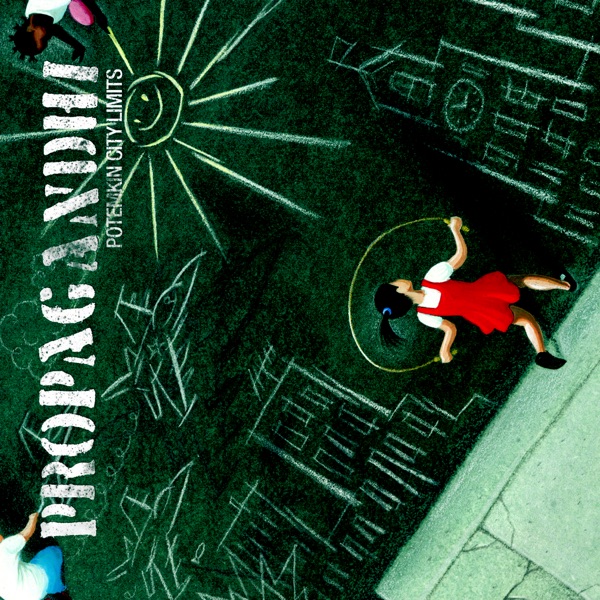
Potemkin City Limits
2005 · 12 tracks
- 1 A Speculative Fiction ↗ 4:15
- 2 Fixed Frequencies ↗ 3:58
- 3 Fedallah's Hearse ↗ 4:01
- 4 Cut Into the Earth ↗ 3:42
- 5 Bringer of Greater Things ↗ 2:46
- 6 Die Jugend Marschiert ↗ 4:42
- 7 Rock for Sustainable Capitalism ↗ 4:12
- 8 Impending Halfhead ↗ 1:14
- 9 Life At Disconnect ↗ 3:24
- 10 Name and Address Withheld ↗ 3:21
- 11 Superbowl Patriot XXXVI ↗ 0:36
- 12 Iteration ↗ 5:20
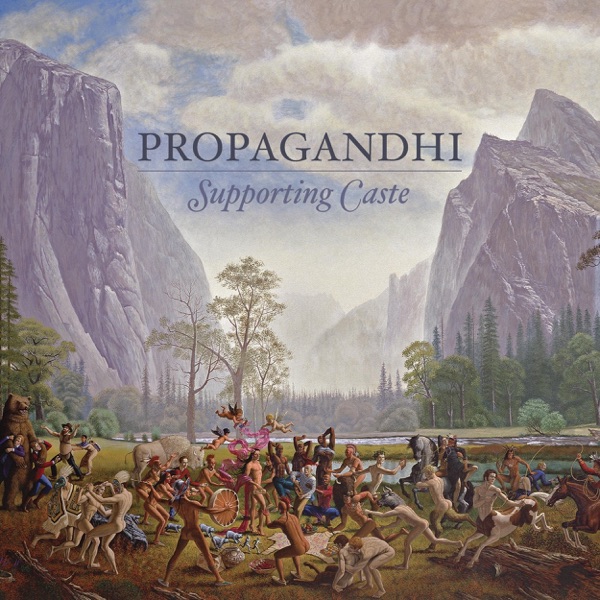
Supporting Caste
2009 · 12 tracks
- 1 Night Letters ↗ 3:52
- 2 Supporting Caste ↗ 4:58
- 3 Tertium Non Datur ↗ 3:17
- 4 Dear Coach's Corner ↗ 4:52
- 5 This Is Your Life ↗ 1:04
- 6 Humane Meat (The Flensing of Sandor Katz) ↗ 2:48
- 7 Potemkin City Limits ↗ 3:49
- 8 The Funeral Procession ↗ 4:15
- 9 Without Love ↗ 3:50
- 10 Incalculable Effects ↗ 2:09
- 11 The Banger's Embrace ↗ 2:13
- 12 Last Will & Testament ↗ 15:15

Failed States
2012 · 12 tracks
- 1 Note to Self (2019 Remaster) ↗ 5:56
- 2 Failed States (2019 Remaster) ↗ 1:54
- 3 Devil's Creek (2019 Remaster) ↗ 2:31
- 4 Rattan Cane (2019 Remaster) ↗ 3:06
- 5 Hadron Collision (2019 Remaster) ↗ 1:37
- 6 Status Update (2019 Remaster) ↗ 1:05
- 7 Cognitive Suicide (2019 Remaster) ↗ 3:42
- 8 Things I Like (2019 Remaster) ↗ 1:59
- 9 Unscripted Moment (2019 Remaster) ↗ 4:10
- 10 Dark Matters (2019 Remaster) ↗ 3:16
- 11 Lotus Gait (2019 Remaster) ↗ 3:15
- 12 Duplicate Keys Icaro (An Interim Report) [2019 Remaster] ↗ 4:33

Victory Lap
2017 · 15 tracks
- 1 Victory Lap ↗ 2:57
- 2 Comply / Resist ↗ 3:23
- 3 Cop Just out of Frame ↗ 2:46
- 4 When All Your Fears Collide ↗ 3:18
- 5 Letters to a Young Anus ↗ 2:20
- 6 Lower Order (A Good Laugh) ↗ 3:06
- 7 Failed Imagineer ↗ 2:11
- 8 Call Before You Dig ↗ 2:22
- 9 Nigredo ↗ 4:13
- 10 In Flagrante Delicto ↗ 2:36
- 11 Tartuffe ↗ 2:36
- 12 Adventures in Zoochosis ↗ 4:41
- 13 Wishing ↗ 2:10
- 14 Beyond ↗ 2:07
- 15 Technocracy ↗ 3:36

At Peace
2025 · 13 tracks
- 1 Guiding Lights ↗ 3:42
- 2 At Peace ↗ 3:54
- 3 Cat Guy ↗ 4:21
- 4 No Longer Young ↗ 2:34
- 5 Rented P.a. ↗ 3:37
- 6 Stargazing ↗ 3:16
- 7 God of Avarice ↗ 2:48
- 8 Prismatic Spray (The Tinder Date) ↗ 4:24
- 9 Benito’s Earlier Work ↗ 3:45
- 10 Vampires Are Real ↗ 3:39
- 11 Fire Season ↗ 3:50
- 12 Day by Day ↗ 3:44
- 13 Something Needs to Die but Maybe It’s Not You ↗ 4:24
-
 How to Clean EverythingPropagandhi199311 tracks
 -
 Less Talk, More RockPropagandhi199614 tracks
 -
 Today’s Empires, Tomorrow’s AshesPropagandhi200118 tracks
 -
 Potemkin City LimitsPropagandhi200512 tracks
 -
 Supporting CastePropagandhi200912 tracks
 -
 Failed StatesPropagandhi201212 tracks
 -
 Victory LapPropagandhi201715 tracks
 -
 At PeacePropagandhi202513 tracks
Deep Dive
Overview
Propagandhi is a Canadian punk rock and hardcore band formed in Portage la Prairie, Manitoba, in 1986. Over nearly four decades, they have built a reputation as one of North America’s most uncompromising punk acts, combining technical musicianship with explicitly political songwriting. The band’s sound merges melodic hardcore and punk rock with progressive song structures and metallic guitar work, positioning them at the intersection of accessibility and artistic ambition.
Formation Story
Propagandhi was founded in 1986 by guitarist Chris Hannah and drummer Jord Samolesky in Portage la Prairie, a smaller city in southern Manitoba. The band would eventually relocate to Winnipeg, where they established themselves as a fixture in the regional punk scene. The early lineup laid the groundwork for what would become one of Canada’s most prolific and politically engaged punk acts. Over the years, the band’s roster solidified around Hannah and Samolesky, with bassist Todd Kowalski and guitarist Sulynn Hago rounding out the core membership.
Breakthrough Moment
Propagandhi’s first two albums, How to Clean Everything (1993) and Yep. (1995), established the band within independent punk circles but with limited mainstream reach. The real turning point came with their third album, Less Talk, More Rock (1996), which showcased a more refined songwriting approach and helped expand their audience beyond regional boundaries. The album’s title became something of a manifesto for the band’s philosophy—a statement of purpose that combined urgency with instrumental sophistication. By the mid-1990s, Propagandhi had earned recognition as a serious creative force within melodic hardcore and punk rock.
Peak Era
Propagandhi’s most creatively ambitious period arrived with Today’s Empires, Tomorrow’s Ashes (2001). This album marked a significant leap in lyrical complexity and musical arrangement, demonstrating the band’s willingness to expand beyond standard punk-rock structures. The release signaled their maturation as both musicians and songwriters. Throughout the 2000s and 2010s, they continued to release substantive work: Potemkin City Limits (2005), Supporting Caste (2009), Failed States (2012), and Victory Lap (2017) all reinforced their standing as one of punk rock’s most intellectually engaged and musically capable bands. This sustained output across multiple decades established Propagandhi as not merely a legacy act but an actively evolving one.
Musical Style
Propagandhi’s sound is rooted in melodic hardcore and punk rock but distinguished by its technical ambition and lyrical directness. The band’s guitars—handled by Hannah and Hago—employ both traditional punk’s driving rhythmic attack and the intricate, metal-influenced riffing that entered hardcore through bands of the 1980s and 1990s. Songs often feature unconventional structures, shifting between explosive choruses and quieter, more introspective verses. Kowalski’s bass work is active and inventive rather than merely foundational, adding harmonic depth. Samolesky’s drumming balances the precision necessary for punk’s propulsive energy with the complexity demanded by progressive song arrangements. Lyrically, Hannah addresses political economy, activism, and social critique with specificity and moral weight, setting Propagandhi apart from punk acts that traffic in vaguer rebellion.
Major Albums
How to Clean Everything (1993)
Propagandhi’s debut introduced their blend of punk energy and melodic sensibility, establishing the template for their long career and demonstrating that the young Winnipeg band possessed both musicianship and conviction.
Less Talk, More Rock (1996)
The album refined the band’s songwriting and arrangements, becoming a turning point that broadened their audience and proved they were more than a regional curiosity.
Today’s Empires, Tomorrow’s Ashes (2001)
A landmark release showcasing fuller arrangements and more intricate compositions, this album marked Propagandhi’s artistic maturation and deepened their engagement with complex social and political themes.
Potemkin City Limits (2005)
Continuing their trajectory of creative expansion, this album reinforced the band’s status as thoughtful craftspeople within the punk and hardcore tradition.
Failed States (2012)
A title that reflected the band’s ongoing engagement with geopolitical critique, the album demonstrated that Propagandhi remained committed to both musical innovation and political substance decades into their career.
Signature Songs
- “Stick the Flag Up Your…” — An early song that captured the band’s irreverent punk attitude and willingness to provoke.
- “A Fireman’s Grenade” — A composition that showcases the band’s ability to balance melody with lyrical urgency.
- “The Glorious Dawn of the Worker’s Descent Into the Commodity-Form” — A title that exemplifies Propagandhi’s commitment to weaving political and economic analysis into song structure.
- “Potemkin City Limits” — Title track that demonstrates the band’s skill at constructing architecturally complex songs within punk’s traditional timeframe.
Influence on Rock
Propagandhi’s influence extends across punk, hardcore, and adjacent rock subgenres. They demonstrated that political substance and musical sophistication were not contradictory in punk rock—that songs addressing labor politics, imperialism, and environmental destruction could also be intricate and technically impressive. Younger bands in melodic hardcore and progressive punk have looked to Propagandhi as proof that the genre need not choose between accessibility and artistic ambition. The band’s alignment with independent record labels and cooperative distribution networks also modeled an approach to the music industry grounded in the band’s stated values. Their example has encouraged a generation of bands to prioritize message and musicianship over commercial calculation.
Legacy
Propagandhi’s legacy rests on consistency, principle, and artistic growth. Across nearly four decades—from their 1986 formation through the release of At Peace in 2025—they have remained a working punk band that treats both their political convictions and their musical craft as equally serious. They have avoided the compromises that often accompany broader commercial success, instead building a sustainable career through independent labels like Epitaph Records, Fat Wreck Chords, and G7 Welcoming Committee Records. The band’s longevity has earned them recognition among punk historians and musicians as exemplars of the form’s potential for intellectual and sonic depth. Their back catalog remains actively listened to, and their continued touring and recording demonstrate that Propagandhi has not calcified into nostalgia but remains a functional, evolving band.
Fun Facts
- Propagandhi’s name derives from the Russian word meaning “propaganda,” a deliberate choice reflecting the band’s commitment to message-driven music.
- The band relocated from Portage la Prairie to Winnipeg, a move that positioned them more centrally within Canada’s punk ecosystem while maintaining their independence from major metropolitan music industry infrastructure.
- Propagandhi have released eight studio albums over three decades, a testament to their sustained output and refusal to break up despite changing punk-rock trends.
- The band has maintained remarkably stable personnel, with Hannah and Samolesky remaining as founding members throughout the band’s existence.