
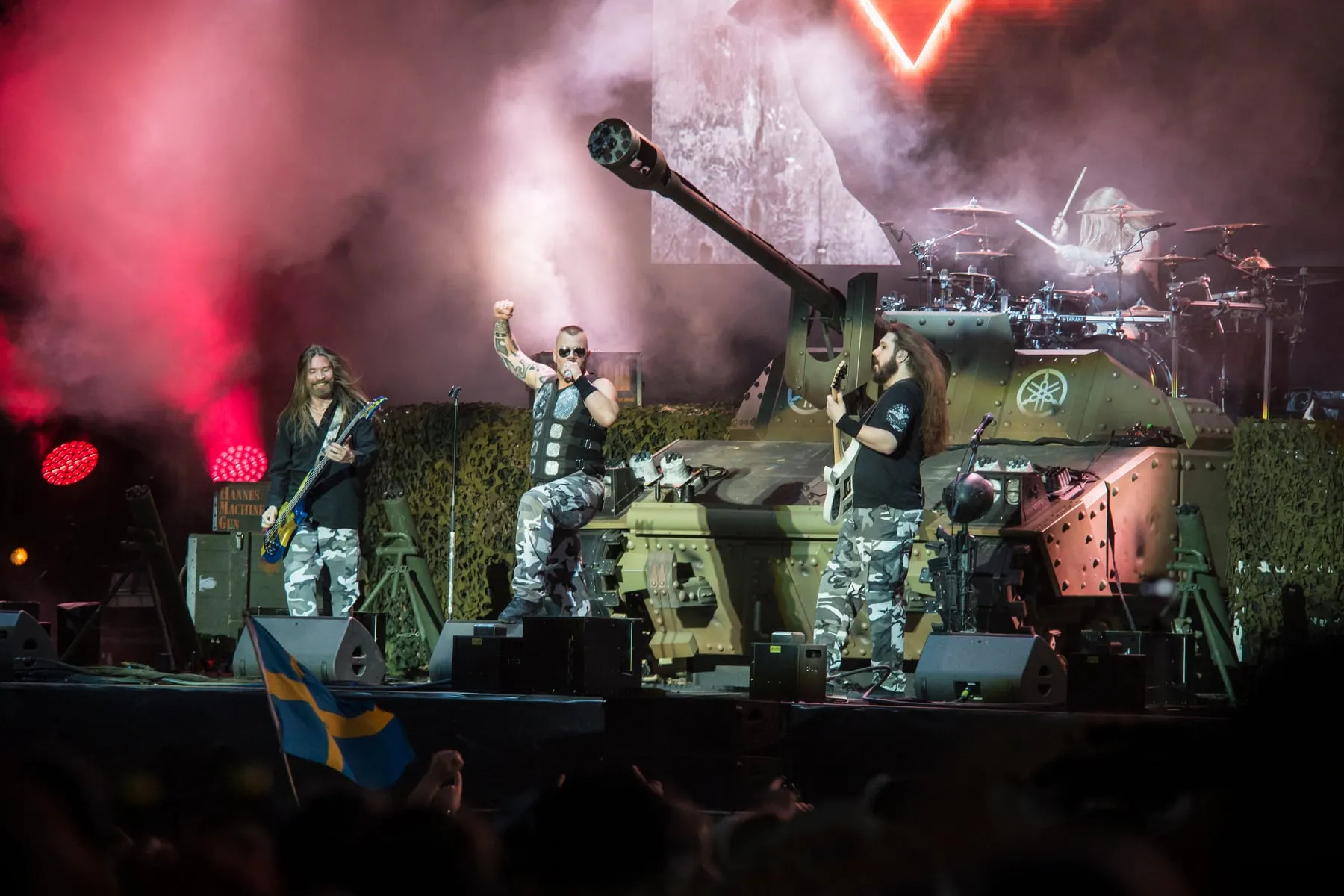
Photo by Selbymay , licensed under CC BY-SA 4.0 · Wikimedia Commons
Rank #228
Sabaton
From Wikipedia
Sabaton is a Swedish power metal band from Falun. The band was formed in 1999 by lead singer Joakim Brodén, bassist Pär Sundström, guitarists Oskar Montelius and Rikard Sundén, and drummer Richard Larsson, but has gone through multiple lineup changes with Brodén and Sundström remaining the only consistent members. The vast majority of their songs are about historical events, mainly wars and significant battles.
Members
- Joakim Brodén (1999–present)
- Oskar Montelius (1999–2012)
- Pär Sundström (1999–present)
- Rikard Sundén (1999–2012)
- Daniel Mullback (2001–2012)
- Daniel Myhr (2005–2012)
- Chris Rörland (2012–present)
- Robban Bäck (2012–2013)
- Thorbjörn Englund (2012–2016)
- Hannes Van Dahl (2013–present)
- Tommy Johansson (2016–2024)
Discography & Previews
Browse through and click an album to open and play 30-second previews streamed from Apple Music.

Primo Victoria
2005 · 15 tracks
- 1 Primo Victoria ↗ 4:11
- 2 Reign of Terror ↗ 3:52
- 3 Panzer Battalion ↗ 5:10
- 4 Wolfpack ↗ 5:56
- 5 Counterstrike ↗ 3:48
- 6 Stalingrad ↗ 5:18
- 7 Into the Fire ↗ 3:26
- 8 Purple Heart ↗ 5:08
- 9 Metal Machine ↗ 4:23
- 10 The March to War ↗ 1:22
- 11 Shotgun ↗ 3:14
- 12 Into the Fire (Live in Falun, 2008) ↗ 4:08
- 13 Rise of Evil (Live in Falun, 2008) ↗ 8:04
- 14 The Beast (Twisted Sister) ↗ 3:12
- 15 Dead Soldier's Waltz ↗ 1:21

Attero Dominatus
2006 · 14 tracks
- 1 Attero Dominatus ↗ 3:43
- 2 Nuclear Attack ↗ 4:10
- 3 Rise of Evil ↗ 8:19
- 4 In the Name of God ↗ 4:06
- 5 We Burn ↗ 2:55
- 6 Angels Calling ↗ 5:57
- 7 Back in Control ↗ 3:15
- 8 Light in the Black ↗ 4:52
- 9 Metal Crüe ↗ 3:43
- 10 Für Immer (Doro Song) ↗ 4:37
- 11 Långa Bollar På Bengt (Svenne Rubins Song) ↗ 2:53
- 12 Metal Medley (Live, in Falun, 2008) ↗ 6:13
- 13 Nightchild ↗ 5:13
- 14 Primo Victoria (Demo Version) ↗ 4:11

Metalizer
2007 · 27 tracks
- 1 Hellrider ↗ 3:42
- 2 Thundergods ↗ 3:48
- 3 Metalizer ↗ 4:07
- 4 Shadows ↗ 3:29
- 5 Burn Your Crosses ↗ 5:09
- 6 7734 ↗ 3:42
- 7 Endless Nights ↗ 4:52
- 8 Hail to the King ↗ 3:39
- 9 Thunderstorm ↗ 3:09
- 10 Speeder ↗ 3:46
- 11 Masters of the World ↗ 4:03
- 12 Jawbreaker (Judas Priest Song) ↗ 3:23
- 13 Dream Destroyer ↗ 3:12
- 14 Panzer Batallion (Demo Version) ↗ 5:02
- 15 Hellrider (Live in Västeras 2006) ↗ 4:26
- 16 Introduction (Fist for Fight Compiltation of Demos) ↗ 0:56
- 17 Hellrider (Fist for Fight Compiltation of Demos) ↗ 3:48
- 18 Endless Nights (Fist for Fight Compiltation of Demos) ↗ 4:50
- 19 Metalizer (Fist for Fight Compiltation of Demos) ↗ 4:26
- 20 Burn Your Crosses (Fist for Fight Compiltation of Demos) ↗ 5:23
- 21 The Hammer Has Fallen (Fist for Fight Compiltation of Demos) ↗ 5:50
- 22 Hail to the King (Fist for Fight Compiltation of Demos) ↗ 4:09
- 23 Shadows (Fist for Fight Compiltation of Demos) ↗ 3:33
- 24 Thunderstorm (Fist for Fight Compiltation of Demos) ↗ 3:10
- 25 Masters of the World (Fist for Fight Compiltation of Demos) ↗ 4:01
- 26 Guten Nacht (Fist for Fight Compiltation of Demos) ↗ 1:53
- 27 Birds of War (Fist for Fight Compiltation of Demos) ↗ 4:53

The Art of War
2008 · 17 tracks
- 1 Sun Tzu Says ↗ 0:24
- 2 Ghost Division ↗ 3:51
- 3 The Art of War ↗ 5:09
- 4 40:1 ↗ 4:11
- 5 Unbreakable ↗ 5:58
- 6 The Nature of Warfare ↗ 1:19
- 7 Cliffs of Gallipoli ↗ 5:52
- 8 Talvisota ↗ 3:32
- 9 Panzerkampf ↗ 5:16
- 10 Union (Slopes of St. Benedict) ↗ 4:05
- 11 The Price of a Mile ↗ 5:55
- 12 Firestorm ↗ 3:26
- 13 A Secret ↗ 0:37
- 14 Swedish Pagans ↗ 4:13
- 15 Glorious Land ↗ 3:19
- 16 Art of War (Pre Production Demos) ↗ 4:48
- 17 Swedish National Anthem (Live, at Sweden Rock Festival) ↗ 2:35

Coat of Arms
2010 · 13 tracks
- 1 Coat of Arms ↗ 3:35
- 2 Midway ↗ 2:29
- 3 Uprising ↗ 4:56
- 4 Screaming Eagles ↗ 4:08
- 5 The Final Solution ↗ 4:57
- 6 Aces in Exile ↗ 4:23
- 7 Saboteurs ↗ 3:16
- 8 Wehrmacht ↗ 4:14
- 9 White Death ↗ 4:10
- 10 Metal Ripper ↗ 3:51
- 11 Coat of Arms (Instrumental) ↗ 3:33
- 12 Metal Ripper (Instrumental) ↗ 3:47
- 13 White Death (Instrumental) ↗ 4:10

Carolus Rex
2012 · 12 tracks

Heroes
2014 · 12 tracks
- 1 Intro - Heroes (Track Commentary) ↗ 0:30
- 2 Night Witches (Track Commentary) ↗ 0:34
- 3 No Bullets Fly (Track Commentary) ↗ 0:44
- 4 Smoking Snakes (Track Commentary) ↗ 0:39
- 5 Inmate 4859 (Track Commentary) ↗ 0:50
- 6 To Hell and Back (Track Commentary) ↗ 0:50
- 7 The Ballad of Bull (Track Commentary) ↗ 0:34
- 8 Resist and Bite (Track Commentary) ↗ 0:50
- 9 Soldier of 3 Armies (Track Commentary) ↗ 0:39
- 10 Far from the Fame (Track Commentary) ↗ 0:34
- 11 Hearts of Iron (Track Commentary) ↗ 0:39
- 12 Outro - Heroes (Track Commentary) ↗ 0:16

The Last Stand
2016 · 10 tracks
- 1 Sparta (Track Commentary) ↗ 0:37
- 2 Last Dying Breath (Track Commentary) ↗ 0:20
- 3 Blood of Bannockburn (Track Commentary) ↗ 1:17
- 4 The Lost Battalion (Track Commentary) ↗ 1:08
- 5 Rorke's Drift (Track Commentary) ↗ 1:22
- 6 The Last Stand (Track Commentary) ↗ 1:30
- 7 Hill 3234 (Track Commentary) ↗ 1:01
- 8 Shiroyama (Track Commentary) ↗ 2:18
- 9 Winged Hussars (Track Commentary) ↗ 1:30
- 10 The Last Battle (Track Commentary) ↗ 2:28

The Great War
2019 · 11 tracks
- 1 The Future of Warfare ↗ 3:26
- 2 Seven Pillars of Wisdom ↗ 3:02
- 3 82nd All the Way ↗ 3:31
- 4 The Attack of the Dead Men ↗ 3:56
- 5 Devil Dogs ↗ 3:17
- 6 The Red Baron ↗ 3:22
- 7 Great War ↗ 4:28
- 8 A Ghost in the Trenches ↗ 3:26
- 9 Fields of Verdun ↗ 3:17
- 10 The End of the War to End All Wars ↗ 4:45
- 11 In Flanders Fields ↗ 1:57


-
 Primo VictoriaSabaton200515 tracks
 -
 Attero DominatusSabaton200614 tracks
 -
 MetalizerSabaton200727 tracks
 -
 The Art of WarSabaton200817 tracks
 -
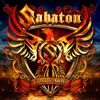 Coat of ArmsSabaton201013 tracks
 -
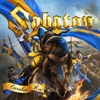 Carolus RexSabaton201212 tracks
 -
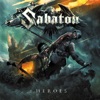 HeroesSabaton201412 tracks
 -
 The Last StandSabaton201610 tracks
 -
 The Great WarSabaton201911 tracks
 -
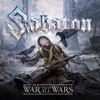 The War to End All WarsSabaton202210 tracks
 -
 LegendsSabaton202511 tracks
Deep Dive
Overview
Sabaton is a Swedish power metal band from Falun that has built a distinctive career around a singular artistic premise: the composition of songs about historical events, predominantly wars and significant battles. Formed in 1999, the band arrived as power metal was entering a period of sustained international expansion, and their thematic focus—a systematic dramatization of military history through the language of melodic heavy metal—set them apart from peers more concerned with fantasy, mythology, or personal introspection. Over two decades of operation, Sabaton has released eleven studio albums, maintained a stable core creative partnership, and cultivated a dedicated global fanbase drawn equally to the technical demands of power metal and the narrative specificity of their songwriting.
Formation Story
Sabaton was founded in 1999 in Falun, a city in the Dalarna region of central Sweden, by lead vocalist Joakim Brodén, bassist Pär Sundström, guitarists Oskar Montelius and Rikard Sundén, and drummer Richard Larsson. The band emerged during a moment when Swedish metal was experiencing a broad renaissance across multiple subgenres; power metal in particular was gaining traction internationally, with bands from across Europe refining the bombastic, technically proficient template established in the 1980s. Brodén and Sundström established themselves as the creative and organizational constants from the beginning, a relationship that would prove foundational to the band’s continuity through the numerous personnel shifts of the following two decades. The founding lineup of five musicians would remain intact for roughly six years, allowing the band to develop its core sound and conceptual framework before the first of many rotations in the rhythm section and lead guitar positions.
Breakthrough Moment
Sabaton’s entry into wider recognition arrived with the release of their debut studio album, Primo Victoria, in 2005. The title itself—Latin for “first victory”—signaled the band’s intention to address historical warfare with a martial vocabulary, and the record established the sonic and thematic template that would define their career: power metal marked by clear, fronted vocals, technical but melodically grounded guitar work, and lyrical preoccupation with historical combat. The album gained traction within the international power metal community and, critically, the 2006 follow-up Attero Dominatus (Latin for “I bring destruction”) deepened this reputation, further cementing Sabaton’s position as a distinctive voice within the genre. By the time of The Art of War in 2008, the band had secured distribution deals with major independent labels, including Nuclear Blast, which would become their principal global partner.
Peak Era
Sabaton’s most commercially successful and creatively sustained period spanned the decade from approximately 2008 to 2019, encompassing the albums The Art of War (2008), Coat of Arms (2010), Carolus Rex (2012), Heroes (2014), The Last Stand (2016), and The Great War (2019). These albums, released at roughly two-year intervals, represented a period of consistent output and increasingly sophisticated production, as the band signed to Better Noise Music and expanded their touring infrastructure. During this stretch, Sabaton refined both their technical execution—with lead guitarist Chris Rörland, who joined in 2012, becoming the longest-tenured guitarist after the initial years—and their approach to historical narrative, moving from single-battle focus toward conceptual albums that treated entire campaigns or eras as unified thematic spaces. The 2012 release Carolus Rex marked a turning point, introducing baroque production elements and treating the reign of Swedish King Charles XII as a narrative throughline, establishing a model the band would revisit on subsequent records.
Musical Style
Sabaton’s music operates within the power metal vocabulary: accelerated tempos, layered melodic guitar lines, clean and soaring vocals, and rhythm sections locked into the propulsive groove that defines the genre. Brodén’s vocal approach—pitched in a mid-range tenor, delivered with clarity and without excessive ornamentation—sits higher in the mix than in many comparable European power metal bands, functioning almost as a lead instrument carrying the lyrical and emotional content. The band’s production aesthetic, particularly from The Art of War onward, incorporates orchestral elements and period-appropriate instrumentation; Carolus Rex, for instance, introduced folk melodies and baroque sensibilities that reflected its historical subject. Structurally, Sabaton songs tend toward conventional verse-chorus-bridge arrangements, avoiding the extended instrumental passages and complex time signatures favored by some progressive-leaning power metal acts in favor of clarity and singability. Lyrically, the band’s commitment to historical documentation means that their songs function simultaneously as metal music and as condensed historical narratives, with album artwork, liner notes, and concert presentations all reinforcing this dual identity.
Major Albums
Primo Victoria (2005)
Sabaton’s debut established both their sound and their thematic obsession: a tight, production-conscious power metal record centered on accounts of historical military campaigns and the soldiers who fought them, with clear vocals and memorable melody lines serving as the entry point for listeners unfamiliar with the band.
The Art of War (2008)
The band’s third album marked a significant leap in production sophistication and international distribution, introducing orchestral arrangements and solidifying their reputation as serious historians working within the metal idiom rather than as novelty or gimmick performers.
Carolus Rex (2012)
A conceptual album treating the reign of Swedish King Charles XII, Carolus Rex expanded Sabaton’s production palette with baroque instrumentation and folk melodic elements, demonstrating their willingness to evolve their sound in service of historical authenticity.
Heroes (2014)
This record shifted focus toward individual soldiers and civilian experiences of war, maintaining the band’s technical polish while broadening their emotional and narrative scope beyond military strategy and command decisions.
The Great War (2019)
A comprehensive treatment of World War I released at the centennial of the conflict’s end, The Great War represented the culmination of Sabaton’s approach to historical documentation, combining technical proficiency with deeply researched songwriting across multiple national perspectives.
Signature Songs
- Primo Victoria — The title track from the 1995 debut, functioning as the band’s de facto anthem and establishing the thematic framework for everything that followed.
- 40:1 — A chronicle of the Battle of France during World War II, notable for its stoic pacing and the stark mathematical ratio referenced in the title.
- The Last Stand — The title track from the 2016 album, addressing the Swiss Guard’s defense of Vatican City during the Sack of Rome in 1527.
- Carolus Rex — The title track from the 2012 album, a baroque-inflected portrait of Swedish King Charles XII that became the band’s most ambitious production undertaking to that point.
- In the Army Now — A military-life reflection that became a popular concert favorite and one of the band’s most recognized songs outside the core fanbase.
Influence on Rock
Sabaton’s primary influence has been to demonstrate that thematic consistency and conceptual depth are compatible with commercial metal success, particularly within the power metal subgenre. They have encouraged other bands to treat historical subjects with seriousness and to pursue research-backed songwriting rather than stock fantasy or mythological tropes. The band’s sustained touring schedule across Europe, North America, and beyond has raised the commercial profile of power metal generally in markets where the subgenre had limited visibility; their festivals and tour packages have become destinations for metal audiences seeking music with intellectual and educational content alongside technical musicianship. Within the broader context of 2000s and 2010s rock, Sabaton represented a counterweight to the irony and pastiche that characterized some contemporary metal trends, proposing instead that genre traditions could be honored while expanding thematic ambitions.
Legacy
Sabaton has achieved sustained commercial success and critical credibility over a quarter-century, an accomplishment rare within metal subgenres known for rapid style shifts and audience fragmentation. The band’s 2022 album The War to End All Wars, another World War I concept record, and their 2025 release Legends, continue this trajectory of regular output and thematic ambition. Their music has achieved significant streaming presence and they maintain one of the most consistent touring schedules among European metal acts, with dedicated festival appearances and regional tour packages across multiple continents. The band’s longevity, combined with Brodén and Sundström’s unbroken creative partnership since 1999, has established them as elder statesmen within modern power metal, a position they leverage through mentorship of younger bands and sustained engagement with their global fanbase through social media and convention appearances.
Fun Facts
- Sabaton’s commitment to historical accuracy extends beyond music into visual presentation; their concerts often feature period-appropriate staging, authentic military costuming, and multimedia presentations that contextualize the historical events depicted in each album.
- The band’s name derives from sabaton, a term for armor protecting the foot in medieval and Renaissance warfare, reflecting their interest in military history from its technical and material dimensions.
- Joakim Brodén and Pär Sundström have been the only members present from the band’s 1999 formation through the present day, making them one of the few consistent creative partnerships in modern power metal.
- Sabaton’s 2022 release The War to End All Wars arrived at the centennial of World War I’s conclusion, demonstrating their long-term commitment to addressing historical anniversaries through album releases timed to significant historical moments.