
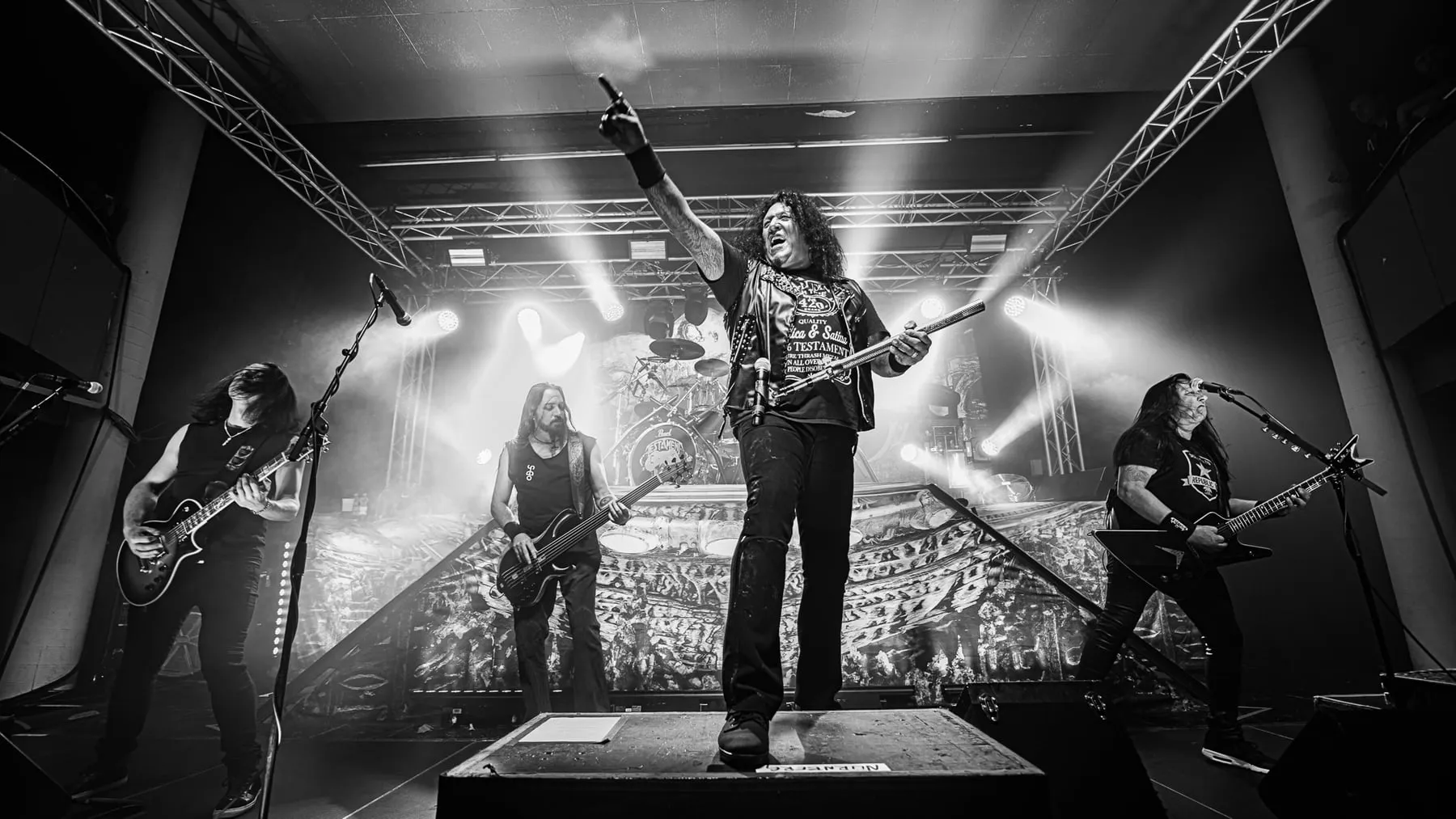
Photo by Stefan Brending ( 2eight ) , licensed under CC BY-SA 3.0 de · Wikimedia Commons
Rank #385
Testament
From Wikipedia
Testament is an American thrash metal band from Berkeley, California. Formed in 1983 under the name Legacy, the band's current lineup includes rhythm guitarist Eric Peterson, lead vocalist Chuck Billy, lead guitarist Alex Skolnick, bassist Steve Di Giorgio and drummer Chris Dovas. Testament has experienced many lineup changes over the years, with Peterson being the only remaining original member. The band has released fourteen studio albums, four live albums, five compilation albums, thirteen singles and three DVDs. They are estimated to have sold over 1.4 million albums in the United States since the beginning of the SoundScan era, and over 14 million copies worldwide as of 2016.
Members
- Eric Peterson (1983–present)
- Greg Christian (1983–1996)
- Steve Souza (1983–1986)
- Alex Skolnick (1985–1992)
- Chuck Billy (1986–present)
- Paul Bostaph (1992–1993)
- Chris Kontos (1995–1996)
- Gene Hoglan (1996–1997)
- Dave Lombardo (1998–1999)
- Steve DiGiorgio (1998–2005)
- Nick Barker (2006–2007)
Discography & Previews
Browse through and click an album to open and play 30-second previews streamed from Apple Music.


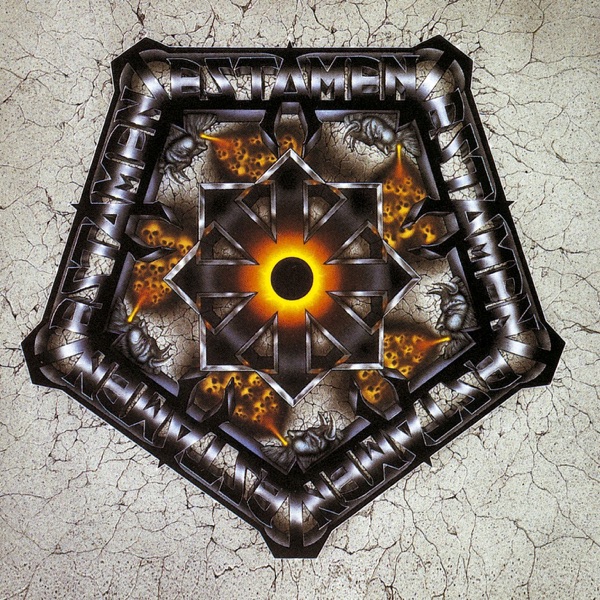
Practice What You Preach
1989 · 10 tracks

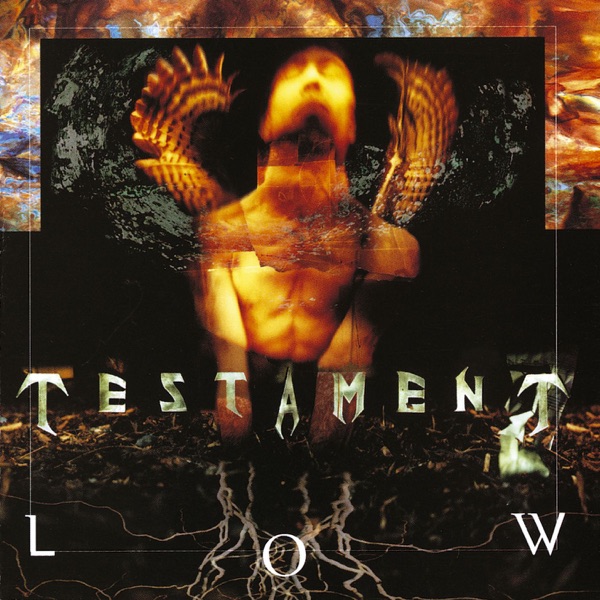
Low
1994 · 12 tracks

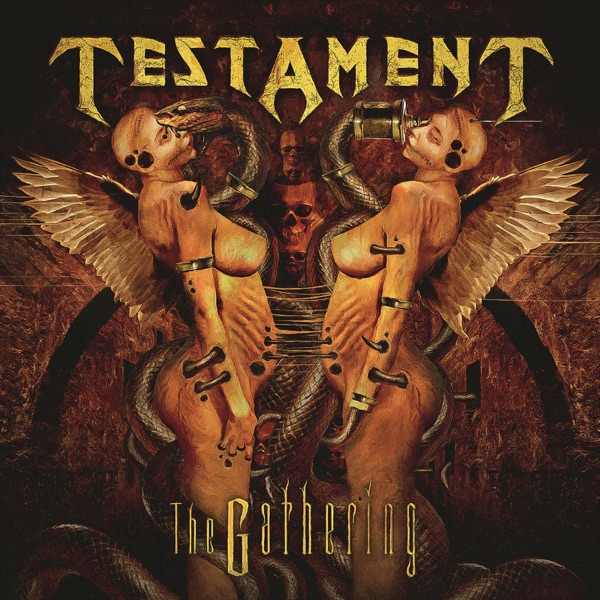
The Gathering
1999 · 12 tracks
- 1 D.N.R. (Do Not Resuscitate) ↗ 3:32
- 2 Down for Life ↗ 3:24
- 3 Eyes of Wrath ↗ 5:27
- 4 True Believer ↗ 3:36
- 5 3 Days in Darkness ↗ 4:40
- 6 Legions of the Dead ↗ 2:39
- 7 Careful What You Wish For ↗ 3:30
- 8 Riding the Snake ↗ 4:10
- 9 Allegiance ↗ 2:37
- 10 Sewn Shut Eyes ↗ 4:16
- 11 Fall of Sipledome ↗ 4:51
- 12 Hammer of the Gods ↗ 3:13

First Strike Still Deadly
2001 · 11 tracks

The Formation of Damnation
2008 · 11 tracks
- 1 For the Glory of... ↗ 1:12
- 2 More Than Meets the Eye ↗ 4:33
- 3 The Evil Has Landed ↗ 4:44
- 4 The Formation of Damnation ↗ 5:10
- 5 Dangers of the Faithless ↗ 5:48
- 6 The Persecuted Won't Forget ↗ 5:49
- 7 Henchmen Ride ↗ 4:01
- 8 Killing Season ↗ 4:53
- 9 Afterlife ↗ 4:14
- 10 F.E.A.R. ↗ 4:47
- 11 Leave Me Forever ↗ 4:28
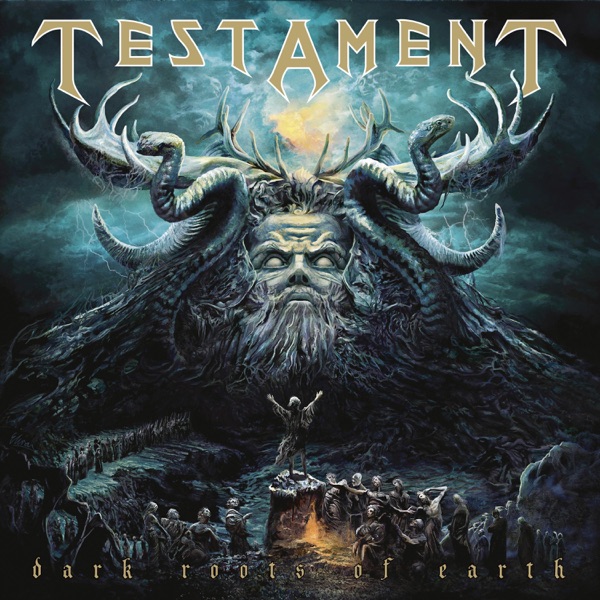
Dark Roots of Earth
2012 · 14 tracks
- 1 Rise Up ↗ 4:18
- 2 Native Blood ↗ 5:21
- 3 Dark Roots of Earth ↗ 5:45
- 4 True American Hate ↗ 5:27
- 5 A Day in the Death ↗ 5:38
- 6 Cold Embrace ↗ 7:46
- 7 Man Kills Mankind ↗ 5:06
- 8 Throne of Thorns ↗ 7:05
- 9 Last Stand for Independence ↗ 4:43
- 10 Dragon Attack ↗ 4:44
- 11 Animal Magnetism ↗ 5:56
- 12 Powerslave ↗ 6:51
- 13 Throne of Thorns (Extended Version) ↗ 7:41
- 14 A Day in the Death (feat. Chris Adler) ↗ 5:41

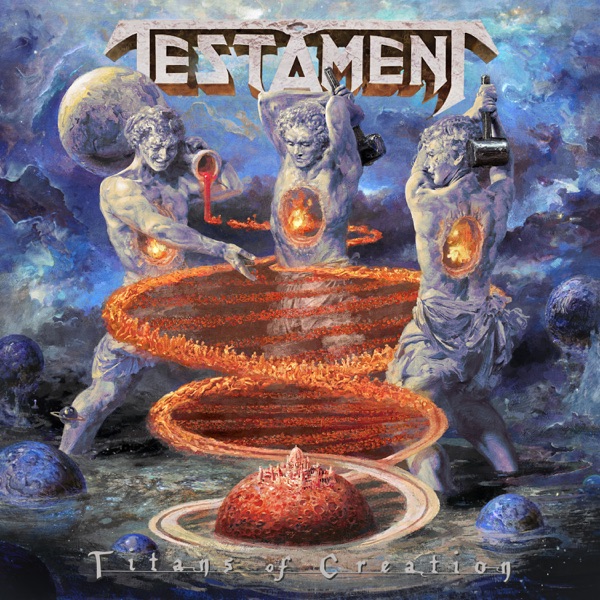
Titans of Creation
2020 · 12 tracks

-
 The LegacyTestament19879 tracks
 -
 The New OrderTestament198810 tracks
 -
 Practice What You PreachTestament198910 tracks
 -
 Souls of BlackTestament199010 tracks
 -
 The RitualTestament199211 tracks
 -
 LowTestament199412 tracks
 -
 DemonicTestament199711 tracks
 -
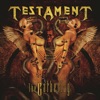 The GatheringTestament199912 tracks
 -
 First Strike Still DeadlyTestament200111 tracks
 -
 The Formation of DamnationTestament200811 tracks
 -
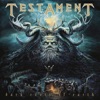 Dark Roots of EarthTestament201214 tracks
 -
 Brotherhood of the SnakeTestament201610 tracks
 -
 Titans of CreationTestament202012 tracks
 -
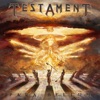 Para BellumTestament202510 tracks
Deep Dive
Overview
Testament is an American thrash metal band from Berkeley, California, that emerged from the same mid-1980s Bay Area scene that produced Metallica, Slayer, and Megadeth. Formed in 1983 under the name Legacy, the band carved out a distinct position in thrash metal through technically proficient songwriting, driving rhythms, and a willingness to explore both speed and atmosphere across a catalog spanning nearly four decades. With over 14 million albums sold worldwide as of 2016 and consistent touring and recording activity, Testament stands as one of thrash metal’s most enduring acts.
Formation Story
Testament began in 1983 in Berkeley as Legacy, founded by rhythm guitarist Eric Peterson and bassist Greg Christian. Vocalist Steve Souza joined early, establishing the core of the band’s first phase. The band operated within the Berkeley thrash metal ecosystem, a region that had begun to forge its own sound distinct from the Los Angeles speed metal scene and the East Coast hardcore influences that also shaped the genre. By 1985, lead guitarist Alex Skolnick joined the lineup, and vocalist Chuck Billy came aboard in 1986, replacing Souza. The addition of Billy and Skolnick shaped the band’s sound and vision heading into their first official release. The band changed their name from Legacy to Testament before recording their debut, a shift that reflected their growing ambition and the need to avoid confusion with other acts.
Breakthrough Moment
Testament’s official breakthrough came with their 1987 debut album, The Legacy, released on Atlantic Records. The album announced the band as serious contenders in thrash metal, combining the speed and heaviness established by Metallica’s Master of Puppets and Slayer’s Reign in Blood with Testament’s own architectural approach to riffing. However, it was the 1989 release Practice What You Preach that solidified their broader recognition within the metal community and beyond. The album’s tighter production, more confident songwriting, and the full realization of Chuck Billy’s vocal presence made Practice What You Preach a standout entry in the thrash metal canon and elevated Testament from promising newcomers to established acts. This album marked the band’s entry into their peak creative period and helped them command increasingly prominent spots on metal tours and festivals.
Peak Era
From 1989 through the mid-1990s, Testament achieved their greatest commercial and critical heights. Souls of Black (1990) and The Ritual (1992) deepened the band’s lyrical and sonic palette, moving beyond pure speed-based thrash to incorporate darker atmospherics, complex song structures, and more introspective vocal delivery from Billy. These albums showcased the band’s maturation: while earlier work emphasized velocity and technical display, the peak-era material demonstrated an understanding of dynamics and song craft that transcended genre boundaries. The period saw numerous lineup changes, with Alex Skolnick departing in 1992 and Greg Christian exiting in 1996, yet Peterson and Billy remained as the creative anchors. By the mid-1990s, the broader metal landscape had shifted toward grunge’s rise and thrash metal’s commercial decline, yet Testament continued to record and tour, maintaining a devoted international following particularly strong in Europe and South America.
Musical Style
Testament’s sound is built on the foundation of Bay Area thrash metal—fast, syncopated riffs derived from both metal and punk-influenced songwriting—but with a distinctive emphasis on groove and songwriting depth. The band’s rhythm section, anchored by Peterson’s tightly controlled rhythm guitar work, locks into driving, syncopated patterns that propel rather than overwhelm. Lead guitarists like Skolnick brought a bluesy, articulate approach to soloing, emphasizing melodic phrasing and sustain rather than pure speed. Chuck Billy’s vocals, which range from aggressive shouts to sustained melodic lines, sit prominently in the mix and often carry lyrical weight focused on darker, philosophical themes. Across their catalog, Testament demonstrated an ability to shift between relentless, mid-tempo riff-driven passages and faster, more angular thrash sections, a dynamic range that kept even lengthy albums engaging. Over time, particularly from the 2000s onward, the band’s production became increasingly polished and modern, though the core songwriting remained rooted in their thrash metal identity.
Major Albums
The Legacy (1987)
Testament’s debut introduced the band’s core sound: Bay Area thrash metal executed with technical precision and memorable riffing. The album established the template for their subsequent work and their place in the broader thrash metal movement.
Practice What You Preach (1989)
The album that crystallized Testament’s breakthrough, featuring tighter songwriting, more confident performances, and Chuck Billy fully in command of the band’s vocal identity. Practice What You Preach remains the band’s most widely recognized release.
The Ritual (1992)
One of Testament’s most accomplished albums, incorporating darker atmospherics and more ambitious song structures while maintaining the band’s thrash metal core. The album showcased the band’s songwriting maturity and willingness to experiment within the genre.
The Gathering (1999)
A landmark return to prominence following the genre’s commercial decline in the 1990s. The Gathering demonstrated the band’s continued relevance and ability to craft compelling material, with notably modern production and solidified performances.
The Formation of Damnation (2008)
A critically acclaimed album marking a creative resurgence, with intricate song arrangements, powerful performances, and production that honored the band’s legacy while sounding contemporary. The album proved Testament remained vital after two decades of shifting trends.
Dark Roots of Earth (2012)
Testament’s most recent album to garner widespread critical attention, showcasing sustained creative vitality and a band clearly engaged with their material and their audience.
Signature Songs
- “Return to Serenity” — A Practice What You Preach standout that showcases the band’s ability to balance melodic sensibility with thrash metal intensity.
- “Souls of Black” — Title track from their 1990 album, exemplifying Testament’s groove-oriented approach to thrash metal and Chuck Billy’s commanding vocal presence.
- “The Preacher” — A fan favorite demonstrating the band’s knack for memorable riffing and lyrical substance combined.
- “Over and Out” — A signature example of Testament’s ability to build dynamic, layered compositions that sustain interest across longer song forms.
- “D.M.C.” — A driving, riff-centric track that captures the band’s relentless energy and technical execution.
Influence on Rock
Testament helped define and sustain the Bay Area thrash metal movement through four decades of activity, maintaining a blueprint that influenced countless metal bands globally. While not as commercially dominant as Metallica or as shock-oriented as Slayer, Testament’s combination of technical competency, songwriting craft, and philosophical seriousness on their lyrics proved influential on metal acts across Europe and South America, where their fanbase remained particularly devoted. The band’s willingness to evolve their sound while remaining rooted in thrash metal’s core vocabulary—the driving rhythms, the syncopated riffing, the emphasis on dynamics—provided a model for longevity in a genre often seen as requiring continual reinvention to remain relevant. Testament’s sustained existence and continued touring demonstrated that thrash metal, despite commercial decline in the 1990s and 2000s, possessed cultural staying power that extended well beyond its peak popularity.
Legacy
Testament stands as one of thrash metal’s most durable and prolific acts, having released fourteen studio albums across nearly four decades while maintaining the core musical identity established in the 1980s. The band’s ability to sustain a career through multiple lineup changes—with Eric Peterson serving as the sole constant since the band’s formation—speaks to both his creative vision and the fundamental appeal of Testament’s music. The band’s 1.4 million album sales in the United States alone, combined with their estimated 14 million copies sold worldwide as of 2016, reflects a substantial and loyal international following. Testament’s continued activity into the 2020s, including the 2025 album Para Bellum, demonstrates their place as a functioning part of metal’s infrastructure rather than a relic of the 1980s. The band remains a fixture on festival lineups and continues to draw devoted audiences across multiple continents, evidence of thrash metal’s continued cultural resonance decades after the genre’s initial commercial peak.
Fun Facts
- Eric Peterson has been Testament’s only continuous member since the band’s 1983 formation, giving him a unique position as the sole surviving original member through all subsequent lineup changes and over forty years of active performance.
- The band originally performed under the name Legacy before their 1987 debut, a name change made to avoid confusion with other bands and to mark their official entry into the metal mainstream.
- Testament has worked with multiple influential drummers across different eras, including Dave Lombardo (who also played for Slayer) in 1998–1999 and Gene Hoglan in 1996–1997, bringing diverse stylistic influences to the band’s evolving sound.
- The band’s international fanbase, particularly in Europe and South America, remained remarkably devoted even during the 1990s when thrash metal experienced its steepest commercial decline in North America.
- Testament’s active recording and touring schedule into the 2020s makes them one of the few Bay Area thrash metal acts to maintain continuous presence and album output for nearly four consecutive decades.