
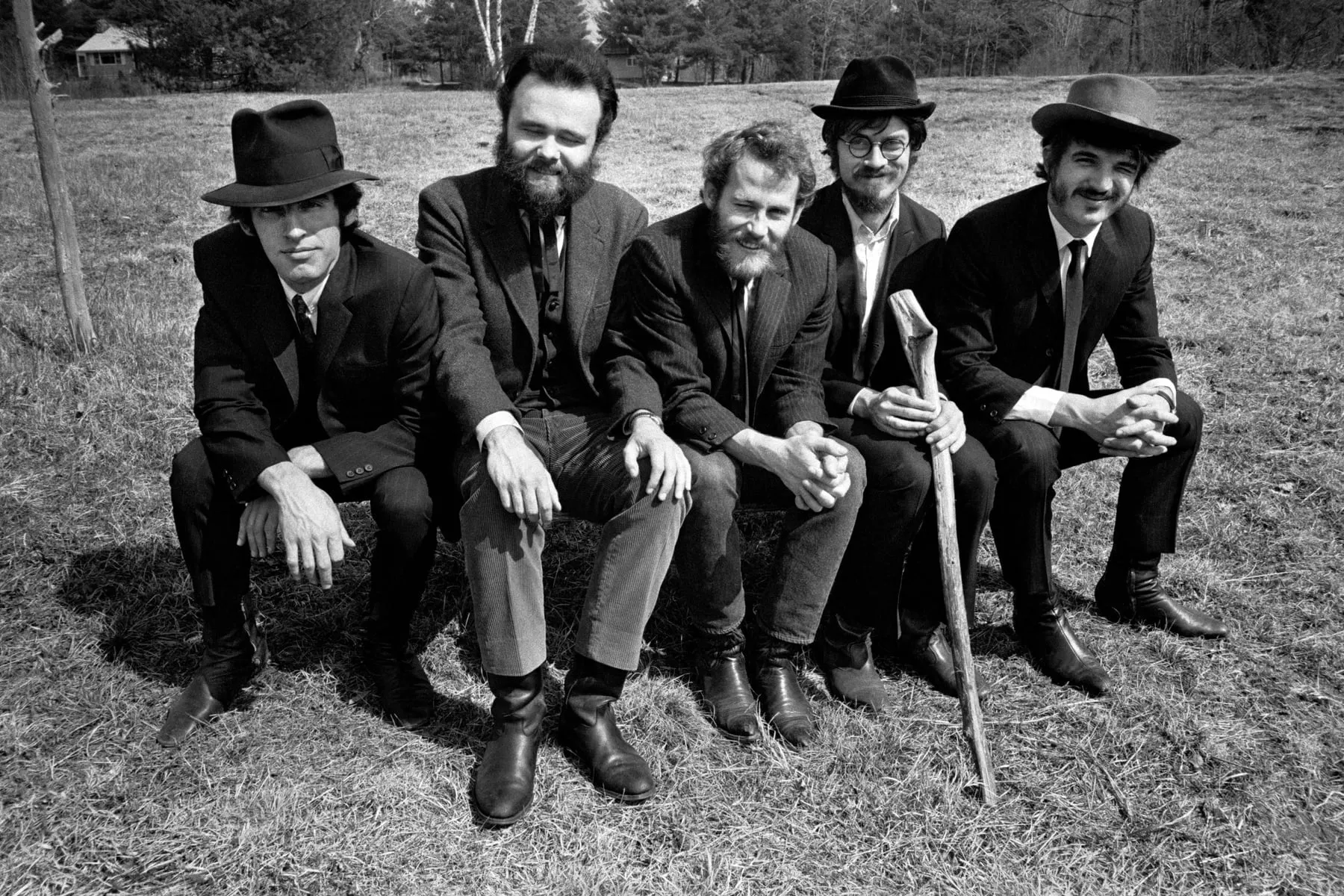
Photo by Capitol Records , licensed under Public domain · Wikimedia Commons
Rank #38
The Band
From Wikipedia
The Band were a Canadian-American rock band formed in Toronto, Ontario. It consisted of Canadians Rick Danko, Garth Hudson, Richard Manuel and Robbie Robertson and American Levon Helm. The Band's music combined elements of Americana, folk, rock, R&B, jazz and country, which influenced artists including George Harrison, Elton John, the Grateful Dead, Eric Clapton and Wilco.
Discography & Previews
Browse through and click an album to open and play 30-second previews streamed from Apple Music.

Music From Big Pink
1968 · 11 tracks
- 1 Tears of Rage ↗ 5:20
- 2 To Kingdom Come (Remastered 2000) ↗ 3:19
- 3 In A Station (Remastered 2000) ↗ 3:30
- 4 Caledonia Mission (Remastered 2000) ↗ 2:54
- 5 The Weight ↗ 4:34
- 6 We Can Talk (Remastered 2000) ↗ 3:03
- 7 Long Black Veil (Remastered 2000) ↗ 3:01
- 8 Chest Fever (Remastered 2000) ↗ 5:13
- 9 Lonesome Suzie (Remastered 2000) ↗ 4:01
- 10 This Wheel's On Fire (Remastered 2000) ↗ 3:10
- 11 I Shall Be Released (Remastered 2000) ↗ 3:12
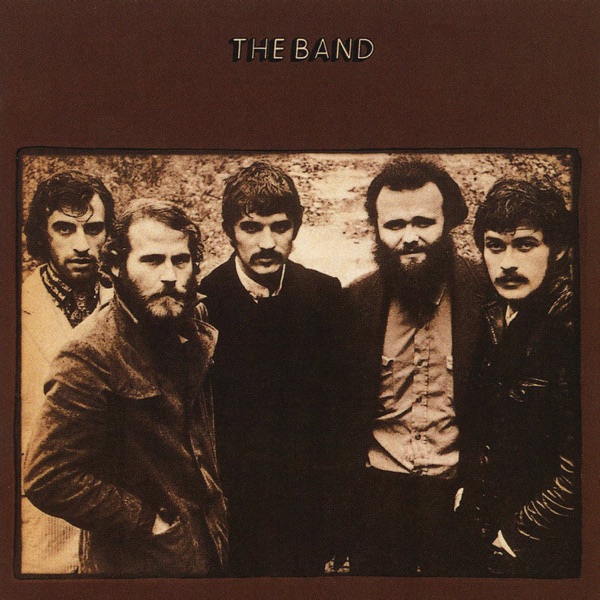
The Band
1969 · 12 tracks
- 1 Across the Great Divide ↗ 2:53
- 2 Rag Mama Rag ↗ 3:02
- 3 The Night They Drove Old Dixie Down ↗ 3:32
- 4 When You Awake ↗ 3:13
- 5 Up On Cripple Creek ↗ 4:30
- 6 Whispering Pines ↗ 3:57
- 7 Jemima Surrender ↗ 3:30
- 8 Rockin' Chair ↗ 3:41
- 9 Look Out Cleveland ↗ 3:07
- 10 Jawbone ↗ 4:19
- 11 The Unfaithful Servant ↗ 4:15
- 12 King Harvest (Has Surely Come) ↗ 3:38

Stage Fright
1970 · 10 tracks
- 1 Strawberry Wine (Remastered) ↗ 2:34
- 2 Sleeping (Remastered) ↗ 3:16
- 3 Time To Kill (Remastered) ↗ 3:26
- 4 Just Another Whistle Stop (Remastered) ↗ 3:51
- 5 All La Glory (Remastered) ↗ 3:33
- 6 The Shape I'm In (Remastered) ↗ 4:01
- 7 The W.S. Walcott Medicine Show (Remastered) ↗ 3:01
- 8 Daniel and the Sacred Harp (Remastered) ↗ 4:09
- 9 Stage Fright (Remastered) ↗ 3:40
- 10 The Rumor (Remastered) ↗ 4:14

Cahoots
1971 · 11 tracks
- 1 Life Is a Carnival ↗ 3:56
- 2 When I Paint My Masterpiece ↗ 4:18
- 3 Last of the Blacksmiths ↗ 3:39
- 4 Where Do We Go From Here? ↗ 3:48
- 5 4% Pantomime ↗ 4:32
- 6 Shoot Out In Chinatown ↗ 2:50
- 7 The Moon Struck One ↗ 4:08
- 8 Thinkin' Out Loud ↗ 3:17
- 9 Smoke Signal ↗ 5:07
- 10 Volcano ↗ 3:02
- 11 The River Hymn ↗ 4:39


The Basement Tapes
1975 · 24 tracks
- 1 Odds and Ends ↗ 1:47
- 1 Too Much of Nothing ↗ 3:04
- 2 Orange Juice Blues (Blues for Breakfast) ↗ 3:39
- 2 Yea! Heavy and a Bottle of Bread ↗ 2:15
- 3 Million Dollar Bash ↗ 2:32
- 3 Ain't No More Cane ↗ 3:59
- 4 Yazoo Street Scandal ↗ 3:30
- 4 Crash On the Levee (Down In the Flood) ↗ 2:04
- 5 Goin' to Acapulco ↗ 5:28
- 5 Ruben Remus ↗ 3:16
- 6 Katie's Been Gone ↗ 2:49
- 6 Tiny Montgomery ↗ 2:51
- 7 Lo and Behold! ↗ 2:47
- 7 You Ain't Goin' Nowhere ↗ 2:43
- 8 Bessie Smith ↗ 4:18
- 8 Don't Ya Tell Henry ↗ 3:13
- 9 Clothes Line Saga ↗ 2:58
- 9 Nothing Was Delivered ↗ 4:23
- 10 Apple Suckling Tree ↗ 2:49
- 10 Open the Door, Homer ↗ 2:49
- 11 Please, Mrs. Henry ↗ 2:33
- 11 Long Distance Operator ↗ 3:40
- 12 Tears of Rage ↗ 4:16
- 12 This Wheel's On Fire ↗ 3:49


Islands
1977 · 10 tracks
- 1 Right As Rain (Remastered) ↗ 3:52
- 2 Street Walker (Remastered) ↗ 3:17
- 3 Let the Night Fall (Remastered) ↗ 3:10
- 4 Ain't That a Lot of Love (Remastered) ↗ 3:08
- 5 Christmas Must Be Tonight (Remastered) ↗ 3:37
- 6 Islands (Remastered) ↗ 3:54
- 7 The Saga of Pepote Rouge (Remastered) ↗ 4:14
- 8 Georgia On My Mind (Remastered) ↗ 3:09
- 9 Knockin' Lost John (Remastered) ↗ 3:49
- 10 Livin' In a Dream (Remastered) ↗ 2:53

Jericho
1993 · 12 tracks
- 1 Remedy ↗ 4:23
- 2 Blind Willie McTell ↗ 6:40
- 3 The Caves of Jericho ↗ 5:22
- 4 Atlantic City ↗ 5:15
- 5 Too Soon Gone ↗ 3:59
- 6 Country Boy ↗ 3:14
- 7 Move to Japan ↗ 4:25
- 8 Amazon (River of Dreams) ↗ 6:00
- 9 Stuff You Gotta Watch ↗ 2:49
- 10 Same Thing ↗ 4:31
- 11 Shine a Light ↗ 4:12
- 12 Blues Stay Away from Me ↗ 6:01

High on the Hog
1996 · 12 tracks

Jubilation
1998 · 11 tracks
- 1 Book Faded Brown ↗ 4:13
- 2 Don't Wait ↗ 4:21
- 3 Last Train To Memphis (feat. Eric Clapton) ↗ 3:56
- 4 High Cotton ↗ 3:25
- 5 Kentucky Downpour ↗ 4:32
- 6 Bound By Love (feat. John Hiatt) ↗ 3:22
- 7 White Cadillac (Ode To Ronnie Hawkins) ↗ 3:39
- 8 If I Should Fail ↗ 3:58
- 9 Spirit of the Dance ↗ 5:07
- 10 You See Me ↗ 4:36
- 11 French Girls [Instrumental] ↗ 2:06
-
 Music From Big PinkThe Band196811 tracks
 -
 The BandThe Band196912 tracks
 -
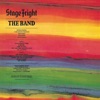 Stage FrightThe Band197010 tracks
 -
 CahootsThe Band197111 tracks
 -
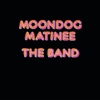 Moondog MatineeThe Band197310 tracks
 -
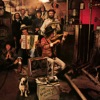 The Basement TapesThe Band197524 tracks
 -
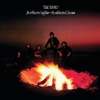 Northern Lights – Southern CrossThe Band19758 tracks
 -
 IslandsThe Band197710 tracks
 -
 JerichoThe Band199312 tracks
 -
 High on the HogThe Band199612 tracks
 -
 JubilationThe Band199811 tracks
Deep Dive
Overview
The Band were a Canadian-American rock ensemble that fundamentally reshaped how rock music engaged with American vernacular traditions. Formed in Toronto, Ontario, they drew from blues rock, Americana, country, folk, R&B, and jazz to create a sound that felt simultaneously rooted in the past and immediate in the present. Their five-member lineup—Canadians Rick Danko, Garth Hudson, Richard Manuel, and Robbie Robertson alongside American Levon Helm—created a template for roots-conscious rock that would influence generations of artists including George Harrison, Elton John, the Grateful Dead, Eric Clapton, and Wilco.
Formation Story
The Band’s origins lay in the mid-1960s Toronto music scene, where the five members coalesced around a shared aesthetic that privileged ensemble playing and lyrical depth over the prevailing psychedelic and progressive rock trends of the era. Robertson, Hudson, Manuel, Danko, and Helm brought complementary skills: Robertson’s compositional voice and guitar work, Hudson’s organ and keyboard artistry, Manuel’s vocal range and musicianship, Danko’s bass playing and vocal contributions, and Helm’s drumming and vocal presence anchored the group. Rather than chase the experimental excess of contemporary rock, they developed an almost antiquarian reverence for American folk, country, and R&B idioms, seeing in those traditions the bedrock upon which authentic rock and roll could be reconstructed.
Breakthrough Moment
The Band’s entry into broader recognition arrived with Music From Big Pink in 1968, an album that announced their distinctive approach to roots material. The following year, their self-titled effort The Band (1969) crystallized their sound and secured their place in the rock establishment. These early records demonstrated that a rock band could honor country, folk, and Americana conventions without pastiche or condescension. The albums’ commercial and critical success established The Band not merely as nostalgia merchants but as serious interpreters of American musical heritage, paving the way for a creative run that would see Stage Fright arrive in 1970 and Cahoots in 1971, each further refining their synthesis of rural and urban, old and new.
Peak Era
The Band’s most creatively fertile and commercially successful period spanned the late 1960s through the mid-1970s. Beyond their initial breakthrough, they released Moondog Matinee in 1973, an album of carefully chosen covers that testified to their deep engagement with R&B and rock lineage. That same era saw the release of The Basement Tapes (1975), a legendary collection of recordings made with Bob Dylan, and Northern Lights – Southern Cross (1975), which represented The Band at their artistic peak, balancing intricate arrangements with emotionally resonant songwriting. Islands (1977) extended their catalog into the late 1970s, maintaining the high standards they had set. During this stretch, they demonstrated an unusual capacity to honor tradition while creating original material that felt both timeless and contemporary.
Musical Style
The Band’s sound was built on a foundation of ensemble musicianship, with each member serving both as soloist and accompanist. Garth Hudson’s organ and keyboard work provided harmonic sophistication and textural depth, often evoking both gospel and jazz traditions. Rick Danko’s bass lines were melodic and inventive, anchoring songs without settling into conventional rock patterns. Robbie Robertson’s guitar playing ranged from restrained, fingerpicked accompaniment to driving rhythm work, while his compositions frequently drew on folk and country song structures. Richard Manuel’s voice carried an emotional vulnerability and range that allowed him to navigate both tender ballads and energetic rockers. Levon Helm’s drumming was taste-driven and dynamic, serving the song rather than dominating it, and his vocal contributions added a weathered, blues-rooted timbre to ensemble arrangements. The band’s production favored clarity and separation of instruments, avoiding the wall-of-sound techniques favored by many of their contemporaries. Their songwriting integrated storytelling traditions from folk and country music with rock’s harmonic vocabulary and energy, creating narratives that felt grounded in American life and history.
Major Albums
Music From Big Pink (1968)
Their debut introduced audiences to The Band’s fusion of roots idioms with contemporary rock, establishing the template for their career. The album’s craftsmanship and thematic coherence announced a band uninterested in following prevailing trends.
The Band (1969)
Their self-titled second album solidified their reputation as the finest practitioners of roots-conscious rock. With tracks revealing their compositional depth and ensemble interplay, it became a touchstone for artists seeking to honor American musical traditions.
Stage Fright (1970)
Released in their creative prime, this album demonstrated The Band’s growing confidence in both original songwriting and arrangement, balancing introspection with muscular rock performances.
Northern Lights – Southern Cross (1975)
Often considered their artistic pinnacle, this album integrated their most sophisticated arrangements with emotionally rich compositions, showcasing all five members at their collaborative best.
Moondog Matinee (1973)
Through carefully selected covers of R&B and rock standards, The Band demonstrated their deep knowledge of and reverence for the musical traditions from which they drew inspiration.
Signature Songs
- “The Weight” — A narrative-driven composition featuring ensemble vocals and clean, gospel-inflected arrangements that became their most recognizable recording.
- “Up on Cripple Creek” — A Levon Helm vocal showcase blending country and R&B idioms with a memorable melodic hook.
- “The Night They Drove Old Dixie Down” — An ambitious historical narrative song drawing on American Civil War themes and period musical language.
- “Ophelia” — A tender, emotionally intricate song demonstrating the band’s gift for intimate ensemble arrangements.
- “Atlantic City” — A spare composition that highlighted the band’s ability to create emotional impact through restraint and clarity.
- “Stage Fright” — The title track established a theme of performance anxiety rendered through careful musical understatement.
Influence on Rock
The Band’s primary contribution to rock music lay in their demonstration that serious, artistically accomplished rock could be rooted in older American traditions rather than in technological innovation or formal experimentation. They showed that folk, country, R&B, and blues idioms could be honored and advanced simultaneously, and that such an approach could reach large audiences. Their work encouraged subsequent artists to engage with Americana and roots material as primary sources rather than period references. The genealogy of roots rock, Americana-influenced alternative country, and the broader impulse toward musical eclecticism in late twentieth-century rock traces through their influence. Artists ranging from George Harrison to Eric Clapton to Wilco acknowledged their debt to The Band’s example of how to synthesize disparate traditions into coherent, original music.
Legacy
The Band’s catalog has remained continuously available and studied, with their classic albums from 1968 to 1975 achieving canonical status within rock discourse. The Basement Tapes, their collaborative work with Bob Dylan, gained additional cultural weight following its official release and subsequent reissues, cementing both parties’ commitment to roots exploration. The band’s later work—including Ophelia (1992), Jericho (1993), and Jubilation (1998)—showed their continued engagement with roots-rock aesthetics, though these later albums never achieved the commercial prominence of their classic run. The Band’s influence on contemporary Americana and alt-country music remains substantial; virtually every artist working in those spaces acknowledges their foundational role. Their insistence that rock music could serve as a vehicle for deep historical engagement and musical literacy changed the conversation about what rock music could be and represent.
Fun Facts
- The Band’s 1973 album Moondog Matinee consisted entirely of covers, a declaration of artistic principle that their roots in R&B and rock lineage was as important as original composition.
- The group recorded their most famous collaborative work, The Basement Tapes with Bob Dylan, informally and in relative obscurity before its official 1975 release, only later becoming recognized as a landmark document of American roots music.
- Garth Hudson, the Band’s keyboard player and organist, remains the sole surviving member, having outlasted all four of his bandmates and continuing to perform and record into the twenty-first century.
- The band’s extended catalog includes multiple reissue campaigns and compilations, with releases continuing into the 2000s, testament to ongoing interest in their work across generations of rock fans.