
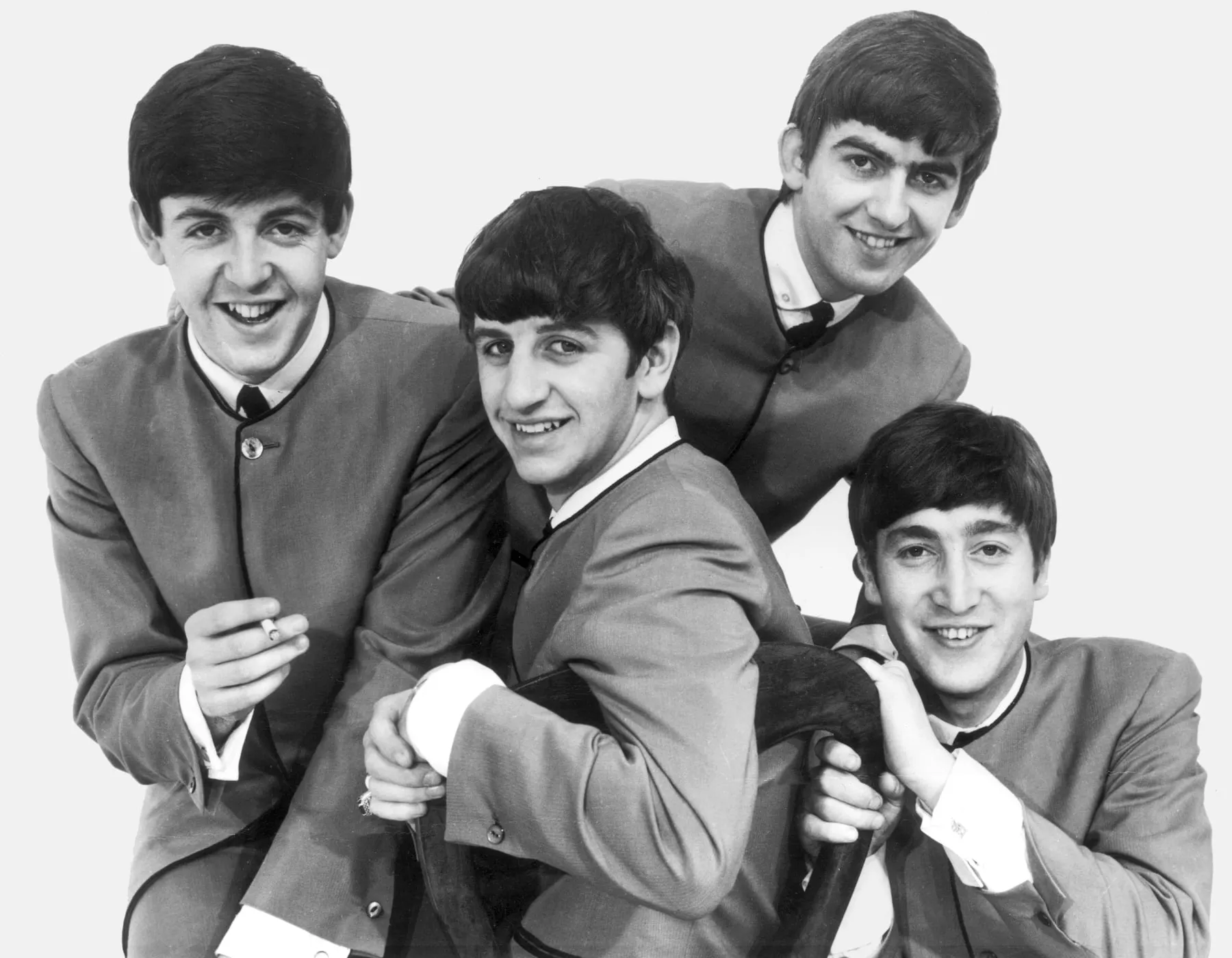
Photo by Dezo Hoffmann, Distributed by Capitol Records , licensed under Public domain · Wikimedia Commons
Rank #3
The Beatles
From Wikipedia
The Beatles were an English rock band formed in Liverpool in 1960. The band comprised John Lennon, Paul McCartney, George Harrison and Ringo Starr. They are regarded as the most influential band in popular music and were integral to the development of 1960s counterculture and the recognition of popular music as an art form. Rooted in skiffle, beat and 1950s rock 'n' roll, their sound incorporated elements of classical music and traditional pop in innovative ways. They also explored styles ranging from folk and Indian music to psychedelia and hard rock. As pioneers in recording, songwriting and artistic presentation, the Beatles revolutionised many aspects of the music industry and were often publicised as leaders of the era's youth and sociocultural movements.
Members
- Chas Newby (1960–1961)
- George Harrison (1960–1970)
- John Lennon (1960–1970)
- Paul McCartney (1960–1970)
- Pete Best (1960–1962)
- Stuart Sutcliffe (1960–1961)
- Tommy Moore (1960–1960)
- Ringo Starr (1962–1970)
Discography & Previews
Browse through and click an album to open and play 30-second previews streamed from Apple Music.
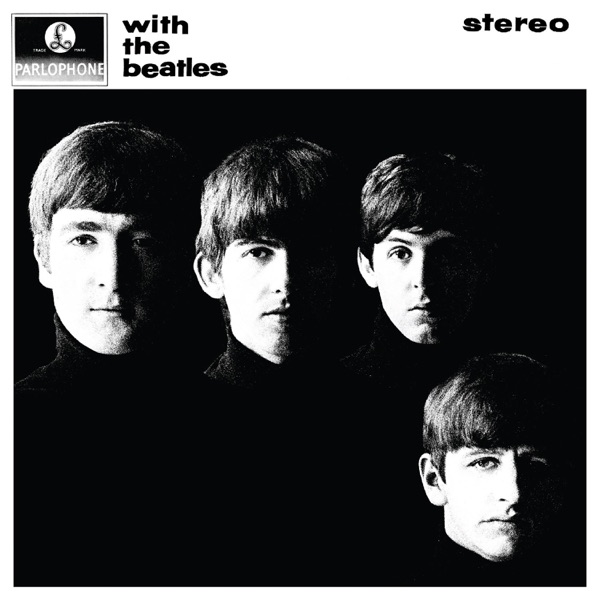
With The Beatles
1963 · 14 tracks
- 1 It Won't Be Long ↗ 2:12
- 2 All I've Got to Do ↗ 2:03
- 3 All My Loving ↗ 2:08
- 4 Don't Bother Me ↗ 2:28
- 5 Little Child ↗ 1:46
- 6 Till There Was You ↗ 2:14
- 7 Please Mister Postman ↗ 2:34
- 8 Roll Over Beethoven ↗ 2:45
- 9 Hold Me Tight ↗ 2:32
- 10 You Really Got a Hold On Me ↗ 3:01
- 11 I Wanna Be Your Man ↗ 2:00
- 12 Devil In Her Heart ↗ 2:26
- 13 Not a Second Time ↗ 2:07
- 14 Money (That's What I Want) ↗ 2:48

Please Please Me
1963 · 14 tracks
- 1 I Saw Her Standing There ↗ 2:53
- 2 Misery ↗ 1:49
- 3 Anna (Go to Him) ↗ 2:57
- 4 Chains ↗ 2:25
- 5 Boys ↗ 2:26
- 6 Ask Me Why ↗ 2:27
- 7 Please Please Me ↗ 2:01
- 8 Love Me Do ↗ 2:22
- 9 P.S. I Love You ↗ 2:04
- 10 Baby It's You ↗ 2:41
- 11 Do You Want to Know a Secret ↗ 1:57
- 12 A Taste of Honey ↗ 2:03
- 13 There's a Place ↗ 1:50
- 14 Twist and Shout ↗ 2:33
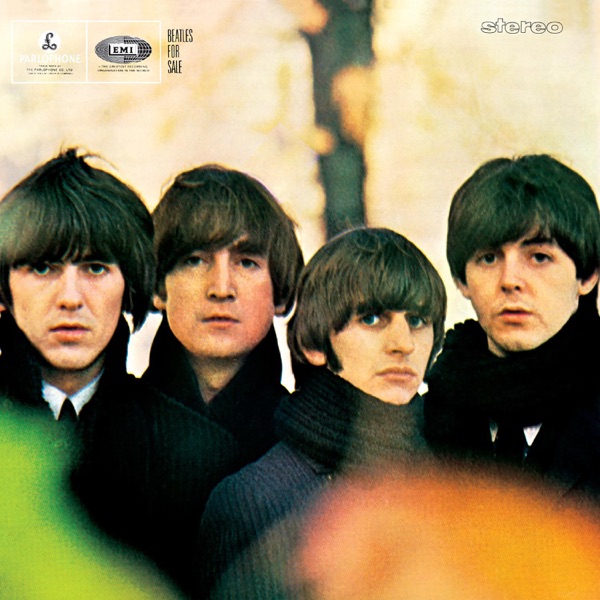
Beatles for Sale
1964 · 14 tracks
- 1 No Reply ↗ 2:15
- 2 I'm a Loser ↗ 2:30
- 3 Baby's In Black ↗ 2:05
- 4 Rock and Roll Music ↗ 2:31
- 5 I'll Follow the Sun ↗ 1:49
- 6 Mr. Moonlight ↗ 2:39
- 7 Kansas City / Hey-Hey-Hey-Hey! ↗ 2:38
- 8 Eight Days a Week ↗ 2:44
- 9 Words of Love ↗ 2:04
- 10 Honey Don't ↗ 2:57
- 11 Every Little Thing ↗ 2:04
- 12 I Don't Want to Spoil the Party ↗ 2:34
- 13 What You're Doing ↗ 2:30
- 14 Everybody's Trying to Be My Baby ↗ 2:24
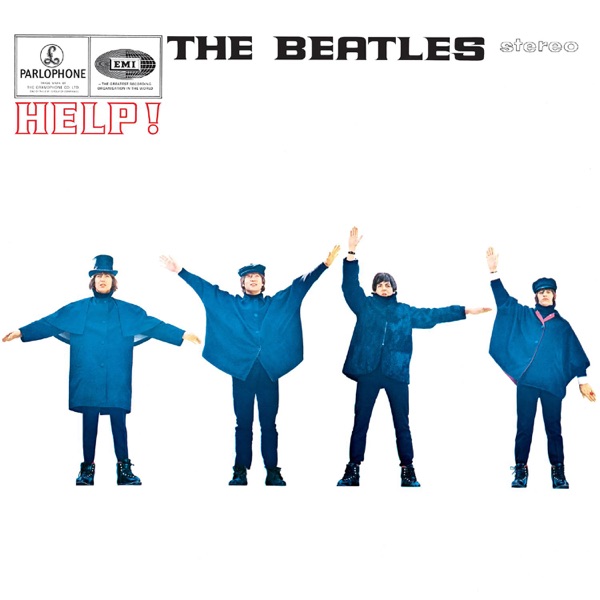
Help!
1965 · 14 tracks
- 1 Help! ↗ 2:19
- 2 The Night Before ↗ 2:35
- 3 You've Got to Hide Your Love Away ↗ 2:09
- 4 I Need You ↗ 2:29
- 5 Another Girl ↗ 2:05
- 6 You're Going to Lose That Girl ↗ 2:19
- 7 Ticket to Ride ↗ 3:10
- 8 Act Naturally ↗ 2:30
- 9 It's Only Love ↗ 1:56
- 10 You Like Me Too Much ↗ 2:37
- 11 Tell Me What You See ↗ 2:38
- 12 I've Just Seen a Face ↗ 2:05
- 13 Yesterday ↗ 2:06
- 14 Dizzy Miss Lizzy ↗ 2:55
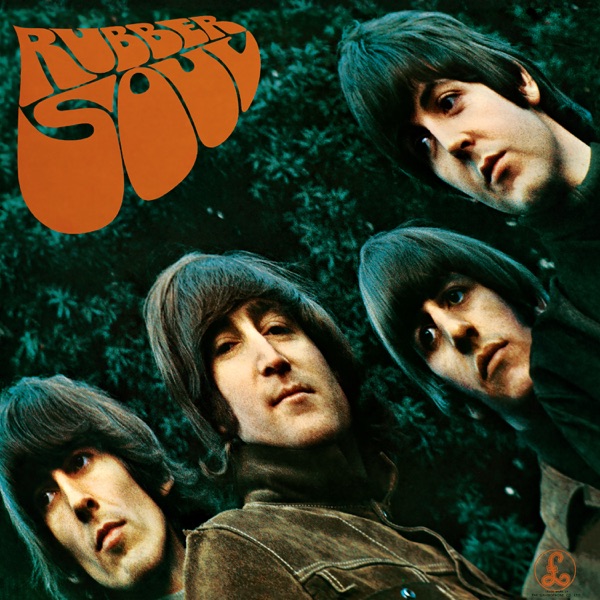
Rubber Soul
1965 · 14 tracks
- 1 Drive My Car ↗ 2:28
- 2 Norwegian Wood (This Bird Has Flown) ↗ 2:05
- 3 You Won't See Me ↗ 3:20
- 4 Nowhere Man ↗ 2:44
- 5 Think For Yourself ↗ 2:19
- 6 The Word ↗ 2:43
- 7 Michelle ↗ 2:42
- 8 What Goes On ↗ 2:49
- 9 Girl ↗ 2:32
- 10 I'm Looking Through You ↗ 2:26
- 11 In My Life ↗ 2:26
- 12 Wait ↗ 2:15
- 13 If I Needed Someone ↗ 2:22
- 14 Run For Your Life ↗ 2:19

Revolver
1966 · 14 tracks
- 1 Taxman (2022 Mix) ↗ 2:38
- 2 Eleanor Rigby (2022 Mix) ↗ 2:06
- 3 I'm Only Sleeping (2022 Mix) ↗ 3:00
- 4 Love You To (2022 Mix) ↗ 3:00
- 5 Here, There and Everywhere (2022 Mix) ↗ 2:25
- 6 Yellow Submarine (2022 Mix) ↗ 2:39
- 7 She Said She Said (2022 Mix) ↗ 2:36
- 8 Good Day Sunshine (2022 Mix) ↗ 2:09
- 9 And Your Bird Can Sing (2022 Mix) ↗ 2:01
- 10 For No One (2022 Mix) ↗ 2:00
- 11 Doctor Robert (2022 Mix) ↗ 2:14
- 12 I Want to Tell You (2022 Mix) ↗ 2:28
- 13 Got to Get You Into My Life (2022 Mix) ↗ 2:29
- 14 Tomorrow Never Knows (2022 Mix) ↗ 2:58

Sgt. Pepper’s Lonely Hearts Club Band
1967 · 13 tracks
- 1 Sgt. Pepper's Lonely Hearts Club Band (2017 Mix) ↗ 2:02
- 2 With A Little Help From My Friends (2017 Mix) ↗ 2:45
- 3 Lucy In The Sky With Diamonds (2017 Mix) ↗ 3:28
- 4 Getting Better (2017 Mix) ↗ 2:47
- 5 Fixing A Hole (2017 Mix) ↗ 2:38
- 6 She's Leaving Home (2017 Mix) ↗ 3:26
- 7 Being For The Benefit Of Mr. Kite! (2017 Mix) ↗ 2:39
- 8 Within You Without You (2017 Mix) ↗ 5:08
- 9 When I'm Sixty-Four (2017 Mix) ↗ 2:40
- 10 Lovely Rita (2017 Mix) ↗ 2:46
- 11 Good Morning Good Morning (2017 Mix) ↗ 2:34
- 12 Sgt. Pepper's Lonely Hearts Club Band (Reprise) [2017 Mix] ↗ 1:21
- 13 A Day In The Life (2017 Mix) ↗ 5:31
The Beatles
1968 · 30 tracks
- 1 Back In the U.S.S.R. ↗ 2:42
- 1 Birthday ↗ 2:42
- 2 Dear Prudence ↗ 3:56
- 2 Yer Blues ↗ 4:00
- 3 Glass Onion ↗ 2:18
- 3 Mother Nature's Son ↗ 2:48
- 4 Ob-La-Di, Ob-La-Da ↗ 3:09
- 4 Everybody's Got Something to Hide Except Me and My Monkey ↗ 2:25
- 5 Wild Honey Pie ↗ 0:53
- 5 Sexy Sadie ↗ 3:15
- 6 The Continuing Story of Bungalow Bill ↗ 3:14
- 6 Helter Skelter ↗ 4:30
- 7 While My Guitar Gently Weeps ↗ 4:45
- 7 Long, Long, Long ↗ 3:06
- 8 Happiness Is a Warm Gun ↗ 2:45
- 8 Revolution 1 ↗ 4:16
- 9 Martha My Dear ↗ 2:29
- 9 Honey Pie ↗ 2:41
- 10 I'm So Tired ↗ 2:03
- 10 Savoy Truffle ↗ 2:54
- 11 Blackbird ↗ 2:18
- 11 Cry Baby Cry ↗ 3:02
- 12 Piggies ↗ 2:04
- 12 Revolution 9 ↗ 8:22
- 13 Rocky Raccoon ↗ 3:33
- 13 Good Night ↗ 3:12
- 14 Don't Pass Me By ↗ 3:50
- 15 Why Don't We Do It In the Road? ↗ 1:41
- 16 I Will ↗ 1:46
- 17 Julia ↗ 2:55

Abbey Road
1969 · 17 tracks
- 1 Come Together (2019 Mix) ↗ 4:20
- 2 Something (2019 Mix) ↗ 3:02
- 3 Maxwell's Silver Hammer (2019 Mix) ↗ 3:28
- 4 Oh! Darling (2019 Mix) ↗ 3:27
- 5 Octopus's Garden (2019 Mix) ↗ 2:51
- 6 I Want You (She's So Heavy) [2019 Mix] ↗ 7:47
- 7 Here Comes the Sun (2019 Mix) ↗ 3:06
- 8 Because (2019 Mix) ↗ 2:46
- 9 You Never Give Me Your Money (2019 Mix) ↗ 4:03
- 10 Sun King (2019 Mix) ↗ 2:26
- 11 Mean Mr. Mustard (2019 Mix) ↗ 1:06
- 12 Polythene Pam (2019 Mix) ↗ 1:13
- 13 She Came In Through the Bathroom Window (2019 Mix) ↗ 1:59
- 14 Golden Slumbers (2019 Mix) ↗ 1:31
- 15 Carry That Weight (2019 Mix) ↗ 1:36
- 16 The End (2019 Mix) ↗ 2:22
- 17 Her Majesty (2019 Mix) ↗ 0:25

Let It Be
1970 · 12 tracks
- 1 Two of Us (2021 Mix) ↗ 3:36
- 2 Dig a Pony (2021 Mix) ↗ 3:55
- 3 Across the Universe (2021 Mix) ↗ 3:48
- 4 I Me Mine (2021 Mix) ↗ 2:25
- 5 Dig It (2021 Mix) ↗ 0:51
- 6 Let It Be (2021 Mix) ↗ 4:03
- 7 Maggie Mae (2021 Mix) ↗ 0:40
- 8 I've Got a Feeling (2021 Mix) ↗ 3:38
- 9 One After 909 (2021 Mix) ↗ 2:54
- 10 The Long and Winding Road (2021 Mix) ↗ 3:38
- 11 For You Blue (2021 Mix) ↗ 2:33
- 12 Get Back (2021 Mix) ↗ 3:08
-
 With The BeatlesThe Beatles196314 tracks
 -
 Please Please MeThe Beatles196314 tracks
 -
 Beatles for SaleThe Beatles196414 tracks
 -
 Help!The Beatles196514 tracks
 -
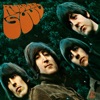 Rubber SoulThe Beatles196514 tracks
 -
 RevolverThe Beatles196614 tracks
 -
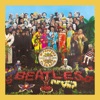 Sgt. Pepper’s Lonely Hearts Club BandThe Beatles196713 tracks
 -
 The BeatlesThe Beatles196830 tracks
 -
 Abbey RoadThe Beatles196917 tracks
 -
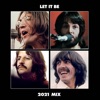 Let It BeThe Beatles197012 tracks
Deep Dive
Overview
The Beatles were an English rock band formed in Liverpool in 1960 comprising John Lennon, Paul McCartney, George Harrison, and Ringo Starr. Widely regarded as the most influential band in popular music history, they were integral to the development of 1960s counterculture and fundamentally altered the recognition of popular music as an art form. Rooted in skiffle, beat music, and 1950s rock and roll, their sound absorbed elements of classical music, traditional pop, folk, Indian music, psychedelia, and hard rock—exploring stylistic territories few rock bands had ventured into before. As pioneers in recording techniques, songwriting, and artistic presentation, The Beatles revolutionized many aspects of the music industry and were publicized as leaders of the era’s youth and sociocultural movements.
Formation Story
The Beatles emerged from Liverpool’s vibrant musical scene in 1960. The founding lineup included John Lennon, Paul McCartney, George Harrison, and Stuart Sutcliffe, alongside early members Tommy Moore (1960) and Chas Newby (1960–1961). Pete Best served as drummer from 1960 to 1962, a transitional period as the group solidified its identity and began accumulating a devoted following in Liverpool’s clubs and across Europe. In 1962, Ringo Starr replaced Pete Best as drummer, completing the classic four-piece lineup that would define the band’s most famous period. The addition of Ringo coincided with the band’s rapid ascent toward international prominence.
Breakthrough Moment
The Beatles’ breakthrough came with the release of Please Please Me in 1963, followed quickly by With The Beatles that same year. These early albums established them as the leading British rock band and sparked the “British Invasion” of the American charts. The band’s success accelerated throughout 1964, with multiple releases including Meet The Beatles!, Twist and Shout, The Beatles’ Second Album, Something New, and Beatles for Sale. By the mid-1960s, The Beatles dominated global popular music and commanded unprecedented cultural attention. Their momentum carried through 1965 with Help! and Rubber Soul, albums that demonstrated their growing sophistication in songwriting and studio craft.
Peak Era
The Beatles’ most creatively fertile and commercially dominant period extended from 1966 through 1969. Revolver (1966) marked a turning point, showcasing experimental recording techniques and expanded instrumental arrangements. Sgt. Pepper’s Lonely Hearts Club Band (1967) became a cultural phenomenon and is widely regarded as one of the defining albums of the 1960s, blending psychedelia, music hall, and orchestral arrangements into a cohesive artistic statement. The Beatles (commonly known as “The White Album”) arrived in 1968 as a sprawling double album that displayed the band’s diverse stylistic range and songwriting depth. Abbey Road (1969) represented another artistic and commercial peak, synthesizing their accumulated experience into polished, complex arrangements. These five years saw The Beatles at the height of their creative powers and cultural influence.
Musical Style
The Beatles’ sound evolved significantly across their active decade. Their early work drew from rock and roll, skiffle, and British beat music, characterized by energetic vocal harmonies and straightforward rock instrumentation. From 1965 onward, their arrangements became increasingly sophisticated, incorporating strings, horns, sitar, harpsichord, and studio experimentation. John Lennon’s often-raw vocal delivery contrasted with Paul McCartney’s cleaner, more melodic approach; these complementary styles formed the nucleus of their songwriting partnership. George Harrison contributed increasingly distinctive lead guitar work and, later, original compositions that introduced elements of Indian classical music. Ringo Starr’s drumming provided a steady, inventive rhythmic foundation while remaining melodically aware. Their production values, engineered at Abbey Road Studios, set new standards for rock recording. The band moved from straightforward pop-rock toward psychedelia, hard rock, blues, folk, and avant-garde experimentation, rarely remaining confined to a single genre across consecutive albums.
Major Albums
Please Please Me (1963)
The band’s debut album established their commercial viability and showcased their energy and harmonies. Recorded during their peak live period, it captured the excitement of early Beatlemania and laid out the blueprint for their rapid rise in the British and American charts.
Rubber Soul (1965)
A watershed moment in songwriting maturity, Rubber Soul demonstrated The Beatles’ ambition to move beyond simple pop formulas. The album’s introspective lyrics and refined arrangements signaled that rock music could accommodate emotional depth and compositional sophistication.
Revolver (1966)
This album pioneered studio experimentation, featuring backwards recordings, innovative production techniques, and orchestral overdubs. Revolver proved that The Beatles were willing to push the technical and artistic boundaries of rock recording.
Sgt. Pepper’s Lonely Hearts Club Band (1967)
Captured at the height of 1960s counterculture, this album blended psychedelia, music hall nostalgia, orchestral arrangements, and complex studio production into a unified artistic vision. It became the defining album of its era and influenced countless artists across multiple genres.
Abbey Road (1969)
A masterpiece of melodic sophistication and production polish, Abbey Road synthesized everything The Beatles had learned. The album’s iconic medley side and intricate arrangements demonstrated their technical mastery while remaining accessible and immediate.
Signature Songs
Among their most defining works are songs that captured different facets of their evolution: early rock and roll energy, sophisticated pop composition, psychedelic experimentation, and introspective lyricism. These songs appeared across their album catalog and became anthems of their respective eras, establishing them as songwriters of remarkable range and ambition.
Influence on Rock
The Beatles fundamentally transformed rock music and the broader music industry. They elevated the album format from a collection of singles into a unified artistic statement. Their willingness to experiment with recording techniques, instrumentation, and studio production became the standard for ambitious rock acts. They demonstrated that rock musicians could be serious artists and composers, not merely performers of commercial entertainment. The band influenced virtually every rock subgenre that emerged after their peak: psychedelic rock, progressive rock, punk, new wave, and alternative rock all trace lineage through their innovations. Their songwriting partnerships and competitive dynamics within a group became a template for rock bands. They proved that British artists could dominate the American market, opening pathways for the sustained British invasion. Their exploration of non-Western musical traditions, particularly Indian classical music, broadened rock’s sonic vocabulary and cultural horizons.
Legacy
The Beatles’ cultural and artistic impact has only deepened since their dissolution in 1970. They remain the best-selling music artist of all time and their catalog continues to generate enormous streaming and sales revenue. Subsequent generations of musicians cite them as foundational influences; virtually no major rock artist emerges without acknowledging their debt to The Beatles’ songwriting, production values, or conceptual ambition. Their recordings have been remastered and reissued multiple times, introducing their work to new listeners and providing longtime fans with enhanced audio fidelity. The band’s cultural presence remains extraordinary: their imagery, song lyrics, and band members remain subjects of scholarly analysis, documentary filmmaking, and popular fascination. The Beatles’ insistence that rock music could be a serious art form fundamentally altered how popular music is perceived and discussed, a shift whose effects persist across all contemporary music genres.
Fun Facts
- Stuart Sutcliffe, the band’s original bassist, left the group in 1961 to pursue painting in Hamburg, making him both a founding member and early departure who played on none of their officially released studio recordings.
- Pete Best, the original drummer, was replaced by Ringo Starr in 1962 just before the band’s commercial breakthrough, a change that generated significant controversy among some Beatles fans who felt loyalty to Best’s contributions.
- The band released an unusual number of different album versions in their early years (1964 included Beatles for Sale alongside multiple North American compilations like Beatles VI and Something New), reflecting the complex contractual and label divisions between British and American record companies.
- Sgt. Pepper’s Lonely Hearts Club Band was recorded over several months at a time when the band had stopped touring, allowing them to focus entirely on studio experimentation and marking a clear shift from live performance to studio-based artistry.
- The Beatles recorded Abbey Road before Let It Be chronologically, though Let It Be was released after the band’s dissolution in 1970, creating a complex posthumous release history that affected how listeners and critics assessed their final creative period.