
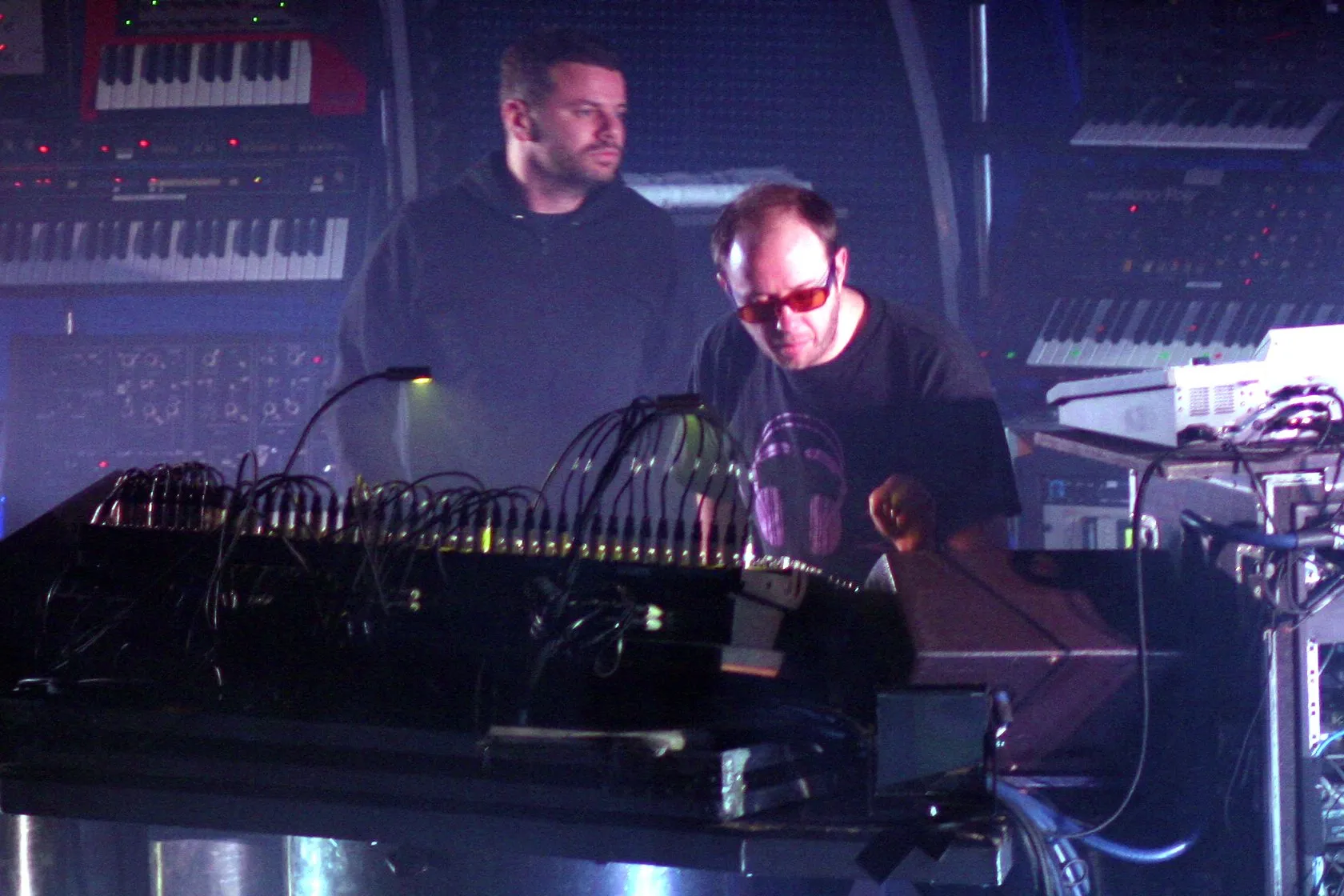
Photo by https://www.flickr.com/photos/alterna2/ , licensed under CC BY 2.0 · Wikimedia Commons
Rank #115
The Chemical Brothers
From Wikipedia
The Chemical Brothers are an English electronic music duo formed by Ed Simons and Tom Rowlands in Manchester in 1992. They were pioneers in bringing the big beat genre to the forefront of pop culture.
Discography & Previews
Browse through and click an album to open and play 30-second previews streamed from Apple Music.
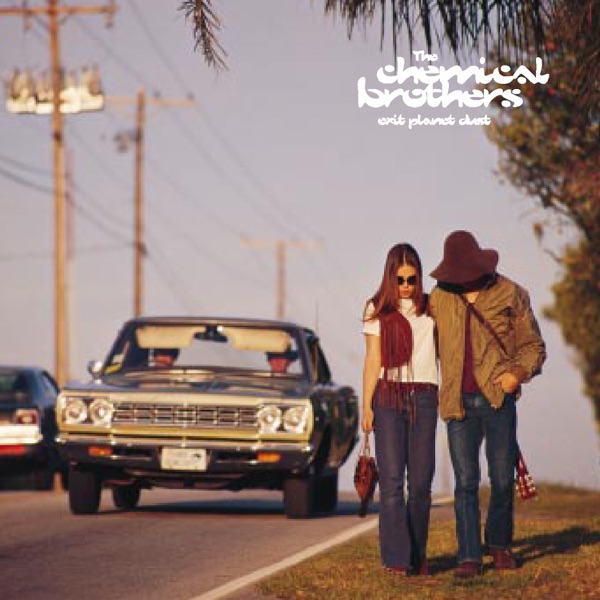
Exit Planet Dust
1995 · 11 tracks
- 1 Leave Home ↗ 5:33
- 2 In Dust We Trust ↗ 5:17
- 3 Song to the Siren ↗ 3:17
- 4 Three Little Birdies Down Beats ↗ 5:39
- 5 F**k Up Beats ↗ 1:26
- 6 Chemical Beats ↗ 4:50
- 7 Chico's Groove ↗ 4:49
- 8 One Too Many Mornings ↗ 4:13
- 9 Life Is Sweet ↗ 6:34
- 10 Playground of a Wedgeless Firm ↗ 2:32
- 11 Alive Alone ↗ 5:16

Dig Your Own Hole
1997 · 11 tracks


We Are the Night
2007 · 14 tracks
- 1 No Path To Follow ↗ 1:04
- 2 We Are the Night ↗ 6:33
- 3 All Rights Reversed ↗ 4:43
- 4 Saturate ↗ 4:50
- 5 Do It Again ↗ 5:33
- 6 Das Spiegel ↗ 5:52
- 7 The Salmon Dance ↗ 3:40
- 8 Burst Generator ↗ 6:53
- 9 A Modern Midnight Conversation ↗ 5:56
- 10 Battle Scars ↗ 5:50
- 11 Harpoons ↗ 2:25
- 12 The Pills Won't Help You Now ↗ 6:34
- 13 Seal ↗ 4:40
- 14 No Need ↗ 5:15

For That Beautiful Feeling
2023 · 11 tracks
- 1 Intro ↗ 1:10
- 2 Live Again (feat. Halo Maud) ↗ 5:10
- 3 No Reason ↗ 4:52
- 4 Goodbye ↗ 5:50
- 5 Fountains ↗ 3:45
- 6 Magic Wand ↗ 2:28
- 7 The Weight ↗ 3:44
- 8 Skipping Like A Stone (feat. Beck) ↗ 4:43
- 9 The Darkness That You Fear (Harvest Mix) ↗ 4:10
- 10 Feels Like I Am Dreaming ↗ 6:58
- 11 For That Beautiful Feeling (feat. Halo Maud) ↗ 4:15
-
 Exit Planet DustThe Chemical Brothers199511 tracks
 -
 Dig Your Own HoleThe Chemical Brothers199711 tracks
 -
 SurrenderThe Chemical Brothers199911 tracks
 -
 Come With UsThe Chemical Brothers200210 tracks
 -
 Push the ButtonThe Chemical Brothers200411 tracks
 -
 We Are the NightThe Chemical Brothers200714 tracks
 -
 FurtherThe Chemical Brothers20109 tracks
 -
 Born in the EchoesThe Chemical Brothers201511 tracks
 -
 No GeographyThe Chemical Brothers201910 tracks
 -
 For That Beautiful FeelingThe Chemical Brothers202311 tracks
Deep Dive
Overview
The Chemical Brothers are an English electronic music duo formed by Ed Simons and Tom Rowlands in Manchester in 1992. As pioneers of the big beat genre, they brought electronic music from underground clubs into the mainstream pop consciousness of the 1990s and beyond. Their production style—layered synthesizers, heavy breakbeats, and filtered vocal samples—defined a sound that influenced electronic and pop music across multiple decades.
Formation Story
Ed Simons and Tom Rowlands came together in Manchester in 1992, emerging from a scene steeped in British electronic experimentation and rave culture. The city’s legacy of electronic innovation—from Factory Records to the acid house movement—provided the ideal crucible for their partnership. Working initially under the Junior Boy’s Own label, the pair developed their distinctive approach to electronic production, blending dance floor energy with pop sensibility. Their early work laid the groundwork for what would become the big beat sound: a fusion of breakbeats, psychedelic textures, and house music fundamentals that would dominate the second half of the 1990s.
Breakthrough Moment
The Chemical Brothers’ debut album Exit Planet Dust, released in 1995, announced their arrival as major creative forces. The record showcased their template: intricate production, heavy reliance on filtered loops and samples, and an aesthetic that felt simultaneously futuristic and rooted in dance music tradition. The album’s success established them as central figures in the emerging big beat movement, a genre that would come to define British electronic pop music in the latter half of the decade. Their sound proved immediately transferable to both nightclubs and mainstream radio, a rarity for electronic music at the time.
Peak Era
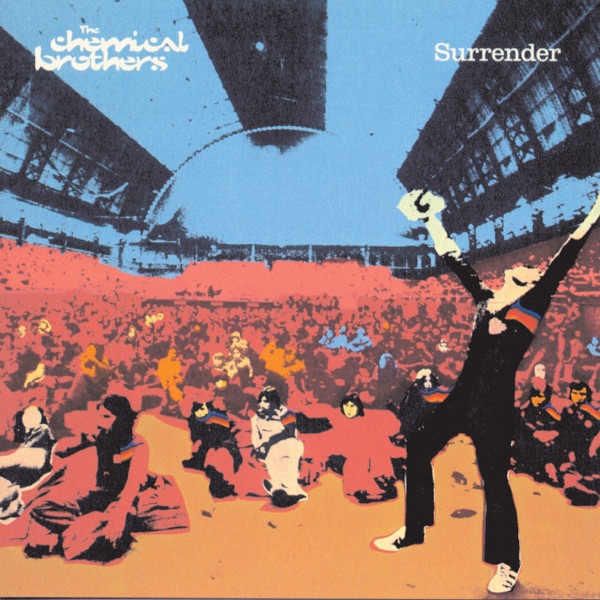
The Chemical Brothers’ creative and commercial peak occurred across the late 1990s with the releases of Dig Your Own Hole (1997) and Surrender (1999). These albums cemented their position as the dominant force in big beat, combining intricate electronic production with an increasingly sophisticated approach to song structure and collaboration. Dig Your Own Hole expanded their palette, while Surrender showcased a band confident in its sound and willing to experiment within it. During this period, the duo achieved both critical acclaim and significant commercial success, with their records charting prominently and their live shows becoming major cultural events. Their ability to scale their studio productions into compelling live experiences—powered by visual elements that became as important as the music itself—set them apart from contemporary electronic acts.
Musical Style
The Chemical Brothers’ sound is built on the foundation of big beat: heavy, syncopated breakbeats (often borrowed from funk and soul records), layered synthesizers, and heavily processed vocal samples that function as instruments rather than traditional lead vocals. Their production approach favors density and texture, with multiple melodic elements woven through each track to create a sense of controlled chaos. Filtered loops and analog-sounding synths sit alongside digital processing, reflecting their engagement with both hardware and software production tools. The duo’s use of guest vocalists—rather than singing themselves—allowed them to vary their sonic palette while maintaining a consistent house-rooted foundation. Over time, their arrangements grew more expansive; earlier work emphasized breakbeat percussion and filtered house elements, while later albums incorporated broader pop influences and more conventional song structures.
Major Albums
Exit Planet Dust (1995)
Their debut established the Chemical Brothers as serious electronic producers, showcasing their ability to craft intricate breakbeat arrangements that retained dancefloor appeal and radio accessibility in equal measure.
Dig Your Own Hole (1997)
This follow-up deepened their big beat template, demonstrating increased sophistication in production and arrangement while maintaining the propulsive energy that defined their early work.
Surrender (1999)
Released at the peak of the big beat era, Surrender represented the duo at their most ambitious, with expansive production, prominent guest vocalists, and a sense of maximalism that reflected the moment’s cultural optimism.
Come With Us (2002)
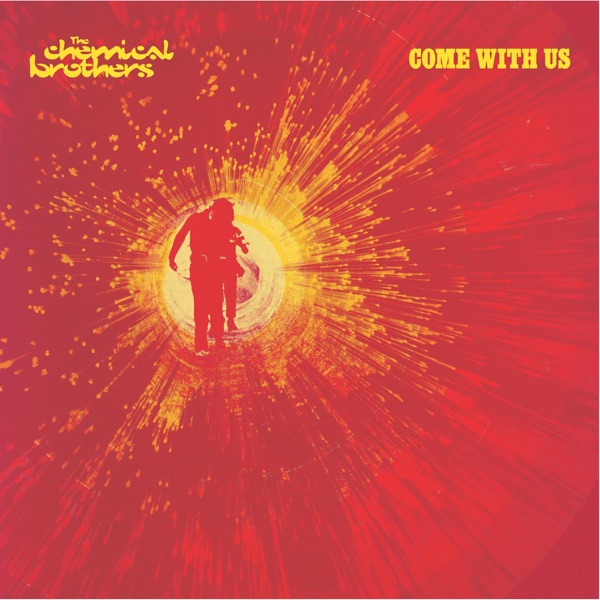
A notable shift toward more accessible pop-electronic production, this album showed the Chemical Brothers adapting to a post-big beat landscape while retaining their core production sensibility.
Push the Button (2004)
This mid-period work demonstrated the duo’s continued relevance in electronic pop, with punchy production and a focus on grooveoriented arrangements.
Further (2010)
Released a decade into their career, Further saw the Chemical Brothers refining their sound with contemporary production techniques while honoring their breakbeat foundations.
Signature Songs
- “Block Rockin’ Beats” — A defining track that exemplifies their big beat approach with heavy percussion and filtered melodic elements.
- “Elektrobank” — Showcases their ability to create intricate, layered electronic arrangements that maintain dancefloor energy.
- “Chemical Beats” — An early production that established their signature sound and production philosophy.
- “Dig Your Own Hole” — The title track demonstrates their evolving approach to song structure within electronic music frameworks.
Influence on Rock
The Chemical Brothers’ contribution to rock and popular music extends well beyond big beat itself. They demonstrated that electronic music could achieve mainstream commercial success without sacrificing artistic credibility or production sophistication. Their emergence helped legitimize electronic production techniques and beat-making as primary songwriting methods in popular music. The duo influenced subsequent generations of electronic pop artists, producers working across multiple genres, and the broader acceptance of synthesizer-led production in rock and pop contexts. Their approach to live performance—treating electronic music as a dynamic, visually compelling art form rather than a pre-recorded backing track—reshaped expectations for how electronic acts could present themselves on stage.
Legacy
The Chemical Brothers’ career has spanned three decades, from their formation in 1992 through ongoing releases including Born in the Echoes (2015), No Geography (2019), and For That Beautiful Feeling (2023). Their influence on electronic music production, big beat, and mainstream pop is substantial and enduring. The duo’s ability to maintain relevance across changing musical trends—adapting their sound while retaining core production values—has ensured continued critical and commercial engagement. Their official website and catalog remain central touchstones for understanding 1990s electronic music and its evolution into contemporary electronic pop. The Chemical Brothers’ body of work continues to be streamed extensively and remains foundational to discussions of big beat’s place in popular music history.
Fun Facts
- The duo recorded their debut Exit Planet Dust in a basement in Manchester, laying the groundwork for one of British electronic music’s most influential sounds with minimal resources and maximum ingenuity.
- The Chemical Brothers’ live show has consistently featured visual projections and animated graphics that have evolved alongside technological capabilities, making their performances as much about visual spectacle as sonic experience.
- Their catalog includes Get A Mix (Nonstop Megamix), a continuous mix format that reflects their roots in DJ culture and club music traditions.
- Ed Simons and Tom Rowlands have maintained their partnership for over three decades, making them one of electronic music’s most enduring creative teams.