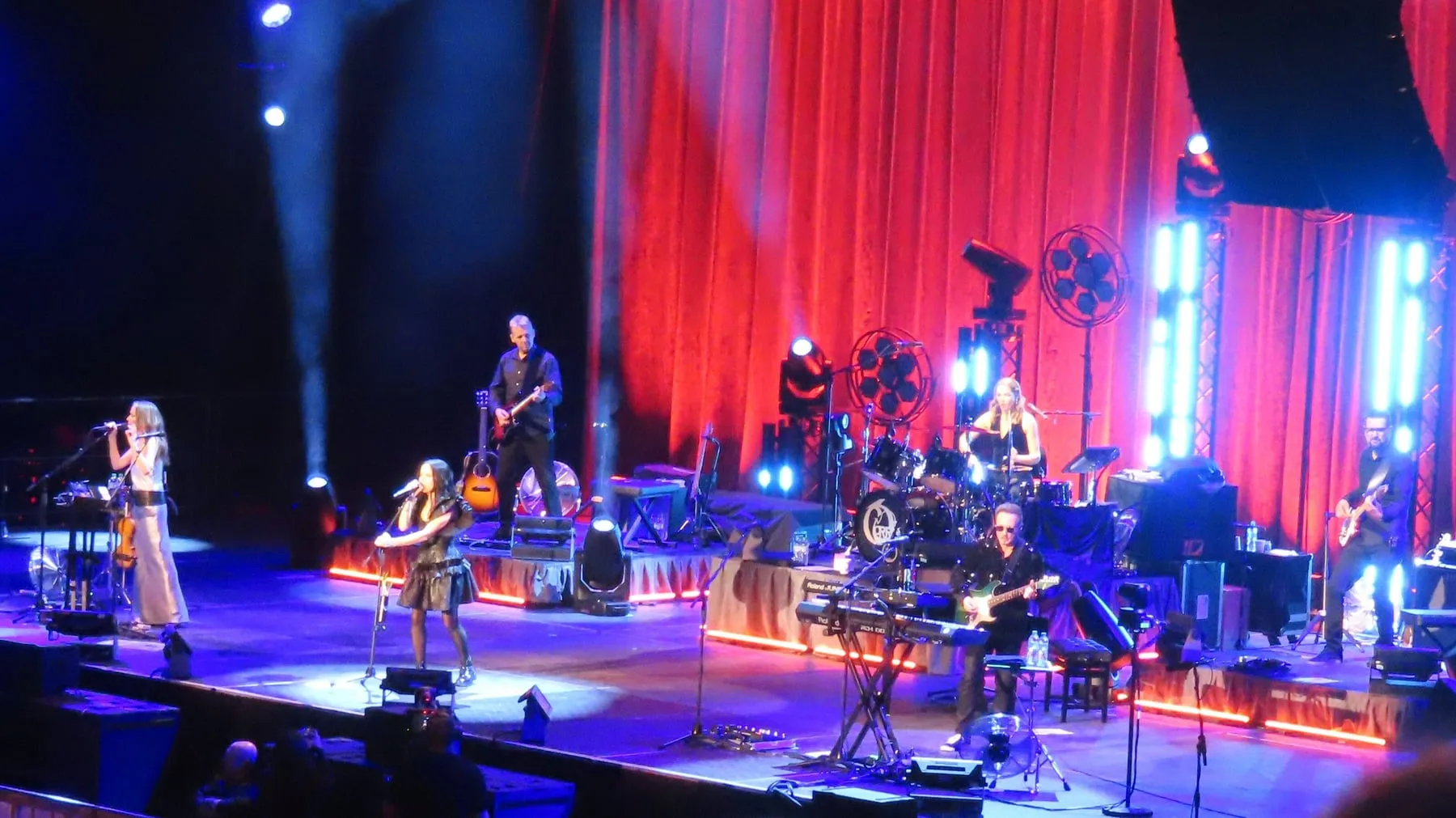
Photo by Steve Knight from Halstead, United Kingdom , licensed under CC BY 2.0 · Wikimedia Commons
Rank #403
The Corrs
From Wikipedia
The Corrs are an Irish family band consisting of siblings Andrea, Sharon, Caroline and Jim. Their music combines pop rock with traditional Irish themes. They are from Dundalk in County Louth, Ireland.
Members
- Andrea Corr
- Caroline Corr
- Jim Corr
- Sharon Corr
Discography & Previews
Browse through and click an album to open and play 30-second previews streamed from Apple Music.
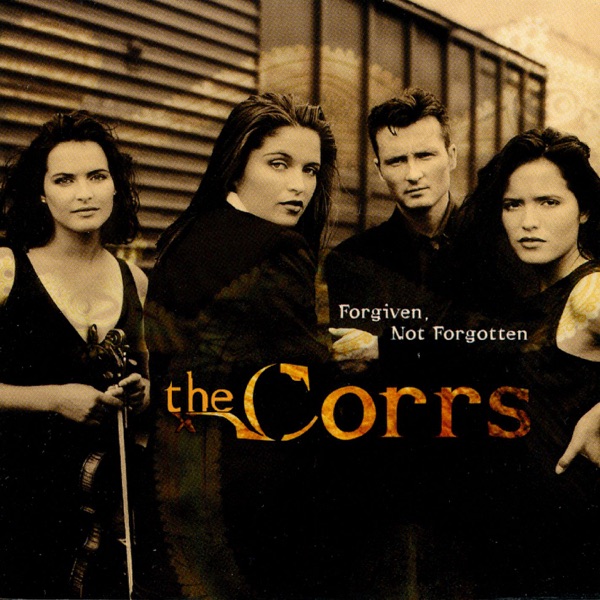
Forgiven, Not Forgotten
1995 · 15 tracks
- 1 Erin Shore (Instrumental) ↗ 0:27
- 2 Forgiven Not Forgotten ↗ 4:16
- 3 Heaven Knows ↗ 4:18
- 4 Along With the Girls (Instrumental) ↗ 0:49
- 5 Someday ↗ 3:51
- 6 Runaway ↗ 4:25
- 7 The Right Time ↗ 4:07
- 8 Minstrel Boy (Instrumental) ↗ 2:12
- 9 Toss the Feathers (Instrumental) ↗ 2:51
- 10 Love to Love You ↗ 3:23
- 11 Secret Life ↗ 4:31
- 12 Carraroe Jig (Instrumental) ↗ 0:53
- 13 Closer ↗ 4:05
- 14 Leave Me Alone ↗ 3:40
- 15 Erin Shore (Instrumental) ↗ 4:14
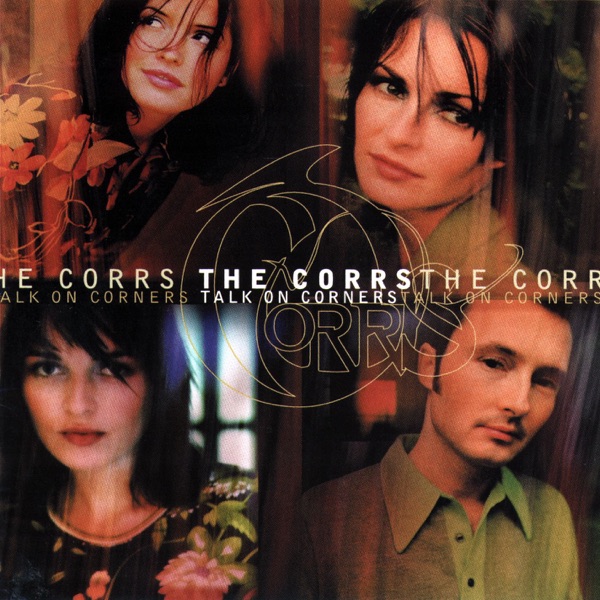
Talk on Corners
1997 · 14 tracks
- 1 Only When I Sleep ↗ 4:15
- 2 When He's Not Around ↗ 4:24
- 3 Dreams ↗ 4:00
- 4 What Can I Do? ↗ 4:15
- 5 I Never Loved You Anyway ↗ 3:54
- 6 So Young ↗ 3:52
- 7 Don't Say You Love Me ↗ 4:39
- 8 Love Gives Love Takes ↗ 3:42
- 9 Hopelessly Addicted ↗ 4:03
- 10 Paddy McCarthy (Instrumental) ↗ 4:59
- 11 Intimacy ↗ 3:57
- 12 Queen of Hollywood ↗ 5:02
- 13 No Good for Me ↗ 4:00
- 14 Little Wing ↗ 5:07
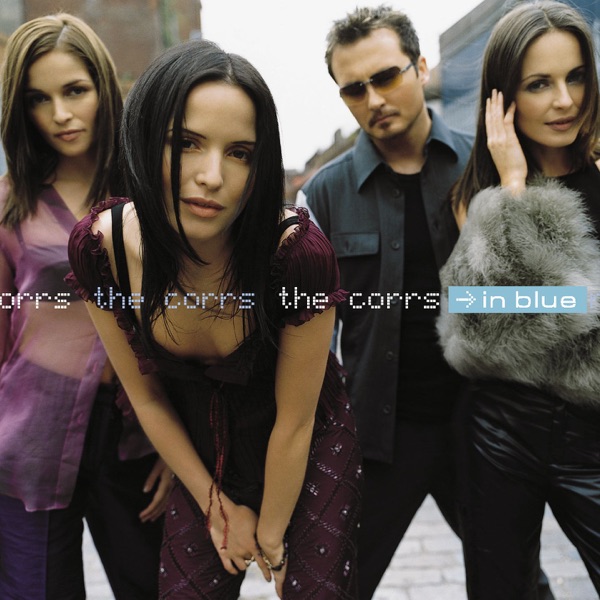
In Blue
2000 · 15 tracks
- 1 Breathless ↗ 3:28
- 2 Give Me a Reason ↗ 3:29
- 3 Somebody for Someone ↗ 4:01
- 4 Say ↗ 4:34
- 5 All the Love In the World ↗ 4:01
- 6 Radio ↗ 4:09
- 7 Irresistible ↗ 3:40
- 8 One Night ↗ 4:38
- 9 All In a Day ↗ 3:43
- 10 At Your Side ↗ 3:50
- 11 No More Cry ↗ 2:59
- 12 Rain ↗ 4:15
- 13 Give It All Up ↗ 3:29
- 14 Hurt Before ↗ 4:05
- 15 Rebel Heart (Instrumental) ↗ 4:08
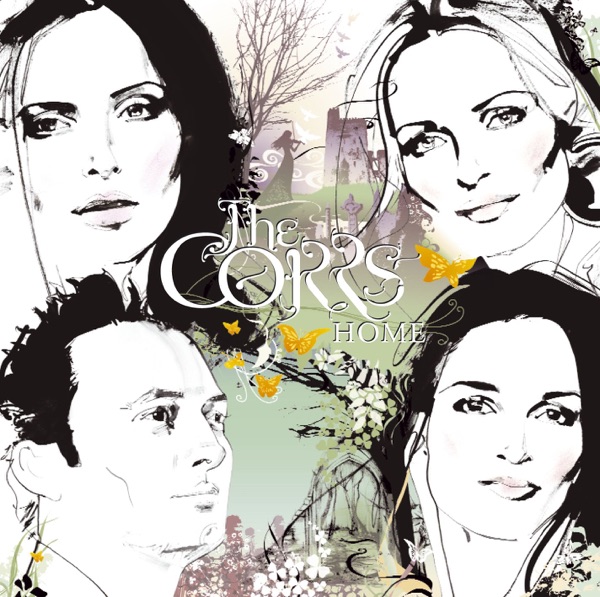
Home
2005 · 12 tracks
- 1 My Lagan Love ↗ 4:20
- 2 Spancill Hill ↗ 5:09
- 3 Peggy Gordon ↗ 4:26
- 4 Black Is the Colour ↗ 3:49
- 5 Heart Like a Wheel ↗ 3:53
- 6 Buachaill On Eirne ↗ 3:15
- 7 Old Hag ↗ 3:44
- 8 Moorlough Shore ↗ 4:17
- 9 Old Town ↗ 3:45
- 10 Dimming of the Day ↗ 2:57
- 11 Brid Og Ni Mhaille ↗ 3:37
- 12 Haste To the Wedding ↗ 2:27

Jupiter Calling
2017 · 13 tracks
- 1 Son of Solomon ↗ 4:21
- 2 Chasing Shadows ↗ 3:36
- 3 Bulletproof Love ↗ 3:18
- 4 Road to Eden ↗ 4:42
- 5 Butter Flutter ↗ 3:45
- 6 Sos ↗ 3:36
- 7 Dear Life ↗ 4:18
- 8 No Go Baby ↗ 2:46
- 9 Hit My Ground Running ↗ 4:40
- 10 Live Before I Die ↗ 4:10
- 11 Season of Our Love ↗ 3:44
- 12 A Love Divine ↗ 4:36
- 13 The Sun and the Moon ↗ 7:51
-
 Forgiven, Not ForgottenThe Corrs199515 tracks
 -
 Talk on CornersThe Corrs199714 tracks
 -
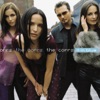 In BlueThe Corrs200015 tracks
 -
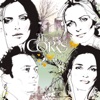 HomeThe Corrs200512 tracks
 -
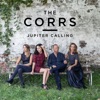 Jupiter CallingThe Corrs201713 tracks
Deep Dive
Overview
The Corrs are an Irish family band composed of siblings Andrea, Sharon, Caroline, and Jim, emerging from Dundalk in County Louth to become one of the most successful pop rock acts of the 1990s and 2000s. Their music weaves together contemporary pop rock songwriting with traditional Irish instrumentation and thematic elements, creating a distinctive sound that appealed across generational and geographic lines. The band’s foundation as a tight-knit family unit—sharing blood ties, a common cultural heritage, and a hometown identity—became central to their public image and artistic coherence.
Formation Story
The Corrs coalesced in Dundalk in 1990, drawing on a musical tradition rooted in their Irish family background. The four siblings—Andrea on vocals and tin whistle, Sharon on violin, Caroline on drums and bodhrán, and Jim on guitar and keyboards—represented a rare configuration for a mainstream pop rock group: a family ensemble in which each member brought both instrumental and vocal capability. Rather than assembling a band from disparate sources, the Corrs operated as an organic unit, their familial bonds translating into intuitive musical chemistry. Dundalk, a town in the northeast of Ireland with its own folk and traditional music lineage, provided the cultural soil from which the band’s blended sensibility would grow.
Breakthrough Moment
The Corrs’ commercial breakthrough came with the release of Forgiven, Not Forgotten in 1995, their debut studio album. The record introduced their characteristic fusion of pop rock accessibility and Irish traditional elements to an international audience, establishing the template that would define their early career. Building on this foundation, their second album Talk on Corners arrived in 1997 and solidified their presence across multiple markets, demonstrating that their appeal extended well beyond Irish shores. These early releases positioned the band as torchbearers for a contemporary Irish pop identity at a moment when Irish culture was experiencing significant global visibility.
Peak Era
The Corrs reached their creative and commercial zenith in the late 1990s and early 2000s. The 2000 release of In Blue represented a peak moment of their artistry, followed by Borrowed Heaven in 2004, albums that showcased a band fully confident in their hybrid sound and their ability to sustain significant radio and touring presence worldwide. During this period, they commanded major festival slots, sold out substantial venues, and maintained a visible profile in popular music. The consistency and quality of output during this window—spanning multiple album cycles from In Blue through Borrowed Heaven—marked their most commercially potent years, when the band’s fusion of Irish instrumentation and pop sensibilities resonated most powerfully across diverse audiences.
Musical Style
The Corrs’ sound is defined by the interplay between pop rock song structures and Irish traditional instrumentation. Andrea’s vocals serve as the primary melodic anchor, clear and emotionally direct, while the string arrangements—driven by Sharon’s violin—and Caroline’s sophisticated rhythmic work on drums and bodhrán create textural depth that distinguishes them from conventional pop rock acts. Jim’s contributions on guitar and keyboards provide harmonic and production sophistication. The band’s instrumentation reflects a conscious effort to honor Irish musical heritage without constraining themselves to traditionalist boundaries; instead, they positioned traditional Irish instruments as texturally valid components within contemporary pop rock production. This approach—neither purely traditional nor wholly commercial—defined their particular niche, allowing them to reach audiences across folk, pop, and rock demographics simultaneously.
Major Albums
Forgiven, Not Forgotten (1995)
Their debut album introduced the Corrs’ signature blend of pop rock and Irish instrumentation, establishing the aesthetic framework that would sustain their career across subsequent releases and proving the commercial viability of family-band pop with traditional roots.
Talk on Corners (1997)
The second album consolidated their international breakthrough, demonstrating that their appeal was not a one-album phenomenon and solidifying their position in the pop rock landscape of the late 1990s.
In Blue (2000)
A landmark album representing the band at peak creative confidence, In Blue showcased their mastery of balancing pop accessibility with sophisticated arrangement and production while maintaining their core identity.
Borrowed Heaven (2004)
Released as the new millennium progressed, Borrowed Heaven reflected a band continuing to evolve their sound while remaining true to the instrumental and thematic foundations established across their prior catalogue.
Home (2005)
An intimate release following Borrowed Heaven, Home served as a reaffirmation of the band’s connection to their roots and domestic identity.
Signature Songs
- “The Trouble with Love Is” (featured on In Blue) — A standout track showcasing Andrea’s vocal capability and the band’s pop sensibility with Irish melodic underpinnings.
- “Runaway” (featured on Talk on Corners) — An early signature piece demonstrating the band’s commercial accessibility without sacrificing instrumental sophistication.
- “Toss the Feathers” (featured on Forgiven, Not Forgotten) — A debut track that exemplifies their marriage of traditional Irish themes and contemporary production.
Influence on Rock
The Corrs demonstrated to the broader pop rock industry that traditional cultural identity and contemporary commercial success were not mutually exclusive. Their success helped legitimize the integration of non-rock instrumentation—particularly strings and traditional folk elements—within mainstream pop rock radio and touring circuits. The band’s family-unit model, while not unique, proved commercially sustainable and artistically coherent, influencing how family bands approached their public presentation and creative development. Their work contributed to a broader 1990s and 2000s cultural moment in which Irish and Celtic-influenced music achieved mainstream crossover visibility alongside more conventional rock and pop acts.
Legacy
The Corrs’ catalogue remains a fixture of streaming platforms and international radio rotation, testament to the durability of their songwriting and the timeless quality of their fusion approach. The band continued releasing new material into the 2010s, with White Light arriving in 2015 and Jupiter Calling in 2017, demonstrating their commitment to ongoing creative work rather than retreating into legacy-act status. Their presence across multiple decades of pop rock history—from the 1990s boom through the 2000s and into the streaming era—establishes them as a sustained force in contemporary music rather than a period piece confined to a single era. The family unit at their core, now tested across three decades, remains their most distinctive and enduring characteristic.
Fun Facts
- All four siblings grew up in Dundalk and maintained their base in Ireland throughout their international success, allowing them to balance global touring commitments with strong ties to their hometown and cultural origin.
- Caroline’s mastery of the bodhrán—an Irish hand drum rarely heard in mainstream pop rock productions—became a signature textural element of the band’s sound, introducing the instrument to audiences worldwide.
- The band’s consistent lineup across all studio albums—no member departures or replacements—is unusual among groups with sustained careers spanning multiple decades, reflecting the stability inherent in a family operation.