
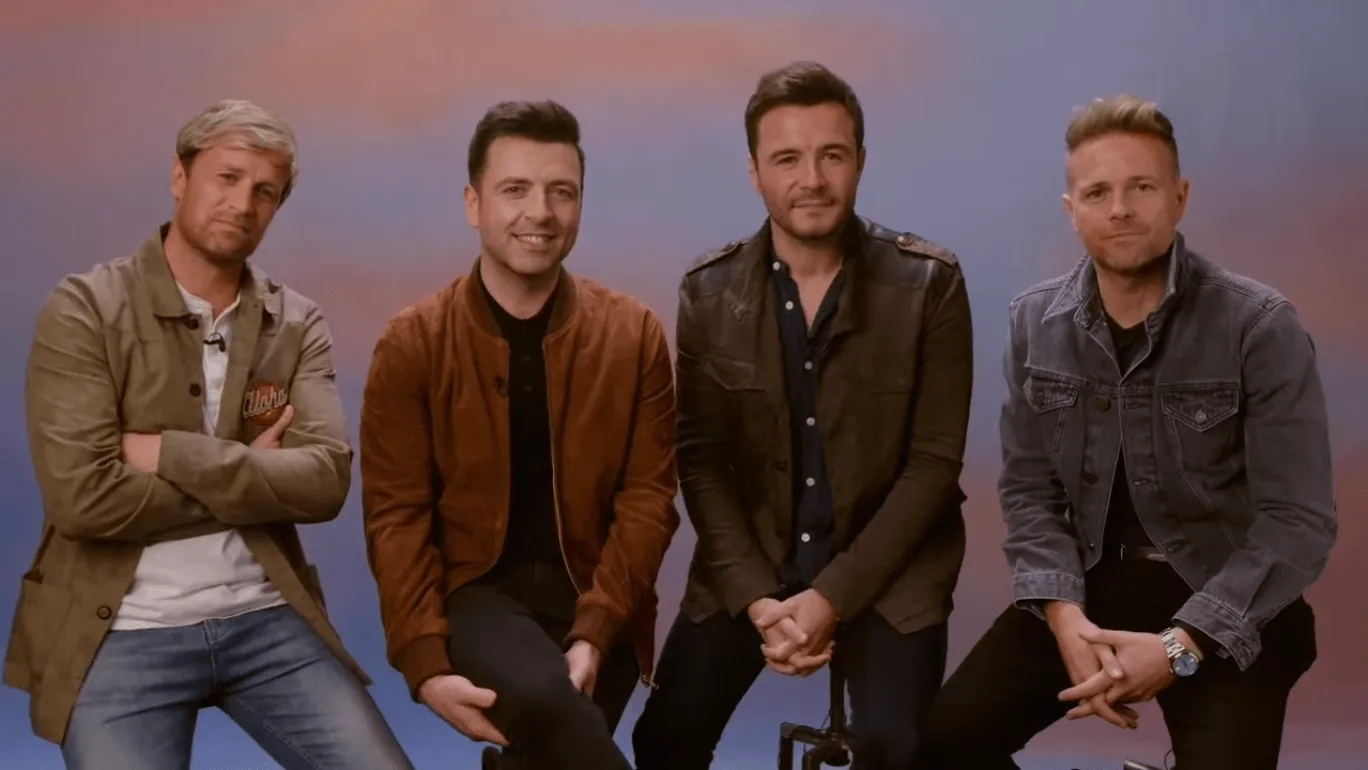
Photo by Warner Music New Zealand , licensed under CC BY 3.0 · Wikimedia Commons
Rank #284
Westlife
From Wikipedia
Westlife are an Irish pop group formed in Dublin in 1998. The group consists of members Nicky Byrne, Shane Filan, Kian Egan and Mark Feehily. Brian McFadden was a member of the band before leaving to pursue a solo career in March 2004. The group disbanded in 2012 and later reunited in 2018.
Members
- Brian McFadden (?–2004)
- Kian Egan
- Mark Feehily
- Nicky Byrne
- Shane Filan
Discography & Previews
Browse through and click an album to open and play 30-second previews streamed from Apple Music.
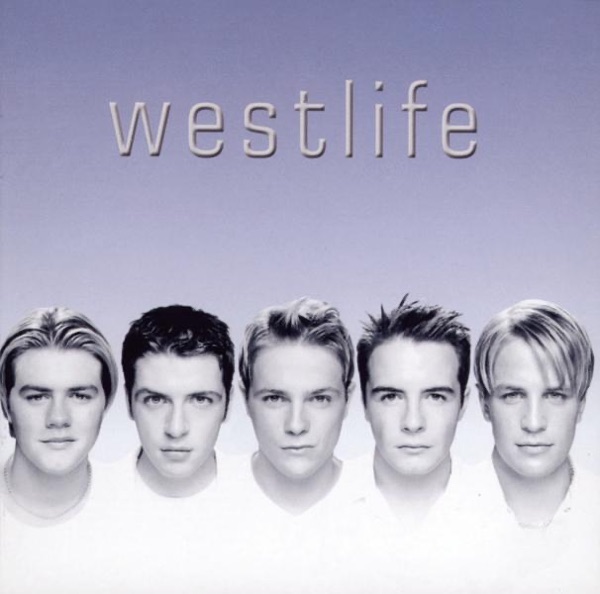
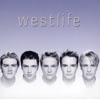
Westlife
1999 · 17 tracks
- 1 Swear It Again (Radio Edit) ↗ 4:08
- 2 If I Let You Go (Radio Edit) ↗ 3:42
- 3 Flying Without Wings ↗ 3:35
- 4 Fool Again ↗ 3:55
- 5 No No ↗ 3:14
- 6 I Don't Wanna Fight ↗ 5:03
- 7 Change the World ↗ 3:09
- 8 Moments ↗ 4:17
- 9 Seasons In the Sun ↗ 4:09
- 10 I Need You ↗ 3:49
- 11 Miss You ↗ 3:53
- 12 More Than Words ↗ 3:54
- 13 Open Your Heart ↗ 3:39
- 14 Try Again ↗ 3:35
- 15 What I Want Is What I've Got ↗ 3:32
- 16 We Are One ↗ 3:44
- 17 Can't Lose What You Never Had ↗ 4:21

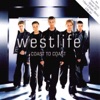
Coast To Coast
2000 · 19 tracks
- 1 My Love (Radio Edit) ↗ 3:52
- 2 What Makes a Man ↗ 3:50
- 3 I Lay My Love On You (Remix) ↗ 3:29
- 4 Against All Odds (Take a Look At Me Now) [feat. Westlife] ↗ 3:20
- 5 When You're Looking Like That (Single Remix) ↗ 3:53
- 6 Close ↗ 4:05
- 7 Somebody Needs You ↗ 3:07
- 8 Angels Wings ↗ 4:02
- 9 Soledad ↗ 3:57
- 10 Puzzle of My Heart ↗ 3:39
- 11 Dreams Come True ↗ 3:07
- 12 No Place That Far ↗ 3:13
- 13 You Make Me Feel ↗ 3:38
- 14 Loneliness Knows Me By Name ↗ 3:02
- 15 Fragile Heart ↗ 2:59
- 16 Every Little Thing You Do ↗ 4:07
- 17 Uptown Girl (Radio Edit) ↗ 3:06
- 18 I Have a Dream (Remix) ↗ 4:14
- 19 My Girl ↗ 2:54

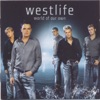
World of Our Own
2001 · 20 tracks
- 1 Queen of My Heart (Radio Edit) ↗ 4:19
- 2 Bop Bop Baby ↗ 4:22
- 3 I Cry ↗ 4:11
- 4 Uptown Girl (Radio Edit) ↗ 3:06
- 5 Why Do I Love You ↗ 3:38
- 6 I Wanna Grow Old with You ↗ 4:07
- 7 When You're Looking Like That (Single Remix) ↗ 3:53
- 8 Evergreen ↗ 4:03
- 9 World of Our Own ↗ 3:31
- 10 To Be Loved ↗ 3:19
- 11 Drive (For All Time) ↗ 3:26
- 12 If Your Heart's Not in It ↗ 4:20
- 13 When You Come Around ↗ 3:41
- 14 Don't Say It's Too Late ↗ 4:11
- 15 Don't Let Me Go ↗ 3:28
- 16 Walk Away ↗ 3:59
- 17 Love Crime ↗ 3:17
- 18 Imaginary Diva ↗ 3:37
- 19 Angel ↗ 4:25
- 20 Bad Girls ↗ 3:23
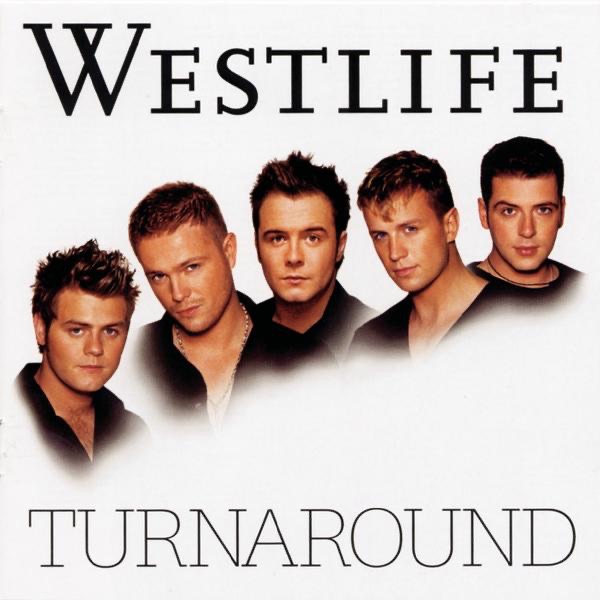
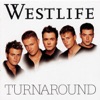
Turnaround
2003 · 13 tracks

…Allow Us to Be Frank
2004 · 13 tracks
- 1 Ain't That a Kick In the Head ↗ 2:26
- 2 Fly Me to the Moon ↗ 2:30
- 3 Smile ↗ 2:49
- 4 Let There Be Love ↗ 2:43
- 5 The Way You Look Tonight ↗ 4:06
- 6 Come Fly With Me ↗ 3:13
- 7 Mack the Knife ↗ 3:08
- 8 I Left My Heart In San Francisco ↗ 2:57
- 9 Summer Wind ↗ 2:57
- 10 Clementine ↗ 3:17
- 11 When I Fall In Love ↗ 3:08
- 12 Moon River ↗ 2:40
- 13 That's Life ↗ 3:11

Face to Face
2005 · 12 tracks
- 1 You Raise Me Up ↗ 4:01
- 2 When You Tell Me That You Love Me (with Diana Ross) ↗ 3:56
- 3 Amazing ↗ 2:49
- 4 That's Where You Find Love ↗ 3:45
- 5 She's Back ↗ 3:10
- 6 Desperado ↗ 3:38
- 7 Colour My World ↗ 3:56
- 8 In This Life ↗ 4:08
- 9 Heart Without a Home ↗ 4:47
- 10 Hit You with the Real Thing ↗ 3:00
- 11 Change Your Mind ↗ 3:43
- 12 Maybe Tomorrow ↗ 3:08

The Love Album
2006 · 11 tracks
- 1 The Rose ↗ 3:39
- 2 Total Eclipse of the Heart ↗ 4:40
- 3 All Out of Love ↗ 3:45
- 4 You Light Up My Life ↗ 3:28
- 5 Easy ↗ 4:26
- 6 You Are So Beautiful ↗ 3:04
- 7 Have You Ever Been In Love ↗ 3:41
- 8 Love Can Build a Bridge ↗ 3:55
- 9 The Dance ↗ 3:59
- 10 All or Nothing ↗ 3:57
- 11 You've Lost That Lovin' Feeling ↗ 3:26

Back Home
2007 · 12 tracks

Where We Are
2009 · 13 tracks
- 1 What About Now ↗ 4:10
- 2 How to Break a Heart ↗ 4:04
- 3 Leaving ↗ 3:57
- 4 Shadows ↗ 4:02
- 5 Talk Me Down ↗ 4:02
- 6 Where We Are ↗ 3:58
- 7 The Difference ↗ 3:30
- 8 As Love Is My Witness ↗ 4:07
- 9 Another World ↗ 3:17
- 10 No More Heroes ↗ 3:59
- 11 Sound of a Broken Heart ↗ 3:52
- 12 Reach Out ↗ 3:56
- 13 I'll See You Again ↗ 5:18

Gravity
2010 · 12 tracks
-
 WestlifeWestlife199917 tracks
 -
 Coast To CoastWestlife200019 tracks
 -
 World of Our OwnWestlife200120 tracks
 -
 TurnaroundWestlife200313 tracks
 -
 …Allow Us to Be FrankWestlife200413 tracks
 -
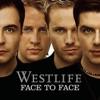 Face to FaceWestlife200512 tracks
 -
 The Love AlbumWestlife200611 tracks
 -
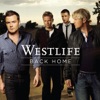 Back HomeWestlife200712 tracks
 -
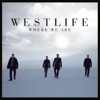 Where We AreWestlife200913 tracks
 -
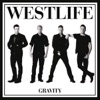 GravityWestlife201012 tracks
 -
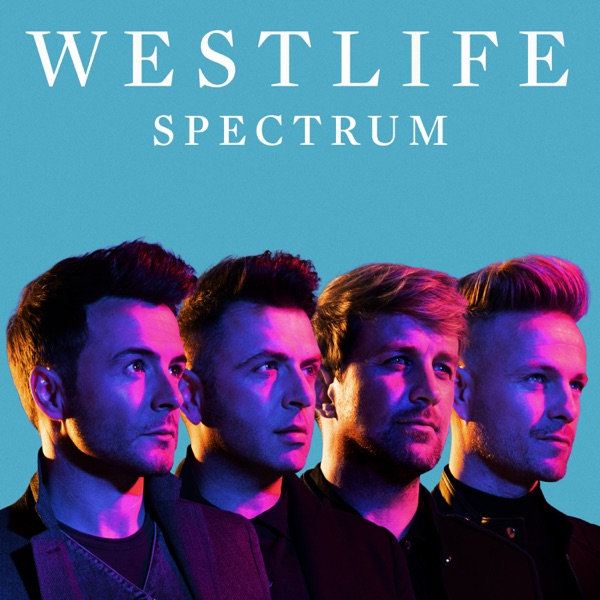
 SpectrumWestlife201911 tracks
Deep Dive
Overview
Westlife are an Irish pop group that emerged from Dublin in 1998 as one of the defining acts of the late-1990s boy-band era. Fronted by the four-piece of Shane Filan, Nicky Byrne, Kian Egan, and Mark Feehily—with Brian McFadden as an original fifth member until 2004—the band positioned themselves within the pop-rock and blue-eyed soul idiom that defined their era. Over a 14-year initial run before disbanding in 2012, they recorded a substantial catalog of studio albums and became central figures in the European pop landscape, achieving particular strength in the United Kingdom and Ireland.
Formation Story
Westlife coalesced in Dublin in 1998, drawing from the Irish pop scene and the broader boy-band template that had taken hold across Europe and North America in the preceding years. The five-member lineup—Shane Filan, Nicky Byrne, Kian Egan, Mark Feehily, and Brian McFadden—formed the group’s initial identity. Though Wikidata locates their origin in Sligo, the band’s professional base and operational center became Dublin, where the Irish music industry infrastructure and major record-label operations were concentrated. The group’s formation came at the tail end of a decade that had seen boy bands rise to massive commercial prominence, giving them an immediate audience and commercial framework within which to operate.
Breakthrough Moment
Westlife’s debut album, Westlife (1999), established the group’s commercial viability and marked their arrival as a significant force in European pop. The album and its supporting campaign created a foundation of radio play and teen-audience enthusiasm that would sustain the band through the subsequent release cycle. By Coast to Coast (2000), they had solidified their position in the pop-rock marketplace, demonstrating that their appeal extended beyond the initial novelty of the boy-band format and into a more durable form of commercial pop success. These early releases confirmed their ability to compete at the highest levels of the European pop industry.
Peak Era
Westlife’s most commercially and creatively intense period spanned from 2001 to 2007, anchored by World of Our Own (2001), Turnaround (2003), and Back Home (2007). During this six-year stretch, the band released a series of studio albums that consolidated their status as major pop acts, particularly in the UK and Irish markets. The 2004 departure of Brian McFadden to pursue a solo career did not derail the group’s momentum; instead, they continued as a four-piece with renewed focus. Albums such as …Allow Us to Be Frank (2004) and Face to Face (2005) sustained their presence in the mainstream, while Back Home (2007) represented a notable statement of creative endurance in a shifting pop landscape. This era saw them navigate the transition from the late 1990s boy-band craze into a more mature phase of their career.
Musical Style
Westlife’s sound blended pop-rock fundamentals with blue-eyed soul and operatic pop inflections, creating a distinctive vocal-group aesthetic that emphasized harmonic arrangements and sentimental melodicism. The band’s production values reflected their era’s pop sensibilities—polished, radio-friendly, and designed to showcase the four (later four, after McFadden’s departure) voices in close harmony. Their songwriting drew from the boy-band tradition of crafted pop singles, with emphasis on romantic themes and mass-market accessibility. The vocal character of the group centered on the interplay between the four members’ tones, allowing for both unison passages and layered harmonies that recalled both contemporary pop-rock and older vocal-group traditions. As the 2000s progressed, the band’s production choices reflected broader industry trends toward digital recording and post-production, while maintaining their core identity as a harmony-driven pop act.
Major Albums
Westlife (1999)
The group’s debut introduced their core sound and commercial template, establishing their presence in the European pop market and confirming their viability as a unit.
Coast to Coast (2000)
This follow-up expanded their international reach and demonstrated that the initial success of the debut was not a one-off, solidifying their fan base across the UK and Ireland.
World of Our Own (2001)
A landmark statement of the band’s ambitions and creative range, showing their capacity to grow beyond debut-era formulas while maintaining the harmonic and melodic core that defined them.
Back Home (2007)
Released in the latter half of their initial run, this album represented a mature statement from the four-piece and one of their final major studio efforts before the 2012 disbandment.
Spectrum (2019)
Following their 2018 reunion, Spectrum marked their return to the studio and signaled their continued relevance to a fanbase that had followed them across the band’s hiatus.
Signature Songs
- “If I Let You Go” — An early single that became synonymous with the band’s softer, more melodic moments and established their commercial identity.
- “Against All Odds” — Demonstrated their ability to handle balladic material and showcase vocal depth across the ensemble.
- “Flying without Wings” — One of their most recognizable tracks, exemplifying the sentimentality and harmonic sophistication that defined their appeal.
- “World of Our Own” — The title track from their 2001 album, showcasing the band’s capacity for a more expansive and confident pop statement.
- “Home” — A centerpiece of their Back Home era, reflecting the band’s maturation and emotional range.
Influence on Rock
While Westlife emerged from the boy-band tradition rather than pioneering it, they extended the commercial and artistic viability of that format into the 2000s, proving that the model could sustain creative development and longevity beyond the initial teen-oriented market. Their success in the European market, particularly the UK and Ireland, demonstrated the enduring appetite for harmony-driven pop-rock acts and influenced the production and promotion strategies of subsequent pop groups. The band’s later reunion in 2018—a decision that would be echoed by other acts from their era—helped establish the template for legacy-act returns and demonstrated that boy bands could successfully navigate a return to touring and recording after extended hiatuses.
Legacy
Westlife’s initial disbandment in 2012 marked the end of their first cycle, but their 2018 reunion and subsequent studio albums (Spectrum in 2019, Wild Dreams in 2021) confirmed their status as a durable property within pop music. The band’s longevity across nearly three decades of activity—accounting for the 2012–2018 hiatus—speaks to a significant and lasting fanbase and a body of work that has maintained relevance across changing industry conditions. Their catalog remains accessible through streaming platforms, and their continued touring activity serves as evidence of sustained audience interest. The release of 25 - The Ultimate Collection (2025) underscores their positioning as an established act with a retrospective value and a history substantial enough to warrant compilations and archival projects. Within the context of Irish pop music, Westlife remain among the most commercially successful acts to have emerged from the island, a distinction they share with a limited number of peers from their era.
Fun Facts
- Brian McFadden’s departure in March 2004 to launch a solo career did not result in the band’s dissolution or reformation, allowing Westlife to continue successfully as a four-piece for the remainder of their initial run.
- The band recorded albums across multiple record labels over their career, including arrangements with Syco Music, Sony BMG Music Entertainment, Universal Music Group, and RCA Records, reflecting the competitive landscape for pop acts during their peak years.
- Their 2018 reunion came six years after the band’s 2012 breakup, making them part of a broader wave of 1990s and 2000s acts revisiting their catalogs and returning to live performance.
- The band’s origin in Sligo, a town in northwestern Ireland, positioned them as representatives of Irish pop music on a global stage during an era when Irish acts held particular cultural cachet in the international market.