
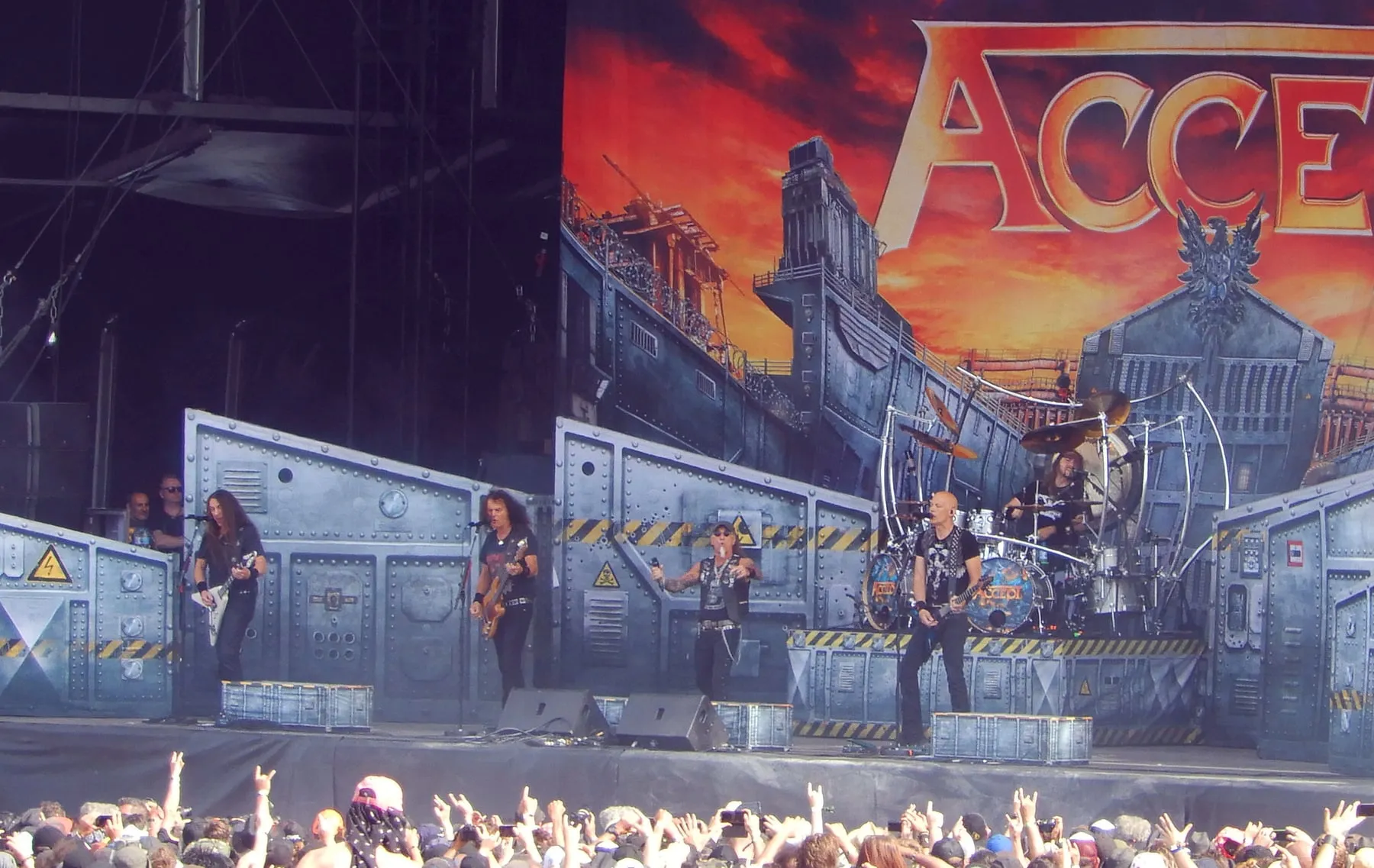
Photo by Tilly antoine , licensed under CC BY-SA 4.0 · Wikimedia Commons
Rank #420
Accept
From Wikipedia
Accept is a German heavy metal band from Solingen, formed in 1976 with their first consistent lineup featuring lead singer Udo Dirkschneider, lead guitarist Wolf Hoffmann, bassist Peter Baltes, rhythm guitarist Jörg Fischer and drummer Stefan Kaufmann. Their current lineup consists of Hoffmann, vocalist Mark Tornillo, guitarist Philip Shouse, drummer Christopher Williams and bassist Martin Motnik. Accept has undergone numerous lineup changes, with Hoffmann being the only constant member. As of 2024, the band has released seventeen studio albums, five live albums and nine compilation albums.
Members
- Udo Dirkschneider (1976–2005)
- Christopher Williams
- Mark Tornillo
- Martin Motnik
- Peter Baltes
- Philip Shouse
- Uwe Lulis
- Wolf Hoffmann
Discography & Previews
Browse through and click an album to open and play 30-second previews streamed from Apple Music.

Restless and Wild
1982 · 10 tracks

Balls to the Wall
1983 · 12 tracks
- 1 Balls to the Wall ↗ 5:43
- 2 London Leatherboys ↗ 3:58
- 3 Fight It Back ↗ 3:34
- 4 Head Over Heels ↗ 4:25
- 5 Losing More Than You've Ever Had ↗ 5:09
- 6 Love Child ↗ 3:35
- 7 Turn Me On ↗ 5:12
- 8 Losers and Winners ↗ 4:20
- 9 Guardian of the Night ↗ 4:25
- 10 Winterdreams ↗ 4:53
- 11 Head Over Heels (Live) ↗ 5:52
- 12 Love Child (Live) ↗ 4:58


Objection Overruled
1993 · 11 tracks

Death Row
1994 · 15 tracks
- 1 Death Row ↗ 5:18
- 2 Sodom & Gomorra ↗ 6:29
- 3 The Beast Inside ↗ 5:57
- 4 Dead On! ↗ 4:52
- 5 Guns 'R' Us ↗ 4:41
- 6 Like a Loaded Gun ↗ 4:19
- 7 What Else ↗ 4:39
- 8 Stone Evil ↗ 5:23
- 9 Bad Habits Die Hard ↗ 4:41
- 10 Prejudice ↗ 4:14
- 11 Bad Religion ↗ 4:26
- 12 Generation Clash II ↗ 5:05
- 13 Writing on the Wall ↗ 4:25
- 14 Drifting Apart (Instrumental) ↗ 3:03
- 15 Pomp and Circumstance (Instrumental) ↗ 3:44

Predator
1996 · 12 tracks

Blood of the Nations
2010 · 13 tracks
- 1 Beat the Bastards ↗ 5:25
- 2 Teutonic Terror ↗ 5:14
- 3 The Abyss ↗ 6:54
- 4 Blood of the Nations ↗ 5:38
- 5 Shades of Death ↗ 7:33
- 6 Locked and Loaded ↗ 4:29
- 7 Time Machine ↗ 5:25
- 8 Kill the Pain ↗ 5:47
- 9 Rollin' Thunder ↗ 4:54
- 10 Pandemic ↗ 5:36
- 11 New World Comin' ↗ 4:51
- 12 No Shelter ↗ 6:04
- 13 Bucketful of Hate ↗ 5:12

Stalingrad
2012 · 11 tracks


Too Mean to Die
2021 · 11 tracks

-
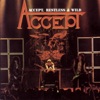 Restless and WildAccept198210 tracks
 -
 Balls to the WallAccept198312 tracks
 -
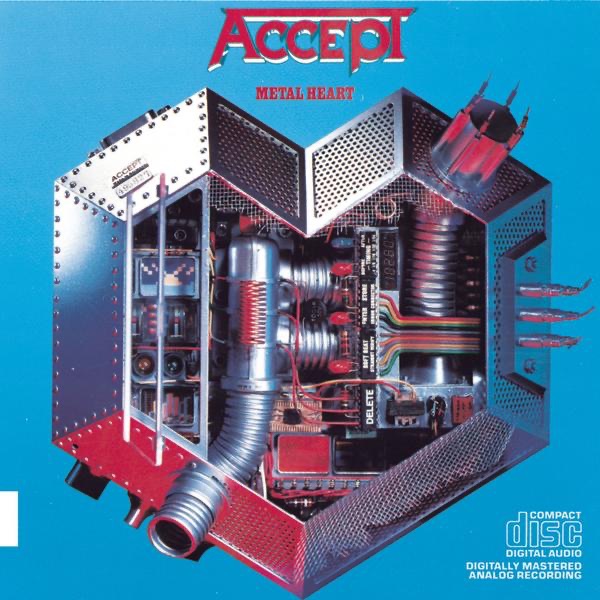
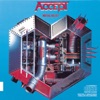 Metal HeartAccept198510 tracks
 -
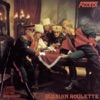 Russian RouletteAccept198610 tracks
 -
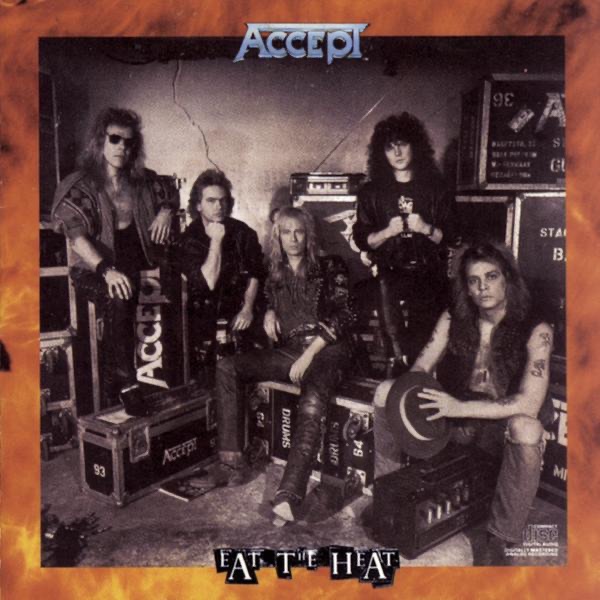
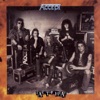 Eat the HeatAccept198911 tracks
 -
 Objection OverruledAccept199311 tracks
 -
 Death RowAccept199415 tracks
 -
 PredatorAccept199612 tracks
 -
 Blood of the NationsAccept201013 tracks
 -
 StalingradAccept201211 tracks
 -
 Blind RageAccept201311 tracks
 -
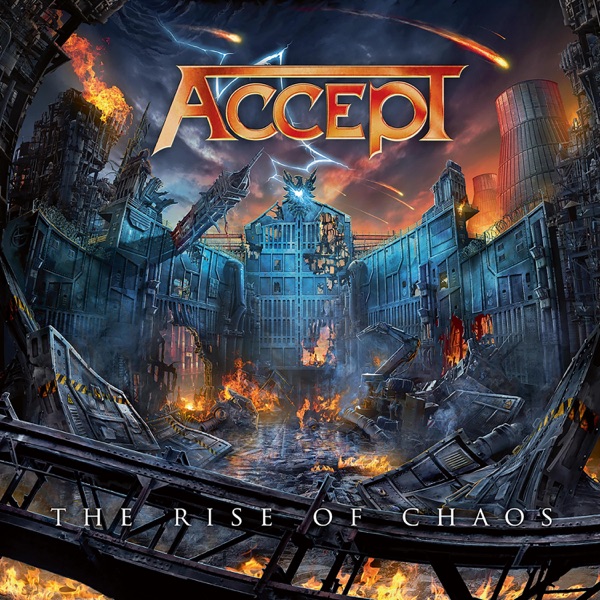
 The Rise of ChaosAccept201710 tracks
 -
 Too Mean to DieAccept202111 tracks
 -
 HumanoidAccept202411 tracks
Deep Dive
Overview
Accept is a German heavy metal band from Solingen, formed in 1976, whose career spans nearly five decades and defined a particular strain of European metal—technically accomplished, unapologetically heavy, and rooted in working-class industrial Germany. The band achieved their greatest commercial and critical success in the early 1980s with Balls to the Wall, an album that codified their sound and earned them a foothold in the international metal market. Wolf Hoffmann, the band’s lead guitarist and sole constant member across all lineup changes, has guided Accept through numerous reconfigurements while maintaining a coherent artistic identity built on precision, volume, and straightforward metal craft.
Formation Story
Accept crystallized in Solingen, a steel-working city in North Rhine-Westphalia, in 1976 with Udo Dirkschneider on vocals, Wolf Hoffmann on lead guitar, Peter Baltes on bass, Jörg Fischer on rhythm guitar, and Stefan Kaufmann on drums. This foundational lineup emerged from the broader wave of heavy metal activity across Germany in the mid-1970s, a period when the country’s metal scene developed in relative isolation from the British and American dominance of the era. The band’s origins in an industrial city shaped their sonic character: a kind of utilitarian heaviness, direct and without pretense, that reflected the pragmatic culture of German manufacturing and engineering. Their early releases on small labels established a regional following before the wider metal world took notice.
Breakthrough Moment
Accept achieved international breakthrough with Balls to the Wall in 1983, an album that crystallized their approach and signaled that German metal could compete on a global stage. The record’s success, driven by its title track and the band’s relentless touring, opened doors across Europe and North America, making Accept one of the few German bands of the era to achieve substantial mainstream metal recognition. Prior albums—Accept (1979), I’m a Rebel (1980), Breaker (1981), and Restless and Wild (1982)—had built a reputation for consistent, technically proficient heavy metal, but Balls to the Wall represented a leap in songwriting cohesion and production clarity. The album’s impact established the band as a permanent fixture in metal’s touring circuit and catalog, a status they would sustain through subsequent decades.
Peak Era
The period from 1982 to 1986 marked Accept’s most creatively fertile and commercially successful stretch. Restless and Wild, Balls to the Wall, Metal Heart (1985), and Russian Roulette (1986) comprised a run of four albums in four years, each sold solidly and reinforced the band’s presence in metal magazines, radio playlists, and live venues across Europe and beyond. During these years, Dirkschneider’s distinctive vocal delivery—powerful, accented, and unmistakably German—paired with Hoffmann’s precise, articulate lead guitar work to create a template that metal audiences recognized and sought out. The band built a loyal international fanbase through tireless touring and consistent album output, establishing themselves as workhorses of the metal underground even as they achieved radio exposure uncommon for German acts at the time.
Musical Style
Accept’s sound is rooted in heavy metal fundamentals—power chords, galloping rhythms, and emphatic vocal lines—but executed with a technical precision and European sensibility that distinguishes them from their British and American contemporaries. Hoffmann’s lead guitar work is precise and economical rather than flashy, built on clear phrasing and controlled intensity; he favors angular, well-defined solos over the blues-based fretboard wandering more common in Anglo-American metal. The rhythm section, anchored by Baltes’ bass and Kaufmann’s drums in the early era, emphasizes lock-step synchronization and propulsive forward motion. Dirkschneider’s vocals are the most distinctive element—a harsh, powerful delivery with a pronounced German accent that became a signature of the band’s identity. Lyrically, the band gravitated toward themes of excess, power, and rebellion, presented without irony or self-consciousness. This directness, combined with the technical competence of the arrangements, gave Accept’s music a kind of brutal efficiency that resonated with metal audiences seeking substance over style.
Major Albums
Balls to the Wall (1983)
The album that secured Accept’s international standing, featuring clear production, anthemic songwriting, and the title track’s memorable riff and chorus. Balls to the Wall remains their best-known and most commercially successful album, establishing the band’s core sound in definitive form.
Metal Heart (1985)
A follow-up that sustained the momentum of Balls to the Wall, demonstrating the band’s ability to craft another strong set of songs without repeating themselves, solidifying their place in the 1980s metal landscape.
Restless and Wild (1982)
The album immediately preceding Balls to the Wall, showing the band hitting their stride with more ambitious and cohesive songwriting, effectively the final step before their commercial breakthrough.
Russian Roulette (1986)
The fourth consecutive strong album, indicating Accept’s staying power in the mid-1980s and their capacity to maintain quality across repeated releases during their peak commercial period.
Blood of the Nations (2010)
A return to recording after a period of reduced output, marking the post-Dirkschneider era with Mark Tornillo on vocals and demonstrating the band’s willingness to continue recording and touring into the 2010s.
Signature Songs
- Balls to the Wall — The title track from their 1983 breakthrough album, featuring a driving riff and anthemic chorus that became the band’s most recognizable song.
- Metal Heart — The lead single from the 1985 album of the same name, showcasing Hoffmann’s guitar work and Dirkschneider’s powerful delivery.
- I’m a Rebel — From the 1980 album, an early signature of the band’s direct, defiant aesthetic.
- Restless and Wild — The title track from their 1982 album, exemplifying the band’s pre-breakthrough sound.
- Fast as a Shark — An early Accept composition that established their style and intensity.
Influence on Rock
Accept’s sustained career and technical competence helped establish German heavy metal as a legitimate regional variant within the broader metal ecosystem. While they never achieved the household-name status of British or American bands, their consistent touring and album output across the 1980s proved that non-English-speaking metal bands could sustain long careers on the global metal circuit. Hoffmann’s precise, non-blues-based guitar approach influenced subsequent generations of European metal musicians who prioritized clarity and technical execution over the pentatonic and blues-scale conventions of Anglo-American rock. The band’s willingness to embrace working-class imagery and subject matter without irony or apology gave metal audiences an alternative to the theatrical or intellectual pretensions sometimes attached to the genre elsewhere, contributing to metal’s standing as a legitimate popular music form across continental Europe.
Legacy
Accept remains active as of 2024, having released seventeen studio albums and transitioned from Dirkschneider’s departure in 2005 to Mark Tornillo on vocals without disbanding or losing their recording momentum. The band’s longevity—nearly five decades from formation to present—places them among the durable metal acts whose career arcs span multiple eras and lineup generations. Hoffmann’s presence throughout all changes has provided continuity and legitimacy to the band’s ongoing work. Recent albums including Too Mean to Die (2021) and Humanoid (2024) demonstrate the band’s continued willingness to record new material and tour, maintaining their presence in the streaming era and contemporary metal touring circuits. Accept’s catalog remains in print and continues to find new listeners through digital platforms, while their 1980s output remains a touchstone for collectors and historians of the era.
Fun Facts
- Solingen, Accept’s hometown, is internationally renowned for its production of high-quality steel products and cutlery; the band’s industrial-grade heaviness reflected their city’s manufacturing heritage.
- Wolf Hoffmann is the only member to appear on all of Accept’s studio albums across their entire history, making him the sole constant in a band that has undergone numerous lineup changes.
- The band continued recording and touring actively into the 2020s, with Humanoid arriving in 2024, demonstrating remarkable longevity for a metal band formed in the 1970s.