

Photo by MerleEllaPatsy , licensed under CC BY-SA 4.0 · Wikimedia Commons
Rank #348
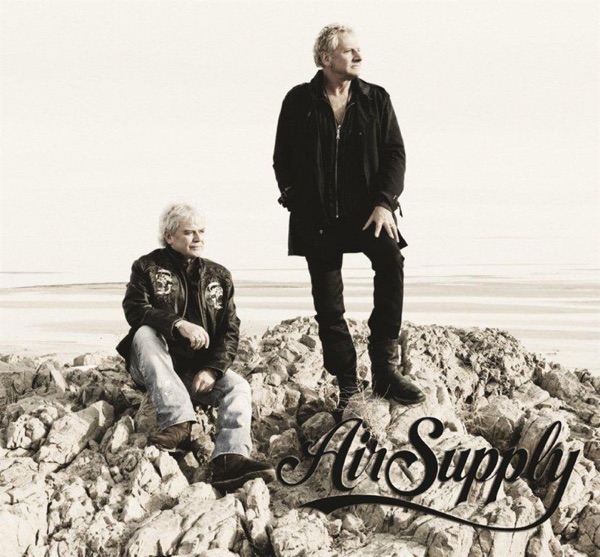
Air Supply
From Wikipedia
Air Supply are a soft rock duo formed in Melbourne, Australia, in 1975, consisting of English singer-songwriter and guitarist Graham Russell and Australian singer Russell Hitchcock.
Members
- Russell Hitchcock
Discography & Previews
Browse through and click an album to open and play 30-second previews streamed from Apple Music.
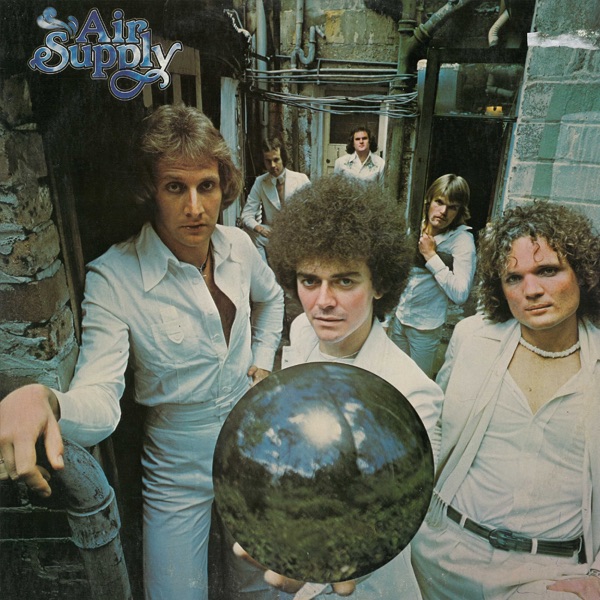
Air Supply
1976 · 11 tracks

Love and Other Bruises
1977 · 10 tracks


The One That You Love
1981 · 10 tracks
- 1 Don't Turn Me Away ↗ 3:41
- 2 Here I Am (Just When I Thought I Was Over You) ↗ 3:50
- 3 Keeping the Love Alive ↗ 3:38
- 4 The One That You Love ↗ 4:19
- 5 This Heart Belongs to Me ↗ 4:14
- 6 Sweet Dreams ↗ 5:22
- 7 I Want to Give It All ↗ 3:41
- 8 I'll Never Get Enough of You ↗ 3:50
- 9 Tonite ↗ 3:47
- 10 I've Got Your Love ↗ 3:42

Now and Forever
1982 · 10 tracks
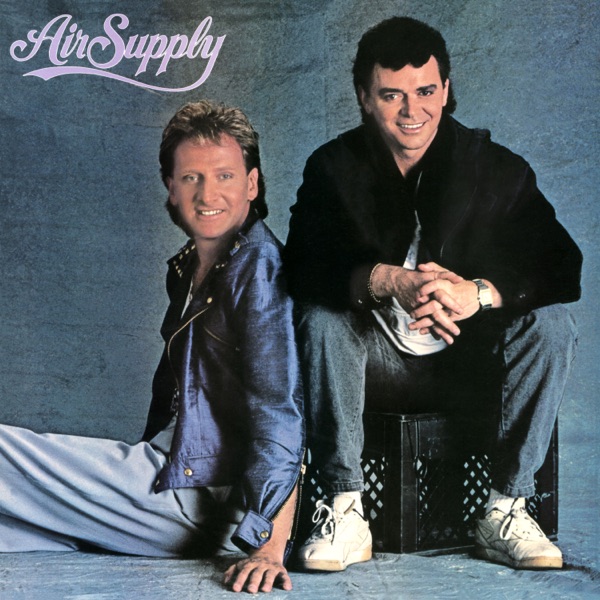
Air Supply
1985 · 12 tracks
- 1 Just as I Am ↗ 4:44
- 2 The Power of Love (You Are My Lady) ↗ 5:28
- 3 I Can't Let Go ↗ 4:18
- 4 After All ↗ 3:41
- 5 I Wanna Hold You Tonight ↗ 3:41
- 6 Make It Right ↗ 3:49
- 7 When the Time Is Right ↗ 4:57
- 8 Sandy ↗ 4:17
- 9 Great Pioneer ↗ 4:13
- 10 Black and Blue ↗ 4:05
- 11 Sunset ↗ 2:48
- 12 Never Fade Away ↗ 4:50
Air Supply
1985 · 12 tracks
- 1 Just as I Am ↗ 4:44
- 2 The Power of Love (You Are My Lady) ↗ 5:28
- 3 I Can't Let Go ↗ 4:18
- 4 After All ↗ 3:41
- 5 I Wanna Hold You Tonight ↗ 3:41
- 6 Make It Right ↗ 3:49
- 7 When the Time Is Right ↗ 4:57
- 8 Sandy ↗ 4:17
- 9 Great Pioneer ↗ 4:13
- 10 Black and Blue ↗ 4:05
- 11 Sunset ↗ 2:48
- 12 Never Fade Away ↗ 4:50

Hearts in Motion
1986 · 11 tracks
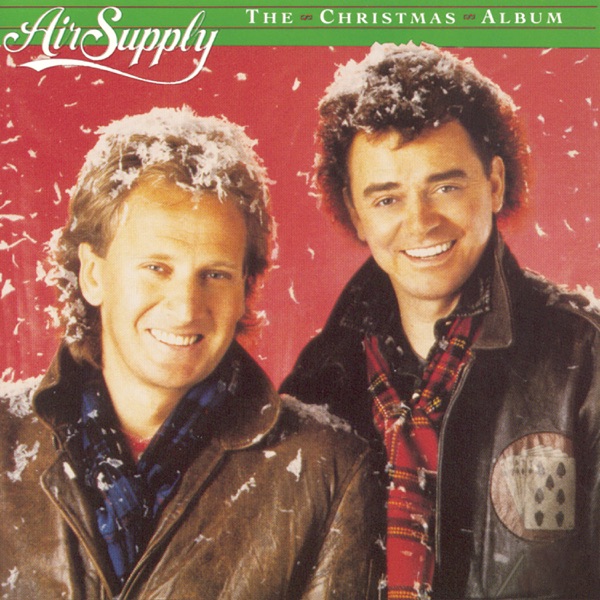
The Christmas Album
1987 · 10 tracks
- 1 White Christmas (Live) ↗ 3:24
- 2 The First Noel ↗ 3:21
- 3 The Little Drummer Boy ↗ 3:05
- 4 The Eyes of a Child ↗ 4:31
- 5 Silent Night ↗ 3:05
- 6 The Christmas Song (Chestnuts Roasting On An Open Fire) ↗ 2:59
- 7 Sleigh Ride ↗ 2:22
- 8 Love Is All ↗ 4:32
- 9 Winter Wonderland ↗ 2:33
- 10 O Come All Ye Faithful ↗ 3:14

News From Nowhere
1995 · 11 tracks
Yours Truly
2001 · 13 tracks
- 1 Who Am I ↗ 3:38
- 2 Body Glove ↗ 4:35
- 3 Don't Throw Our Love Away ↗ 4:58
- 4 Why Don't You Come Over ↗ 5:10
- 5 Tell Me of Spring ↗ 4:07
- 6 Yours Truly ↗ 4:38
- 7 You Are the Reason (feat. Mehnaz) ↗ 4:29
- 8 Only One Forever ↗ 3:23
- 9 If You Love Me ↗ 4:22
- 10 The Scene ↗ 4:31
- 11 Learning to Make Love to You ↗ 4:16
- 12 Peaches and Cream ↗ 3:41
- 13 Hard to Forget Her ↗ 4:30

Across the Concrete Sky
2003 · 11 tracks
The Singer and the Song
2005 · 12 tracks
- 1 Lost In Love (Acoustic Version) ↗ 4:43
- 2 All Out Of Love (Acoustic Version) ↗ 4:19
- 3 Love & Other Bruises (Acoustic Version) ↗ 4:41
- 4 Making Love Out Of Nothing At All (Acoustic Version) ↗ 5:30
- 5 Yours Truly (Acoustic Version) ↗ 4:32
- 6 The One That You Love (Acoustic Version) ↗ 5:23
- 7 Sweet Dreams (Acoustic Version) ↗ 4:18
- 8 Two Less Lonely People In The World (Acoustic Version) ↗ 3:43
- 9 Here I Am (Acoustic Version) ↗ 3:56
- 10 Chances (Acoustic Version) ↗ 4:10
- 11 Goodnight (Acoustic Version) ↗ 2:24
- 12 All Out Of Love with The Celtic Tenors (Bonus Track) ↗ 4:15

Free Love
2009 · 15 tracks
- 1 The Book of Love ↗ 4:37
- 2 Let's Stay Together Tonight ↗ 7:28
- 3 Why Don't You Come Over ↗ 5:05
- 4 I Can't Stop the Rain ↗ 4:42
- 5 Daybreak ↗ 4:16
- 6 Don't Tell Me ↗ 4:46
- 7 When I Say ↗ 4:54
- 8 I Want You ↗ 4:17
- 9 Yours Truly ↗ 4:31
- 10 You Are the Reason ↗ 4:22
- 11 Always ↗ 4:07
- 12 It's Never Too Late ↗ 5:24
- 13 Only One Forever ↗ 3:19
- 14 The Way I Feel ↗ 4:24
- 15 I'll Be Thinking of You ↗ 4:15
Mumbo Jumbo
2010 · 14 tracks
- 1 Setting the Seen ↗ 5:26
- 2 Dance With Me ↗ 5:35
- 3 A Little Bit of Everything ↗ 3:58
- 4 Hold On (feat. Michael Johns) ↗ 4:42
- 5 A Little Bit More ↗ 4:48
- 6 Alternate Ending ↗ 4:36
- 7 I Won't Let It Get In the Way ↗ 4:19
- 8 Why ↗ 4:12
- 9 Me Like You ↗ 3:13
- 10 Mumbo Jumbo ↗ 4:02
- 11 Faith In Love ↗ 4:30
- 12 Can I Be Your Lover ↗ 5:18
- 13 Lovesex ↗ 4:06
- 14 Until ↗ 3:18
-
 Air SupplyAir Supply197611 tracks
 -
 Love and Other BruisesAir Supply197710 tracks
 -
 Lost in LoveAir Supply198010 tracks
 -
 The One That You LoveAir Supply198110 tracks
 -
 Now and ForeverAir Supply198210 tracks
 -
 Air SupplyAir Supply198512 tracks
 - Air SupplyAir Supply198512 tracks
-
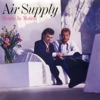 Hearts in MotionAir Supply198611 tracks
 -
 The Christmas AlbumAir Supply198710 tracks
 -
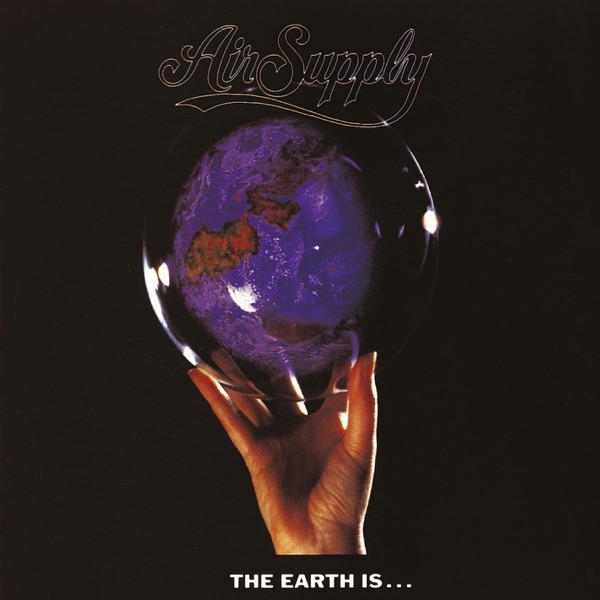
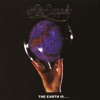 The Earth Is…Air Supply199110 tracks
 -
 The Vanishing RaceAir Supply199310 tracks
 -
 News From NowhereAir Supply199511 tracks
 -
 The Book of LoveAir Supply199710 tracks
 -
 Yours TrulyAir Supply200113 tracks
 -
 Across the Concrete SkyAir Supply200311 tracks
 -
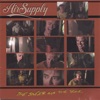 The Singer and the SongAir Supply200512 tracks
 -
 Free LoveAir Supply200915 tracks
 -
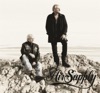 Mumbo JumboAir Supply201014 tracks
Deep Dive
Overview
Air Supply is a soft rock duo formed in Melbourne, Australia, in 1975, consisting of English singer-songwriter and guitarist Graham Russell and Australian vocalist Russell Hitchcock. The pair emerged during an era when melodic, orchestrally-inflected rock was gaining commercial traction in the wake of progressive and glam rock’s dominance, and they would become central figures in the soft rock movement that defined much of the late 1970s and early 1980s. Their crafting of lush arrangements, emotionally direct lyrics, and soaring vocal harmonies positioned them as consummate practitioners of the romantic rock ballad at a time when such sincerity found a devoted global audience.
Formation Story
Air Supply coalesced in Melbourne in 1975 when Graham Russell, an English-born guitarist and songwriter, partnered with Australian vocalist Russell Hitchcock. The two emerged from the Australian rock scene during a period when the country was developing its own identity distinct from British and American rock traditions. Melbourne in the mid-1970s provided the incubator for their collaboration, a city already hosting a vibrant live music community. The duo’s formation at this moment positioned them to ride the wave of interest in polished, harmony-driven rock that was beginning to eclipse the harder rock styles that had dominated the early part of the decade. From their earliest recordings, the partnership emphasized Russell’s intricate guitar work and melodic composition with Hitchcock’s expressive, soaring vocal delivery as the foundation of their sound.
Breakthrough Moment
Air Supply’s international breakthrough came with their 1980 album Lost in Love, which established them as more than a regional Australian act. This record showcased their core strengths—ornate production, carefully layered arrangements, and ballads constructed around memorable hooks and emotional vocal performances. The success of Lost in Love catapulted the duo into global recognition and set the template for their commercial peak throughout the early 1980s. The album’s reception on both sides of the Atlantic validated their approach to soft rock and opened doors to arena touring and mainstream radio play in markets that had previously shown limited interest in the Australian rock scene.
Peak Era
Air Supply’s most commercially successful and creatively confident period spanned from 1980 through the mid-1980s. Albums including Strangers In Love (1980), The One That You Love (1981), Now and Forever (1982), and Hearts in Motion (1986) solidified their position as leading practitioners of sophisticated pop-rock during this period. The early 1980s represented the apex of their chart presence and cultural relevance, when soft rock—particularly the ballad-heavy variant that Air Supply perfected—dominated commercial radio and found favor with audiences seeking emotionally transparent music. Their consistency across this run of releases, each containing moments of genuine melodic distinction alongside passages of ornamental production, established them as reliable purveyors of a very specific strain of adult contemporary rock.
Musical Style
Air Supply’s sound is rooted in soft rock, an idiom that emphasizes melody and emotional directness over instrumental virtuosity or rhythmic experimentation. The duo’s arrangements characteristically employed lush orchestration, with strings and keyboards prominently featured alongside Russell’s guitar work. Hitchcock’s voice—tender and capable of reaching higher registers with apparent ease—provided the emotional focal point for most compositions, often delivering lyrics about romantic longing and devotion with a sincerity that matched their era’s appetite for such sentiment. Structurally, their songs typically built around strong melodic hooks, often arranged in verse-chorus-bridge patterns that maximized emotional payoff during key moments. Russell’s guitar contributions ranged from fingerpicked acoustic figures to more elaborate electric passages, though it was often the restraint and tasteful production of individual elements rather than technical display that defined their aesthetic. Over their career spanning multiple decades, Air Supply maintained these core characteristics, though later recordings inevitably reflected shifting production trends and the evolution of their approach to arrangement and songwriting.
Major Albums
Lost in Love (1980)
The album that transformed Air Supply from an Australian act into an international presence, showcasing their command of the soft rock ballad form and establishing the sound that would define the early 1980s.