

Photo by Library of Congress Life , licensed under CC0 · Wikimedia Commons
Rank #134
Annie Lennox
From Wikipedia
Ann Lennox is a Scottish singer-songwriter, political activist and philanthropist. After achieving moderate success in the late 1970s as part of the new wave band the Tourists, she and fellow musician Dave Stewart went on to achieve international success in the 1980s as Eurythmics. When she appeared in the 1983 music video for "Sweet Dreams " with orange cropped hair and wearing a men’s lounge suit, the BBC wrote, "all eyes were on Annie Lennox, the singer whose powerful androgynous look defied the male gaze". Subsequent hits with Eurythmics include "There Must Be an Angel ", "Love Is a Stranger" and "Here Comes the Rain Again".
Discography & Previews
Browse through and click an album to open and play 30-second previews streamed from Apple Music.
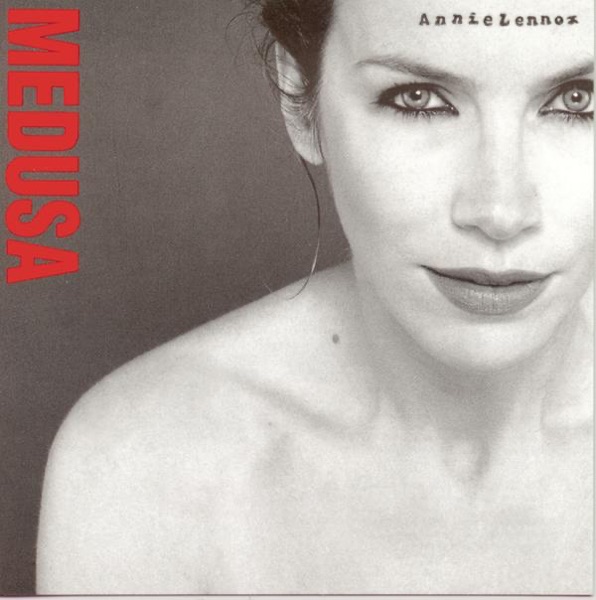
Medusa
1995 · 10 tracks
- 1 No More "I Love You's" ↗ 4:51
- 2 Take Me to the River ↗ 3:35
- 3 A Whiter Shade of Pale ↗ 5:17
- 4 Don't Let It Bring You Down ↗ 3:37
- 5 Train In Vain ↗ 4:45
- 6 I Can't Get Next to You ↗ 3:10
- 7 Downtown Lights ↗ 6:44
- 8 Thin Line Between Love and Hate ↗ 4:56
- 9 Waiting In Vain ↗ 5:41
- 10 Something So Right ↗ 3:56


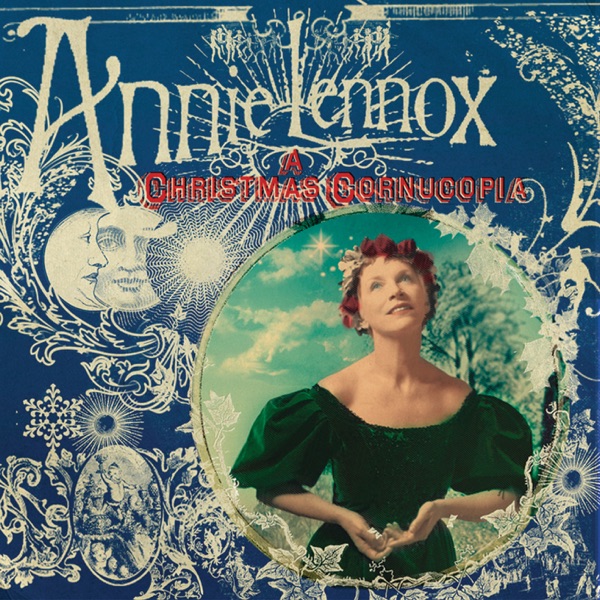
A Christmas Cornucopia
2010 · 12 tracks
- 1 Angels from the Realms of Glory ↗ 4:00
- 2 God Rest Ye Merry Gentlemen ↗ 3:32
- 3 See Amid the Winter's Snow ↗ 3:31
- 4 Il Est Ne Le Divin Enfant ↗ 3:37
- 5 The First Noel ↗ 4:40
- 6 Lullay Lullay (Coventry Carol) ↗ 3:13
- 7 The Holly and the Ivy ↗ 3:37
- 8 In the Bleak Midwinter ↗ 3:31
- 9 As Joseph Was a Walking ↗ 3:59
- 10 Oh Little Town of Bethlehem ↗ 3:33
- 11 Silent Night ↗ 3:49
- 12 Universal Child ↗ 4:14

Nostalgia
2014 · 12 tracks
- 1 Memphis In June ↗ 2:47
- 2 Georgia On My Mind ↗ 3:56
- 3 I Put a Spell On You ↗ 3:32
- 4 Summertime ↗ 5:12
- 5 I Cover the Waterfront ↗ 3:00
- 6 Strange Fruit ↗ 3:47
- 7 God Bless the Child ↗ 3:03
- 8 You Belong To Me ↗ 3:22
- 9 September In the Rain ↗ 2:53
- 10 I Can Dream, Can’t I? ↗ 2:56
- 11 The Nearness of You ↗ 2:32
- 12 Mood Indigo ↗ 5:35
-
 DivaAnnie Lennox199211 tracks
 -
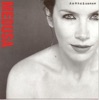 MedusaAnnie Lennox199510 tracks
 -
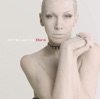 BareAnnie Lennox200311 tracks
 -
 Songs of Mass DestructionAnnie Lennox200711 tracks
 -
 A Christmas CornucopiaAnnie Lennox201012 tracks
 -
 NostalgiaAnnie Lennox201412 tracks
Deep Dive
Overview
Annie Lennox is a Scottish singer-songwriter, political activist, and philanthropist born in 1954. She first gained recognition in the late 1970s as part of the new wave band the Tourists before achieving international superstardom in the 1980s alongside Dave Stewart in Eurythmics. With her striking androgynous visual presentation—notably the orange cropped hair and men’s lounge suit worn in the 1983 “Sweet Dreams” video—and her powerful, expressive voice, Lennox became one of the decade’s most recognizable and influential pop figures. Her solo career, which began in earnest in the 1990s, has seen her record thoughtful, often introspective albums across multiple genres while maintaining her status as a serious artist and cultural commentator.
Formation Story
Ann Lennox was born in Aberdeen, Scotland, in 1954, during the post-war period when British popular music was still taking its shape. She grew up in a country with a distinctive musical tradition, one that would inform her sensibility throughout her career. In the late 1970s, as new wave and post-punk were reshaping rock music in the wake of punk’s explosion, Lennox emerged as a vocalist in the Tourists, a new wave band that achieved moderate success. This early experience in the late 1970s provided her with professional grounding and experience on stage, setting the foundation for what would become a far more substantial partnership and global recognition when she collaborated with multi-instrumentalist and producer Dave Stewart.
Breakthrough Moment
The breakthrough came in the early 1980s when Lennox and Stewart formed Eurythmics, a band that would define the synthesizer-driven sound of the decade. In 1983, Eurythmics released “Sweet Dreams (Are Made of This),” a single that became a global phenomenon. The accompanying music video, in which Lennox appeared with her striking orange cropped hair and androgynous presentation wearing a men’s lounge suit, generated enormous cultural impact. The BBC noted that “all eyes were on Annie Lennox, the singer whose powerful androgynous look defied the male gaze,” capturing how her visual presentation challenged conventional beauty standards and gender presentation in pop music. This moment catapulted both the song and the band into the upper reaches of international pop stardom, establishing Eurythmics as one of the decade’s most significant acts.
Peak Era
Eurythmics’ peak commercial and creative period extended through the 1980s. Following “Sweet Dreams,” the band released a string of hit singles including “There Must Be an Angel,” “Love Is a Stranger,” and “Here Comes the Rain Again.” Each demonstrated Lennox’s vocal range and interpretive depth, from soaring melismatic passages to intimate, understated deliveries. The band became synonymous with the synthesizer-pop sound that dominated MTV and radio throughout the 1980s, their music characterized by Dave Stewart’s innovative production and arrangement alongside Lennox’s commanding presence as a vocalist and performer. During this period, Eurythmics achieved both critical acclaim and massive commercial success, selling millions of records worldwide and establishing themselves as one of the defining acts of the new wave and synthpop movements.
Musical Style
Lennox’s voice is distinguished by its clarity, power, and emotional expressiveness. Within Eurythmics’ synthesizer-driven framework, she demonstrated an ability to move between assertive, almost anthemic passages and vulnerable, intimate moments. Her phrasing often echoed soul and R&B traditions, bringing warmth and human depth to what could have been purely electronic arrangements. The androgynous visual identity she cultivated—sharp tailoring, cropped hair, minimal makeup or gender-coded styling—was inseparable from her musical presentation; she refused the conventional feminine packaging expected of female pop stars in the early 1980s, instead asserting a more fluid, artistic identity. As she transitioned to solo work in the 1990s, her musical approach broadened, incorporating elements of adult contemporary pop, soul, and world music influences, while maintaining the sophisticated production values and emotional authenticity that had always characterized her work.
Major Albums
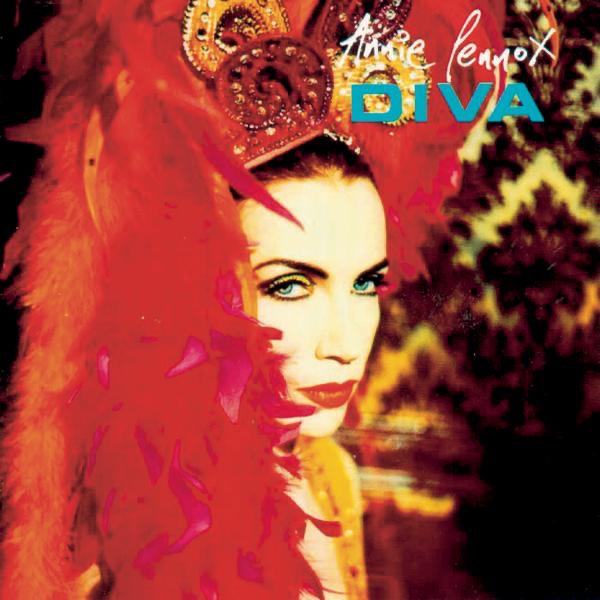
Diva (1992)
Lennox’s solo debut, Diva marked her first significant solo statement following her major success with Eurythmics. The album established her as a serious solo artist with sophisticated production and introspective songwriting, moving beyond the synth-pop framework for which she was best known.
Medusa (1995)
Medusa saw Lennox interpreting jazz and soul standards, a move that demonstrated her vocal range and her interest in exploring musical traditions outside the pop sphere. The album reinforced her status as an interpretive vocalist of considerable skill and taste.
Bare (2003)
Released nearly a decade into her solo career, Bare represented a more stripped-down, intimate approach to her material. The album showcased her voice and songwriting without elaborate production, revealing the emotional core of her work as a solo artist.
Songs of Mass Destruction (2007)
Songs of Mass Destruction saw Lennox engaging with contemporary political and social themes, consistent with her long-standing activism. The album paired her reflections on global and personal crises with contemporary pop-rock arrangements, demonstrating her ongoing creative engagement with meaningful subject matter.
Signature Songs
- “Sweet Dreams (Are Made of This)” (1983) — The defining synth-pop anthem of the 1980s, inseparable from Eurythmics’ breakthrough and one of the most iconic songs in new wave history.
- “There Must Be an Angel (Playing with My Heart)” (1985) — A soaring, majestic hit that showcased Lennox’s vocal range and Eurythmics’ sophisticated pop sensibility.
- “Love Is a Stranger” (1982/1985) — A sultry, questioning exploration of romantic desire that became one of the band’s most recognizable tracks.
- “Here Comes the Rain Again” (1984) — An atmospheric, melancholic number that balanced electronic production with Lennox’s emotionally direct vocals.
- “Why” (1992) — A solo single that established her independent voice as a recording artist beyond Eurythmics.
Influence on Rock
Annie Lennox’s influence on 1980s pop and rock music was substantial and multifaceted. As the face and voice of Eurythmics, she demonstrated that synthesizer-based pop could achieve both commercial success and artistic credibility. Her refusal to conform to conventional feminine presentation opened cultural space for other female performers to assert more complex, androgynous, or unconventional visual identities. The success of Eurythmics helped establish the synthesizer as a primary instrument in mainstream rock and pop, influencing countless artists throughout the 1980s and beyond. Her later solo work, particularly her engagement with jazz standards and political themes, showed that pop success need not limit an artist’s ability to explore other musical traditions or to use their platform for activism and meaningful expression.
Legacy
Annie Lennox remains one of the most significant British pop figures of the late twentieth century. Eurythmics’ music has endured in popular culture, their songs continuing to receive radio play, streaming, and coverage across multiple generations. Lennox’s solo career, spanning from the 1990s into the 2010s, demonstrated her commitment to artistic growth and social activism beyond the commercial peak of the 1980s. Her visual iconography—the cropped hair, the androgynous presentation, the refusal of conventional femininity—has become historically significant as a moment when a major pop star successfully challenged gender presentation in mainstream music. The breadth of her recording career across multiple albums and styles attests to her credibility as a serious musician, not merely a pop personality. Her work as a philanthropist and political activist has reinforced her public image as an artist engaged with questions beyond music itself.
Fun Facts
- Lennox studied at the Royal Academy of Music in London before joining the Tourists, providing her with formal classical training that informed her sophisticated approach to melody and arrangement.
- The 1983 “Sweet Dreams” video, in which Lennox’s striking visual presentation became iconic, was groundbreaking for its presentation of an androgynous female performer in a major pop-culture moment during an era of heightened gender-coded marketing in music and fashion.
- In addition to her music career, Lennox has maintained a long-standing commitment to activism and philanthropy, including work on behalf of numerous charitable causes, establishing her as an artist who has used her public profile for social engagement.