

Photo by Bananarama.jpg : Maciej Zgadzaj derivative work: Tuzapicabit at en.wikipedia , licensed under CC BY 2.0 · Wikimedia Commons
Rank #343
Bananarama
From Wikipedia
Bananarama are an Irish-English pop group formed in London in 1980. The group, originally a trio, consisted of friends Sara Dallin, Siobhan Fahey, and Keren Woodward. In early 1988, Jacquie O'Sullivan replaced Fahey, who went on to form Shakespears Sister. O'Sullivan left the group in 1991, since which time Dallin and Woodward have continued as a duo, with the brief exception of a one-off reunion tour with Fahey during 2017. Their success on both pop and dance charts saw them listed in the Guinness World Records for achieving the world's highest number of chart entries by an all-female group. Between 1982 and 2009, they had 32 singles reach the Top 50 of the UK Singles Chart.
Members
- Jacquie O'Sullivan (1988–1991)
- Keren Woodward
- Sara Dallin
- Siobhan Fahey (?–1988)
Discography & Previews
Browse through and click an album to open and play 30-second previews streamed from Apple Music.
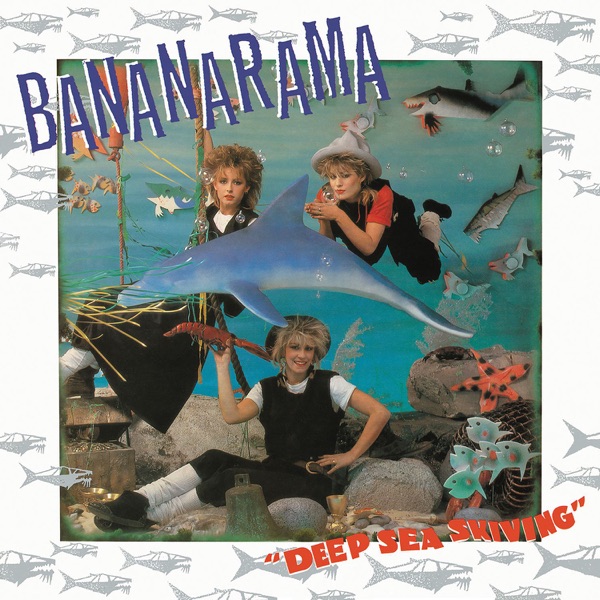
Deep Sea Skiving
1983 · 20 tracks
- 1 Shy Boy ↗ 3:14
- 2 Doctor Love ↗ 3:41
- 3 What a Shambles ↗ 3:33
- 4 Really Sayin' Something (with Fun Boy Three) [feat. Fun Boy Three] ↗ 2:42
- 5 Cheers Then ↗ 3:31
- 6 Aie a Mwana ↗ 3:34
- 7 Young at Heart ↗ 3:11
- 8 Na Na Hey Hey (Kiss Him Goodbye) ↗ 3:29
- 9 Hey Young London ↗ 3:55
- 10 Boy Trouble ↗ 3:11
- 11 Wish You Were Here ↗ 3:48
- 12 He's Got Tact ↗ 2:58
- 13 Girl About Town ↗ 3:13
- 14 Tell Tale Signs ↗ 3:15
- 15 No Feelings ↗ 2:33
- 16 Aie a Mwana (Extended Version) ↗ 5:45
- 17 Really Saying Something (with Fun Boy Three) [Extended Mix] [feat. Fun Boy Three] ↗ 5:39
- 18 Shy Boy (Extended Version) ↗ 5:50
- 19 Cheers Then (Extended version) ↗ 5:18
- 20 Na Na Hey Hey (Kiss Him Goodbye) [Extended Version] ↗ 4:52

Bananarama
1984 · 18 tracks
- 1 Cruel Summer ↗ 3:35
- 2 Rough Justice ↗ 5:04
- 3 King of the Jungle ↗ 3:19
- 4 Dream Baby ↗ 3:09
- 5 Link ↗ 1:31
- 6 Hot Line to Heaven ↗ 7:16
- 7 State I'm in ↗ 2:45
- 8 Robert De Niro's Waiting ↗ 3:42
- 9 Through a Child's Eye ↗ 3:40
- 10 The Wild Life ↗ 3:54
- 11 Cairo ↗ 3:47
- 12 Push! ↗ 4:08
- 13 Live Now ↗ 3:05
- 14 Cruel Summer (Extended Version) ↗ 4:55
- 15 Robert De Niro's Waiting (Extended Version) ↗ 5:42
- 16 Rough Justice (Extended Version) ↗ 5:21
- 17 King of the Jungle (Extended Version) ↗ 5:23
- 18 The Wild Life (Extended Version) ↗ 6:23

True Confessions
1986 · 17 tracks
- 1 True Confessions ↗ 5:19
- 2 Ready or Not ↗ 3:54
- 3 A Trick of the Night ↗ 4:38
- 4 Dance with a Stranger ↗ 4:30
- 5 In a Perfect World ↗ 6:03
- 6 Venus ↗ 3:49
- 7 Do Not Disturb ↗ 3:24
- 8 Cut Above the Rest ↗ 3:39
- 9 Promised Land ↗ 3:43
- 10 More Than Physical ↗ 5:04
- 11 Hooked on Love ↗ 3:49
- 12 Ghost ↗ 4:04
- 13 White Train ↗ 3:52
- 14 Scarlett ↗ 4:14
- 15 Riskin' a Romance ↗ 3:52
- 16 Venus (Extended Version) ↗ 7:23
- 17 A Trick of the Night (The Number One Mix) ↗ 8:15
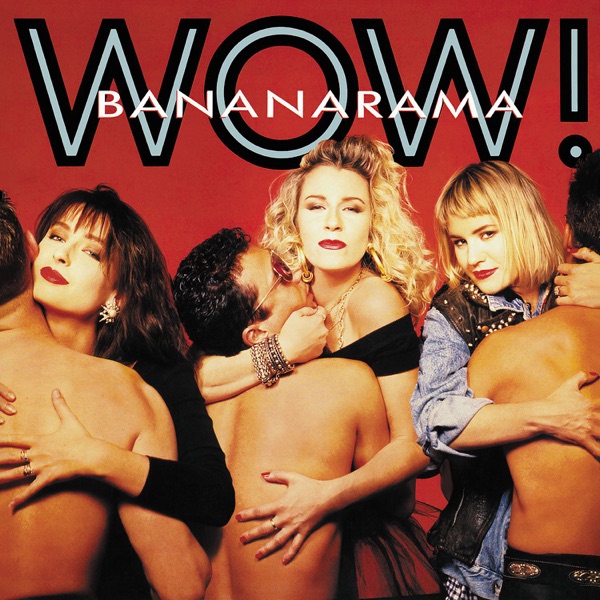
Wow!
1987 · 16 tracks
- 1 I Can't Help It ↗ 3:31
- 2 I Heard a Rumour ↗ 3:24
- 3 Some Girls ↗ 4:19
- 4 Love in the First Degree ↗ 3:31
- 5 Once in a Lifetime ↗ 4:05
- 6 Strike It Rich ↗ 3:28
- 7 Bad for Me ↗ 3:38
- 8 Come Back ↗ 3:39
- 9 Nathan Jones ↗ 5:34
- 10 I Want You Back ↗ 3:52
- 11 Mr Sleaze ↗ 4:49
- 12 I Heard a Rumour (Horoscope Mix) ↗ 5:58
- 13 Love in the First Degree (Jailers Mix) ↗ 6:09
- 14 I Can't Help It (Extended Club Mix) ↗ 8:04
- 15 I Want You Back (Extended European Mix) ↗ 7:55
- 16 Nathan Jones (Extended Version) ↗ 5:13
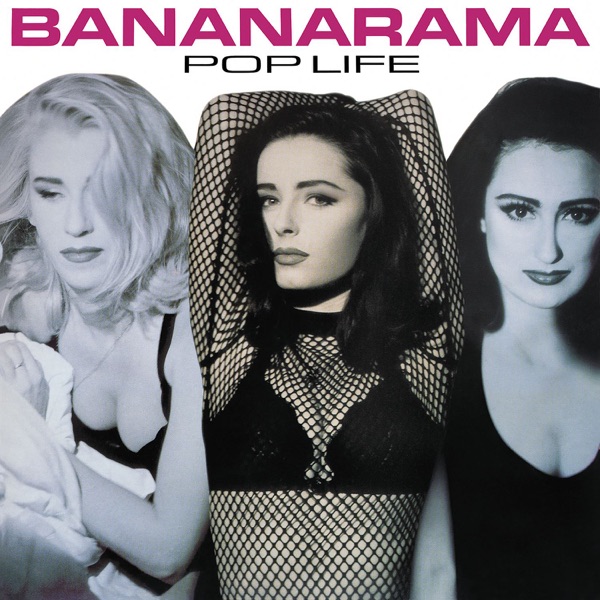
Pop Life
1991 · 15 tracks
- 1 Preacher Man ↗ 3:14
- 2 Long Train Running ↗ 3:30
- 3 Only Your Love ↗ 3:58
- 4 What Colour R The Skies Where U Live ↗ 4:26
- 5 Is Your Love Strong Enough ↗ 5:06
- 6 Tripping on Your Love ↗ 3:20
- 7 Aint No Cure ↗ 3:27
- 8 Outta Sight ↗ 4:32
- 9 Megalomaniac ↗ 6:23
- 10 I Can't Let You Go ↗ 6:08
- 11 Heartless ↗ 3:21
- 12 Only Your Love (Milky Bar Mix) ↗ 8:12
- 13 Preacher Man (Shep's Club Mix) ↗ 7:21
- 14 Long Train Running (Alma De Noche Mix) ↗ 6:40
- 15 Tripping on Your Love (Euro Trance Mix) ↗ 7:21
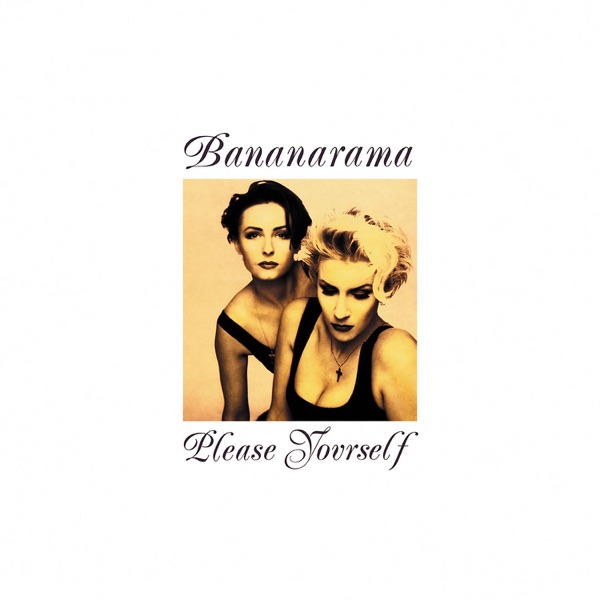
Please Yourself
1993 · 16 tracks
- 1 Movin' On ↗ 4:33
- 2 Last Thing on My Mind ↗ 3:35
- 3 Let Me Love You One More Time ↗ 3:37
- 4 More, More, More ↗ 3:05
- 5 Is She Good to You ↗ 3:38
- 6 Only Time Will Tell ↗ 3:31
- 7 Give It All Up for Love ↗ 3:55
- 8 You'll Never Know What It Means ↗ 4:29
- 9 You're Never Satisfied ↗ 3:26
- 10 I Could Be Persuaded ↗ 5:05
- 11 Another Lover ↗ 3:30
- 12 Treat Me Right ↗ 4:41
- 13 Movin' On (Bumpin' Mix) ↗ 6:13
- 14 Last Thing on My Mind (Hi-NRG Mix) ↗ 5:59
- 15 More, More, More (12" Mix) ↗ 5:16
- 16 Is She Good to You? (12" Club Mix) ↗ 5:50
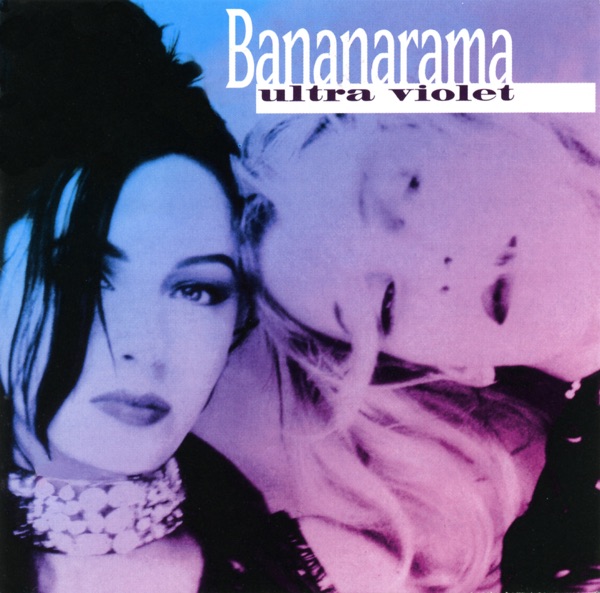
Ultra Violet
1995 · 11 tracks
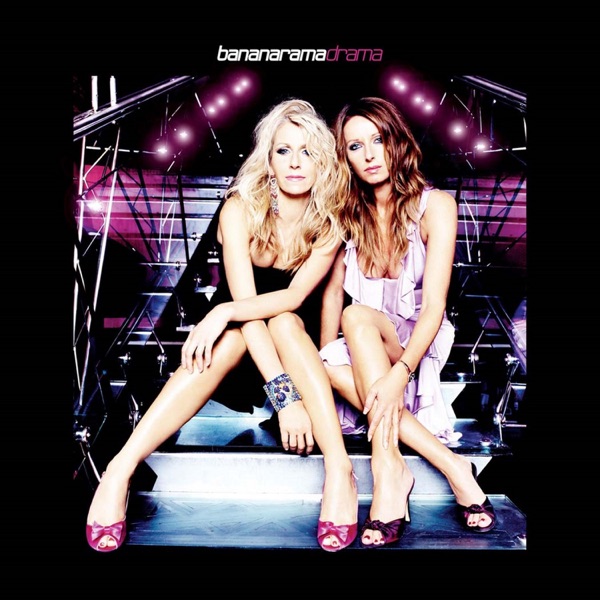
Drama
2005 · 15 tracks
- 1 Move in My Direction ↗ 3:17
- 2 Look on the Floor (Hypnotic Tango) ↗ 3:25
- 3 Waterfall ↗ 4:17
- 4 Frequency ↗ 3:30
- 5 Feel for You ↗ 3:27
- 6 Don't Step on My Groove ↗ 3:06
- 7 Middle of Nowhere ↗ 3:46
- 8 I Love the Way ↗ 4:19
- 9 Lovebite ↗ 3:32
- 10 Rules of Attraction ↗ 3:16
- 11 Your Love Is Like a Drug ↗ 4:38
- 12 Venus (Marc Almond's Hi Nrg Showgirls Remix) ↗ 6:02
- 13 Really Saying Something (Solasso Mix) ↗ 5:58
- 14 Move in My Direction (Bobby Blanco & Miki Moto Vocal Edit) ↗ 3:06
- 15 Look on the Floor (Angel City Radio Edit) ↗ 2:59

Viva
2009 · 16 tracks
- 1 Love Comes ↗ 4:16
- 2 Love Don't Live Here ↗ 4:59
- 3 Rapture ↗ 4:12
- 4 Seventeen ↗ 4:22
- 5 Twisting ↗ 3:42
- 6 Tell Me Tomorrow ↗ 3:55
- 7 The Runner ↗ 3:26
- 8 Extraordinary ↗ 3:35
- 9 Dum Dum Boy ↗ 3:26
- 10 S-S-S-Single Bed ↗ 4:01
- 11 We've Got The Night ↗ 3:51
- 12 The Sound Of Silence ↗ 3:42
- 13 Run To You ↗ 3:04
- 14 Here Comes The Rain ↗ 4:16
- 15 Voyage Voyage ↗ 3:56
- 16 Tokyo Joe ↗ 3:17

-
 Deep Sea SkivingBananarama198320 tracks
 -
 BananaramaBananarama198418 tracks
 -
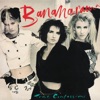 True ConfessionsBananarama198617 tracks
 -
 Wow!Bananarama198716 tracks
 -
 Pop LifeBananarama199115 tracks
 -
 Please YourselfBananarama199316 tracks
 -
 Ultra VioletBananarama199511 tracks
 -
 DramaBananarama200515 tracks
 -
 VivaBananarama200916 tracks
 -
 In StereoBananarama201910 tracks
 -
 MasqueradeBananarama202211 tracks
Deep Dive
Overview
Bananarama are an Irish-English pop group that emerged from London in 1979–1980, establishing themselves as one of the most commercially successful all-female acts in rock and pop history. Operating primarily in the dance-pop and new wave idiom, the group’s defining characteristic was their ability to score consecutive chart hits across both pop and dance formats, a consistency that earned them a Guinness World Record for the highest number of chart entries by an all-female group. Between 1982 and 2009, Bananarama placed 32 singles in the UK Top 50, a feat that underscores their commercial reach and staying power across three decades.
Formation Story
Bananarama coalesced in London around 1979–1980 when three friends—Sara Dallin, Siobhan Fahey, and Keren Woodward—came together to form a pop group. The trio arrived on the music scene as the new wave movement was fragmenting into more accessible, dance-oriented pop styles. Working against the guitar-heavy paradigm that dominated rock radio, Bananarama positioned themselves within the electronic and synth-driven currents flowing through British pop in the early 1980s. Their origin in London placed them squarely within a city-wide ecosystem of new wave and electronic experimentation, a scene that would nurture acts across multiple genres and production sensibilities.
Breakthrough Moment
Bananarama’s commercial breakthrough arrived with their debut album Deep Sea Skiving in 1983. The album introduced their lightweight, synth-pop aesthetic and proved immediately successful on both pop and dance charts, establishing the group as more than a novelty act. Their consistency on the charts through the early-to-mid 1980s solidified their commercial position, and by the time of their self-titled second album Bananarama in 1984, they had transcended cult status to achieve mainstream recognition. The group’s ability to generate radio-friendly singles while maintaining credibility on dance floors became their calling card, setting them apart from contemporaries who often skewed toward one format or the other.
Peak Era
Bananarama’s creative and commercial zenith extended through the mid-to-late 1980s, particularly across the albums True Confessions (1986) and Wow! (1987). This period saw the group at their most prolific and consistent, with True Confessions representing a peak in both studio craft and chart penetration. The 1986–1987 window was their strongest, combining infectious melodies, polished production, and dance-floor appeal that transcended age and demographic boundaries. Even as the 1980s waned and production trends shifted, Bananarama maintained chart presence through the early 1990s, with Pop Life (1991) marking a transitional moment just as Fahey’s departure was reshaping the group’s lineup and identity.
Musical Style
Bananarama’s signature sound emerged from the intersection of new wave pop accessibility and dance-floor functionality. Built on synthesizers, programmed drums, and layered vocal arrangements—often featuring the three-part harmonies of Dallin, Fahey, and Woodward—their music prioritized melodic clarity and rhythmic propulsion over instrumental virtuosity. The group’s production style, informed by the studio techniques and synth palette of the early 1980s, emphasized bright, high-register vocals set against bouncy, uptempo instrumental beds. Their approach to songwriting favored memorable hooks and singalong choruses, elements that made their records accessible to pop radio while retaining enough rhythmic sophistication to engage dance audiences. Unlike many new wave acts that darkened their sound or embraced post-punk angst, Bananarama maintained a fundamentally pop sensibility—engaging, unpretentious, and unabashedly commercial.
Major Albums
Deep Sea Skiving (1983)
Bananarama’s debut established their formula: bright synth-pop production, three-part harmonies, and dance-floor-ready rhythms. The album’s success introduced the world to their aesthetic and proved the commercial viability of their concept as a group.
Bananarama (1984)
The self-titled second album solidified their position as chart mainstays rather than one-album wonders, delivering a fuller, more confident vision of their production style and songwriting approach.
True Confessions (1986)
Regarded as a commercial and creative peak, True Confessions showcased the group at maximum polish and effectiveness, combining their most radio-friendly material with continued dance credibility.
Wow! (1987)
Continuing the momentum of the mid-1980s peak, this album demonstrated their ability to evolve production aesthetics while maintaining commercial consistency as the decade entered its final years.
Pop Life (1991)
Released after Fahey’s departure and Jacquie O’Sullivan’s arrival, Pop Life reflected the changing musical landscape of the early 1990s while marking a transitional moment in the group’s history.
Signature Songs
- “Shy” — An early single that helped establish Bananarama’s chart presence and introduced their vocal signature to radio audiences.
- “Cruel Summer” — Among their most recognizable and enduring tracks, the song exemplified their ability to craft infectious, memorable pop hooks.
- “Venus” — A later single that demonstrated the group’s continued commercial appeal and radio-friendly production sensibility.
- “I Heard a Rumour” — Showcased the group’s ability to layer vocals and production into increasingly sophisticated pop arrangements.
Influence on Rock
Bananarama’s primary influence on popular music centered on demonstrating the commercial and artistic viability of all-female pop acts working in electronic and synth-driven idioms. At a moment when rock music remained male-dominated and when female pop singers were often positioned as solo artists rather than groups, Bananarama’s success as a democratic three-piece (and later two-piece) challenged prevailing assumptions about how pop groups could be configured and marketed. Their chart consistency influenced subsequent generations of pop acts, particularly all-female groups navigating the intersection of new wave, dance, and mainstream pop aesthetics. Their records circulated widely across radio formats, helping to legitimize dance-pop as a commercially serious genre rather than a peripheral trend.
Legacy
Bananarama’s place in popular music history rests on their durability and their unflinching commercial success across a four-decade span. The Guinness World Record for chart entries by an all-female group stands as a concrete marker of their achievement, a record that reflects both the group’s prolific output and their ability to sustain relevance across shifting production styles and cultural moments. Following Fahey’s exit in 1988 and O’Sullivan’s departure in 1991, Dallin and Woodward continued the group as a duo, a decision that speaks to the fundamental identity of Bananarama as a brand and a concept. The group’s 2017 reunion tour with Fahey demonstrated residual audience interest and nostalgia, while subsequent albums including In Stereo (2019) and Masquerade (2022) show Bananarama continuing to record and perform into the present day, an active legacy rather than a historical artifact. Their streaming presence remains robust, particularly among listeners discovering 1980s pop through retroactive archival rather than contemporary radio, ensuring that their catalogue continues to circulate and influence contemporary pop sensibilities.
Fun Facts
- Bananarama’s chart success was sufficiently broad that they achieved recognition not only on pop and rock radio but also on dance and club formats, a rare cross-genre credential that few acts of their era maintained simultaneously.
- The group’s original formation year (1979) and their official entry into commercial recording (1983) represent a gap of approximately four years, during which time they developed their sound and built a local audience before achieving broader recognition.
- Siobhan Fahey’s departure in 1988 to form Shakespears Sister with producer Gail Porter represented a significant moment for the group, yet Bananarama continued successfully with Jacquie O’Sullivan, demonstrating that the group concept transcended any single member’s presence.