

Photo by Raph_PH , licensed under CC BY 2.0 · Wikimedia Commons
Rank #45
Billy Joel
From Wikipedia
William Martin Joel is an American singer, songwriter, and pianist. Nicknamed the "Piano Man" after his signature 1973 song of the same name, Joel has had a successful career as a solo artist since the 1970s. From 1971 to 1993, he released 12, entirely self written, studio albums spanning the genres of pop and rock, and in 2001 released a one-off studio album of classical compositions. With over 160 million records sold worldwide, Joel is one of the world's best-selling music artists and is the fourth-best-selling solo artist in the United States. His 1985 compilation album, Greatest Hits – Volume I & Volume II, is one of the best-selling albums in the U.S.
Discography & Previews
Browse through and click an album to open and play 30-second previews streamed from Apple Music.
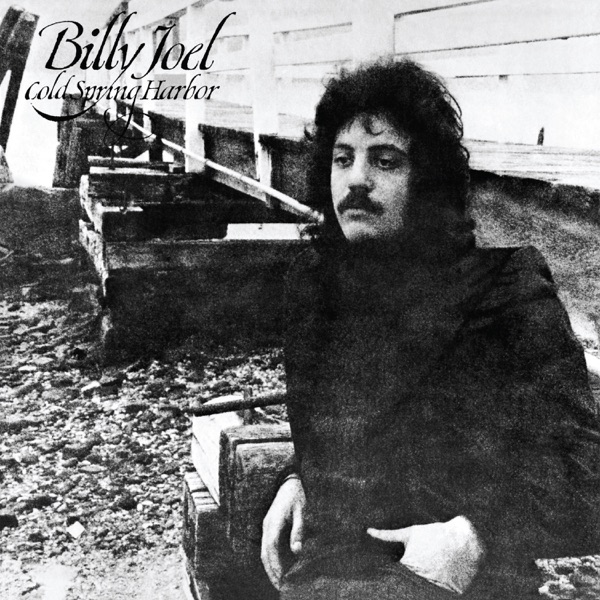
Cold Spring Harbor
1971 · 10 tracks
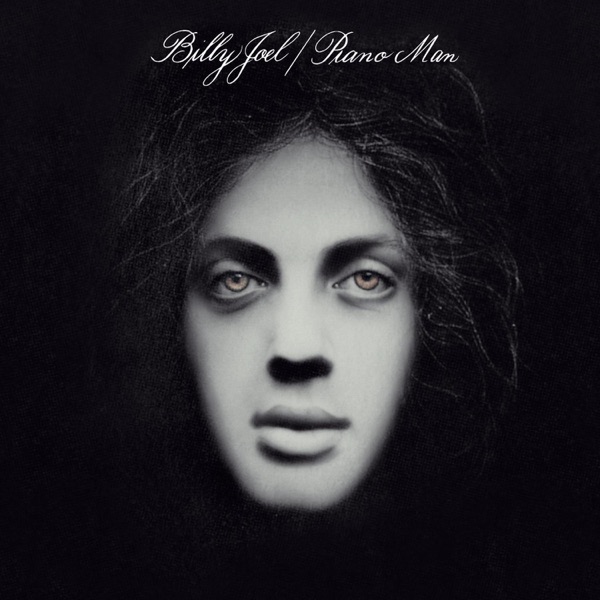
Piano Man
1973 · 10 tracks

Streetlife Serenade
1974 · 10 tracks

The Stranger
1977 · 9 tracks
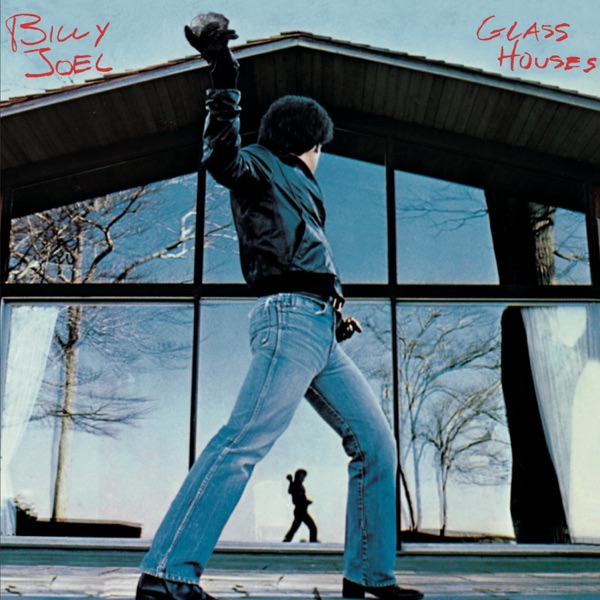
Glass Houses
1980 · 10 tracks
- 1 You May Be Right ↗ 4:16
- 2 Sometimes a Fantasy ↗ 3:40
- 3 Don't Ask Me Why ↗ 2:59
- 4 It's Still Rock and Roll to Me ↗ 2:58
- 5 All for Leyna ↗ 4:13
- 6 I Don't Want to Be Alone ↗ 3:58
- 7 Sleeping With the Television On ↗ 3:03
- 8 C'etait toi (You Were the One) ↗ 3:26
- 9 Close to the Borderline ↗ 3:48
- 10 Through the Long Night ↗ 2:44



River of Dreams
1993 · 10 tracks
-
 Cold Spring HarborBilly Joel197110 tracks
 -
 Piano ManBilly Joel197310 tracks
 -
 Streetlife SerenadeBilly Joel197410 tracks
 -
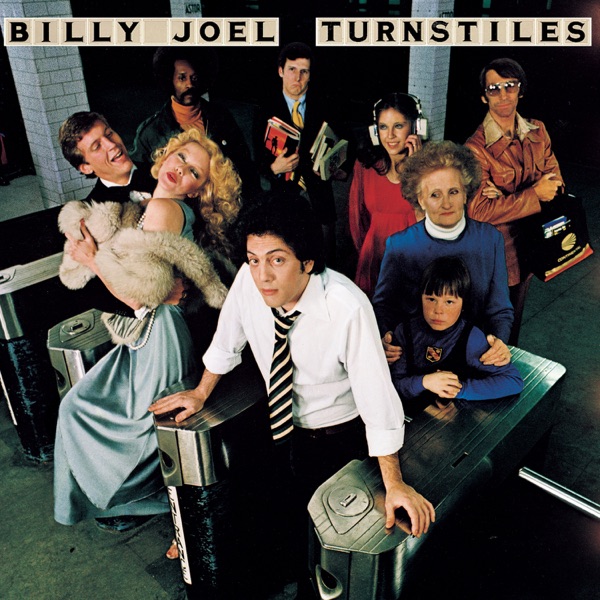
 TurnstilesBilly Joel19768 tracks
 -
 The StrangerBilly Joel19779 tracks
 -
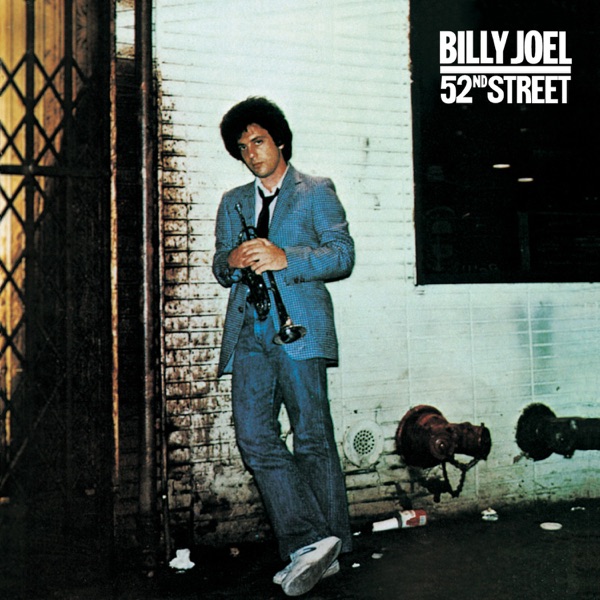
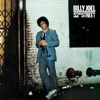 52nd StreetBilly Joel19789 tracks
 -
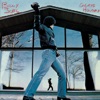 Glass HousesBilly Joel198010 tracks
 -
 The Nylon CurtainBilly Joel19829 tracks
 -
 An Innocent ManBilly Joel198310 tracks
 -
 The BridgeBilly Joel19869 tracks
 -
 Storm FrontBilly Joel198910 tracks
 -
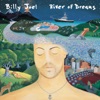 River of DreamsBilly Joel199310 tracks
Deep Dive
Overview
Billy Joel is an American singer, songwriter, and pianist whose four-decade career—spanning from 1971 to the present—has made him one of the world’s best-selling music artists. Nicknamed the “Piano Man” after his signature 1973 song, Joel has sold over 160 million records worldwide and ranks as the fourth-best-selling solo artist in the United States. His work spans pop rock, soft rock, and rock and roll, moving with ease between accessible commercial songwriting and instrumental contemporary classical compositions.
Formation Story
Billy Joel was born in 1949 and emerged as a solo recording artist in the early 1970s. His entry into the recorded music world came via independent and major-label infrastructure, recording his debut studio album, Cold Spring Harbor, in 1971. Unlike many of his contemporaries, Joel built his early catalog through self-written material, establishing himself as both a songwriter and performer capable of writing entire albums without co-writing credits. This self-sufficiency—writing, singing, and performing on piano—became his defining calling card and would remain consistent throughout his prolific period from 1971 through 1993, during which he released 12 entirely self-written studio albums.
Breakthrough Moment
Joel’s breakthrough came quickly with the 1973 album Piano Man, which featured the chart-defining title track of the same name. The song became synonymous with his identity and commercial ascent. Building on that success, his 1974 follow-up Streetlife Serenade consolidated his rising profile. Two years later, in 1976, Turnstiles signaled his maturation as a pop-rock composer. However, his true commercial and critical peak arrived with The Stranger in 1977, an album that would establish him as a major force in global popular music and set the stage for a series of successful releases throughout the late 1970s and 1980s.
Peak Era
The period from 1977 to 1983 represents Joel’s most creatively expansive and commercially dominant years. Following The Stranger in 1977, he released 52nd Street in 1978, another major commercial success. Glass Houses arrived in 1980, followed by The Nylon Curtain in 1982 and An Innocent Man in 1983. Each album moved through variations of pop-rock and soft-rock territory while maintaining Joel’s core identity as a piano-driven songwriter. By 1985, his Greatest Hits – Volume I & Volume II compilation became one of the best-selling albums in U.S. history, cementing his status as a cultural fixture. His continued output through the 1980s, including The Bridge in 1986, sustained his commercial relevance even as the music industry landscape shifted.
Musical Style
Joel’s sound is rooted in the piano as both compositional and performance tool. His songwriting approaches popular song structures—verse-chorus-bridge forms, accessible melodies, and lyrics focused on storytelling and urban American life. The “Piano Man” identity reflects a Tin Pan Alley influence filtered through contemporary rock and pop production; he works in soft rock and pop-rock idioms where the piano is not a background texture but a central voice, often carrying melodies that would traditionally fall to a lead guitar in other rock contexts. His vocal delivery is conversational and measured rather than operatic, and his production choices lean toward clarity and arrangement sophistication rather than textural density. While his earlier work emphasized softer, more introspective tones, his later albums incorporated more rock-oriented instrumentation without abandoning the piano-forward approach. By the 1980s, he had absorbed new wave and contemporary pop influences, though his essential character remained consistent: the thinking person’s pop-rock artist, equally at home with ballads as with uptempo rock numbers.
Major Albums
The Stranger (1977)
Joel’s definitive commercial breakthrough, The Stranger stands as the album that transformed him from a successful recording artist into a household name. It established the template for his mature songwriting and remains his most celebrated work.
52nd Street (1978)
Following immediately on The Stranger’s success, this album confirmed that Joel’s breakthrough was no fluke, delivering another commercially dominant collection with deeper exploration of his piano-driven pop-rock formula.
Glass Houses (1980)
A slightly harder-edged entry that demonstrated Joel’s willingness to incorporate more rock textures while retaining his signature melodic sensibilities, Glass Houses showed range within his established identity.
An Innocent Man (1983)
This album found Joel returning to 1950s and 1960s doo-wop and Motown influences, proving his historical knowledge of popular song and his ability to reinterpret classic song structures for contemporary audiences.
Greatest Hits – Volume I & Volume II (1985)
A compilation that became one of the best-selling albums in U.S. history, this collection solidified Joel’s position as an establishment figure in American popular music and introduced his catalog to millions who may have encountered only singles.
Signature Songs
- “Piano Man” (1973) — The song that gave Joel his nickname and remains his most iconic recording, a melancholic portrait of a piano bar performer that became his identifying piece.
- “Uptown Girl” (1983) — A stylistically distinct uptempo pop number that showcased Joel’s ability to work outside his ballad-heavy catalogue while maintaining his melodic core.
- “We Didn’t Start the Fire” (1989) — A rapid-fire historical chronicle set to music, demonstrating Joel’s gift for narrative songwriting and his interest in commenting on American cultural history.
- “Vienna” (2003) — A later composition from The Harbor Sessions that captures Joel’s enduring ability to craft introspective, piano-centered pieces.
Influence on Rock
Joel’s influence lies in his demonstration that the piano could anchor a rock and pop career without requiring the artist to position themselves as a classical musician or revivalist. He inherited and adapted the singer-songwriter tradition while building commercial scale; his success created space for other keyboard-forward artists to achieve mainstream visibility. His self-sufficiency as a composer—writing every track on albums from 1971 to 1993—pushed against the co-writing and committee-songwriting models that dominated pop. Additionally, his historical consciousness and willingness to mine earlier American song traditions influenced later artists interested in songcraft over production trend-chasing. The “Piano Man” template—accessible, melodic, lyrically grounded in storytelling—became a viable commercial model that subsequent artists have followed.
Legacy
With over 160 million records sold, Joel remains one of the world’s best-selling music artists and the fourth-best-selling solo artist in the United States. His catalog has endured through streaming, with The Stranger, 52nd Street, and other core works from his peak era remaining consistently listened-to. Beyond commercial metrics, Joel’s position as a high-profile touring artist and recording figure has remained relatively stable even as he reduced new studio output after River of Dreams (1993). His later releases—the classical album Fantasies & Delusions (2001), the live Harbor Sessions (2003), and And So It Goes (2018)—show an artist exploring adjacent and reflective territory rather than attempting to match the commercial scale of his 1970s and 1980s peak. His influence on how the piano is deployed in popular music, and his model of the self-contained songwriter-performer, remain touchstones in how popular music discusses craft and melody.
Fun Facts
- Joel has remained active as a recording and touring artist from 1971 through the present, an uninterrupted span of more than five decades in the professional music industry.
- His 1985 Greatest Hits compilation became one of the best-selling albums in U.S. history, ranking alongside compilations by The Beatles and other canonized figures in popular music.
- After his primary prolific period ended with River of Dreams in 1993, Joel explored classical composition with Fantasies & Delusions (2001), a one-off studio album demonstrating his interest in contemporary classical idioms.
- The song “Piano Man” has become so associated with Joel’s identity that it functionally serves as his artistic trademark across decades of cultural reference and touring.