
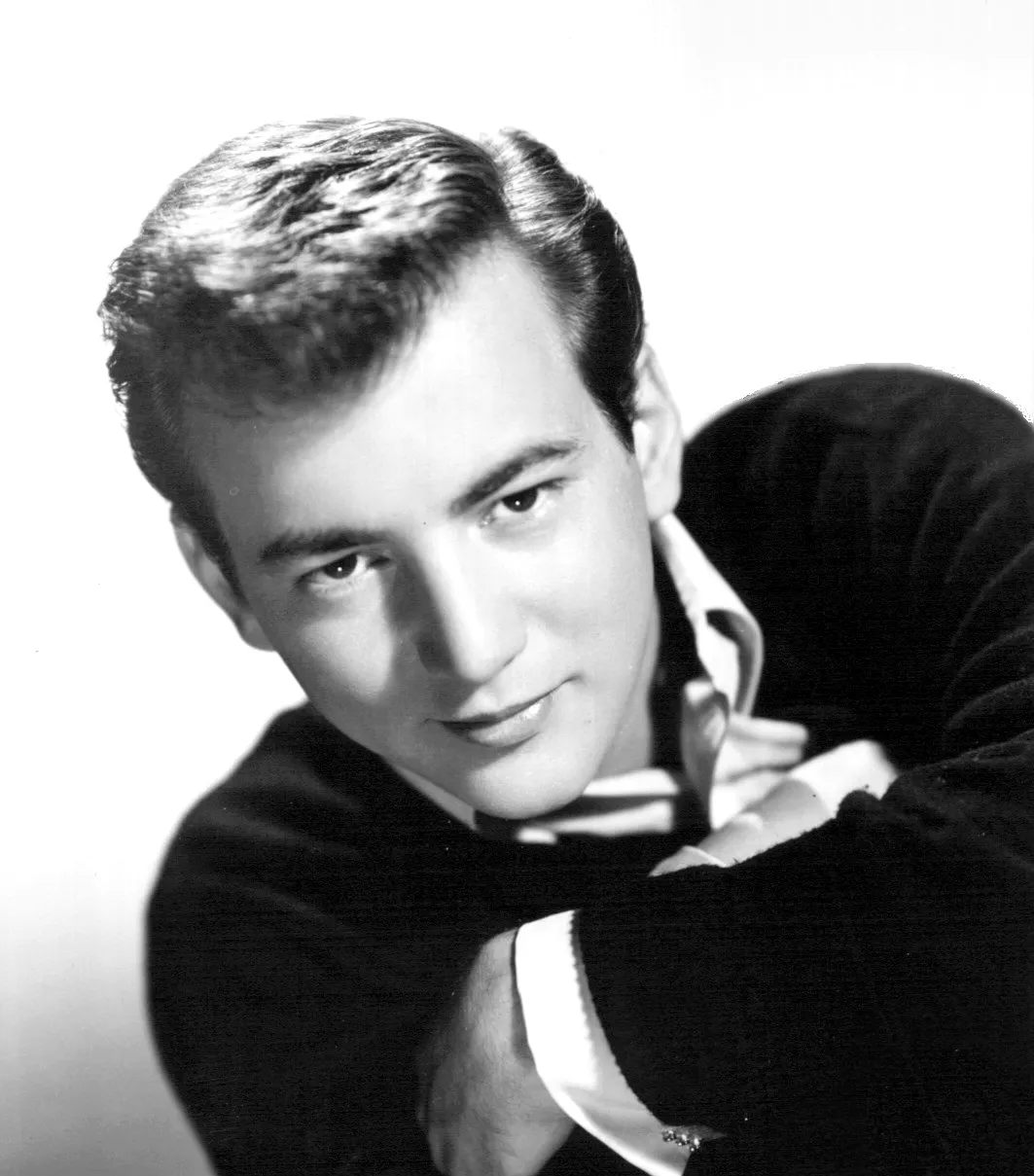
Photo by General Artists Corporation (management)/photographer: "Bruno of Hollywood" , licensed under Public domain · Wikimedia Commons
Rank #458
Bobby Darin
From Wikipedia
Walden Robert Cassotto, known by the stage name Bobby Darin, was an American singer, songwriter, and actor who performed pop, swing, folk, rock and roll and country music.
Discography & Previews
Browse through and click an album to open and play 30-second previews streamed from Apple Music.

Bobby Darin
1958 · 12 tracks
- 1 Splish Splash ↗ 2:12
- 2 Just In Case You Change Your Mind ↗ 2:11
- 3 Pretty Betty ↗ 1:47
- 4 Talk to Me Something ↗ 2:19
- 5 Judy, Don't Be Moody ↗ 2:18
- 6 (Since Your Gone) I Can't Go On ↗ 2:47
- 7 I Found a Million Dollar Baby (In a Five and Ten Cent Store) ↗ 2:04
- 8 Wear My Ring ↗ 1:54
- 9 So Mean ↗ 2:40
- 10 Don't Call My Name ↗ 2:02
- 11 Brand New House ↗ 2:35
- 12 Actions Speak Louder Than Words ↗ 2:10

That's All
1959 · 12 tracks
- 1 Mack the Knife ↗ 3:04
- 2 Beyond the Sea ↗ 2:52
- 3 Through a Long and Sleepless Night ↗ 2:36
- 4 Softly, As In a Morning Sunrise ↗ 2:31
- 5 She Needs Me ↗ 3:28
- 6 It Ain't Necessarily So ↗ 3:23
- 7 I'll Remember April ↗ 2:20
- 8 That's the Way Love Is ↗ 3:00
- 9 Was There a Call for Me ↗ 3:06
- 10 Some of These Days ↗ 2:40
- 11 Where Is the One ↗ 3:26
- 12 That's All ↗ 2:01

This Is Darin
1959 · 12 tracks
- 1 Clementine ↗ 3:16
- 2 Have You Got Any Castles, Baby ↗ 3:39
- 3 Don't Dream of Anybody But Me ↗ 4:12
- 4 My Gal Sal ↗ 2:09
- 5 Black Coffee ↗ 3:54
- 6 Caravan ↗ 2:59
- 7 Guys and Dolls ↗ 2:14
- 8 Down with Love ↗ 2:59
- 9 Pete Kelly's Blues ↗ 4:12
- 10 All Nite Long ↗ 2:57
- 11 The Gal That Got Away ↗ 4:05
- 12 I Can't Give You Anything But Love ↗ 2:37

For Teenagers Only
1960 · 12 tracks
- 1 I Want You with Me ↗ 2:20
- 2 Keep a Walkin' ↗ 1:53
- 3 You Know How ↗ 2:05
- 4 Somebody to Love ↗ 2:16
- 5 I Ain't Sharin' Sharon ↗ 2:12
- 6 Pity Miss Kitty ↗ 2:21
- 7 That Lucky Old Sun ↗ 2:40
- 8 All the Way Home ↗ 1:53
- 9 You Never Called ↗ 2:06
- 10 A Picture No Artist Could Paint ↗ 2:15
- 11 Hush, Somebody's Calling My Name ↗ 1:56
- 12 Here I'll Stay ↗ 2:16

The 25th Day of December
1960 · 14 tracks
- 1 O Come All Ye Faithful ↗ 2:22
- 2 Poor Little Jesus ↗ 3:01
- 3 Child of God ↗ 2:00
- 4 Baby Born Today ↗ 1:28
- 5 Holy Holy Holy ↗ 2:45
- 6 Ave Maria ↗ 3:57
- 7 Go Tell It On the Mountain ↗ 1:52
- 8 While Shepherds Watched Their Flocks ↗ 2:09
- 9 Jehovah Hallelujah ↗ 2:12
- 10 Mary Where Is Your Baby ↗ 1:47
- 11 Silent Night, Holy Night ↗ 3:48
- 12 Dona Nobis Pacem ↗ 1:50
- 13 Amen ↗ 0:55
- 14 Christmas Auld Lang Syne ↗ 2:43

Twist
1961 · 12 tracks
- 1 Bullmoose ↗ 2:31
- 2 Early In the Morning ↗ 2:18
- 3 Mighty Mighty Man ↗ 1:41
- 4 You Know How ↗ 2:07
- 5 Somebody to Love ↗ 2:19
- 6 Multiplication ↗ 2:18
- 7 Irresistible You ↗ 2:34
- 8 Queen of the Hop ↗ 2:14
- 9 You Must Have Been a Beautiful Baby ↗ 2:12
- 10 Keep a Walkin' ↗ 1:59
- 11 Pity Miss Kitty ↗ 2:09
- 12 I Ain't Sharin' Sharon ↗ 2:11

Love Swings
1961 · 12 tracks
- 1 Long Ago and Far Away ↗ 1:50
- 2 I Didn't Know What Time It Was ↗ 2:18
- 3 How About You ↗ 2:03
- 4 The More I See You ↗ 1:45
- 5 It Had to Be You ↗ 2:13
- 6 No Greater Love ↗ 3:23
- 7 In Love In Vain ↗ 3:07
- 8 Just Friends ↗ 2:14
- 9 Something to Remember You By ↗ 3:02
- 10 Skylark ↗ 2:42
- 11 Spring Is Here ↗ 2:47
- 12 I Guess I'll Have to Change My Plan ↗ 2:10

Oh! Look at Me Now
1962 · 12 tracks
- 1 All By Myself ↗ 3:05
- 2 My Buddy ↗ 2:35
- 3 There's a Rainbow 'Round My Shoulder ↗ 2:40
- 4 Roses of Picardy ↗ 2:11
- 5 You'll Never Know ↗ 2:55
- 6 Blue Skies ↗ 2:32
- 7 Always ↗ 2:22
- 8 You Made Me Love You (I Didn't Want to Do It) ↗ 2:52
- 9 A Nightingale Sang In Berkeley Square ↗ 3:02
- 10 I'm Beginning to See the Light ↗ 2:19
- 11 Oh! Look At Me Now ↗ 2:44
- 12 The Party's Over ↗ 2:27

Sings Ray Charles
1962 · 11 tracks
- 1 What'd I Say ↗ 4:08
- 2 I Got a Woman (AKA I've Got a Woman) ↗ 6:34
- 3 Tell All the World About You ↗ 1:55
- 4 Tell Me How Do You Feel ↗ 2:50
- 5 My Bonnie ↗ 2:34
- 6 The Right Time ↗ 3:28
- 7 Hallelujah I Love Her So ↗ 2:52
- 8 Leave My Woman Alone (AKA Leave My Man Alone) ↗ 3:16
- 9 Ain't That Love ↗ 2:58
- 10 Drown In My Own Tears ↗ 3:24
- 11 That's Enough ↗ 2:23

Things & Other Things
1962 · 12 tracks

Golden Folk Hits
1963 · 12 tracks
- 1 Mary Don't You Weep ↗ 2:12
- 2 Where Have All the Flowers Gone? ↗ 3:04
- 3 If I Had a Hammer (The Hammer Song) ↗ 1:55
- 4 Don't Think Twice, It's All Right ↗ 2:00
- 5 Greenback Dollar ↗ 2:26
- 6 Why Daddy Why ↗ 2:04
- 7 Michael Row the Boat Ashore ↗ 2:06
- 8 Abilene ↗ 3:24
- 9 Green, Green ↗ 2:18
- 10 Settle Down (Goin' Down That Highway) ↗ 2:36
- 11 Blowin' In the Wind ↗ 3:15
- 12 Train to the Sky ↗ 1:43

You’re the Reason I’m Living
1963 · 12 tracks
- 1 Sally Was a Good Old Girl ↗ 2:36
- 2 Be Honest with Me ↗ 2:26
- 3 Oh, Lonesome Me ↗ 3:04
- 4 (I Heard That) Lonesome Whistle ↗ 2:43
- 5 It Keeps Right on a-Hurtin' ↗ 2:19
- 6 You're the Reason I'm Living ↗ 2:29
- 7 Please Help Me I'm Falling (In Love with You) ↗ 2:46
- 8 Under Your Spell Again ↗ 2:52
- 9 Here I Am ↗ 2:32
- 10 Who Can I Count On? ↗ 2:35
- 11 Now You're Gone ↗ 2:15
- 12 Release Me ↗ 2:52

Earthy!
1963 · 12 tracks
- 1 Long Time Man ↗ 3:37
- 2 Work Song ↗ 3:31
- 3 La Bamba ↗ 3:14
- 4 I'm On My Way Great God ↗ 4:35
- 5 The Sermon of Samson ↗ 2:40
- 6 Strange Rain ↗ 3:04
- 7 Why Don't You Swing Down ↗ 1:51
- 8 Everything's Okay ↗ 2:24
- 9 Guantamera ↗ 4:03
- 10 Where Their Mama Is Gone ↗ 4:32
- 11 Fay-O ↗ 3:09
- 12 The Er-I-Ee Was a'Rising ↗ 2:44
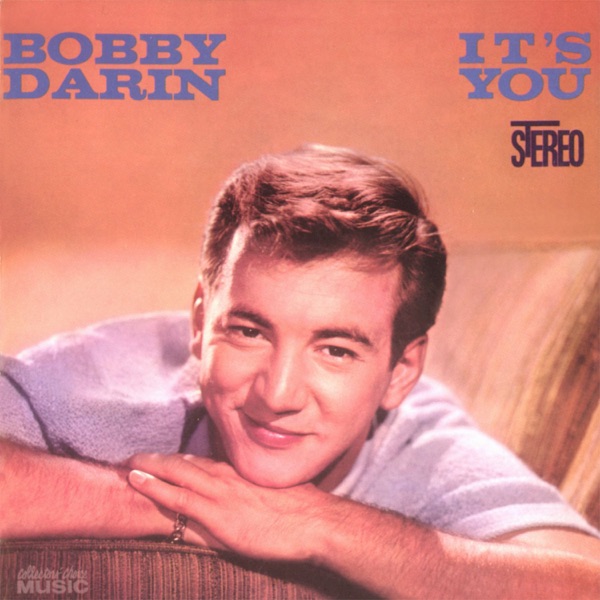
It’s You or No One
1963 · 12 tracks
- 1 It's You or No One ↗ 3:25
- 2 I Hadn't Anyone Till You ↗ 2:39
- 3 Not Mine ↗ 2:09
- 4 I Can't Believe That You're In Love With Me ↗ 2:25
- 5 I've Never Been In Love Before ↗ 2:00
- 6 All or Nothing At All ↗ 2:15
- 7 Only One Little Item ↗ 3:58
- 8 Don't Get Around Much Anymore ↗ 2:51
- 9 How About Me ↗ 2:58
- 10 I'll Be Around ↗ 2:47
- 11 All I Do Is Cry ↗ 2:43
- 12 I Guess I'm Good for Nothing But the Blues ↗ 3:24

Clementine
1964 · 1 track
- 1 Clementine (Performed Live On The Ed Sullivan Show 2/28/60) ↗ 3:12

Venice Blue
1965 · 11 tracks
- 1 Venice Blue (Que c'est triste Venise) ↗ 2:37
- 2 I Wanna Be Around ↗ 2:13
- 3 Somewhere ↗ 2:35
- 4 The Good Life ↗ 2:26
- 5 Dear Heart ↗ 3:15
- 6 Softly, As I Leave You ↗ 2:58
- 7 You Just Don't Know ↗ 2:25
- 8 There Ain't No Sweet Gal Worth the Salt of My Tears ↗ 3:04
- 9 Who Can I Turn To (When Nobody Needs Me) ↗ 2:39
- 10 A Taste of Honey ↗ 2:37
- 11 In a World Without You ↗ 3:10

Bobby Darin Sings The Shadow of Your Smile
1966 · 11 tracks
- 1 The Shadow of Your Smile ↗ 2:17
- 2 The Sweetheart Tree ↗ 2:10
- 3 I Will Wait for You ↗ 2:35
- 4 The Ballad of Cat Ballou ↗ 2:33
- 5 What's New Pussycat? ↗ 2:14
- 6 Rainin ↗ 2:52
- 7 Lover, Come Back to Me ↗ 2:26
- 8 Cute ↗ 2:22
- 9 After You've Gone ↗ 3:15
- 10 It's Only a Paper Moon ↗ 2:26
- 11 Liza (All the Clouds'll Roll Away) ↗ 2:43

In a Broadway Bag
1966 · 11 tracks
- 1 Mame ↗ 2:17
- 2 I Believe in You ↗ 3:54
- 3 It's Today ↗ 2:10
- 4 Everybody Has the Right to Be Wrong ↗ 2:40
- 5 Feeling Good ↗ 2:52
- 6 Don't Rain on My Parade ↗ 3:01
- 7 The Other Half of Me ↗ 2:31
- 8 Once Upon a Time ↗ 3:09
- 9 Try to Remember ↗ 3:12
- 10 I'll Only Miss Her When I Think of Her ↗ 2:36
- 11 Night Song ↗ 3:09

If I Were a Carpenter
1966 · 11 tracks
The Shadow of Your Smile
1966 · 11 tracks
- 1 The Shadow of Your Smile ↗ 2:17
- 2 The Sweetheart Tree ↗ 2:10
- 3 I Will Wait for You ↗ 2:35
- 4 The Ballad of Cat Ballou ↗ 2:33
- 5 What's New Pussycat? ↗ 2:14
- 6 Rainin ↗ 2:52
- 7 Lover, Come Back to Me ↗ 2:26
- 8 Cute ↗ 2:22
- 9 After You've Gone ↗ 3:15
- 10 It's Only a Paper Moon ↗ 2:26
- 11 Liza (All the Clouds'll Roll Away) ↗ 2:43
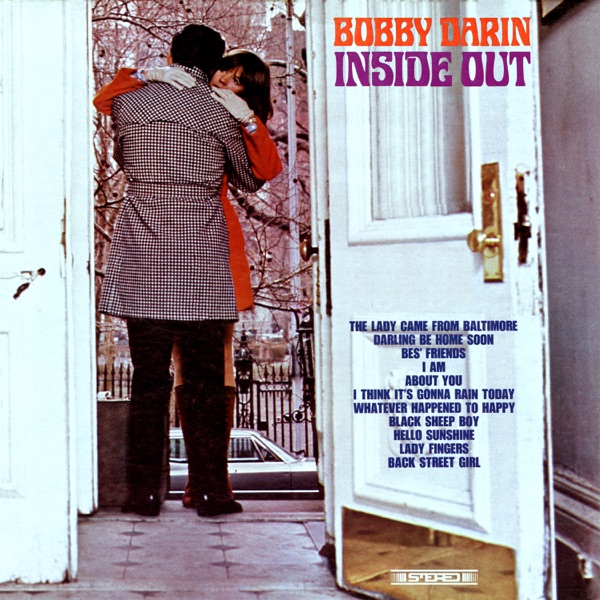
Inside Out
1967 · 11 tracks


Commitment
1969 · 14 tracks
- 1 Me & Mr. Hohner ↗ 3:18
- 2 Sugar Man ↗ 2:59
- 3 Sausalito (The Governors Song) ↗ 2:34
- 4 Song for a Dollar ↗ 1:52
- 5 The Harvest ↗ 3:14
- 6 Distractions (Part 1) ↗ 3:34
- 7 Water Color Canvas ↗ 3:35
- 8 Jive ↗ 2:12
- 9 Hey Magic Man ↗ 4:33
- 10 Light Blue ↗ 3:39
- 11 Baby May ↗ 2:38
- 12 Sweet Reasons ↗ 1:48
- 13 Maybe We Can Get It Together ↗ 3:56
- 14 RX-Pyro (Prescription: Fire) ↗ 2:53

Bobby Darin
1972 · 10 tracks
- 1 Sail Away ↗ 4:01
- 2 I've Already Stayed Too Long ↗ 2:26
- 3 Something In Her Love ↗ 3:38
- 4 Who Turned the World Around ↗ 3:18
- 5 Shipmates In Cheyenne ↗ 3:07
- 6 Let It Be Me ↗ 3:44
- 7 Hard Headed Woman ↗ 3:31
- 8 Average People ↗ 3:51
- 9 I Used To Think It Was Easy ↗ 2:55
- 10 My First Night (Alone Without You) ↗ 3:29

Two of a Kind
1990 · 13 tracks
- 1 Two of a Kind (Intro) ↗ 0:50
- 2 Indiana ↗ 2:41
- 3 Bob White ↗ 3:37
- 4 Ace In the Hole ↗ 3:10
- 5 East of the Rockies ↗ 2:49
- 6 If I Had My Druthers ↗ 3:59
- 7 I Ain't Gonna Give Nobody None of My Jellyroll ↗ 1:48
- 8 Lonesome Polecat ↗ 3:28
- 9 My Cutey's Due at Two-To-Two Today ↗ 2:24
- 10 Paddlin' Madelin' Home / Row Row Row ↗ 1:55
- 11 Who Takes Care of the Caretaker's Daughter ↗ 3:10
- 12 Mississippi Mud ↗ 1:56
- 13 Two of a Kind ↗ 3:41

Songs From Big Sur
2004 · 22 tracks
- 1 Baby May ↗ 2:40
- 1 Distractions (Part 1) [Live] ↗ 5:01
- 2 Jingle Jangle Jungle ↗ 2:59
- 2 Long Line Rider (Live) ↗ 2:52
- 3 Change ↗ 2:27
- 3 Simple Song of Freedom (Live) ↗ 4:24
- 4 The Harvest ↗ 3:18
- 4 Monolog: Questions (Live) ↗ 7:42
- 5 Funny What Love Can Do ↗ 2:54
- 6 RX-Pyro: Prescription: Fire ↗ 2:54
- 7 Distractions (Part 1) ↗ 3:37
- 8 Jive ↗ 2:11
- 9 Long Time Movin' ↗ 2:56
- 10 City Life ↗ 2:30
- 11 Long Line Rider ↗ 3:02
- 12 I'm Going To Love You ↗ 2:32
- 13 Me & Mr. Hohner ↗ 3:20
- 14 I Am ↗ 2:01
- 15 My Baby Needs Me ↗ 3:02
- 16 Everywhere I Go ↗ 3:00
- 17 Maybe We Can Get It Together ↗ 3:59
- 18 Route 58 ↗ 3:01

Swing An' Slow
2006 · 36 tracks
- 1 Mack the Knife (Live At the Flamingo) ↗ 3:24
- 1 I Left My Heart In San Francisco ↗ 2:32
- 2 Intro. & Hello Young Lovers (Live) (2000 Digital Remaster) ↗ 2:55
- 2 The Good Life (1995 Digital Remaster) ↗ 2:24
- 3 Always ↗ 2:20
- 3 I Wanna Be Around ↗ 2:11
- 4 I'm Beginning To See the Light ↗ 2:19
- 4 All By Myself (1992 Digital Remaster) ↗ 3:05
- 5 Oh! Look At Me Now ↗ 2:46
- 5 My Buddy (Digitally Remastered 1995) ↗ 2:35
- 6 Hello, Dolly! ↗ 3:14
- 6 Roses of Picardy ↗ 2:10
- 7 Call Me Irresponsible ↗ 2:05
- 7 You'll Never Know ↗ 2:54
- 8 More (1996 Digital Remaster) ↗ 2:25
- 8 Blue Skies ↗ 2:31
- 9 Charade ↗ 1:47
- 9 You Made Me Love You (I Didn't Want To Do It) ↗ 2:52
- 10 On the Street Where You Live ↗ 2:08
- 10 The Days of Wine and Roses ↗ 2:34
- 11 Sunday In New York ↗ 2:31
- 11 Where Love Has Gone ↗ 2:42
- 12 Goodbye, Charlie ↗ 2:24
- 12 You're the Reason I'm Living ↗ 2:27
- 13 As Long As I'm Singing (1989 Digital Remaster) ↗ 1:33
- 13 The End of the World ↗ 2:38
- 14 Standing On the Corner (Digitally Remastered 1995) ↗ 2:33
- 14 Blowin' In the Wind ↗ 3:11
- 15 I'm Sitting On Top of the World ↗ 1:48
- 15 Somewhere ↗ 2:33
- 16 That Funny Feeling (1989 Digital Remaster) ↗ 1:56
- 16 Softly, As I Leave You ↗ 2:56
- 17 I Got Rhythm ↗ 1:57
- 17 Who Can I Turn To (When Nobody Needs Me) ↗ 2:37
- 18 There's a Rainbow 'Round My Shoulder (Digitally Remastered 1995) ↗ 2:42
- 18 The Party's Over ↗ 2:30
-
 Bobby DarinBobby Darin195812 tracks
 -
 That's AllBobby Darin195912 tracks
 -
 This Is DarinBobby Darin195912 tracks
 -
 For Teenagers OnlyBobby Darin196012 tracks
 -
 The 25th Day of DecemberBobby Darin196014 tracks
 -
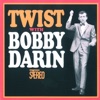 TwistBobby Darin196112 tracks
 -
 Love SwingsBobby Darin196112 tracks
 -
 Oh! Look at Me NowBobby Darin196212 tracks
 -
 Sings Ray CharlesBobby Darin196211 tracks
 -
 Things & Other ThingsBobby Darin196212 tracks
 -
 Golden Folk HitsBobby Darin196312 tracks
 -
 You’re the Reason I’m LivingBobby Darin196312 tracks
 -
 Earthy!Bobby Darin196312 tracks
 -
 It’s You or No OneBobby Darin196312 tracks
 -
 ClementineBobby Darin19641 track
 -
 Venice BlueBobby Darin196511 tracks
 -
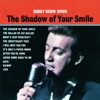 Bobby Darin Sings The Shadow of Your SmileBobby Darin196611 tracks
 -
 In a Broadway BagBobby Darin196611 tracks
 -
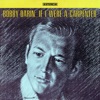 If I Were a CarpenterBobby Darin196611 tracks
 - The Shadow of Your SmileBobby Darin196611 tracks
-
 Inside OutBobby Darin196711 tracks
 -
 Born Walden Robert CassottoBobby Darin19689 tracks
 -
 CommitmentBobby Darin196914 tracks
 -
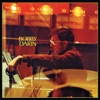 Bobby DarinBobby Darin197210 tracks
 -
 Two of a KindBobby Darin199013 tracks
 -
 Songs From Big SurBobby Darin200422 tracks
 -
 Swing An' SlowBobby Darin200636 tracks
Deep Dive
Overview
Bobby Darin, born Walden Robert Cassotto, emerged in the late 1950s as one of American pop music’s most stylistically restless and ambitious entertainers. Over a recording career that spanned from 1958 until his death in 1973, Darin demonstrated mastery across pop, swing, folk, rock and roll, and country idioms—refusing to be confined to a single lane at a time when radio and the record industry pressured artists toward consistency. His willingness to experiment across genres, combined with his sharp musical instincts and warm baritone, positioned him as a transitional figure between the big band era and the rock mainstream of the 1960s.
Formation Story
Born in 1936, Darin came of age during the golden age of swing and the big band sound. Growing up in New York and steeped in the popular music of the 1940s and early 1950s, he gravitated naturally toward singing and performing. By the mid-1950s, as rock and roll was beginning its explosive ascent, Darin entered the recording industry, signing with Decca Records and later Atlantic Records. His early recordings began appearing in 1958, marking the official start of his professional discography. From the outset, Darin resisted being typecast; rather than adopting a single rock and roll persona, he drew eclectically from the standards tradition, novelty music, and contemporary pop trends, creating a career pathway that would keep him visible and relevant across multiple audiences throughout the 1960s.
Breakthrough Moment
Darin’s initial albums in 1958 and 1959—including Bobby Darin, That’s All, and This Is Darin—established him as a competent young entertainer with broad stylistic range. However, it was his willingness to record novelty material and his ear for accessible, well-crafted pop songs that helped him build momentum. By the early 1960s, as rock music was maturing and establishing itself as a dominant commercial force, Darin positioned himself as an artist who could bridge the gap between the older, sophisticated pop audience and younger rock listeners. His prolific output during 1962 and 1963—albums such as Oh! Look at Me Now, Sings Ray Charles, Things & Other Things, Golden Folk Hits, You’re the Reason I’m Living, and Earthy!—demonstrated his versatility and willingness to follow musical trends while maintaining his own identity.
Peak Era
The years between 1960 and 1966 represented Darin’s most creatively ambitious and commercially active period. Albums like For Teenagers Only (1960) and the Christmas-themed The 25th Day of December (1960) showed his attempt to capture different market segments. His 1961 releases, Twist and Love Swings, capitalized on dance-music trends while maintaining his swing sensibilities. The years 1963 through 1966 saw an explosion of studio output: Golden Folk Hits and You’re the Reason I’m Living in 1963 tapped into the folk revival; If I Were a Carpenter (1966) and In a Broadway Bag (1966) continued his pattern of stylistic exploration. Born Walden Robert Cassotto (1968) signaled a deeper introspection, while Commitment (1969) suggested an artist still seeking meaningful creative outlets as the 1960s counterculture reshaped the musical landscape.
Musical Style
Bobby Darin’s sound defied easy categorization. His voice—a warm, conversational baritone—worked equally well on jazz standards, novelty pop, and folk-influenced material. He inherited the swing tradition’s emphasis on phrasing and orchestration, often surrounding himself with lush string arrangements and big band instrumentation that were becoming increasingly unfashionable as rock and roll consolidated its dominance. Yet Darin remained unafraid to adapt. His interpretations of material ranged from straightforward covers of pop standards to genre-crossing projects like Sings Ray Charles, which demonstrated his ability to inhabit another artist’s style while remaining himself. His songwriting, though less prominent in the supplied discography, showed an ear for memorable melodies and accessible lyrics. Throughout the 1960s, as folk music and singer-songwriter traditions gained influence, Darin incorporated acoustic guitar, simpler arrangements, and more introspective material into his work, particularly evident in albums like Golden Folk Hits and If I Were a Carpenter.
Major Albums
Bobby Darin (1958)
His debut album announced a musician comfortable across multiple idioms—pop, novelty, and standards—establishing the eclecticism that would define his career.
That’s All (1959)
Released in the same prolific year as This Is Darin, this album further consolidated his reputation as a versatile pop craftsman drawing from swing and contemporary pop traditions.
You’re the Reason I’m Living (1963)
This album exemplified Darin’s capacity to engage with contemporary trends while maintaining his sophisticated pop approach, blending romantic pop songs with his distinctive phrasing.
If I Were a Carpenter (1966)
Darin’s turn toward folk-influenced material and acoustic arrangements signaled his responsiveness to the cultural shifts of the mid-1960s and his continued artistic evolution.
Born Walden Robert Cassotto (1968)
Titled with his birth name, this album suggested a return to roots and personal reassessment during a turbulent period in popular music, reflecting the introspective mood of late-1960s rock.
Signature Songs
- “Mack the Knife” — His most enduring and widely recognized recording, a sophisticated jazz-pop standard that became his signature vehicle.
- “Dream Lover” — A pop-rock novelty hit that showcased his ability to deliver upbeat, commercially savvy material.
- “You’re the Reason I’m Living” — A romantic pop song that highlighted his emotional phrasing and broad commercial appeal.
- “If I Were a Carpenter” — His interpretation of this folk-influenced song demonstrated his respect for singer-songwriter tradition.
Influence on Rock
Bobby Darin occupied a unique historical position as a bridge between the jazz-and-swing era and the rock-dominated 1960s. His refusal to specialize in a single genre helped legitimize the idea of an American pop musician as a versatile entertainer rather than a locked-in rock-and-roll identity. He demonstrated that artists could move fluidly between jazz standards, pop novelties, folk material, and rock without sacrificing credibility, an approach that influenced later artists who similarly resisted genre pigeonholing. His early recordings for Atlantic Records—part of the label’s strategy to capture both the adult pop market and younger rock audiences—helped establish the template for pop-rock as a mainstream category distinct from pure rock and roll.
Legacy
Bobby Darin’s death in 1973 at the age of 37 cut short a career that might have evolved further in response to the changing musical landscape. His extensive discography—ranging from novelty records to interpretations of jazz standards to folk-inflected material—created a legacy that resists simple summarization. In subsequent decades, Darin’s work has remained accessible through reissues and compilations, with The Wonderful World of Bobby Darin (1993) and later projects like Swingin’ the Standards (1999) introducing his music to new audiences. His willingness to work across genres and his cosmopolitan approach to American popular song secured his place as a significant figure in the transition from pre-rock to rock-era pop music. Though not canonized with the same historical weight as his rock and roll contemporaries, Darin’s catalog testifies to a musician of genuine ambition and craft who refused artistic constraint.
Fun Facts
- Darin recorded albums with thematic clarity—The 25th Day of December capitalized on seasonal programming, while Golden Folk Hits capitalized on the folk revival, showing his attentiveness to radio trends and listener demand.
- His prolific recording pace during 1962 and 1963 resulted in multiple album releases within single years, reflecting both his productivity and the record industry’s strategy of saturating the market with catalog from successful artists.
- The 1968 album Born Walden Robert Cassotto represented a deliberate return to his birth name, signaling artistic reassessment during a period of significant cultural upheaval in American music.
- His work across multiple record labels—Decca, Atlantic, Capitol, Brunswick, and Atco—demonstrated his broad commercial visibility and the industry’s view of him as a significant catalog artist.