
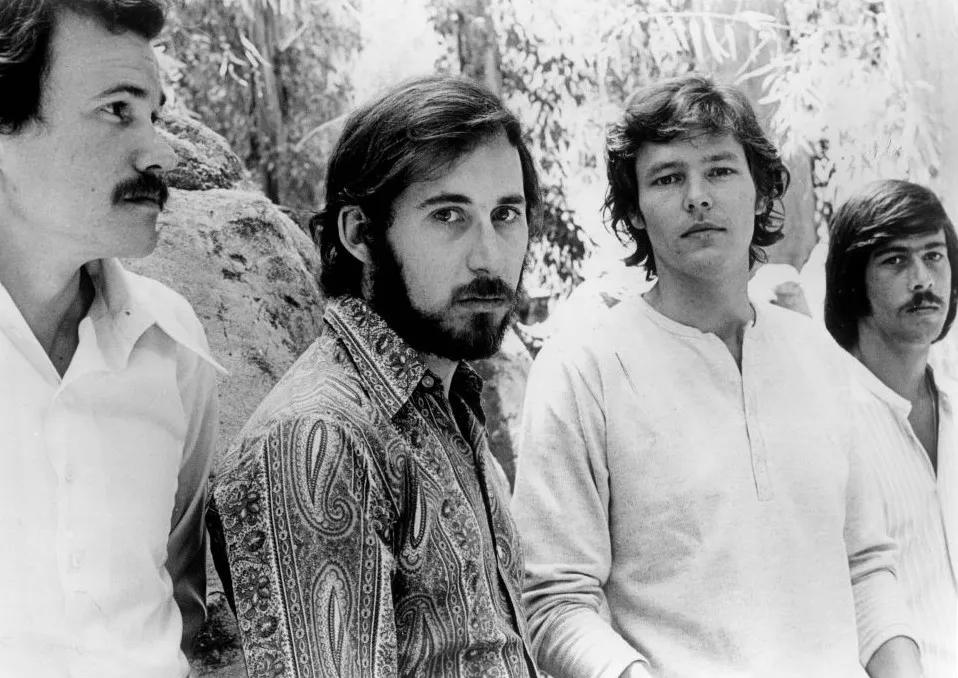
Photo by Elektra Records , licensed under Public domain · Wikimedia Commons
Rank #466
Bread
From Wikipedia
Bread was an American soft rock band from Los Angeles, California. They had 13 songs chart on the Billboard Hot 100 between 1970 and 1977.
Members
- David Gates
Discography & Previews
Browse through and click an album to open and play 30-second previews streamed from Apple Music.

Bread
1969 · 12 tracks

On the Waters
1970 · 12 tracks
- 1 Why Do You Keep Me Waiting ↗ 2:29
- 2 Make It With You ↗ 3:12
- 3 Blue Satin Pillow ↗ 2:29
- 4 Look What You've Done ↗ 3:11
- 5 I Am That I Am ↗ 3:20
- 6 Been Too Long On the Road ↗ 4:52
- 7 I Want You With Me ↗ 2:52
- 8 Coming Apart ↗ 3:30
- 9 Easy Love ↗ 2:29
- 10 In the Afterglow ↗ 2:36
- 11 Call On Me ↗ 4:00
- 12 The Other Side of Life ↗ 2:03

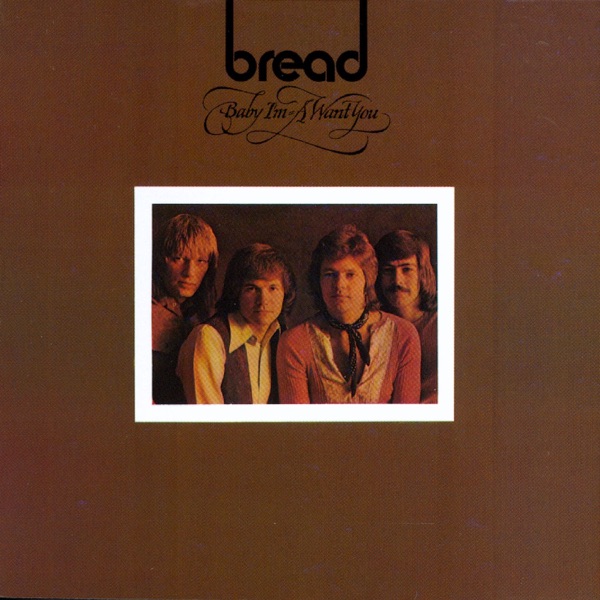
Baby I’m‐A Want You
1972 · 12 tracks
- 1 Mother Freedom ↗ 2:36
- 2 Baby I'm-A Want You ↗ 2:31
- 3 Down On My Knees ↗ 2:45
- 4 Everything I Own ↗ 3:07
- 5 Nobody Like You ↗ 3:14
- 6 Diary ↗ 3:09
- 7 Dream Lady ↗ 3:22
- 8 Daughter ↗ 3:24
- 9 Games of Magic ↗ 3:10
- 10 This Isn't What the Governmeant ↗ 2:27
- 11 Just Like Yesterday ↗ 2:16
- 12 I Don't Love You ↗ 2:51
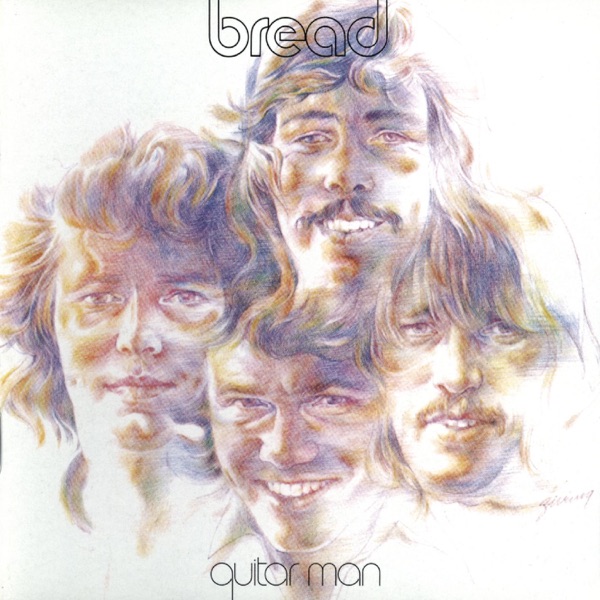
Guitar Man
1972 · 12 tracks

Lost Without Your Love
1977 · 11 tracks
-
 BreadBread196912 tracks
 -
 On the WatersBread197012 tracks
 -
 MannaBread197112 tracks
 -
 Baby I’m‐A Want YouBread197212 tracks
 -
 Guitar ManBread197212 tracks
 -
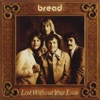 Lost Without Your LoveBread197711 tracks
Deep Dive
Overview
Bread was an American soft rock band that emerged from Los Angeles in 1968 and became one of the defining soft rock acts of the 1970s. Over a seven-year initial run, the group charted 13 songs on the Billboard Hot 100 between 1970 and 1977, establishing themselves as reliable hitmakers during an era when acoustic instrumentation, smooth vocal arrangements, and introspective songwriting dominated mainstream rock radio. Their ascent coincided with the broader shift in American popular music away from the harder rock of the mid-1960s toward more melodic, production-conscious approaches that would dominate the decade.
Formation Story
Bread was founded in Los Angeles in 1968, a city that had become a fertile ground for the emerging soft rock and singer-songwriter movements. David Gates served as the primary creative force behind the band, steering its artistic direction from inception. The group’s formation came at a moment when Los Angeles was nurturing acts that blended rock instrumentation with pop sensibilities and sophisticated vocal harmonies—a sound that would come to define much of the early 1970s mainstream.
Breakthrough Moment
Bread’s commercial breakthrough arrived quickly with their early releases in the 1970–1972 window. Their self-titled debut, Bread (1969), introduced the band’s characteristic sound, while On the Waters (1970) and Manna (1971) solidified their presence on the charts. The year 1972 proved especially productive, with both Baby I’m‐A Want You and Guitar Man released, each contributing to their accumulating catalog of hit singles. By the middle of the decade, Bread had established themselves as consistent chart performers, a position rare for rock acts in an era of increasing fragmentation in popular taste.
Peak Era
Bread’s commercial peak spanned the early to mid-1970s, a five-year window (1970–1975) during which they secured the vast majority of their 13 Billboard Hot 100 entries. This period saw them refine their signature blend of intimate vocal delivery, layered instrumental arrangements, and pop-influenced songwriting. The consistency of their chart presence during this stretch—particularly their ability to place multiple songs on the Hot 100 simultaneously—reflected both strong radio support and genuine audience affection for their sound. Their musical output during this era balanced accessibility with an underlying sophistication that allowed them to retain credibility among rock audiences even as they dominated pop-oriented radio playlists.
Musical Style
Bread’s music was defined by a marriage of soft rock sensibilities and pop craftsmanship. Their arrangements typically featured acoustic guitar as a foundational element, layered with strings, keyboards, and full band instrumentation that created a lush, polished production sound. Vocal harmony was central to their approach, with smooth, often syrupy vocal tones that prioritized melodic clarity and emotional directness. The band’s songwriting emphasized personal, often relationship-focused lyrics delivered with a conversational tone that felt both intimate and radio-friendly. This style occupied a middle ground between the introspection of contemporary singer-songwriters and the commercial polish of mainstream pop-rock, appealing to listeners seeking rock music with emotional accessibility and production values that reflected 1970s studio sophistication.
Major Albums
Bread (1969)
The band’s self-titled debut announced their soft rock approach and introduced David Gates’s songwriting voice to wider audiences, establishing the template for their subsequent success.
On the Waters (1970)
This album consolidated Bread’s commercial foothold, producing multiple chart entries and demonstrating their ability to craft commercially viable soft rock singles without sacrificing musical cohesion.
Manna (1971)
Manna deepened the band’s artistic reach, showcasing more elaborate arrangements and continued refinement of their vocal-harmony-driven approach to composition.
Baby I’m‐A Want You (1972)
Released the same year as Guitar Man, this album continued their streak of chart productivity during their commercial peak, further cementing their status as reliable hit-makers.
Lost Without Your Love (1977)
Appearing five years after Guitar Man, this album marked a return to recording after a significant gap, demonstrating the band’s ability to maintain relevance and commercial appeal in the post-1975 rock landscape.
Signature Songs
- Bread’s charting output between 1970 and 1977 yielded 13 Billboard Hot 100 entries, though specific song titles from the supplied discography are not individually itemized.
Influence on Rock
Bread’s commercial success and sustained chart presence throughout the early 1970s helped legitimize soft rock as a major force in popular music. Their approach—blending rock instrumentation with pop songwriting discipline and sophisticated vocal arrangements—influenced the broader trajectory of 1970s rock radio, particularly the rise of album-oriented rock and the consolidation of production-heavy approaches to what was marketed as rock music. While they were not the only soft rock act of the era, their 13 chart entries demonstrated audience appetite for emotionally direct, melodically accessible rock music that prioritized studio polish and vocal sophistication. This commercially validated template influenced scores of acts attempting to balance artistic credibility with mainstream radio appeal.
Legacy
Bread’s span of activity—continuing from their 1968 formation into the present, with recorded output extending at least through 1977—reflects their place in the enduring soft rock canon. Their accumulated chart success and consistent presence on 1970s radio established a lasting footprint in the era’s musical landscape. The band’s ability to place 13 songs on the Billboard Hot 100 across a concentrated seven-year window remains a testament to their commercial acumen and the durability of their approach to soft rock songcraft. As classic rock radio continues to program 1970s material, Bread’s contributions remain embedded in the era’s musical identity, a marker of the decade’s shift toward polished, melodically sophisticated rock music designed for broad popular consumption.
Fun Facts
- Bread was one of only a handful of soft rock acts to maintain multiple simultaneous chart entries during the competitive radio environment of the early 1970s.
- The band released two albums in 1972—Baby I’m‐A Want You and Guitar Man—demonstrating the intensity of their productivity during their commercial peak.
- Despite disbanding and reforming, Bread’s years-active notation extends to the present, indicating ongoing engagement with the music industry or periodic reunions.