
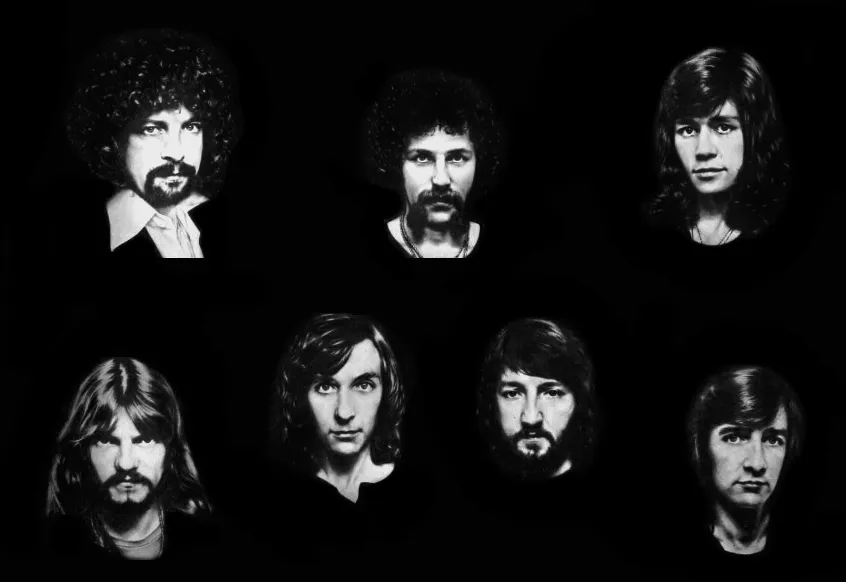
Photo by Jet Records , licensed under Public domain · Wikimedia Commons
Rank #238
Electric Light Orchestra
From Wikipedia
Electric Light Orchestra (ELO) are an English rock band formed in Birmingham in 1970 by multi-instrumentalists Jeff Lynne and Roy Wood and drummer Bev Bevan. Their music is characterised by a fusion of pop and classical arrangements with futuristic iconography. After Wood's departure in 1972, Lynne became the band's sole leader, co-arranging and producing every album while writing nearly all of their original material. During their first run from 1970 to 1986, Lynne and Bevan were the group's only consistent members.
Discography & Previews
Browse through and click an album to open and play 30-second previews streamed from Apple Music.

On the Third Day
1973 · 9 tracks
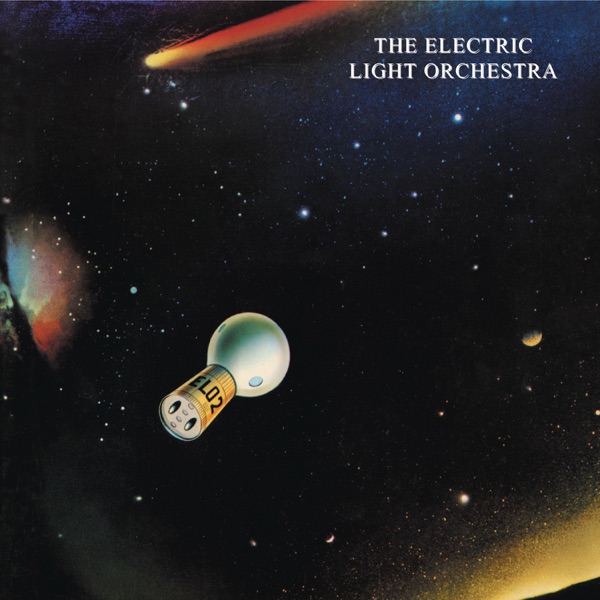


Out of the Blue
1977 · 17 tracks
- 1 Turn to Stone ↗ 3:49
- 2 It's Over ↗ 4:08
- 3 Sweet Talkin' Woman ↗ 3:50
- 4 Across the Border ↗ 3:53
- 5 Night in the City ↗ 4:02
- 6 Starlight ↗ 4:31
- 7 Jungle ↗ 3:53
- 8 Believe Me Now ↗ 1:21
- 9 Steppin' Out ↗ 4:40
- 10 Standin' in the Rain ↗ 4:21
- 11 Big Wheels ↗ 5:09
- 12 Summer and Lightning ↗ 4:15
- 13 Mr. Blue Sky ↗ 5:04
- 14 Sweet Is the Night ↗ 3:28
- 15 The Whale ↗ 5:07
- 16 Birmingham Blues ↗ 4:23
- 17 Wild West Hero ↗ 4:41


Time
1981 · 13 tracks
- 1 Prologue ↗ 1:17
- 2 Twilight ↗ 3:42
- 3 Yours Truly, 2095 ↗ 3:11
- 4 Ticket to the Moon ↗ 4:07
- 5 The Way Life's Meant to Be ↗ 4:38
- 6 Another Heart Breaks ↗ 3:51
- 7 Rain Is Falling ↗ 3:55
- 8 From the End of the World ↗ 3:16
- 9 The Lights Go Down ↗ 3:33
- 10 Here Is the News ↗ 3:50
- 11 21st Century Man ↗ 4:03
- 12 Hold On Tight ↗ 3:06
- 13 Epilogue ↗ 1:31

Secret Messages
1983 · 17 tracks
- 1 Secret Messages ↗ 4:43
- 2 Loser Gone Wild ↗ 5:27
- 3 Bluebird ↗ 4:13
- 4 Take Me On and On ↗ 4:59
- 5 Stranger ↗ 4:29
- 6 No Way Out ↗ 3:28
- 7 Letter from Spain ↗ 2:59
- 8 Danger Ahead ↗ 3:47
- 9 Four Little Diamonds ↗ 4:10
- 10 Train of Gold ↗ 4:22
- 11 Endless Lies ↗ 3:35
- 12 Buildings Have Eyes ↗ 4:04
- 13 Rock 'N' Roll Is King ↗ 3:14
- 14 Mandalay ↗ 5:19
- 15 Time After Time ↗ 3:56
- 16 After All ↗ 0:40
- 17 Hello My Old Friend ↗ 8:31


Zoom
2001 · 13 tracks
- 1 Alright ↗ 3:12
- 2 Moment In Paradise ↗ 3:35
- 3 State of Mind ↗ 3:04
- 4 Just for Love ↗ 3:39
- 5 Stranger On a Quiet Street ↗ 3:39
- 6 In My Own Time ↗ 3:04
- 7 Easy Money ↗ 2:51
- 8 It Really Doesn't Matter ↗ 3:20
- 9 Ordinary Dream ↗ 3:22
- 10 A Long Time Gone ↗ 3:15
- 11 Melting In the Sun ↗ 3:10
- 12 All She Wanted ↗ 3:15
- 13 Lonesome Lullaby ↗ 4:04
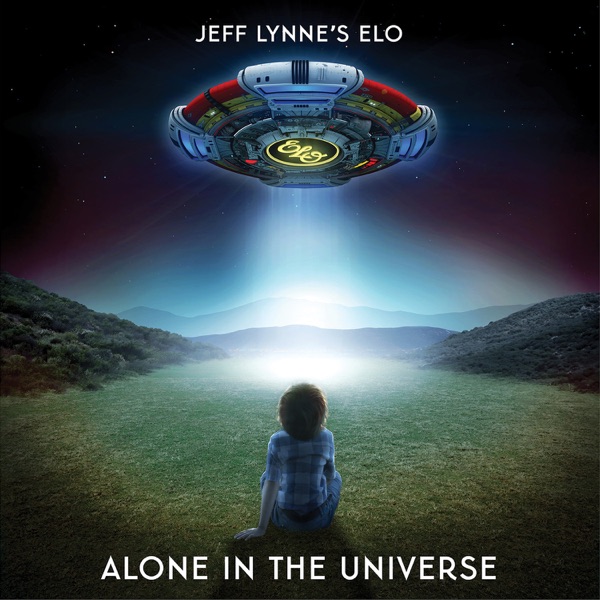
Alone in the Universe
2015 · 12 tracks
- 1 When I Was a Boy ↗ 3:12
- 2 Love and Rain ↗ 3:30
- 3 Dirty to the Bone ↗ 3:07
- 4 When the Night Comes ↗ 3:22
- 5 The Sun Will Shine On You ↗ 3:30
- 6 Ain't It a Drag ↗ 2:36
- 7 All My Life ↗ 2:52
- 8 I'm Leaving You ↗ 3:09
- 9 One Step at a Time ↗ 3:22
- 10 Alone In the Universe ↗ 3:52
- 11 Fault Line (Bonus Track) ↗ 2:07
- 12 Blue (Bonus Track) ↗ 2:36

-
 On the Third DayElectric Light Orchestra19739 tracks
 -
 Electric Light Orchestra IIElectric Light Orchestra19735 tracks
 -
 Face the MusicElectric Light Orchestra19758 tracks
 -
 A New World RecordElectric Light Orchestra19769 tracks
 -
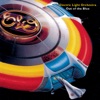 Out of the BlueElectric Light Orchestra197717 tracks
 -
 DiscoveryElectric Light Orchestra19799 tracks
 -
 TimeElectric Light Orchestra198113 tracks
 -
 Secret MessagesElectric Light Orchestra198317 tracks
 -
 Balance of PowerElectric Light Orchestra198610 tracks
 -
 ZoomElectric Light Orchestra200113 tracks
 -
 Alone in the UniverseElectric Light Orchestra201512 tracks
 -
 From out of NowhereElectric Light Orchestra201910 tracks
Deep Dive
Overview
Electric Light Orchestra (ELO) are an English rock band that emerged from Birmingham in 1970, pioneering a distinctive sound that fused pop songwriting with classical orchestration and science-fiction imagery. Founded by multi-instrumentalists Jeff Lynne and Roy Wood alongside drummer Bev Bevan, ELO occupied a singular position in 1970s rock—neither purely progressive rock nor straightforward pop, but a hybrid that layered string arrangements, synthesizers, and complex vocal harmonies over rock instrumentation. Their music became emblematic of an era in which rock bands increasingly incorporated orchestral elements and conceptual ambition.
Formation Story
Electric Light Orchestra formed in Birmingham in 1970 when Jeff Lynne and Roy Wood, both accomplished multi-instrumentalists steeped in the city’s rock tradition, joined forces with drummer Bev Bevan to realize an ambitious vision: rock music augmented by lush classical arrangements. The band emerged during a period when progressive rock was ascending, yet ELO’s approach differed markedly from the genre’s dominant strains. Rather than adopt the extended improvisational structures of contemporary progressive bands, Lynne and Wood crafted tightly arranged pop-rock songs scaffolded with orchestral textures—violins, cellos, and other classical instruments woven into the fabric of rock songs built on memorable melodies and conventional song structures.
Roy Wood’s departure in 1972 marked a pivotal transition. With Wood gone, Jeff Lynne assumed sole creative leadership of the band, co-arranging and producing every album while composing nearly all of their original material. This centralization of control under Lynne’s vision became the defining characteristic of ELO’s long career. Through their first run from 1970 to 1986, Lynne and Bevan remained the group’s only consistent members, allowing Lynne to refine and evolve the band’s sound without the creative friction or shifting personnel that defined other major rock acts of the era.
Breakthrough Moment
ELO’s first album, The Electric Light Orchestra, arrived in 1971 to modest attention, establishing the band’s core sonic identity but not yet commanding broad commercial success. The band’s creative momentum accelerated through the early 1970s with Electric Light Orchestra II (1973) and On the Third Day (1973), each refining Lynne’s orchestral arrangements and deepening the band’s integration of classical and pop elements. Eldorado: A Symphony by the Electric Light Orchestra (1974) represented a conceptual leap forward, signaling ELO’s ambition to create album-length narratives and thematic cohesion alongside their signature symphonic pop sound. By the mid-1970s, with Face the Music (1975) and A New World Record (1976), ELO had transcended cult status to achieve mainstream commercial recognition, establishing themselves as major chart contenders and concert draws.
Peak Era
The period from 1976 through 1981 marked ELO’s most commercially successful and creatively assured phase. Out of the Blue (1977) solidified their position as one of the decade’s most commercially viable rock acts, combining Lynne’s gift for pop melody with elaborate orchestration and futuristic aesthetics that aligned with the broader cultural embrace of science fiction and space-age imagery in the late 1970s. Discovery (1979) and Time (1981) sustained this momentum, demonstrating Lynne’s ability to evolve the band’s sonic palette without abandoning the classical-rock fusion that defined their appeal. During these years, ELO balanced artistic ambition with accessibility, producing albums that functioned equally well as FM radio staples and deep-listening experiences for devoted fans. Secret Messages (1983) and Balance of Power (1986) extended this run, though the band’s initial momentum began to show signs of fatigue as the 1980s progressed and pop-rock tastes shifted toward new wave and synth-pop aesthetics.
Musical Style
Electric Light Orchestra’s sound centered on the fusion of rock and classical music, a concept that could have resulted in pretentious overreach but instead produced some of the 1970s’ most enduring popular music. Jeff Lynne’s production approach married electric guitars, drums, and bass with string sections—violins, cellos, and violas—creating a layered, orchestral texture that supported pop-driven melodies and hooks. The band’s instrumentation evolved across their discography; early albums leaned more heavily toward traditional orchestration, while later records incorporated synthesizers and electronic production techniques, reflecting broader technological shifts in rock music production. Vocally, Lynne’s tenor delivery often sat high in the mix, frequently double-tracked and harmonized, creating a distinctive vocal character that became synonymous with ELO’s identity. Lyrically, the band drew on science-fiction and fantasy themes, particularly in concept albums like Eldorado and Time, lending their pop arrangements a theatrical and imaginative dimension. The band’s genre classification proved perpetually difficult for critics and radio programmers: too orchestral for mainstream rock radio in its strictest sense, yet too pop-oriented for progressive rock purists, ELO occupied a unique commercial and artistic territory that allowed them to appeal across generational and demographic lines.
Major Albums
Eldorado: A Symphony by the Electric Light Orchestra (1974)
ELO’s most fully realized concept album, Eldorado demonstrated Lynne’s maturation as an arranger and bandleader, layering elaborate orchestration around a thematic exploration of fantasy and escapism that resonated with the mid-1970s’ appetite for ambitious rock albums.
Face the Music (1975)
Marking a decisive turn toward mainstream commercial appeal while retaining orchestral sophistication, Face the Music blended Lynne’s pop sensibilities with complex arrangements, establishing ELO as major chart contenders.
A New World Record (1976)
This album showcased Lynne’s skill at balancing radio-friendly pop hooks with sophisticated production and orchestration, presenting ELO’s sound at its most accessible without compromising artistic ambition.
Out of the Blue (1977)
Album that cemented ELO’s status as one of the 1970s’ most commercially dominant acts, Out of the Blue paired futuristic sonic conceits with unforgettable melodies, creating some of the band’s most recognizable material.
Time (1981)
A science-fiction-themed concept album that showcased Lynne’s integration of synthesizers and contemporary production techniques while maintaining the orchestral sophistication that defined the band’s identity.
Signature Songs
- “Evil Woman” — A dramatic showcase for orchestral dynamics and Lynne’s layered vocal arrangements, anchoring Face the Music with one of the band’s most distinctive and recognizable compositions.
- “Mr. Blue Sky” — An optimistic, exuberant track exemplifying ELO’s ability to merge pop melody with sophisticated orchestration and demonstrate why the band appealed beyond rock purists.
- “Telephone Line” — A pop-rock staple from Out of the Blue that highlighted Lynne’s songwriting gift for memorable hooks married to unusual instrumental textures.
- “Do Ya” — An early signature track showcasing the band’s guitar-driven rock foundation enhanced by orchestral elements and vocal harmonies.
- “Turn to Stone” — From A New World Record, demonstrating the band’s command of radio-friendly pop structures alongside their signature symphonic arrangements.
Influence on Rock
Electric Light Orchestra’s impact on rock music extended far beyond their commercial success, establishing a template for how orchestral and classical elements could enhance rather than overwhelm popular music. They demonstrated that symphonic arrangements and pop accessibility were not mutually exclusive propositions, influencing subsequent generations of rock musicians who incorporated orchestration into otherwise conventional rock formats. While progressive rock pursued complexity and extended forms, ELO proved that classical sophistication could coexist with three-minute pop singles and FM radio-friendly production. The band’s example encouraged other artists to explore genre hybridity and orchestral production during an era when such experimentation might otherwise have remained marginalized. Their success validated science-fiction and fantasy thematic elements in rock music, contributing to a broader cultural conversation about rock’s capacity to engage imaginative and conceptual ambition.
Legacy
Electric Light Orchestra’s legacy rests on their demonstration that rock music could absorb and synthesize classical and pop elements into a coherent artistic vision with genuine commercial appeal. The band continued to record and perform long after their initial 1970–1986 run, returning with Zoom (2001) and subsequent albums including Alone in the Universe (2015) and From out of Nowhere (2019), proving that their core sonic identity retained currency across decades. Their catalogue achieved sustained streaming and legacy airplay, with hits like “Mr. Blue Sky” and “Evil Woman” remaining fixtures in popular culture and on rock radio formats worldwide. ELO’s willingness to embrace futuristic imagery and orchestral ambition while maintaining pop sensibility established a model that influenced countless subsequent acts working at the intersection of rock, pop, and classical music. Jeff Lynne’s role as sole creative leader during the band’s founding era—writing, arranging, and producing the material that defined their sound—positioned him as one of rock music’s significant auteurs, a figure whose singular vision shaped the band’s entire trajectory and created a body of work that endured as some of the 1970s’ most distinctive and commercially successful popular music.
Fun Facts
- Electric Light Orchestra took their name from an ambition to create a modern, futuristic incarnation of classical orchestras, emphasizing the “electric” component as a marker of their contemporary technological approach to symphony.
- Jeff Lynne’s production philosophy emphasized meticulous layering and multi-tracking of arrangements, sometimes resulting in studio sessions of extraordinary length to achieve the orchestral density he envisioned.
- The band’s science-fiction aesthetic aligned with broader 1970s cultural interests in space exploration and futuristic imagery, influencing their visual presentation and thematic album concepts alongside their musical evolution.