
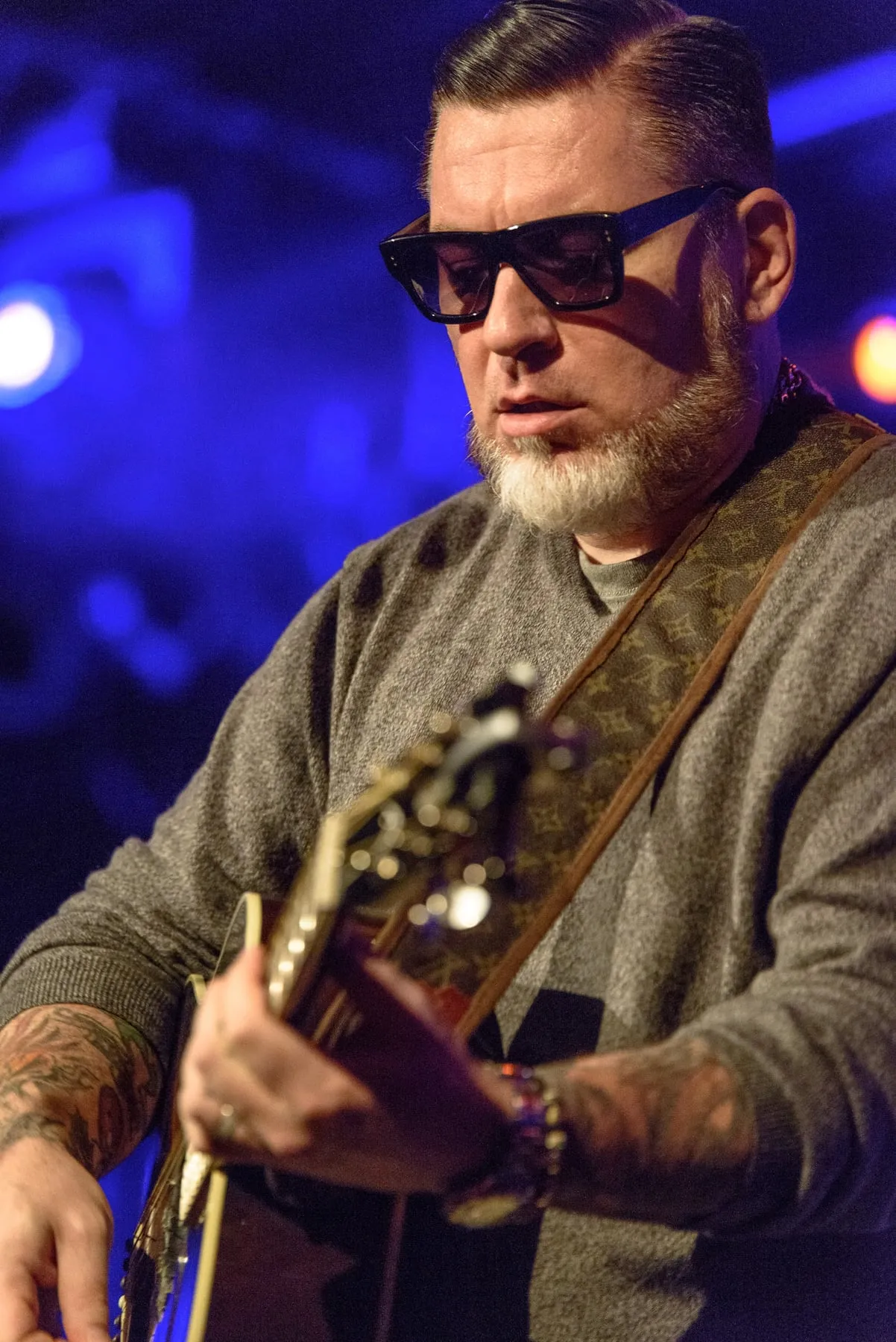
Photo by Pistenwolf , licensed under CC BY-SA 3.0 · Wikimedia Commons
Rank #435
Everlast
From Wikipedia
Erik Francis Schrody, known by his stage names Everlast and Whitey Ford, is an American rapper, singer, and songwriter who was the frontman for hip hop group House of Pain. His breakthrough as a solo artist came in 1998 with his album Whitey Ford Sings the Blues, which blended rock and hip-hop and garnered him his first Grammy Award nomination for the song "What It's Like". The album peaked at number 9 on the Billboard 200 album chart, while the single peaked at number 13 on the Billboard Hot 100 singles chart. As of 2023, they remain his highest mainstream chart positions for an album and single respectively.
Discography & Previews
Browse through and click an album to open and play 30-second previews streamed from Apple Music.


Whitey Ford Sings the Blues
1998 · 16 tracks
- 1 The White Boy Is Back ↗ 0:45
- 2 Money [Dollar Bill] [feat. Sadat X] ↗ 3:15
- 3 Ends ↗ 4:24
- 4 What It's Like ↗ 5:04
- 5 Sen Dog ↗ 0:15
- 6 Tired ↗ 2:22
- 7 Hot to Death ↗ 3:49
- 8 Painkillers ↗ 3:24
- 9 Prince Paul ↗ 0:59
- 10 Praise the Lord ↗ 3:06
- 11 Today (Watch Me Shine) [feat. Bronx Style Bob] [feat. Bronx Style Bob] ↗ 5:02
- 12 Guru ↗ 0:17
- 13 Death Comes Callin' ↗ 4:16
- 14 Funky Beat (feat. Sadat X & Casual) ↗ 4:04
- 15 The Letter ↗ 2:06
- 16 7 Years ↗ 4:05

Eat at Whitey’s
2000 · 13 tracks
- 1 Whitey ↗ 1:35
- 2 Black Jesus ↗ 4:42
- 3 I Can't Move ↗ 3:26
- 4 Black Coffee (feat. Merry Clayton) ↗ 2:57
- 5 Babylon Feeling (feat. Carlos Santana) ↗ 5:12
- 6 Deadly Assassins (feat. B - Real) ↗ 2:44
- 7 Children's Story (feat. Rahzel) ↗ 3:21
- 8 Love for Real (feat. N'dea Davenport) ↗ 4:21
- 9 One and the Same ↗ 5:03
- 10 We're All Gonna Die (feat. Cee - Lo) ↗ 2:20
- 11 Mercy on My Soul (feat. Warren Haynes) ↗ 3:24
- 12 One, Two (feat. Kurupt) ↗ 3:28
- 13 Graves to Dig ↗ 3:24
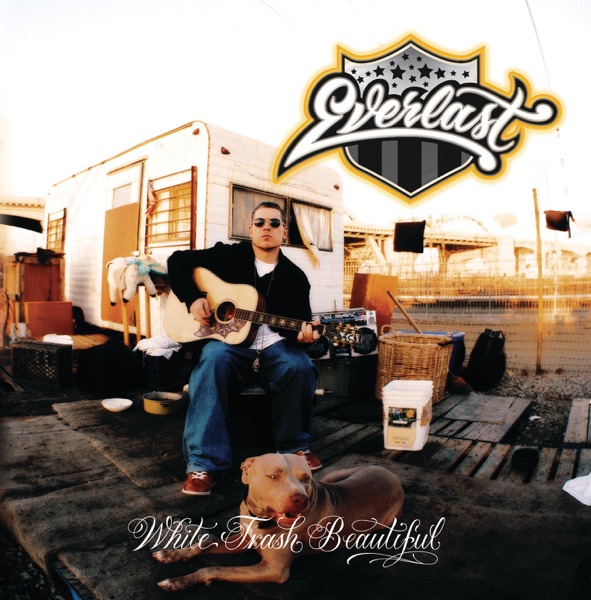
White Trash Beautiful
2004 · 15 tracks
- 1 Blinded by the Sun ↗ 4:08
- 2 Broken ↗ 4:23
- 3 White Trash Beautiful ↗ 4:01
- 4 Sleepin' Alone ↗ 4:07
- 5 The Warning ↗ 3:07
- 6 Angel ↗ 4:40
- 7 This Kind of Lonely ↗ 3:33
- 8 Soul Music ↗ 3:13
- 9 GodWanna ↗ 4:27
- 10 Lonely Road ↗ 3:18
- 11 Sad Girl ↗ 4:10
- 12 Ticking Away ↗ 3:45
- 13 Pain ↗ 4:39
- 14 2 Pieces of Drama ↗ 3:48
- 15 Maybe ↗ 3:14

Love, War, and the Ghost of Whitey Ford
2008 · 16 tracks
- 1 Kill the Emperor ↗ 3:25
- 2 Folsom Prison Blues ↗ 3:27
- 3 Stone in My Hand ↗ 3:33
- 4 Anyone ↗ 4:13
- 5 Die in Yer Arms ↗ 3:40
- 6 Friend ↗ 3:24
- 7 Everyone ↗ 5:38
- 8 Naked ↗ 4:04
- 9 Stay ↗ 4:58
- 10 Letters Home from the Garden of Stone ↗ 4:07
- 11 Tuesday Mornin' ↗ 3:59
- 12 Throw a Stone ↗ 0:29
- 13 Weakness ↗ 5:07
- 14 Dirty ↗ 3:53
- 15 The Ocean ↗ 3:44
- 16 Let It Go ↗ 4:30

Songs of the Ungrateful Living
2011 · 15 tracks
- 1 Long At All ↗ 2:57
- 2 Gone For Good ↗ 3:13
- 3 I Get By ↗ 3:39
- 4 Little Miss America ↗ 3:59
- 5 My House ↗ 3:34
- 6 Long Time ↗ 3:27
- 7 Friday the 13th ↗ 2:31
- 8 The Crown ↗ 3:49
- 9 Sixty-Five Roses ↗ 3:11
- 10 Moneymaker ↗ 3:13
- 11 The Rain ↗ 3:26
- 12 Some of Us Pray ↗ 2:55
- 13 I'll Be There For You ↗ 3:52
- 14 Even God Don't Know ↗ 4:14
- 15 A Change Is Gonna Come ↗ 3:17

More Songs of the Ungrateful Living
2012 · 7 tracks


Whitey Ford’s House of Pain
2018 · 15 tracks
- 1 One of Us ↗ 3:37
- 2 The Culling ↗ 3:14
- 3 It Ain't Easy ↗ 3:18
- 4 The Climb (Interlude) ↗ 0:45
- 5 The Climb ↗ 4:23
- 6 Slow Your Roll (feat. Aloe Blacc) ↗ 3:25
- 7 Smokin & Drinkin ↗ 3:41
- 8 Oooohh (I Don't Need You) [feat. Slug] ↗ 3:30
- 9 Summer Rain (Interlude) ↗ 1:01
- 10 Summer Rain ↗ 3:17
- 11 Don't Complain ↗ 3:36
- 12 Break It Down ↗ 3:32
- 13 Break It Down (Interlude) ↗ 0:48
- 14 HeartBeat ↗ 3:30
- 15 Dream State ↗ 3:08
-
 Forever EverlastingEverlast199011 tracks
 -
 Whitey Ford Sings the BluesEverlast199816 tracks
 -
 Eat at Whitey’sEverlast200013 tracks
 -
 White Trash BeautifulEverlast200415 tracks
 -
 Love, War, and the Ghost of Whitey FordEverlast200816 tracks
 -
 Songs of the Ungrateful LivingEverlast201115 tracks
 -
 More Songs of the Ungrateful LivingEverlast20127 tracks
 -
 The Life AcousticEverlast201312 tracks
 -
 Whitey Ford’s House of PainEverlast201815 tracks
Deep Dive
Overview
Erik Francis Schrody, known professionally as Everlast and Whitey Ford, emerged as one of the defining voices in rap-rock during the 1990s and 2000s. Beginning as the frontman for the hip-hop group House of Pain, Everlast built a solo career that blended hardcore hip-hop with rock instrumentation, blues sensibility, and folk-influenced storytelling. His 1998 solo breakthrough, Whitey Ford Sings the Blues, established him as a major crossover artist and earned him a Grammy Award nomination, cementing his position at the intersection of rap, rock, and blues traditions.
Formation Story
Everlast was born in 1969 in Los Angeles, a city with deep roots in both hip-hop and rock music. He came of age during the formative years of West Coast rap, when the genre was still establishing its identity and aesthetic. Rather than remain confined to a single style, Schrody drew from the city’s eclectic musical heritage—hip-hop’s rhythmic foundation, rock’s instrumentation and raw energy, and blues’s emotional depth. His stage name reflected his ambition and endurance; he was determined to build a career that would outlast trends. Before his solo breakthrough, Everlast gained recognition as the frontman of House of Pain, a group that had already begun experimenting with the fusion of rap and rock elements. This early work provided both a platform and a laboratory for developing the sound he would refine as a solo artist.
Breakthrough Moment
Everlast’s transition to solo stardom came with the 1998 release of Whitey Ford Sings the Blues, an album that announced a dramatic stylistic shift. The record married rap vocals and hip-hop rhythm patterns with electric guitar, harmonica, and blues chord progressions—a formula that had rarely been executed with such commercial success or critical legitimacy. The lead single, “What It’s Like,” became the vehicle for his mainstream breakthrough. The song’s conversational narrative style and its guitar-driven arrangement set it apart from both contemporary rap and rock radio formats. It peaked at number 13 on the Billboard Hot 100, while the album climbed to number 9 on the Billboard 200. The Grammy nomination for “What It’s Like” validated the album’s artistic ambition and signaled that hip-hop and rock audiences were willing to meet in the middle.
Peak Era
The years immediately following Whitey Ford Sings the Blues represented Everlast’s peak mainstream visibility and commercial success. His second solo album, Eat at Whitey’s (2000), continued the rap-rock fusion formula while deepening his exploration of blues and folk traditions. By 2004, with White Trash Beautiful, Everlast had solidified his reputation as a serious songwriter unafraid to tackle personal and social themes within unconventional genre frames. These years saw him working across multiple record labels—Warner Bros. Records and Island Records chief among them—as different projects and partnerships required. His willingness to experiment with acoustic arrangements, as evidenced by The Life Acoustic (2013), showed an artist still engaged with evolving his sound while maintaining core principles of lyrical directness and musical honesty.
Musical Style
Everlast’s sound is fundamentally a conversation between hip-hop and rock, mediated by blues and folk traditions. Rhythmically, his work remains grounded in hip-hop’s percussive attack and syncopation; lyrically, he favors the narrative storytelling and vernacular directness associated with rap. However, where much hip-hop of his era relied on soul samples and drum machines, Everlast’s arrangements featured live electric guitar, harmonica, acoustic instrumentation, and blues-inflected chord changes. His vocal delivery sits somewhere between rap’s rapid-fire flow and rock’s sustained, emotional phrasing—he can snap into rhythmic incantation or shift into a sung melodic line within the same song. The influence of blues tradition runs through his work not as pastiche but as genuine stylistic DNA; harmonica solos and minor-key progressions became recurring signatures. This fusion approach positioned him apart from both pure hip-hop and pure rock camps, creating a space for listeners uncomfortable with genre orthodoxy. Over time, his production choices evolved from the heavier electric arrangements of his 1998–2000 peak to more acoustic and introspective configurations, but the fundamental blend remained constant.
Major Albums
Whitey Ford Sings the Blues (1998)
This breakthrough solo album established the template for Everlast’s career: hip-hop narratives set against rock and blues instrumentation. “What It’s Like” became his signature song, and the album’s fusion approach introduced rap-rock to mainstream radio as a credible artistic statement rather than a novelty.
Eat at Whitey’s (2000)
Following immediately on the success of its predecessor, this album deepened the rap-rock formula while expanding Everlast’s thematic range. It demonstrated that his 1998 breakthrough was not a one-off but a sustainable artistic direction.
White Trash Beautiful (2004)
Released on Island Records, this album found Everlast refining his songwriting craft and exploring more introspective territory. It represents a midpoint in his career where the initial shock of genre-blending had become his established vocabulary.
Love, War, and the Ghost of Whitey Ford (2008)
This album continued Everlast’s exploration of acoustic and stripped-down arrangements, showing an artist committed to expanding beyond the electric guitar-driven sound of his peak years.
Signature Songs
- “What It’s Like” (1998) — His defining crossover hit, a conversational rap-rock narrative that peaked at number 13 on the Billboard Hot 100 and earned a Grammy nomination.
- **“Black Coffee” — A blues-inflected track showcasing his ability to blend rap flow with soulful vocal delivery and traditional blues instrumentation.
- “Today Is the Day” — Representative of his more introspective, rock-oriented work from the 2000s era.
- “What Is Love?” — Demonstrates his capacity for melodic, sung-vocal work within the rap-rock framework.
Influence on Rock
Everlast’s most significant contribution to rock music was proving that rap and rock could merge not as a gimmick but as a legitimate artistic fusion grounded in shared American musical traditions. He arrived at this synthesis from a different angle than many of his contemporaries; rather than grafting rap over rock backings, he integrated blues and folk traditions as the common ground. This approach influenced subsequent generations of artists exploring the boundaries between genres, showing that credibility in both camps was achievable. His success on both rock and rap radio formats—rare for the late 1990s—opened industry and audience acceptance for cross-genre experimentation. The blues-rock-hip-hop triangle he established became a touchstone for artists seeking to escape genre silos.
Legacy
As of 2023, Whitey Ford Sings the Blues remains Everlast’s highest mainstream chart achievement, a testament to the album’s enduring appeal and the specific cultural moment it captured. His position as a bridge between hip-hop and rock communities has secured his place in discussions of 1990s–2000s music history. The consistency of his output—a steady stream of albums from 1990 through 2018, across multiple record labels and evolving production styles—speaks to a career built on artistic persistence rather than hit-dependent visibility. His acoustic recordings, including The Life Acoustic (2013) and his subsequent work, have attracted listeners seeking authenticity and craftsmanship in an era of streaming fragmentation. Everlast remains an active recording and performing artist, and his influence on contemporary rap-rock and genre-blending acts continues to be acknowledged.
Fun Facts
- Everlast holds the stage names Everlast and Whitey Ford, using the latter as a stylistic marker for certain projects and album cycles.
- His 1990 album Forever Everlasting predates his mainstream breakthrough by eight years, showing an artist with deep roots in hip-hop before pivoting toward rap-rock fusion.
- The harmonica became one of his signature instruments, a blues-traditional element that set his sound apart from contemporary hip-hop producers relying exclusively on samples and synths.
- His official website, martyr-inc.com, has remained his digital hub across decades of career evolution, reflecting a commitment to direct artist-to-fan connection independent of social media algorithms.