

Photo by Tibban99 , licensed under CC BY 3.0 · Wikimedia Commons
Rank #302
Gary Moore
From Wikipedia
Robert William Gary Moore was a Northern Irish musician. Over the course of his career, he played in various groups and performed a range of music including blues, blues rock, hard rock, heavy metal and jazz fusion.
Discography & Previews
Browse through and click an album to open and play 30-second previews streamed from Apple Music.
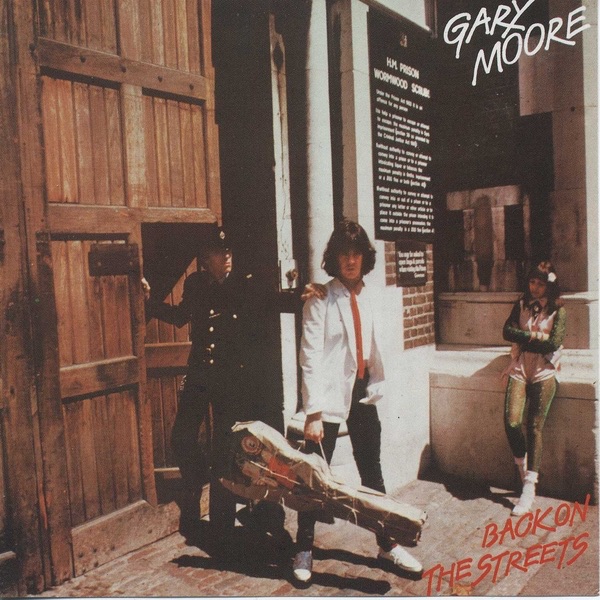
Back on the Streets
1978 · 12 tracks
- 1 Back On the Streets ↗ 4:26
- 2 Don't Believe a Word ↗ 3:54
- 3 Fanatical Fascists ↗ 3:06
- 4 Flight of the Snow Moose ↗ 7:26
- 5 Hurricane ↗ 4:54
- 6 Song for Donna ↗ 5:32
- 7 What Would You Rather Bee or a Wasp ↗ 4:56
- 8 Parisienne Walkways ↗ 3:21
- 9 Track Nine ↗ 5:06
- 10 Spanish Guitar (Phil Lynott Vocal) ↗ 3:55
- 11 Spanish Guitar (Gary Moore Vocal) ↗ 3:56
- 12 Spanish Guitar (Instrumental) ↗ 3:48


Corridors of Power
1982 · 9 tracks


Run for Cover
1985 · 10 tracks
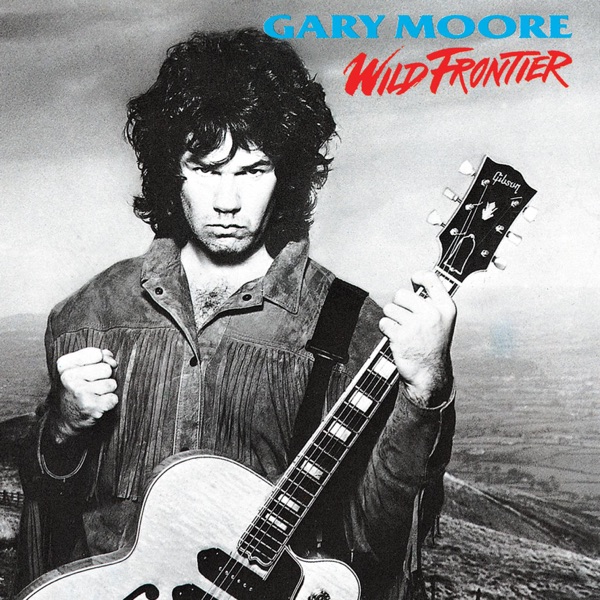
Wild Frontier
1987 · 11 tracks
- 1 Over the Hills and Far Away ↗ 5:21
- 2 Wild Frontier ↗ 4:14
- 3 Take a Little Time ↗ 4:06
- 4 The Loner ↗ 5:54
- 5 Wild Frontier (12" Version) ↗ 6:38
- 6 Friday On My Mind ↗ 4:12
- 7 Strangers In the Darkness ↗ 4:38
- 8 Thunder Rising ↗ 5:43
- 9 Johnny Boy ↗ 3:15
- 10 Over the Hills and Far Away (12" Version) ↗ 7:27
- 11 Crying In the Shadows ↗ 5:01

After the War
1988 · 11 tracks
- 1 Dunluce, Pt. 1 ↗ 1:22
- 2 After the War ↗ 4:17
- 3 Speak for Yourself ↗ 3:43
- 4 Livin' On Dreams ↗ 4:15
- 5 Led Clones (feat. Ozzy Osbourne) ↗ 6:09
- 6 The Messiah Will Come Again ↗ 7:32
- 7 Running from the Storm ↗ 4:46
- 8 This Thing Called Love ↗ 3:23
- 9 Ready for Love ↗ 5:43
- 10 Blood of Emeralds ↗ 8:20
- 11 Dunluce, Pt. 2 ↗ 3:49

Still Got the Blues
1990 · 12 tracks
- 1 Moving On ↗ 2:40
- 2 Oh Pretty Woman ↗ 4:25
- 3 Walking By Myself ↗ 2:56
- 4 Still Got the Blues ↗ 6:11
- 5 Texas Strut ↗ 4:52
- 6 Too Tired ↗ 2:50
- 7 King of the Blues ↗ 4:36
- 8 As the Years Go Passing By ↗ 7:44
- 9 Midnight Blues ↗ 4:58
- 10 That Kind of Woman ↗ 4:30
- 11 All Your Love ↗ 3:41
- 12 Stop Messin' Around ↗ 3:53
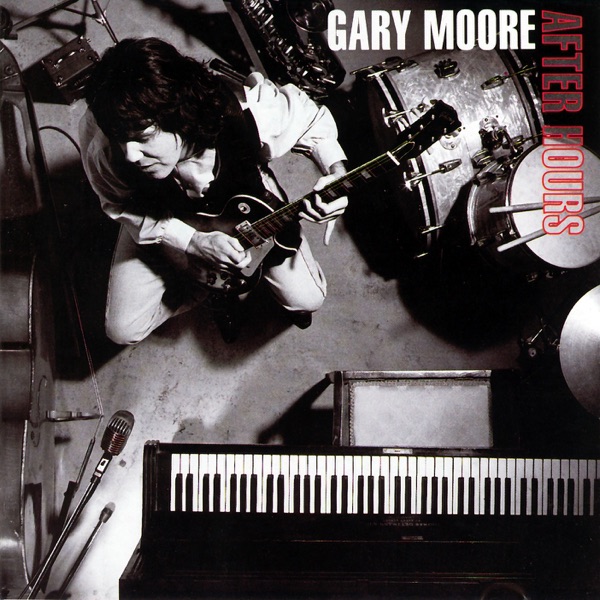
After Hours
1992 · 11 tracks
- 1 Cold Day In Hell ↗ 4:27
- 2 Don't You Lie to Me (I Get Evil) ↗ 2:30
- 3 Story of the Blues ↗ 6:41
- 4 Since I Met You Baby ↗ 2:53
- 5 Separate Ways ↗ 4:55
- 6 Only Fool In Town ↗ 3:55
- 7 Key to Love ↗ 1:59
- 8 Jumpin' at Shadows ↗ 4:22
- 9 The Blues Is Alright ↗ 5:45
- 10 The Hurt Inside ↗ 5:54
- 11 Nothing's the Same ↗ 5:03

Blues for Greeny
1995 · 11 tracks

Dark Days in Paradise
1997 · 11 tracks
- 1 One Good Reason ↗ 3:06
- 2 Cold Wind Blows ↗ 5:30
- 3 I Have Found My Love In You ↗ 4:56
- 4 One Fine Day ↗ 5:00
- 5 Like Angels ↗ 7:32
- 6 What Are We Here For? ↗ 5:46
- 7 Always There for You ↗ 4:35
- 8 Afraid of Tomorrow ↗ 6:44
- 9 Where Did We Go Wrong? ↗ 6:35
- 10 Business As Usual ↗ 13:37
- 11 Dark Days In Paradise ↗ 3:34

A Different Beat
1999 · 11 tracks


Scars
2002 · 10 tracks
- 1 When the Sun Goes Down ↗ 4:18
- 2 Rectify ↗ 4:20
- 3 Wasn't Born In Chicago ↗ 4:34
- 4 Stand Up ↗ 4:09
- 5 Just Can't Let You Go ↗ 7:39
- 6 My Baby (She's So Good to Me) ↗ 3:25
- 7 World of Confusion ↗ 4:20
- 8 Ball and Chain ↗ 12:53
- 9 World Keep Turnin' Round ↗ 4:10
- 10 Who Knows (What Tomorrow May Bring)? ↗ 9:49


Old New Ballads Blues
2006 · 10 tracks
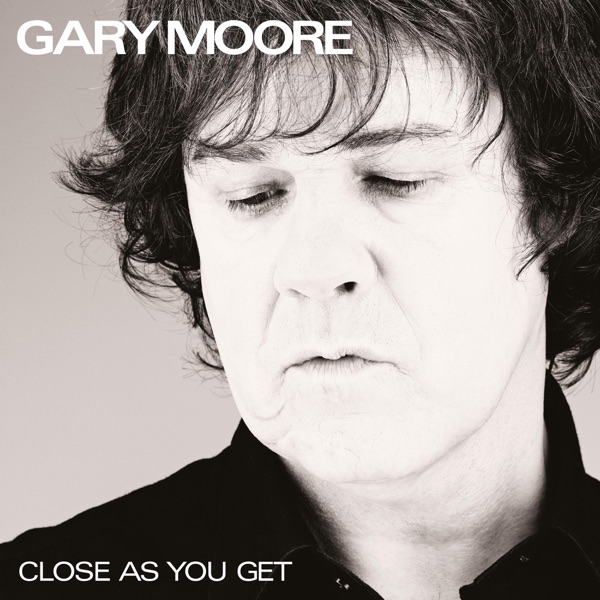
Close as You Get
2007 · 11 tracks

Bad for You Baby
2008 · 11 tracks
- 1 Bad for You Baby ↗ 2:54
- 2 Down the Line ↗ 2:56
- 3 Umbrella Man ↗ 3:39
- 4 Holding On ↗ 3:47
- 5 Walkin' Thru the Park ↗ 3:00
- 6 I Love You More Than You'll Ever Know ↗ 10:37
- 7 Mojo Boogie ↗ 3:33
- 8 Someday Baby ↗ 3:35
- 9 Did You Ever Feel Lonely? ↗ 6:11
- 10 Preacher Man Blues ↗ 5:59
- 11 Trouble Ain't Far Behind ↗ 9:39

-
 Back on the StreetsGary Moore197812 tracks
 -
 G-ForceGary Moore19809 tracks
 -
 Corridors of PowerGary Moore19829 tracks
 -
 Victims of the FutureGary Moore19838 tracks
 -
 Dirty FingersGary Moore198410 tracks
 -
 Run for CoverGary Moore198510 tracks
 -
 Wild FrontierGary Moore198711 tracks
 -
 After the WarGary Moore198811 tracks
 -
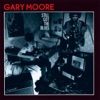 Still Got the BluesGary Moore199012 tracks
 -
 After HoursGary Moore199211 tracks
 -
 Blues for GreenyGary Moore199511 tracks
 -
 Dark Days in ParadiseGary Moore199711 tracks
 -
 A Different BeatGary Moore199911 tracks
 -
 Back to the BluesGary Moore200110 tracks
 -
 ScarsGary Moore200210 tracks
 -
 Power of the BluesGary Moore200410 tracks
 -
 Old New Ballads BluesGary Moore200610 tracks
 -
 Close as You GetGary Moore200711 tracks
 -
 Bad for You BabyGary Moore200811 tracks
 -
 How Blue Can You GetGary Moore20218 tracks
Deep Dive
Overview
Robert William Gary Moore was a Northern Irish musician whose five-decade career spanned blues, blues rock, hard rock, heavy metal, and jazz fusion. Born in 1952, Moore built a reputation as a versatile and technically accomplished guitarist whose work ranged from the aggressive posturing of 1980s hard rock to deeply felt acoustic and electric blues. His trajectory—from his emergence as a young virtuoso to his eventual embrace of blues as his primary language—mirrors a larger movement in rock music toward the reclamation and reinterpretation of its foundational genres.
Formation Story
Gary Moore was born in Belfast, Northern Ireland, and came of age during a period when rock music offered an escape route from the political and social turbulence of his homeland. Like many British and Irish guitarists of his generation, he was drawn to the blues as both a technical discipline and an emotional vocabulary. His early career saw him moving between various groups and musical contexts, an apprenticeship that exposed him to the breadth of rock’s inheritance—from traditional blues to the heavier and more experimental reaches of rock. This willingness to move between genres and collaborators would define much of his working life, as he pursued mastery across multiple idioms rather than settling into a single identity.
Breakthrough Moment
Moore’s initial recordings under Virgin Records began with Back on the Streets in 1978, establishing his presence as a recording artist. The early 1980s, however, marked his emergence as a notable figure in hard rock and heavy metal circles. Albums like G-Force (1980), Corridors of Power (1982), and Victims of the Future (1983) positioned him within the harder end of rock’s spectrum. These records demonstrated that Moore possessed both the technical facility and the creative ambition to compete with the decade’s most prominent guitarists, blending heavy riffs with his growing interest in blues-inflected soloing.
Peak Era
The late 1980s and early 1990s represented Moore’s most commercially successful and artistically significant period. Albums such as Wild Frontier (1987) and After the War (1988) continued his work in hard rock territory, but 1990 marked a watershed moment with Still Got the Blues. This album signaled a decisive shift in Moore’s artistic priorities—a wholesale return to blues as his primary language. That pivot, sustained across the remainder of his career through releases including After Hours (1992), Blues for Greeny (1995), Dark Days in Paradise (1997), A Different Beat (1999), and Back to the Blues (2001), positioned Moore as a serious blues interpreter and revitalist. From the early 1990s onward, blues became his home base.
Musical Style
Gary Moore was defined above all by his guitar playing—a voice that conveyed both technical precision and emotional directness. Throughout his career, his tone ranged from the sharp, high-gain textures of 1980s hard rock to the warmer, more nuanced blues tones of his later work. His soloing vocabulary drew deeply from American blues traditions while maintaining a distinctly rock sensibility; he favored fluid, singing lines over purely mechanical display. As he aged and deepened his commitment to blues, his approach became less about velocity and more about phrasing, dynamics, and the subtle communication of feeling through sustained notes and carefully chosen bends. Jazz fusion influences surfaced periodically in his work, adding harmonic sophistication and a willingness to venture beyond conventional song structures. His records spanning the late 1990s and 2000s—including Beer, Beards and Moore (2002), Scars (2002), Power of the Blues (2004), Old New Ballads Blues (2006), Close as You Get (2007), and Bad for You Baby (2008)—showcased a musician entirely comfortable in blues idiom, whether working acoustic or electric, traditional or reimagined.
Major Albums
Still Got the Blues (1990)
The decisive turning point in Moore’s career, marking his full embrace of blues as his primary creative language and establishing the template for his work over the next two decades.
After Hours (1992)
A companion to Still Got the Blues, deepening his exploration of blues standards and original compositions in a more intimate, often acoustic setting.
Blues for Greeny (1995)
A tribute album demonstrating Moore’s reverence for blues tradition while asserting his own voice as an interpreter and improviser.
Back to the Blues (2001)
A consolidation of Moore’s mature blues vision, combining original compositions with traditional material and showcasing his refined approach to both rhythm and lead guitar work.
Power of the Blues (2004)
A late-career statement that reinforced Moore’s identity as a blues-committed artist, balancing accessibility with musical substance.
Signature Songs
- “Walk on By” — A blues standard reinterpreted through Moore’s guitar-driven lens, demonstrating his ability to honor tradition while making it his own.
- “Still Got the Blues” — The title track that announced his pivot to blues and became his most enduring calling card across his final two decades.
- “Oh Pretty Woman” — His take on a blues perennial, showcasing his phrasing and tone.
- “The Lemon Song” — A traditional blues piece given Moore’s interpretive stamp, highlighting his respect for the form.
Influence on Rock
Gary Moore’s career trajectory—from hard rock journeyman to committed blues revivalist—embodied an important late-20th-century movement: the resurgence of blues as the central language of serious rock guitarists. His willingness to move from the high-volume, heavily amplified world of 1980s rock to acoustic and electric blues signaled that commercial viability was not incompatible with artistic depth. Moore demonstrated that blues was not a museum piece but a living, evolving tradition capable of absorbing rock’s technical innovations and emotional directness. His body of work influenced younger blues-rock players who similarly sought to balance technical facility with emotional authenticity. His example—that a rock musician could transition credibly from hard rock to blues without loss of credibility—helped legitimize blues study among guitarists in the post-1980s era.
Legacy
Gary Moore died in 2011, having recorded and performed continuously until the end of his life. His recorded legacy spans from 1978 through his final sessions, with a total of more than twenty studio albums charting the evolution from hard rock to blues. The posthumous album A Spoonful of Bruce, Baker & Moore (2011) and the later reissue How Blue Can You Get (2021) ensured his discography remained in circulation. Moore is remembered as a guitarist of uncommon versatility and a serious student of blues tradition who never surrendered his rock musician’s sensibility. His records remain widely available and continue to find audiences among blues-rock enthusiasts and guitarists seeking models of how to balance technical mastery with emotional authenticity.
Fun Facts
- Moore worked extensively with Virgin Records across the span of his recording career, giving him one of rock’s longest label relationships.
- His discography includes the collaboratively titled A Spoonful of Bruce, Baker & Moore (2011), reflecting his place within a lineage of blues and rock virtuosity.
- Late in his career, Moore released Beer, Beards and Moore (2002), a title that hinted at his approach to blues as a lived, rather than purely academic, tradition.
- Moore’s 1995 album Blues for Greeny served as a direct tribute to his blues predecessors, documenting his deep study of the tradition he chose to inhabit.