
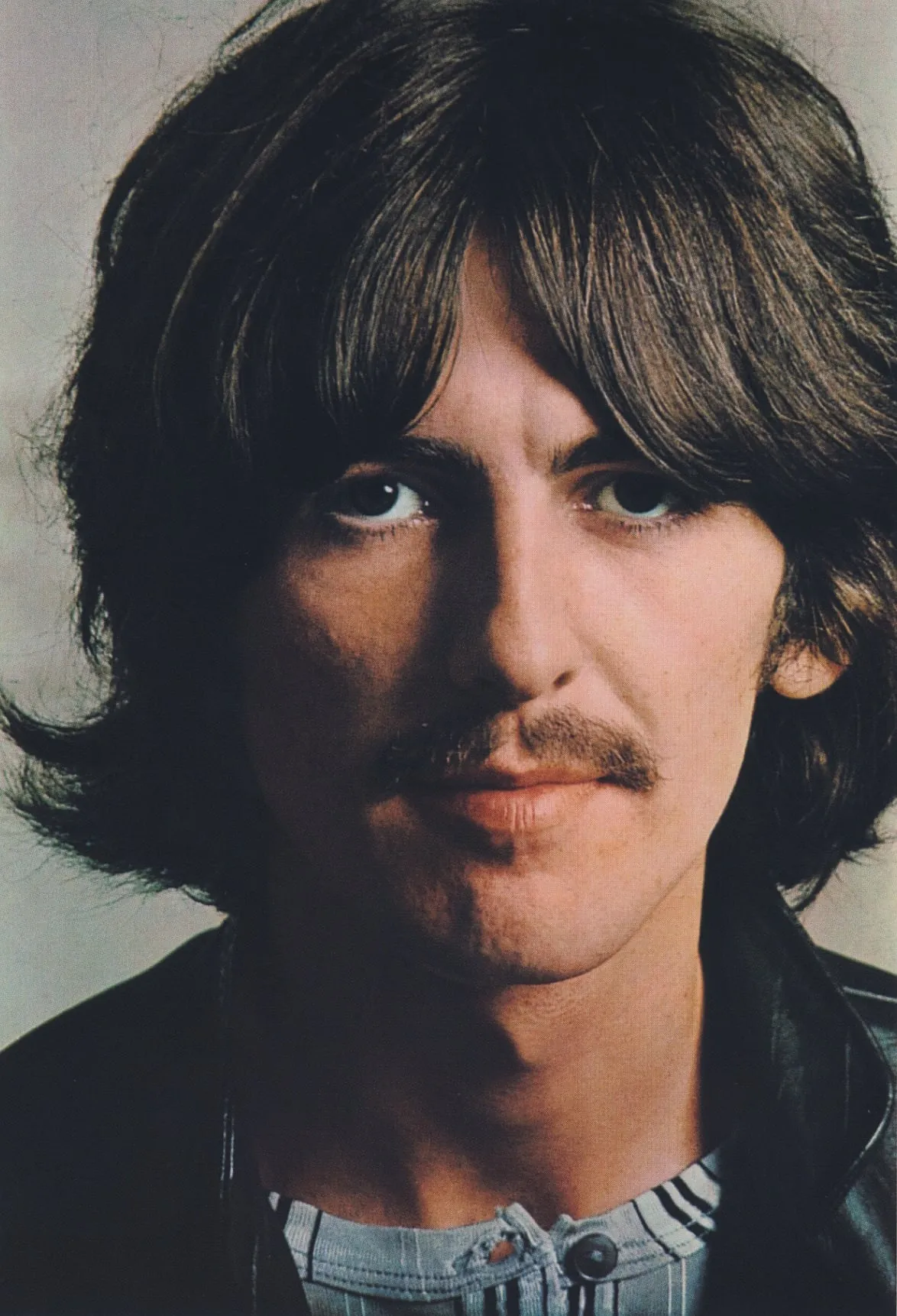
Photo by John Kelly , licensed under Public domain · Wikimedia Commons
Rank #189
George Harrison
From Wikipedia
George Harrison was an English musician who achieved international fame as the lead guitarist of the Beatles. Known as "the quiet Beatle", Harrison played a significant role in shaping the band's musical direction and established a successful solo career, particularly through his interest in non-Western musical influences.
Discography & Previews
Browse through and click an album to open and play 30-second previews streamed from Apple Music.

Electronic Sound
1969 · 2 tracks

All Things Must Pass
1970 · 23 tracks
- 1 I'd Have You Anytime (2020 Mix) ↗ 2:58
- 1 Beware of Darkness (2020 Mix) ↗ 3:52
- 2 My Sweet Lord (2020 Mix) ↗ 4:41
- 2 Apple Scruffs (2020 Mix) ↗ 3:07
- 3 Wah-Wah (2020 Mix) ↗ 5:38
- 3 Ballad of Sir Frankie Crisp (Let It Roll) [2020 Mix] ↗ 3:48
- 4 Isn't It a Pity (Version 1) [2020 Mix] ↗ 7:11
- 4 Awaiting on You All (2020 Mix) ↗ 2:48
- 5 What Is Life (2020 Mix) ↗ 4:24
- 5 All Things Must Pass (2020 Mix) ↗ 3:47
- 6 If Not for You (2020 Mix) ↗ 3:31
- 6 I Dig Love (2020 Mix) ↗ 4:57
- 7 Behind That Locked Door (2020 Mix) ↗ 3:07
- 7 Art of Dying (2020 Mix) ↗ 3:39
- 8 Let It Down (2020 Mix) ↗ 4:58
- 8 Isn't It a Pity (Version 2) [2020 Mix] ↗ 4:48
- 9 Run of the Mill (2020 Mix) ↗ 2:53
- 9 Hear Me Lord (2020 Mix) ↗ 5:50
- 10 Out of the Blue (2020 Remaster) ↗ 11:16
- 11 It's Johnny's Birthday (2020 Remaster) ↗ 0:50
- 12 Plug Me In (2020 Remaster) ↗ 3:19
- 13 I Remember Jeep (2020 Remaster) ↗ 8:08
- 14 Thanks for the Pepperoni (2020 Remaster) ↗ 5:33

Living in the Material World
1973 · 14 tracks
- 1 Give Me Love (Give Me Peace on Earth) ↗ 3:36
- 2 Sue Me, Sue You Blues (2014 Remaster) ↗ 4:46
- 3 The Light That Has Lighted the World (2014 Remaster) ↗ 3:31
- 4 Don't Let Me Wait Too Long (2014 Remaster) ↗ 2:57
- 5 Who Can See It (2014 Remaster) ↗ 3:51
- 6 Living in the Material World (2014 Remaster) ↗ 5:30
- 7 The Lord Loves the One (That Loves the Lord) ↗ 4:34
- 8 Be Here Now (2014 Remaster) ↗ 4:10
- 9 Try Some Buy Some (2014 Remaster) ↗ 4:08
- 10 The Day the World Gets 'Round (2014 Remaster) ↗ 2:53
- 11 That Is All (2014 Remaster) ↗ 3:44
- 12 Deep Blue (2014 Remaster) ↗ 3:45
- 13 Miss O'Dell (2014 Remaster) ↗ 2:32
- 14 Bangla Desh (2014 Remaster) ↗ 3:57
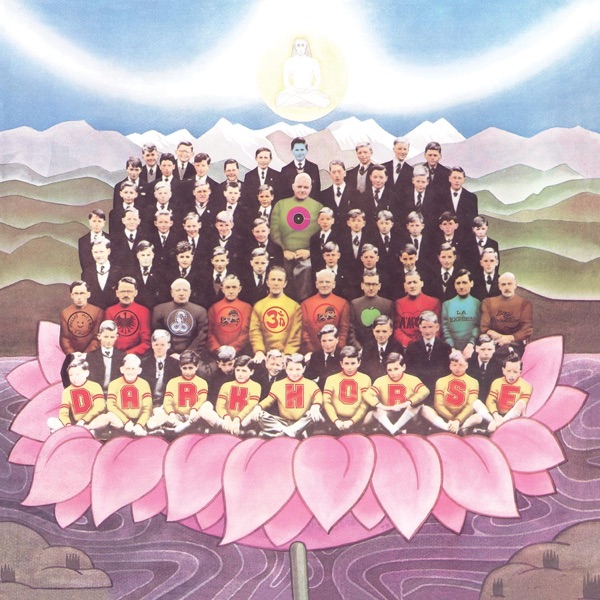
Dark Horse
1974 · 11 tracks
- 1 Hari's on Tour (Express) ↗ 4:43
- 2 Simply Shady ↗ 4:38
- 3 So Sad ↗ 5:00
- 4 Bye Bye Love ↗ 4:07
- 5 Māya Love ↗ 4:23
- 6 Ding Dong, Ding Dong ↗ 3:41
- 7 Dark Horse ↗ 3:54
- 8 Far East Man ↗ 5:52
- 9 It Is 'He' (Jai Sri Krishna) ↗ 4:52
- 10 I Don't Care Anymore ↗ 2:44
- 11 Dark Horse (Early Take) [Bonus Track] ↗ 4:25

Extra Texture (Read All About It)
1975 · 11 tracks
- 1 You (2014 Remaster) ↗ 3:44
- 2 The Answer's at the End (2014 Remaster) ↗ 5:33
- 3 This Guitar (Can't Keep from Crying) ↗ 4:13
- 4 Ooh Baby (You Know That I Love You) ↗ 4:00
- 5 World of Stone (2014 Remaster) ↗ 4:44
- 6 A Bit More of You (2014 Remaster) ↗ 0:45
- 7 Can't Stop Thinking About You (2014 Remaster) ↗ 4:33
- 8 Tired of Midnight Blue (2014 Remaster) ↗ 4:53
- 9 Grey Cloudy Lies (2014 Remaster) ↗ 3:43
- 10 His Name Is Legs (Ladies and Gentleman) ↗ 5:51
- 11 This Guitar (Can't Keep from Crying) [Platinum Weird Version] ↗ 3:55

Thirty Three & 1/ॐ
1976 · 12 tracks
- 1 Woman Don't You Cry for Me (2004 Remaster) ↗ 3:20
- 2 Dear One (2004 Remaster) ↗ 5:08
- 3 Beautiful Girl (2004 Remaster) ↗ 3:42
- 4 This Song (2004 Remaster) ↗ 4:14
- 5 See Yourself (2004 Remaster) ↗ 2:52
- 6 It's What You Value (2004 Remaster) ↗ 5:09
- 7 True Love (2004 Remaster) ↗ 2:45
- 8 Pure Smokey (2004 Remaster) ↗ 3:56
- 9 Crackerbox Palace (2004 Remaster) ↗ 3:58
- 10 Learning How to Love You (2004 Remaster) ↗ 4:15
- 11 Tears of the World (2004 Remaster) ↗ 4:04
- 12 Learning How to Love You (Early Mix) ↗ 4:13
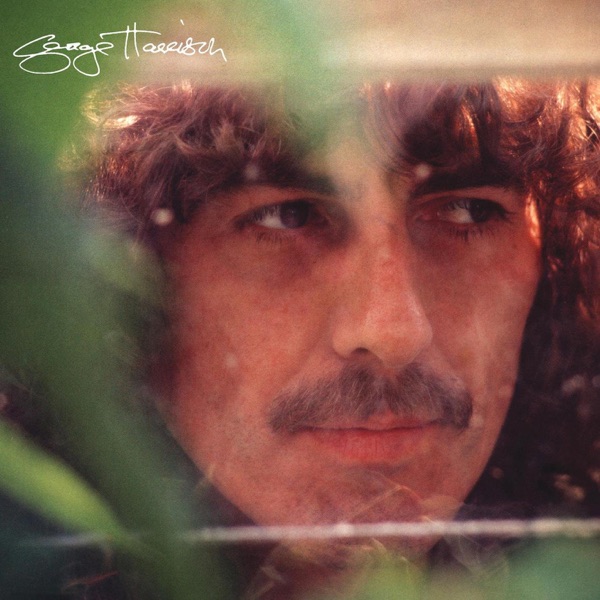
George Harrison
1979 · 12 tracks
- 1 Love Comes to Everyone (2004 Remaster) ↗ 4:36
- 2 Not Guilty (2004 Remaster) ↗ 3:35
- 3 Here Comes the Moon (2004 Remaster) ↗ 4:50
- 4 Soft-Hearted Hana (2004 Remaster) ↗ 4:04
- 5 Blow Away (2004 Remaster) ↗ 4:01
- 6 Faster (2004 Remaster) ↗ 4:48
- 7 Dark Sweet Lady (2004 Remaster) ↗ 3:22
- 8 Your Love Is Forever (2004 Remaster) ↗ 3:48
- 9 Soft Touch (2004 Remaster) ↗ 4:00
- 10 If You Believe (2004 Remaster) ↗ 2:57
- 11 Here Comes the Moon (Demo Version) [2004 Mix] ↗ 3:40
- 12 Blow Away (Demo) ↗ 3:05

Somewhere in England
1981 · 12 tracks
- 1 Blood from a Clone (2004 Remaster) ↗ 4:04
- 2 Unconsciousness Rules (2004 Remaster) ↗ 3:37
- 3 Life Itself (2004 Remaster) ↗ 4:27
- 4 All Those Years Ago (2004 Remaster) ↗ 3:47
- 5 Baltimore Oriole (2004 Remaster) ↗ 3:59
- 6 Teardrops (2004 Remaster) ↗ 4:10
- 7 That Which I Have Lost (2004 Remaster) ↗ 3:47
- 8 Writing's on the Wall (2004 Remaster) ↗ 4:02
- 9 Hong Kong Blues (2004 Remaster) ↗ 2:56
- 10 Save the World (2004 Remaster) ↗ 5:01
- 11 Save the World (Demo Version) [2004 Remaster] ↗ 4:32
- 12 Flying Hour ↗ 4:35

Gone Troppo
1982 · 11 tracks
- 1 Wake Up My Love (2004 Remaster) ↗ 3:36
- 2 That's the Way It Goes (2004 Remaster) ↗ 3:38
- 3 I Really Love You (2004 Remaster) ↗ 2:57
- 4 Greece (2004 Remaster) ↗ 4:03
- 5 Gone Troppo (2004 Remaster) ↗ 4:27
- 6 Mystical One (2004 Remaster) ↗ 3:46
- 7 Unknown Delight (2004 Remaster) ↗ 4:18
- 8 Baby Don't Run Away (2004 Remaster) ↗ 4:05
- 9 Dream Away (2004 Remaster) ↗ 4:32
- 10 Circles (2004 Remaster) ↗ 3:48
- 11 Mystical One (Demo Version) ↗ 6:02
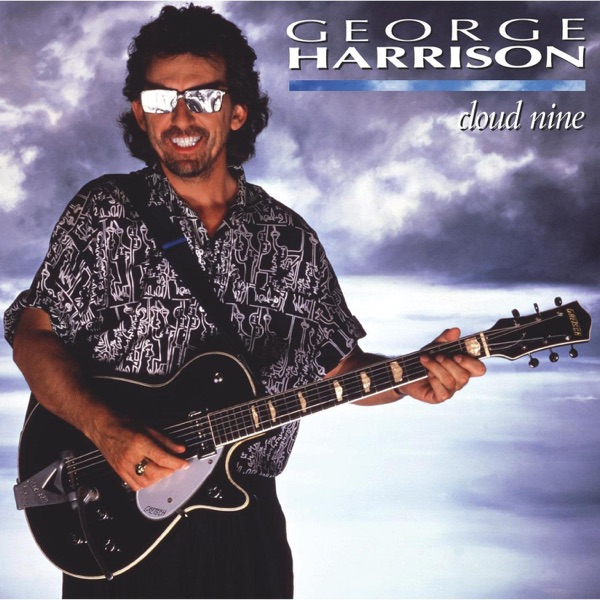
Cloud Nine
1987 · 14 tracks
- 1 Cloud Nine (2004 Remaster) ↗ 3:17
- 2 That's What It Takes (2004 Remaster) ↗ 4:01
- 3 Fish on the Sand (2004 Remaster) ↗ 3:24
- 4 Just for Today (2004 Remaster) ↗ 4:06
- 5 This Is Love (2004 Remaster) ↗ 3:49
- 6 When We Was Fab (2004 Remaster) ↗ 4:00
- 7 Devil's Radio (2004 Remaster) ↗ 3:54
- 8 Someplace Else (2004 Remaster) ↗ 3:53
- 9 Wreck of the Hesperus (2004 Remaster) ↗ 3:34
- 10 Breath Away from Heaven (2004 Remaster) ↗ 3:36
- 11 Got My Mind Set on You (2004 Remaster) ↗ 3:55
- 12 Shanghai Surprise (2004 Remaster) ↗ 5:09
- 13 Zig Zag (2004 Remaster) ↗ 2:47
- 14 Got My Mind Set on You (Extended Version) ↗ 5:17

Brainwashed
2002 · 12 tracks
- 1 Any Road ↗ 3:52
- 2 P2 Vatican Blues (Last Saturday Night) ↗ 2:38
- 3 Pisces Fish ↗ 4:53
- 4 Looking for My Life ↗ 3:49
- 5 Rising Sun ↗ 5:27
- 6 Marwa Blues ↗ 3:42
- 7 Stuck Inside a Cloud ↗ 4:05
- 8 Run So Far ↗ 4:06
- 9 Never Get Over You ↗ 3:26
- 10 Between the Devil and the Deep Blue Sea ↗ 2:35
- 11 Rocking Chair in Hawaii ↗ 3:07
- 12 Brainwashed ↗ 6:08
-
 Electronic SoundGeorge Harrison19692 tracks
 -
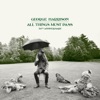 All Things Must PassGeorge Harrison197023 tracks
 -
 Living in the Material WorldGeorge Harrison197314 tracks
 -
 Dark HorseGeorge Harrison197411 tracks
 -
 Extra Texture (Read All About It)George Harrison197511 tracks
 -
 Thirty Three & 1/ॐGeorge Harrison197612 tracks
 -
 George HarrisonGeorge Harrison197912 tracks
 -
 Somewhere in EnglandGeorge Harrison198112 tracks
 -
 Gone TroppoGeorge Harrison198211 tracks
 -
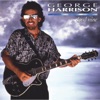 Cloud NineGeorge Harrison198714 tracks
 -
 BrainwashedGeorge Harrison200212 tracks
Deep Dive
Overview
George Harrison stands as one of rock music’s most consequential musicians, a guitarist and songwriter whose innovations within the Beatles fundamentally altered the course of popular music in the 1960s. As a solo artist from 1969 onward, he pursued a deeply personal vision grounded in non-Western musical traditions, particularly Indian classical music, while maintaining command of rock’s emotional and structural language. Known as “the quiet Beatle,” Harrison proved in his solo work that his quietude masked an adventurous and uncompromising artistic temperament.
Formation Story
George Harrison was born in Liverpool, England, in 1943, arriving in a city already transformed by American rock and roll broadcasts. He came of age during the skiffle craze of the mid-1950s and the British Invasion’s formative moment. Harrison’s path into rock began young; by his late teens, he had already developed the technical mastery on lead guitar that would distinguish him among his peers. His earliest professional work landed him in the Beatles, where he functioned not merely as an accompanist but as a creative force shaping the band’s harmonic palette and instrumental textures. In that role, Harrison pursued increasingly sophisticated musical directions—incorporating Indian classical instruments and compositional approaches into rock arrangements—while remaining, publicly at least, less visible than his songwriting bandmates John Lennon and Paul McCartney.
Breakthrough Moment
Harrison’s turn toward a full solo career crystallized in the late 1960s, as the Beatles neared dissolution. His first solo album, Electronic Sound (1969), was an experimental venture into synthesizer textures and ambient soundscapes, a modest but decisive statement of independence. It was the double album All Things Must Pass (1970) that confirmed him as a major solo artist in his own right. Arriving in the wake of the Beatles’ breakup, the album showcased Harrison’s songwriting maturity and his ability to orchestrate large-scale rock and pop arrangements. The record was both a critical and commercial success, establishing him as a significant figure beyond the shadow of his former band and demonstrating that his compositional voice, honed but constrained within the Beatles, had been waiting for full expression.
Peak Era
The early 1970s represented Harrison’s most creatively fertile period as a solo artist. Living in the Material World (1973) deepened his exploration of spiritual and philosophical themes, maintaining the melodic sophistication and production ambition of All Things Must Pass while pushing toward more introspective terrain. These albums marked a coherent artistic statement: Harrison was constructing a body of work that took rock music’s technical and emotional resources and directed them toward questions of meaning, transcendence, and the individual’s place within both material and spiritual worlds. The albums that followed—Dark Horse (1974) and Extra Texture (Read All About It) (1975)—continued to sell substantially and maintain his profile as a thinking artist, even as the restless innovation of the early 1970s gave way to a more measured exploration of familiar ground.
Musical Style
Harrison’s sound as a solo artist synthesized multiple traditions into a recognizable whole. His lead guitar work retained the clarity and melodic sensibility he had developed in the Beatles, but his solo work placed greater emphasis on orchestration and arrangement, often enlisting producers and musicians to flesh out his visions in lush, detailed soundscapes. The influence of Indian classical music—raga forms, the sitar and tabla traditions—permeated his harmonic and rhythmic thinking. His voice, never conventionally powerful, carried an intimate, almost confessional quality in his recordings, suited to the introspective lyrical content that dominated much of his work. Stylistically, his solo output moved between psychedelic rock, folk rock, and world music fusions, with excursions into pop and more straightforward rock arrangements on later albums like Cloud Nine (1987). Throughout, Harrison maintained the Beatles-era habit of blending complex melodic writing with sophisticated studio production, creating records that functioned both as songs and as carefully engineered sonic objects.
Major Albums
All Things Must Pass (1970)
Harrison’s landmark solo debut established him as a major songwriter and artist. The double album’s scope, ambition, and melodic wealth—coupled with Phil Spector’s grandiose production—made it both a critical and commercial triumph, selling millions and proving that his songwriting voice had been substantially sidelined within the Beatles.
Living in the Material World (1973)
This album deepened Harrison’s spiritual and philosophical preoccupations while maintaining melodic sophistication and production ambition. It demonstrated that his artistic vision had not been a one-album phenomenon but a sustained creative direction.
Cloud Nine (1987)
After a period of relative quiet in the studio, Harrison returned with an album produced by Jeff Lynne that merged his songwriting with contemporary 1980s production sensibilities. The record charted a path between his established identity and the sound world of his moment.
Thirty Three & 1/ॐ (1976)
Released amid a busy touring schedule, this album showcased Harrison’s continued engagement with non-Western musical influences and his willingness to experiment with different production and arrangement approaches.
Signature Songs
- “My Sweet Lord”—The spiritual meditation and devotional tone became Harrison’s calling card, a song that balanced commercial accessibility with genuine philosophical inquiry.
- “Here Comes the Sun”—Written and recorded during the Beatles era but exemplifying the melodic gifts he brought to his solo work’s lyrical and harmonic sophistication.
- “Isn’t It a Pity”—A showcase for Harrison’s emotional depth as a songwriter and his ability to construct elaborate arrangements around simple melodic and harmonic ideas.
- “While My Guitar Gently Weeps”—Another Beatles-era composition that forecast the introspective, technically sophisticated approach dominating his solo work.
Influence on Rock
Harrison’s integration of Indian classical music into a rock and pop context opened pathways for subsequent generations of musicians. His willingness to pursue non-Western musical traditions as a serious artistic pursuit—not as exoticism or novelty—established a template for world music fusion that others would follow. More broadly, his solo work demonstrated that the Beatles’ shadow could be escaped; that a member of that band, freed from its collaborative constraints and democratic song-selection process, could build a substantial independent artistic vision. His guitarwork—spare yet melodically inventive, supportive yet distinctive—influenced rock musicians who valued texture and instrumental voice over virtuosic display. The introspective, spiritually inflected songwriting he pioneered shaped the singer-songwriter tradition that emerged from the 1970s onward.
Legacy
George Harrison died in 2001, but his influence on popular music has only grown in retrospect. His solo catalogue remains in constant circulation on streaming platforms and in physical formats; All Things Must Pass especially has been reassessed by each generation as a work of enduring sophistication and emotional power. His role in the Beatles is now fully contextualized—no longer the “quiet Beatle” playing a subsidiary role, but a major force in shaping that band’s harmonic language and its openness to non-Western musical sources. Museum exhibitions and documentary projects have continued to elaborate his life and work, recognizing in him not an appendage to the Beatles story but a major figure in twentieth-century popular music in his own right. His records remain reference points for musicians interested in bridging popular and world music traditions.
Fun Facts
- Harrison’s sustained exploration of Indian classical music was introduced to him by a sitar encounter during Beatles film work in India in the mid-1960s, beginning a lifelong study of raga and Indian musical philosophy.
- His partnership with producer Phil Spector on All Things Must Pass brought Spector’s Wall of Sound production philosophy into the 1970s, marking one of the era’s most significant producer-artist collaborations.
- The album Thirty Three & 1/ॐ included a Om symbol in its title, a direct spiritual and musical statement of Harrison’s engagement with Eastern religious and musical traditions.
- After his death in 2001, posthumous albums including Brainwashed (2002) were assembled from archived recordings and unreleased material, ensuring that previously unavailable work would eventually reach audiences.