
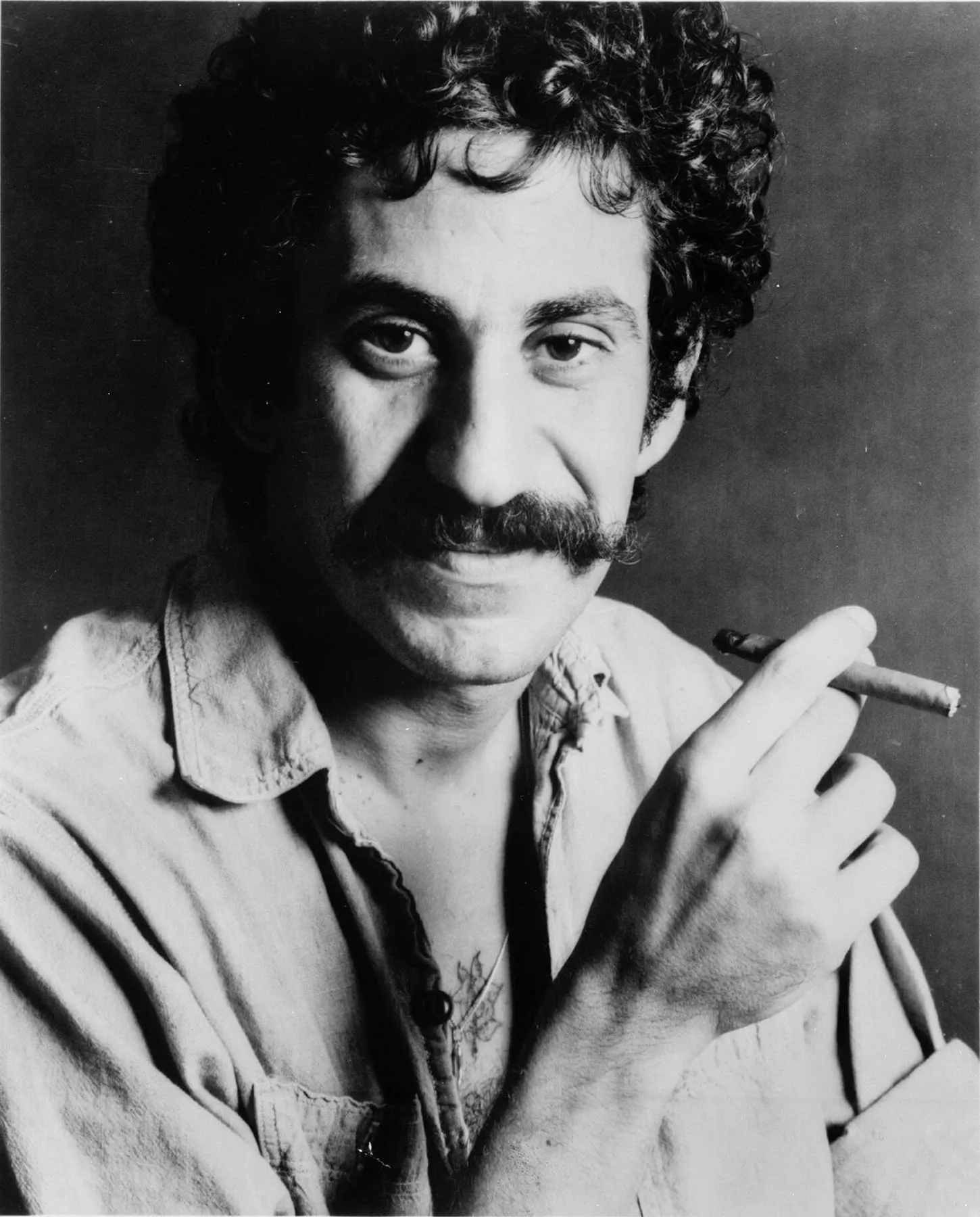
Photo by ABC Records , licensed under Public domain · Wikimedia Commons
Rank #181
Jim Croce
From Wikipedia
James Joseph Croce was an American folk and rock singer-songwriter. Between 1966 and 1973, he released five studio albums and numerous singles. During this period, Croce took a series of odd jobs to pay bills while he continued to write, record, and perform concerts. After forming a partnership with the songwriter and guitarist Maury Muehleisen in the early 1970s, Croce's fortunes turned. His breakthrough came in 1972, when his third album, You Don't Mess Around with Jim, produced three charting singles, including "Time in a Bottle", which reached number one after Croce died. The follow-up album Life and Times included the song "Bad, Bad Leroy Brown", Croce's only number-one hit during his lifetime.
Discography & Previews
Browse through and click an album to open and play 30-second previews streamed from Apple Music.
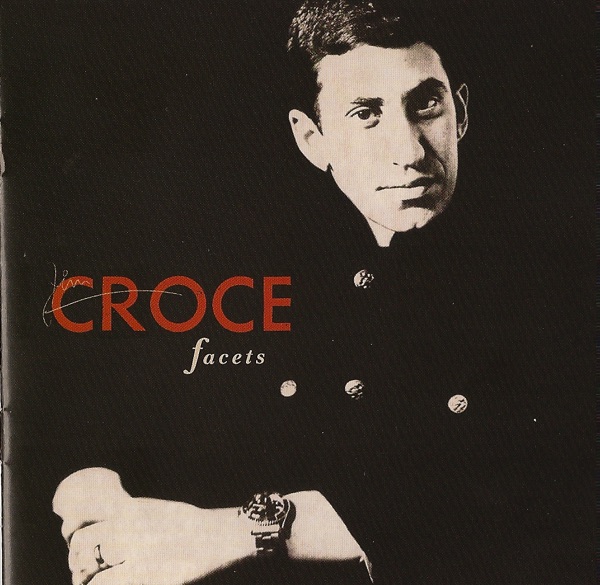
Facets
1966 · 18 tracks
- 1 Steel Rail Blues ↗ 2:17
- 1 Child of Midnight ↗ 2:50
- 2 Coal Tattoo ↗ 2:17
- 2 It's All Over, Mary Ann ↗ 2:35
- 3 Texas Rodeo ↗ 1:44
- 3 Railroads and Riverboats ↗ 3:13
- 4 Charlie Green, Play That Slide Trombone ↗ 2:27
- 4 Hard Times Be Over ↗ 1:52
- 5 The Ballad of Gunga Din ↗ 4:06
- 5 Railroad Song ↗ 2:56
- 6 Hard Hearted Hannah (The Vamp from Savannah) ↗ 1:58
- 6 Maybe Tomorrow ↗ 2:30
- 7 Sun Come Up ↗ 2:06
- 7 Pa (Song for a Grandfather) ↗ 1:51
- 8 The Blizzard ↗ 2:54
- 9 Running Maggie ↗ 1:52
- 10 Until It's Time for Me to Go ↗ 3:06
- 11 Big Fat Woman ↗ 1:59

You Don’t Mess Around With Jim
1972 · 12 tracks
- 1 You Don't Mess Around with Jim ↗ 3:03
- 2 Tomorrow’s Gonna Be a Brighter Day ↗ 2:54
- 3 New York's Not My Home ↗ 3:08
- 4 Hard Time Losin’ Man ↗ 2:29
- 5 Photographs and Memories ↗ 2:08
- 6 Walkin’ Back to Georgia ↗ 2:52
- 7 Operator (That's Not the Way It Feels) ↗ 3:50
- 8 Time in a Bottle ↗ 2:29
- 9 Rapid Roy (The Stock Car Boy) ↗ 2:46
- 10 Box #10 ↗ 2:27
- 11 A Long Time Ago ↗ 2:22
- 12 Hey Tomorrow ↗ 2:47

I Got a Name
1973 · 11 tracks
- 1 I Got a Name ↗ 3:14
- 2 Lover's Cross ↗ 3:05
- 3 Five Short Minutes ↗ 3:29
- 4 Age ↗ 3:45
- 5 Workin' at the Car Wash Blues ↗ 2:34
- 6 I'll Have to Say I Love You In a Song ↗ 2:35
- 7 Salon and Saloon ↗ 2:31
- 8 Thursday ↗ 2:28
- 9 Top Hat Bar and Grille ↗ 2:49
- 10 Recently ↗ 2:34
- 11 The Hard Way Every Time ↗ 2:30
-
 FacetsJim Croce196618 tracks
 -
 You Don’t Mess Around With JimJim Croce197212 tracks
 -
 I Got a NameJim Croce197311 tracks
Deep Dive
Overview
Jim Croce was an American folk and rock singer-songwriter whose career spanned from 1966 until his death in 1973. Though his recording life lasted less than a decade, Croce achieved significant commercial and critical success during the early 1970s, becoming one of the era’s most distinctive voices in folk-rock storytelling. His gift for narrative songwriting—grounded in conversational lyrics and blues-tinged melody—secured his place in the pantheon of American singer-songwriters, and his legacy endures through streaming and continued radio play decades later.
Formation Story
Jim Croce was born in 1943 and grew up in a musical household that exposed him to folk traditions and American songwriting. He emerged from the American folk-music scene of the 1960s, a period when singer-songwriters were displacing the acoustic-group model in popular music. Croce began recording in 1966 with his debut album Facets, establishing himself as a working musician willing to pursue his craft despite financial constraints. Through the late 1960s, he supported himself with a series of odd jobs while continuing to write, record, and perform live concerts. This period of persistence and growth set the stage for the transformative partnership that would define his final years.
Breakthrough Moment
Croce’s fortunes shifted decisively in the early 1970s when he formed a creative partnership with songwriter and guitarist Maury Muehleisen. Their collaboration bore immediate fruit: in 1972, Croce released You Don’t Mess Around with Jim, his third studio album, which produced three charting singles and introduced him to national radio audiences. The album’s title track became a signature song, but it was the haunting ballad “Time in a Bottle” that would define Croce’s legacy. Though released as a single during his lifetime, “Time in a Bottle” ascended to number one on the charts posthumously, following his death in 1973. This trajectory—from working musician to chart-topping artist in a matter of months—remained tragically brief but undeniably transformative.
Peak Era
Croce’s peak creative and commercial period spanned 1972–1973, a concentrated burst that yielded two studio albums and multiple hit singles. After the success of You Don’t Mess Around with Jim, he followed with Life and Times in 1973, which featured “Bad, Bad Leroy Brown,” his only number-one hit during his lifetime. In this final period, Croce had secured major-label support and touring capacity, performing concerts across the United States while his radio presence and chart positions climbed steadily. The combination of Muehleisen’s sophisticated guitar work and Croce’s warm, conversational vocal delivery created a sound that resonated with FM radio programmers and album-oriented rock listeners. Tragically, this era of achievement ended abruptly, leaving questions about how his artistry might have evolved had he lived beyond 1973.
Musical Style
Jim Croce’s musical identity was rooted in folk-rock and soft rock traditions, drawing from blues, American folk idioms, and contemporary singer-songwriter aesthetics. His songwriting centered on narrative lyrics that told stories of everyday life, romantic entanglement, and moral lessons—delivered in a conversational tone that made sophisticated themes accessible without condescension. Vocally, Croce possessed a warm, somewhat weathered baritone that conveyed both vulnerability and authenticity; his voice was the instrument of a storyteller rather than a technical vocalist seeking vocal display. Maury Muehleisen’s guitar work complemented Croce’s lyrics with fluid, jazz-influenced fingerstyle playing that elevated the production beyond simple folk-singer templates. The combination created a signature sound: economical arrangements centered on voice and guitar, often supported by understated rhythm sections and occasional string or horn accents. This aesthetic aligned Croce with the singer-songwriter movement of the early 1970s, though his emphasis on narrative and humor distinguished him from more introspective contemporaries.
Major Albums
You Don’t Mess Around with Jim (1972)
Croce’s third album marked his commercial breakthrough, yielding three charting singles and establishing him as a major radio presence. The album showcased his gift for character-driven storytelling, anchored by the title track’s braggadocio narrative and the melancholic beauty of “Time in a Bottle.”
Life and Times (1973)
Released in the final year of Croce’s life, this album featured his only number-one hit during his lifetime, “Bad, Bad Leroy Brown,” a vivid portrait of an urban protagonist. The album demonstrated Croce’s growing confidence in both songwriting and production, with arrangements that had become more sophisticated than his earlier work.
Facets (1966)
Croce’s debut album introduced his folk-based sensibility and established the acoustic foundations that would characterize his mature work. Though less commercially successful than his later releases, it documented his early artistic vision and commitment to the singer-songwriter idiom.
I Got a Name (1973)
Released shortly before or around the time of his death, this album represented Croce’s final recording session and included songs that would be discovered and celebrated by audiences discovering his catalog posthumously.
Signature Songs
- “Time in a Bottle” — A wistful ballad about mortality and the futility of saving moments, this song became Croce’s most enduring composition, reaching number one after his death and remaining a staple of American radio and streaming playlists.
- “Bad, Bad Leroy Brown” — A vivid narrative portrait of a street figure, this song was Croce’s only number-one hit during his lifetime and exemplified his gift for character-driven storytelling.
- “You Don’t Mess Around with Jim” — The album’s title track, a boastful narrative song that became iconic and introduced audiences to Croce’s comic timing and conversational lyrical style.
- “I Have to Say I Love You in a Song” — A tender declaration of affection that showcased Croce’s softer side and his ability to express emotion through intimate, conversational melody.
- “Operator” — A melancholic song about loneliness and failed connection, featuring Croce’s warm vocal delivery and Muehleisen’s sensitive guitar accompaniment.
Influence on Rock
Though his active career lasted less than a decade, Jim Croce’s influence on singer-songwriter traditions and folk-rock aesthetics proved durable. His narrative-driven songwriting model—specific, character-focused, story-based rather than purely autobiographical or confessional—influenced subsequent generations of songwriters working in folk-rock and soft-rock idioms. Croce’s commercial success in the early 1970s demonstrated that folk-rock had evolved from its mid-1960s origins into a viable mainstream format, capable of producing chart-topping singles and platinum-selling albums. His partnership with Maury Muehleisen showcased the potential of the singer-guitarist duo format, which became a template for numerous folk-rock acts in subsequent decades. The warm, conversational tone of Croce’s vocals influenced how subsequent singer-songwriters approached the relationship between lyrics and melody, prioritizing clarity and emotional directness over technical vocal prowess.
Legacy
Jim Croce’s legacy is shaped profoundly by the tragedy of his early death and the enduring strength of his catalog. “Time in a Bottle” remains one of the most-streamed songs of the 1970s era, appearing regularly on classic-rock radio formats and digital streaming platforms. His final albums—You Don’t Mess Around with Jim and Life and Times—have maintained continuous availability through successive reissues and format changes, ensuring that new listeners regularly discover his work. Croce’s narrative approach to songwriting established a template that influenced folk-rock and country-rock artists throughout the 1970s and beyond. Though he did not live to see his later work gain widespread recognition, his posthumous commercial success—particularly “Time in a Bottle”—ensured that his artistry achieved the wider audience that his early 1970s touring and radio play had begun to cultivate. Streaming services, digital reissues, and classic-rock programming have maintained his presence in popular culture, introducing his music to audiences born long after his death.
Fun Facts
- Before achieving success as a recording artist, Croce supported himself with a series of odd jobs while continuing to write, record, and perform, a period of persistence that spanned from his 1966 debut through his early 1970s breakthrough.
- “Time in a Bottle,” one of the most iconic songs in American popular music, reached number one on the charts only after Croce’s death, making it a posthumous tribute to his artistry.
- Croce recorded five studio albums between 1966 and 1973, an impressive output given the brevity of his career and the modest commercial success of his early releases.
- His partnership with Maury Muehleisen lasted only a few years but proved creatively transformative, elevating Croce’s arrangements and production to a level of sophistication that distinguished his early 1970s work from his earlier recordings.
- Croce’s record labels included Vertigo Records, ABC Records, Capitol Records, and Atlantic Records, reflecting his journey from smaller independent labels to major-label distribution as his commercial profile grew.