
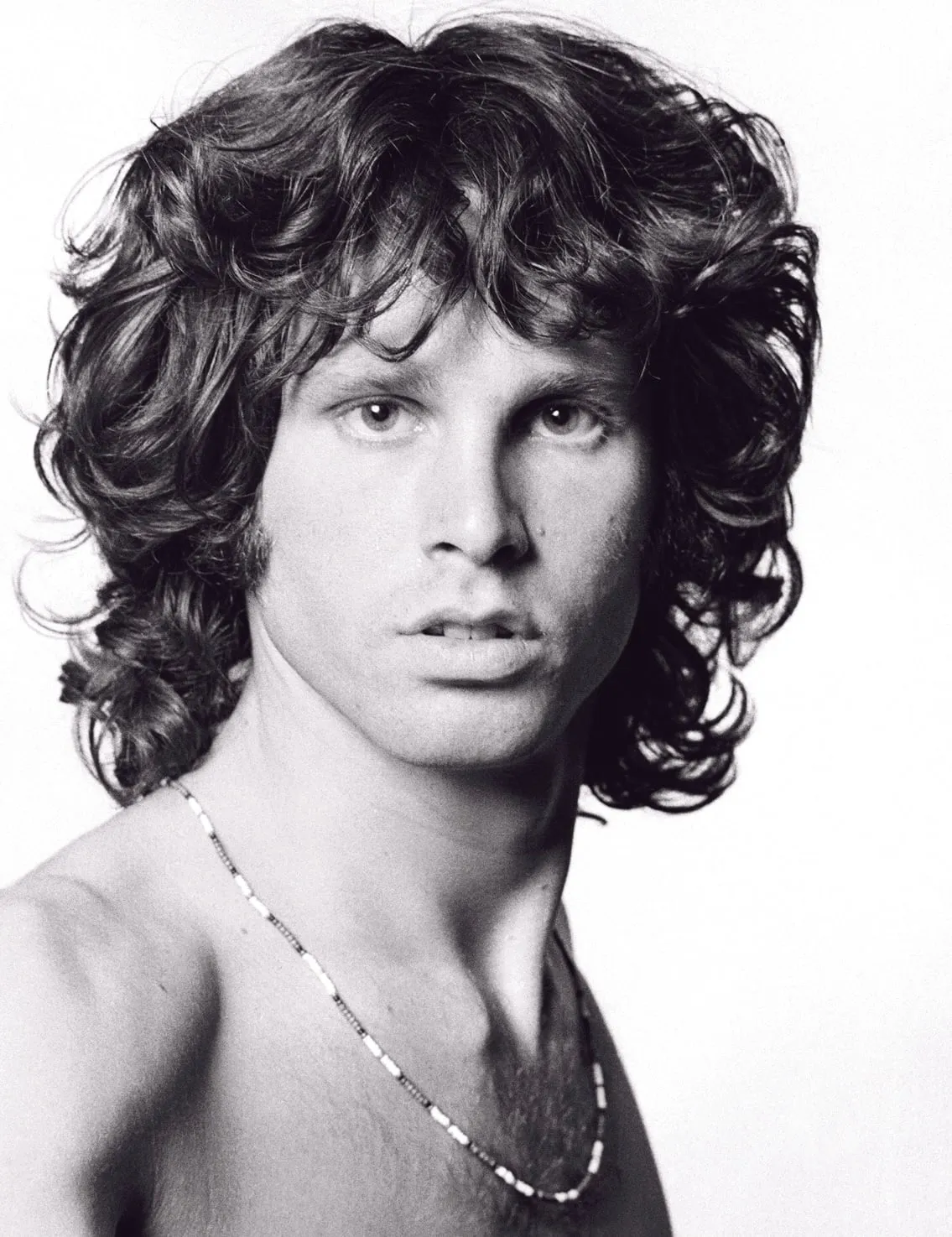
Photo by Joel Brodsky, Distributed by Elektra Records , licensed under Public domain · Wikimedia Commons
Rank #432
Jim Morrison
From Wikipedia
James Douglas Morrison was an American singer-songwriter and poet who was the lead vocalist and primary lyricist of the rock band the Doors. Due to his charismatic persona, poetic lyrics, distinctive voice, and unpredictable performances, along with the dramatic circumstances surrounding his life and early death, Morrison is regarded by music critics and fans as one of the most influential frontmen in rock history. Since his death, his fame has endured as one of popular culture's top rebellious and oft-displayed icons, representing the generation gap and youth counterculture.
Discography & Previews
Browse through and click an album to open and play 30-second previews streamed from Apple Music.
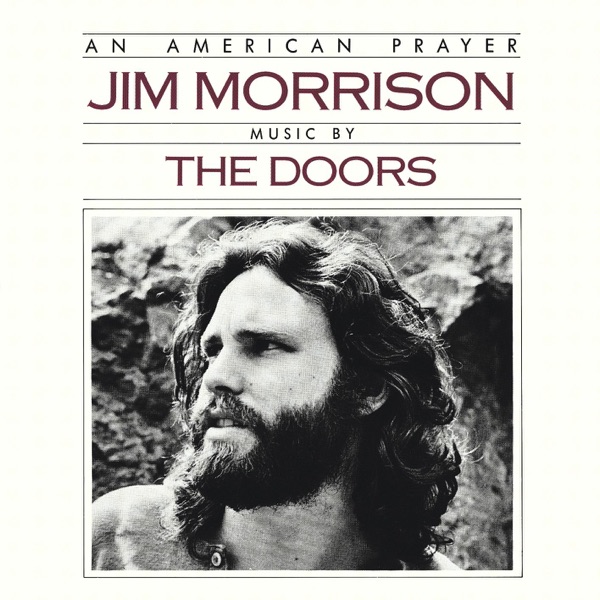
An American Prayer
1978 · 23 tracks
- 1 Awake ↗ 0:36
- 2 Ghost Song ↗ 2:51
- 3 Dawn's Highway ↗ 1:22
- 4 Newborn Awakening ↗ 2:25
- 5 To Come of Age ↗ 1:02
- 6 Black Polished Chrome ↗ 1:08
- 7 Latino Chrome ↗ 2:15
- 8 Angels and Sailors ↗ 2:47
- 9 Stoned Immaculate ↗ 1:33
- 10 The Movie ↗ 1:36
- 11 Curses, Invocations ↗ 1:54
- 12 American Night ↗ 0:28
- 13 Roadhouse Blues ↗ 5:53
- 14 The World On Fire ↗ 1:07
- 15 Lament ↗ 2:19
- 16 The Hitchhiker ↗ 2:16
- 17 An American Prayer ↗ 3:04
- 18 Hour for Magic ↗ 1:18
- 19 Freedom Exists ↗ 0:20
- 20 A Feast of Friends ↗ 2:11
- 21 Babylon Fading ↗ 1:40
- 22 Bird of Prey ↗ 1:04
- 23 The Ghost Song ↗ 5:16
-
 An American PrayerJim Morrison197823 tracks
Deep Dive
Overview
Jim Morrison was an American singer-songwriter and poet who served as the lead vocalist and primary lyricist of the Doors, one of rock music’s most experimental and philosophically ambitious bands. Born in 1943, Morrison’s influence extended far beyond his vocal delivery—his charismatic stage presence, introspective and often cryptic lyrics, and willingness to push the boundaries of live performance made him one of the defining frontmen of the psychedelic rock era. His early death in 1971 cemented his status as a cultural icon, and his legacy has remained central to how subsequent generations understand rock music’s relationship to poetry, rebellion, and artistic transgression.
Formation Story
Jim Morrison’s path to rock music emerged from a deep engagement with literature, poetry, and the philosophical currents of his time. Growing up in the United States during the 1950s, Morrison absorbed the post-war cultural landscape and the emerging counterculture that would define the 1960s. His attraction to rock music was neither inevitable nor early; rather, it developed as he matured into his late teens and early twenties, driven by a desire to merge poetic expression with musical form. This fusion of literary ambition and rock’s raw emotional power became the core of his artistic identity and the foundation upon which his most significant work would be built.
Breakthrough Moment
Morrison’s rise to prominence came through his work with the Doors, the psychedelic rock band that crystallized his artistic vision. While the band itself achieved mainstream success in the mid-to-late 1960s, Morrison’s individual presence—his dangerous unpredictability on stage, his magnetic vocal quality, and his often poetic and confrontational lyrics—became inseparable from the band’s identity. His ability to embody both intellectual depth and visceral charisma made him a symbol of the era’s youth rebellion, transforming the role of the rock frontman from mere vocalist to full artistic presence.
Peak Era
Morrison’s most creatively fertile and culturally influential period coincided with the Doors’ commercial and artistic peak in the late 1960s. During these years, he refined a performance style that was both spontaneous and deliberately provocative, drawing audiences into psychological and emotional territory that rock music had rarely explored. His work during this period established him as a figure who transcended typical rock music boundaries, positioning himself as a poet who happened to work within a rock idiom rather than a rock singer who occasionally wrote poetic lyrics.
Musical Style
Morrison’s vocal approach was distinctive and unconventional for rock music. His baritone was capable of both haunting intimacy and dramatic projection, often moving between near-spoken passages and full-bodied singing within a single performance. He refused to be constrained by conventional song structure or standard rock vocal delivery, instead treating his voice as an instrument of poetic expression. His lyrics drew on symbolism, classical mythology, and introspective meditation on death, desire, and consciousness. The arrangement of his words and the deliberate ambiguity of their meaning reflected a commitment to rock music as a vehicle for serious artistic investigation rather than simple entertainment or commercial calculation.
Major Albums
An American Prayer (1978)
Released seven years after Morrison’s death, this album combined previously unreleased recordings of Morrison reading his own poetry, supported by musical accompaniment. It served as a document of Morrison’s literary ambitions and his voice outside the Doors’ band context.
Stoned But Articulate (1996)
This compilation drew from unreleased and archival material, presenting Morrison’s vocal performances in contexts that highlighted his range and interpretive capabilities.
Dionysus (1998)
Another archival project that explored Morrison’s connection to themes of ecstasy, mythology, and transformation that had long preoccupied his artistic thinking.
Without a Safety Net / The Future Ain’t What It Used to Be (2004)
This release continued the archival excavation of Morrison’s solo vocal work, providing listeners with additional insight into his artistic development outside the Doors’ framework.
Signature Songs
- “Light My Fire” — The Doors’ breakthrough hit that showcased Morrison’s vocal command and the band’s psychedelic arrangement.
- “Break On Through (To the Other Side)” — An urgent exploration of consciousness and liberation that became one of his most recognizable performances.
- “Roadhouse Blues” — A raw, blues-inflected showcase for Morrison’s gritty vocal power and his ability to command a stripped-down arrangement.
- “The End” — An extended, operatic composition that demonstrated Morrison’s ambition to expand rock music’s formal boundaries and emotional scope.
- “LA Woman” — A sprawling meditation on Los Angeles and desire, capturing Morrison’s fascination with urban landscape and psychological exploration.
Influence on Rock
Morrison’s impact on rock music fundamentally altered what frontmen could be and how the role could be performed. His insistence on integrating serious poetic language into rock lyrics raised the artistic expectations for the genre and demonstrated that rock could be a vehicle for genuine intellectual and emotional complexity. His willingness to improvise, to risk failure, and to challenge audience expectations in live performance established a model of artistic fearlessness that influenced countless subsequent rock performers. His integration of theatrical elements, mythological references, and psychological exploration into the rock idiom proved that the form could accommodate ambition comparable to other artistic mediums. His vision of the rock frontman as a complete artistic presence—not just a vocalist but a poet, performer, and intellectual—reshaped the role permanently.
Legacy
Morrison’s early death in 1971 transformed him into a permanent cultural icon, his image and mythology enduring as powerfully as his music. The archival releases that emerged decades after his death—including An American Prayer, Stoned But Articulate, Dionysus, and Without a Safety Net—kept his artistic legacy alive and provided new generations with access to his voice and creative vision. His influence extends across multiple genres; rock musicians, poets, performance artists, and visual artists have drawn on his model of uncompromising artistic expression. His status as a symbol of 1960s counterculture and youth rebellion has not diminished; if anything, his representation of the generation gap and artistic transgression has become more historically significant as the era itself has receded into the past. Morrison remains one of popular culture’s most enduring icons, his image continuing to represent a particular vision of artistic rebellion and the dangers of charisma without restraint.
Fun Facts
- Morrison was deeply influenced by poetry and literary tradition, viewing his work in the Doors as an extension of a poet’s ambition rather than a conventional rock musician’s career.
- His stage presence was notoriously unpredictable; he would sometimes alter lyrics spontaneously or abandon planned arrangements entirely during live performances.
- Morrison’s interest in film and visual art led him to pursue documentary work alongside his music career, reflecting his commitment to exploring multiple artistic mediums.
- After his death in 1971, archival recordings and unreleased material continued to be discovered and released, keeping his artistic output in circulation for decades.