
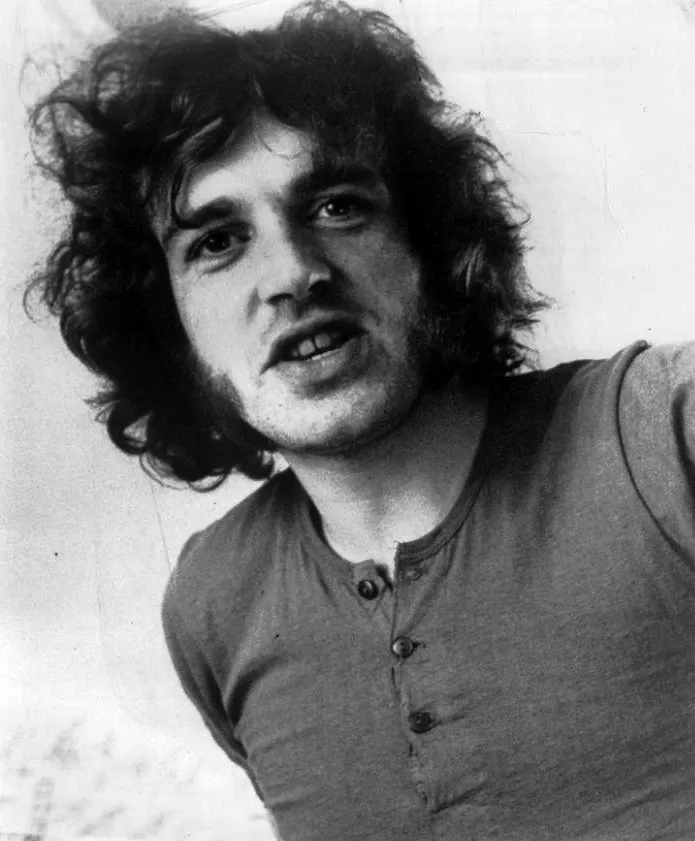
Photo by A & M Records , licensed under Public domain · Wikimedia Commons
Rank #146
Joe Cocker
From Wikipedia
John Robert "Joe" Cocker was an English singer known for his gritty, bluesy voice and dynamic stage performances that featured expressive body movements. Most of his best known singles were interpretations of songs written by others, such as "Feelin' Alright" and "Unchain My Heart", though Cocker composed original songs for most of his albums as well, often in conjunction with songwriting partner Chris Stainton.
Discography & Previews
Browse through and click an album to open and play 30-second previews streamed from Apple Music.
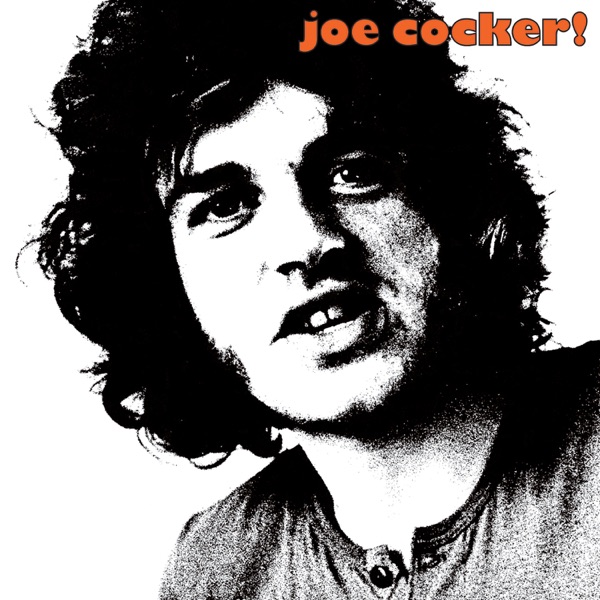
Joe Cocker!
1969 · 12 tracks
- 1 Dear Landlord ↗ 3:25
- 2 Bird On A Wire ↗ 4:28
- 3 Lawdy Miss Clawdy ↗ 2:14
- 4 She Came In Through The Bathroom Window ↗ 2:36
- 5 Hitchcock Railway ↗ 4:37
- 6 That's Your Business ↗ 2:57
- 7 Something ↗ 3:31
- 8 Delta Lady ↗ 2:50
- 9 Hello, Little Friend ↗ 3:52
- 10 Darling Be Home Soon ↗ 4:45
- 11 She's Good To Me (Single Version) ↗ 3:00
- 12 Let It Be ↗ 5:01
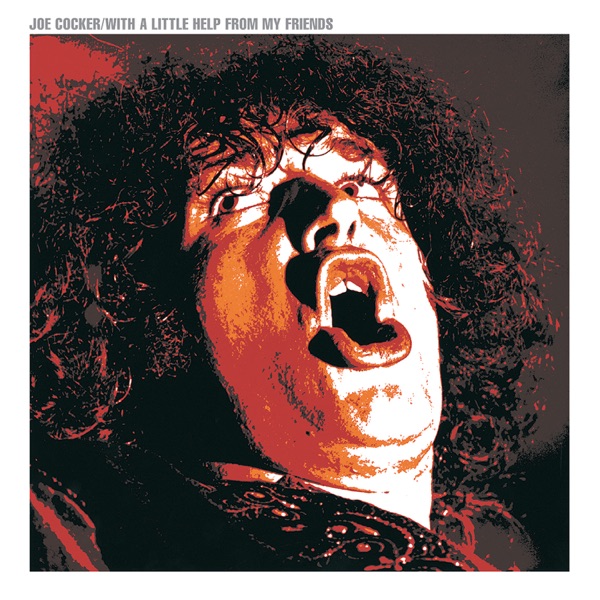
With a Little Help From My Friends
1969 · 12 tracks
- 1 Feelin' Alright ↗ 4:11
- 2 Bye Bye Blackbird ↗ 3:28
- 3 Change in Louise ↗ 3:23
- 4 Marjorine (Single Version) ↗ 2:38
- 5 Just Like a Woman ↗ 5:18
- 6 Do I Still Figure in Your Life? ↗ 4:00
- 7 Sandpaper Cadillac ↗ 3:17
- 8 Don't Let Me Be Misunderstood ↗ 4:41
- 9 With a Little Help from My Friends ↗ 5:12
- 10 I Shall Be Released ↗ 4:36
- 11 The New Age of Lily (Single Version) ↗ 2:15
- 12 Something's Coming On (Single Version) ↗ 2:15


I Can Stand a Little Rain
1974 · 10 tracks

Jamaica Say You Will
1975 · 10 tracks


Luxury You Can Afford
1978 · 11 tracks
- 1 Fun Time (LP Version) ↗ 2:40
- 2 Watching the River Flow (LP Version) ↗ 3:17
- 3 Boogie Baby (LP Version) ↗ 3:52
- 4 A Whiter Shade of Pale (LP Version) ↗ 5:27
- 5 I Can't Say No (LP Version) ↗ 2:51
- 6 Southern Lady (LP Version) ↗ 3:16
- 7 I Know (You Don't Want Me No More) (LP Version) ↗ 3:08
- 8 What You Did to Me Last Night (LP Version) ↗ 3:29
- 9 Lady Put the Light Out (LP Version) ↗ 4:46
- 10 Wasted Years (LP Version) ↗ 4:49
- 11 I Heard It Through the Grapevine (LP Version) ↗ 4:29


Civilized Man
1984 · 10 tracks


One Night of Sin
1989 · 12 tracks
- 1 When the Night Comes ↗ 4:49
- 2 I Will Live For You ↗ 4:12
- 3 Got To Use My Imagination ↗ 4:25
- 4 Letting Go ↗ 4:12
- 5 Just To Keep From Drowning ↗ 4:39
- 6 Unforgiven ↗ 3:29
- 7 Another Mind Gone ↗ 4:45
- 8 Fever ↗ 3:38
- 9 You Know It's Gonna Hurt ↗ 3:59
- 10 Bad Bad Sign ↗ 4:09
- 11 I'm Your Man ↗ 3:52
- 12 One Night of Sin ↗ 3:15
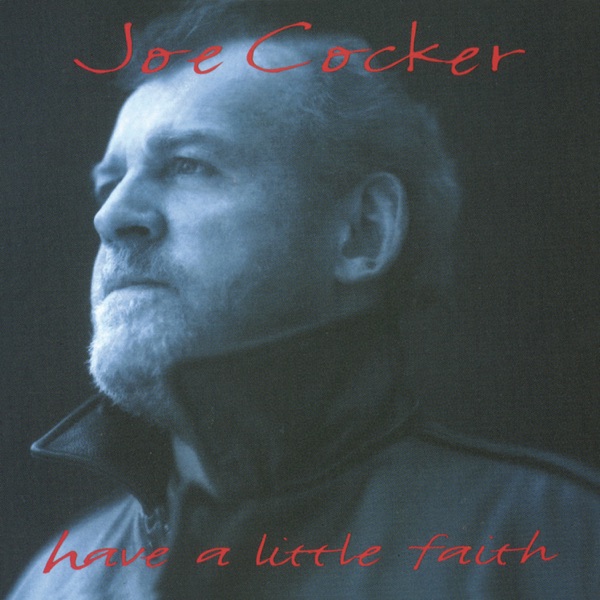
Have a Little Faith
1994 · 12 tracks
- 1 Let the Healing Begin ↗ 5:09
- 2 Have a Little Faith in Me ↗ 4:41
- 3 The Simple Things ↗ 4:50
- 4 Summer in the City ↗ 3:54
- 5 The Great Divide ↗ 3:36
- 6 Highway Highway ↗ 4:32
- 7 Too Cool ↗ 4:44
- 8 Soul Time ↗ 4:35
- 9 Out of the Blue ↗ 3:46
- 10 Angeline ↗ 4:31
- 11 Standing Knee Deep in a River ↗ 4:08
- 12 Take Me Home ↗ 4:24

Organic
1996 · 14 tracks
- 1 Into the Mystic ↗ 3:32
- 2 Anybody Seen My Girl ↗ 3:03
- 3 Delta Lady ↗ 3:16
- 4 Heart Full of Rain ↗ 4:49
- 5 Don't Let Me Be Misunderstood ↗ 3:52
- 6 Many Rivers to Cross ↗ 4:23
- 7 High Lonesome Blue ↗ 4:10
- 8 Sail Away ↗ 3:00
- 9 You and I ↗ 4:35
- 10 Darling Be Home Soon ↗ 4:11
- 11 Dignity ↗ 3:12
- 12 You Can Leave Your Hat On ↗ 3:46
- 13 You Are So Beautiful ↗ 2:43
- 14 Can't Find My Way Home ↗ 3:53

Across From Midnight
1997 · 12 tracks
- 1 Tonight ↗ 4:49
- 2 Could You Be Loved ↗ 5:47
- 3 That's All I Need to Know ↗ 4:05
- 4 N'oubliez Jamais ↗ 4:43
- 5 What Do I Tell My Heart ↗ 5:01
- 6 Wayward Soul ↗ 4:16
- 7 Loving You Tonight ↗ 4:39
- 8 Across from Midnight ↗ 4:58
- 9 What Do You Say ? ↗ 4:42
- 10 The Last One to Know ↗ 3:30
- 11 That's the Way Her Love Is ↗ 2:45
- 12 Need Your Love so Bad ↗ 5:20

No Ordinary World
1999 · 14 tracks
- 1 First We Take Manhattan ↗ 3:44
- 2 Different Roads ↗ 4:59
- 3 My Father's Son ↗ 4:30
- 4 While You See A Chance ↗ 3:52
- 5 She Believes In Me ↗ 4:45
- 6 No Ordinary World ↗ 3:53
- 7 Where Would I Be Now ↗ 5:28
- 8 Ain't Gonna Cry Again ↗ 4:07
- 9 Soul Rising ↗ 3:58
- 10 Naked Without You ↗ 4:32
- 11 Love To Lean On ↗ 4:18
- 12 On My Way Home ↗ 4:14
- 13 Lie To Me ↗ 4:02
- 14 Love Made A Promise ↗ 5:03

Respect Yourself
2002 · 11 tracks
- 1 You Can't Have My Heart ↗ 4:03
- 2 Love Not War ↗ 4:02
- 3 You Took It So Hard ↗ 4:29
- 4 Never Tear Us Apart ↗ 4:05
- 5 This Is Your Life ↗ 4:36
- 6 Respect Yourself ↗ 5:16
- 7 I'm Listening Now ↗ 5:03
- 8 Leave A Light On ↗ 4:34
- 9 It's Only Love ↗ 3:57
- 10 Every Time It Rains ↗ 3:36
- 11 Midnight Without You ↗ 5:08

Heart & Soul
2004 · 13 tracks
- 1 One ↗ 4:33
- 2 I (Who Have Nothing) ↗ 4:00
- 3 What's Going On ↗ 5:11
- 4 Chain of Fools ↗ 3:45
- 5 Maybe I'm Amazed ↗ 3:22
- 6 I Keep Forgetting ↗ 3:33
- 7 I Put a Spell On You ↗ 4:31
- 8 Every Kind of People ↗ 4:18
- 9 Love Don't Live Here Anymore ↗ 4:14
- 10 Don't Let Me Be Lonely ↗ 3:40
- 11 Jealous Guy ↗ 4:06
- 12 Everybody Hurts ↗ 5:19
- 13 One (Live) ↗ 4:44

Hymn for My Soul
2007 · 10 tracks


Fire It Up
2012 · 14 tracks
- 1 Fire It Up ↗ 3:53
- 2 I'll Be Your Doctor ↗ 3:31
- 3 You Love Me Back ↗ 3:55
- 4 I Come In Peace ↗ 4:19
- 5 You Don't Need a Million Dollars ↗ 3:56
- 6 Eye On the Prize ↗ 4:07
- 7 Younger ↗ 4:12
- 8 You Don't Know What You're Doing To Me ↗ 3:51
- 9 The Letting Go ↗ 3:29
- 10 I'll Walk In Sunshine Again ↗ 3:14
- 11 Weight of the World ↗ 3:59
- 12 The Last Road ↗ 4:04
- 13 Walk Through the World With Me ↗ 4:20
- 14 Let Love Decide ↗ 2:49
-
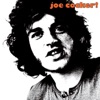 Joe Cocker!Joe Cocker196912 tracks
 -
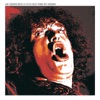 With a Little Help From My FriendsJoe Cocker196912 tracks
 -
 Joe CockerJoe Cocker19729 tracks
 -
 I Can Stand a Little RainJoe Cocker197410 tracks
 -
 Jamaica Say You WillJoe Cocker197510 tracks
 -
 StingrayJoe Cocker197610 tracks
 -
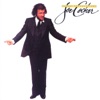 Luxury You Can AffordJoe Cocker197811 tracks
 -
 Sheffield SteelJoe Cocker198210 tracks
 -
 Civilized ManJoe Cocker198410 tracks
 -
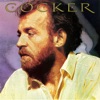 CockerJoe Cocker198610 tracks
 -
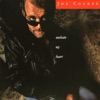 Unchain My HeartJoe Cocker198710 tracks
 -
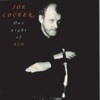 One Night of SinJoe Cocker198912 tracks
 -
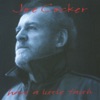 Have a Little FaithJoe Cocker199412 tracks
 -
 OrganicJoe Cocker199614 tracks
 -
 Across From MidnightJoe Cocker199712 tracks
 -
 No Ordinary WorldJoe Cocker199914 tracks
 -
 Respect YourselfJoe Cocker200211 tracks
 -
 Heart & SoulJoe Cocker200413 tracks
 -
 Hymn for My SoulJoe Cocker200710 tracks
 -
 Hard KnocksJoe Cocker201010 tracks
 -
 Fire It UpJoe Cocker201214 tracks
Deep Dive
Overview
Joe Cocker was an English singer whose career spanned from the late 1960s until his death in 2014, establishing himself as one of rock and blues music’s most distinctive vocalists. His gritty, emotionally raw voice and uninhibited stage presence—characterized by expressive body movements and visceral engagement with the material—made him a compelling live performer and recording artist. Cocker built his reputation largely on interpretations of songs written by others, most notably “Feelin’ Alright” and “Unchain My Heart,” though he also contributed original compositions to most of his albums, frequently collaborating with songwriter and musician Chris Stainton.
Formation Story
John Robert Cocker was born in Sheffield, England, in 1944, emerging from the industrial heartland that had produced other blues-influenced rock singers. He came of age during the 1960s British blues boom, when American blues was being rediscovered and reinterpreted by English musicians. Cocker’s early immersion in blues and soul music, combined with his natural vocal gifts, positioned him to enter the professional music scene as a solo artist in the late 1960s. His partnership with Chris Stainton proved formative, as the two developed a songwriting and arranging sensibility that would define much of Cocker’s best work across four decades of recording.
Breakthrough Moment
Cocker’s initial recording period coincided with two albums released in 1969: Joe Cocker! and With a Little Help From My Friends. The latter title, drawing from the Beatles’ 1967 album track, signaled Cocker’s willingness to tackle songs already in the cultural canon and reimagine them through his own visceral interpretation. These early releases established his voice and approach among rock audiences, setting the foundation for a career that would see him record prolifically across multiple decades and continue touring extensively into the 2000s. His ability to inhabit a song with emotional depth rather than technical perfection became his defining artistic signature.
Peak Era
Cocker’s most creatively and commercially significant period centered on the 1970s and 1980s. I Can Stand a Little Rain (1974), Jamaica Say You Will (1975), and Stingray (1976) demonstrated his growing confidence as a recording artist, while Sheffield Steel (1982) and Civilized Man (1984) showed that his appeal remained strong into the 1980s. The 1987 album Unchain My Heart, which took its title from one of his signature interpretations, represented a crystallization of his artistic identity and a return to his blues-rock roots after some stylistic wandering in the mid-1980s. Throughout this period, Cocker maintained an active touring schedule, relying on his reputation as a compelling live performer to sustain audience engagement.
Musical Style
Cocker’s voice was his primary instrument—gritty, textured, and capable of conveying emotional vulnerability even when delivering uptempo material. His vocal style drew deeply from American blues and soul traditions, yet maintained a distinctly British rock sensibility. Unlike many contemporaries who prized vocal purity, Cocker’s voice bore the marks of wear and hard living, which became an asset rather than a liability; it communicated authenticity and earthiness that polished singers could not match. His stage presence reinforced this aesthetic: rather than standing at the microphone in the manner of a crooner, Cocker moved expressively, his body seeming to channel the emotional content of each lyric. Musically, his backing arrangements typically combined blues-based guitar work with soul-influenced horn sections and keyboards, creating a hybrid sound that occupied the fertile ground between rock, blues, and soul. Chris Stainton’s contributions as both songwriter and musician ensured consistency in this approach across multiple albums.
Major Albums
With a Little Help From My Friends (1969)
Cocker’s second album of that prolific year, featuring covers and originals that showcased his ability to make other writers’ material entirely his own through the force of his interpretation.
I Can Stand a Little Rain (1974)
A mid-career statement that balanced original compositions with carefully selected covers, demonstrating Cocker’s maturity as a recording artist and his deepening partnership with Stainton.
Sheffield Steel (1982)
Returning to his hometown’s name in the title, this album represented a successful reinvention for the 1980s, blending soul, blues, and contemporary rock production.
Unchain My Heart (1987)
Taking its title from one of Cocker’s most celebrated interpretations, this album reasserted his blues-rock identity and proved his enduring appeal to longtime fans.
Have a Little Faith (1994)
A late-career album that demonstrated Cocker’s willingness to continue evolving and exploring new material while maintaining his core artistic identity.
Signature Songs
- “Feelin’ Alright” — One of Cocker’s definitive interpretations, a soul-inflected cover that became synonymous with his name and captured his gift for transforming another writer’s composition.
- “Unchain My Heart” — A blues standard that Cocker made his own, showcasing his ability to deliver both vocal power and emotional nuance.
- “With a Little Help From My Friends” — Cocker’s interpretation of the Beatles track became widely known and demonstrated his approach to high-profile covers.
- “Night and Day” — A classic standards interpretation that highlighted Cocker’s range beyond rock and soul material.
Influence on Rock
Cocker’s career demonstrated that a rock and blues artist could sustain a decades-long recording and touring career built primarily on interpretations of others’ material, provided the artist brought sufficient emotional authenticity and vocal distinctiveness to justify the versions. His influence was less about sonic innovation and more about the philosophy of artistic commitment—the belief that how you sing matters more than what song you choose. This approach influenced subsequent generations of interpretive rock and soul singers who valued emotional truth over technical display or originality. Cocker’s live reputation also contributed to the broader rock tradition of valuing concert performance as an essential creative act rather than a mere reproduction of recorded material.
Legacy
Joe Cocker’s death in 2014 marked the end of a 45-year recording career that produced over twenty studio albums and established him as a fixture in global rock and blues audiences. His consistent touring presence and catalog of recordings ensured continued streaming and radio play well into the digital era. Cocker remained respected by rock critics and musicians as an exemplar of authenticity and emotional commitment, a singer who proved that technical perfection was less important than the ability to move an audience through sheer force of feeling. His Sheffield origins and working-class demeanor made him an ambassador for rock music as a vehicle for ordinary people to reach extraordinary audiences.
Fun Facts
- Cocker signed to multiple record labels throughout his career, including Decca, A&M, Chrysalis, Island, and Capitol, reflecting his ability to adapt to changing industry structures across nearly five decades.
- His songwriting partnership with Chris Stainton endured across multiple albums and decades, one of rock music’s longer and more productive creative collaborations.
- Cocker’s expressive stage movements and apparent lack of conventional rock-star posture made him instantly recognizable and became a trademark of his live performances throughout his career.