
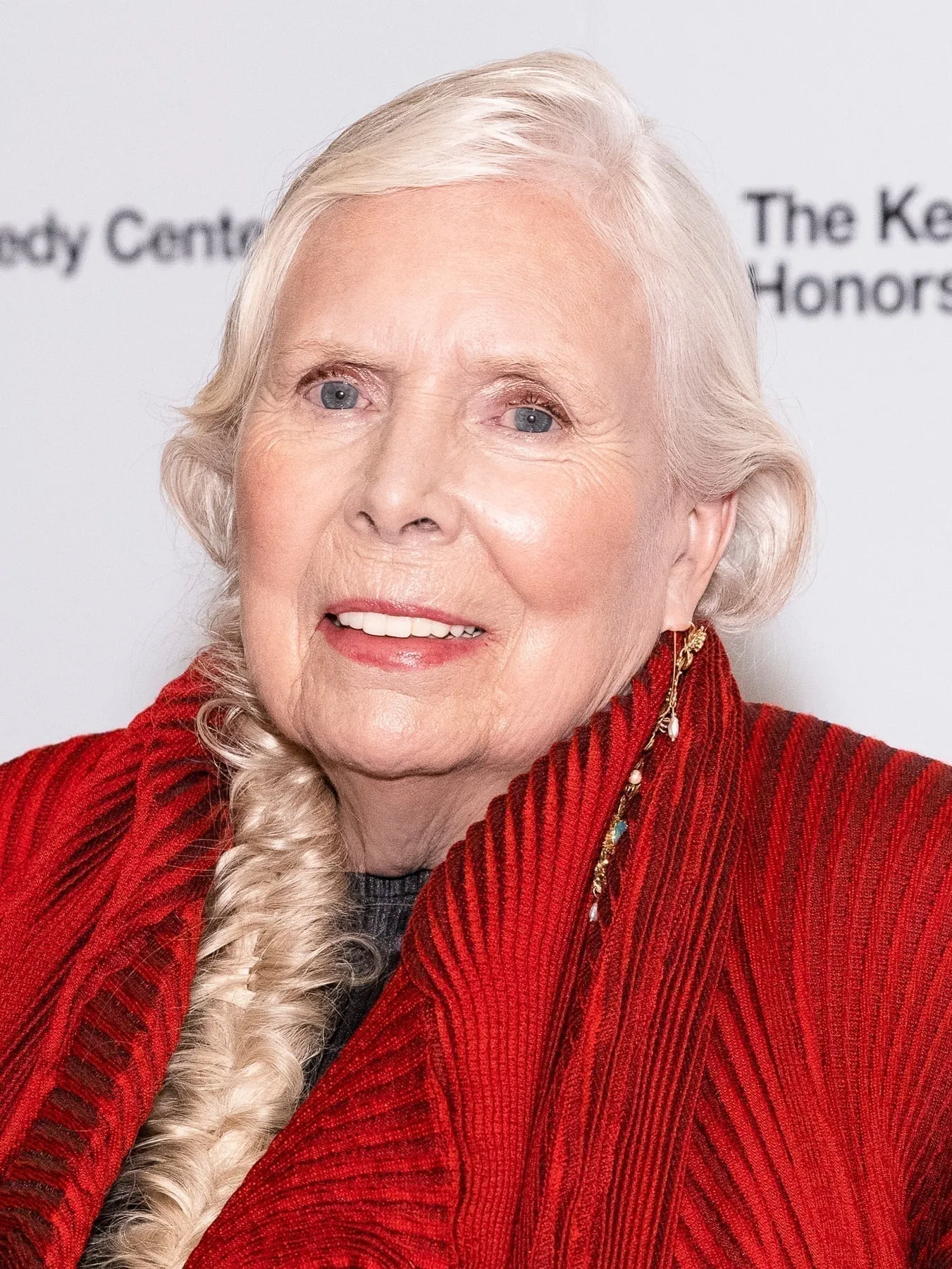
Photo by Library of Congress Life , licensed under CC0 · Wikimedia Commons
Rank #27
Joni Mitchell
From Wikipedia
Roberta Joan "Joni" Mitchell is a Canadian singer-songwriter, multi-instrumentalist, and painter. As one of the most influential singer-songwriters to emerge from the 1960s folk music circuit, Mitchell became known for her personal lyrics and unconventional compositions, which grew to incorporate elements of pop, jazz, rock, and other genres. Among her accolades are eleven Grammy Awards, and induction into the Rock and Roll Hall of Fame in 1997. Rolling Stone, in 2002, named her "one of the greatest songwriters ever", and AllMusic, in a 2011 biography, stated "Joni Mitchell may stand as the most important and influential female recording artist of the late 20th century."
Discography & Previews
Browse through and click an album to open and play 30-second previews streamed from Apple Music.

Clouds
1969 · 10 tracks
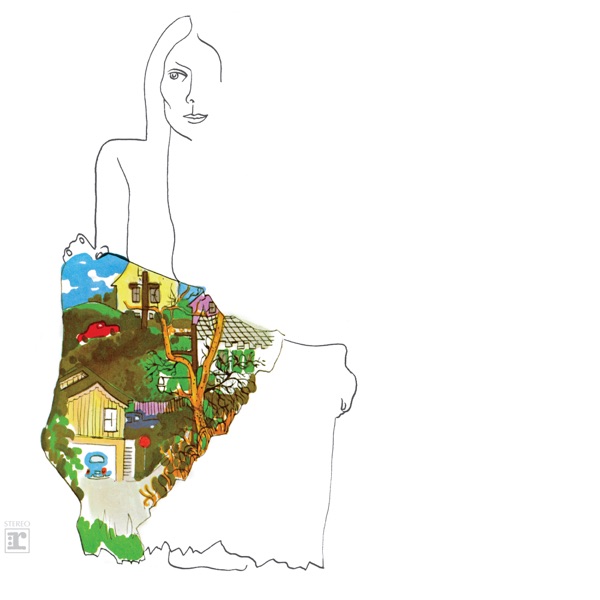
Ladies of the Canyon
1970 · 12 tracks


For the Roses
1972 · 12 tracks
- 1 Banquet ↗ 3:01
- 2 Cold Blue Steel and Sweet Fire ↗ 4:17
- 3 Barangrill ↗ 2:52
- 4 Lesson In Survival ↗ 3:11
- 5 Let the Wind Carry Me ↗ 3:56
- 6 For the Roses ↗ 3:43
- 7 See You Sometime ↗ 2:57
- 8 Electricity ↗ 3:02
- 9 You Turn Me On I'm a Radio ↗ 2:40
- 10 Blonde In the Bleachers ↗ 2:42
- 11 Woman of Heart and Mind ↗ 2:39
- 12 Judgement of the Moon and Stars (Ludwig's Tune) ↗ 5:19

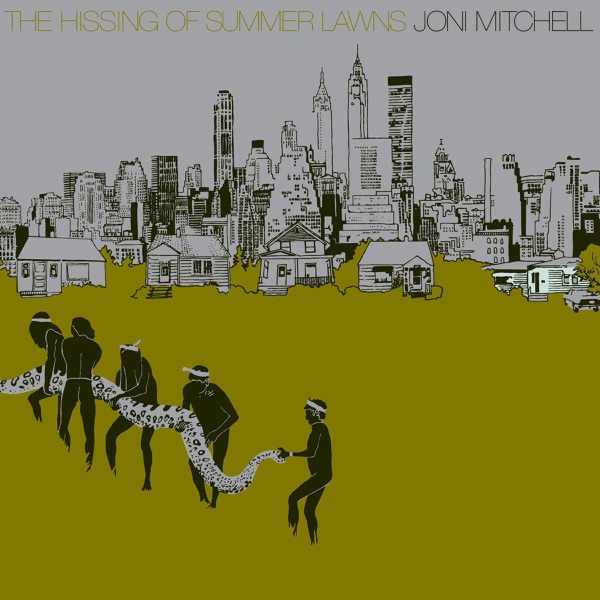
The Hissing of Summer Lawns
1975 · 10 tracks
- 1 In France They Kiss on Main Street ↗ 3:19
- 2 The Jungle Line ↗ 4:26
- 3 Edith and the Kingpin ↗ 3:39
- 4 Don't Interrupt the Sorrow ↗ 4:08
- 5 Shades of Scarlett Conquering ↗ 5:00
- 6 The Hissing of Summer Lawns ↗ 3:01
- 7 The Boho Dance ↗ 3:49
- 8 Harry's House / Centerpiece ↗ 6:49
- 9 Sweet Bird ↗ 4:13
- 10 Shadows and Light ↗ 4:19


Don Juan’s Reckless Daughter
1977 · 10 tracks
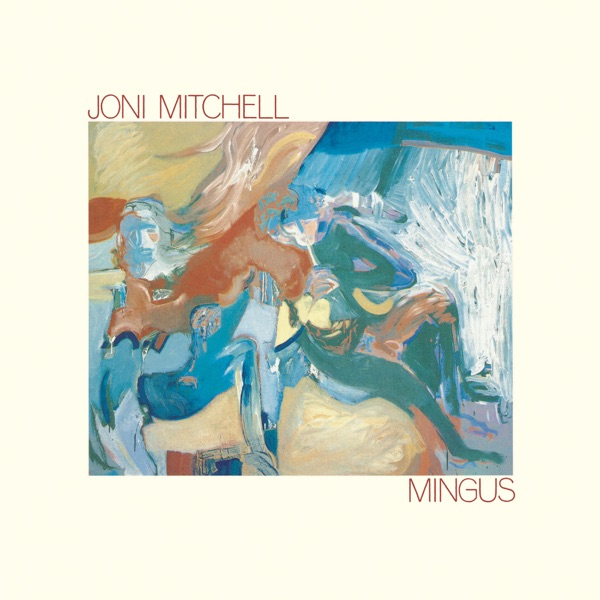
Mingus
1979 · 11 tracks
- 1 Happy Birthday 1975 ↗ 0:57
- 2 God Must Be a Boogie Man ↗ 4:36
- 3 Funeral ↗ 1:07
- 4 A Chair in the Sky ↗ 6:43
- 5 The Wolf That Lives in Lindsey ↗ 6:36
- 6 I's a Muggin' ↗ 0:08
- 7 Sweet Sucker Dance ↗ 8:05
- 8 Coin in the Pocket ↗ 0:12
- 9 The Dry Cleaner From Des Moines ↗ 3:22
- 10 Lucky ↗ 0:04
- 11 Goodbye Pork Pie Hat ↗ 5:37
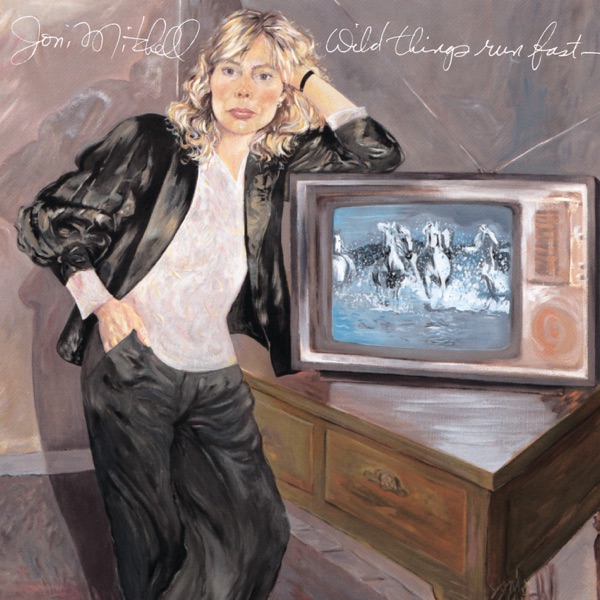
Wild Things Run Fast
1982 · 11 tracks
- 1 Chinese Cafe/Unchained Melody ↗ 5:20
- 2 Wild Things Run Fast ↗ 2:16
- 3 Ladies' Man ↗ 2:40
- 4 Moon at the Window ↗ 3:45
- 5 Solid Love ↗ 3:06
- 6 Be Cool ↗ 4:14
- 7 (You're So Square) Baby, I Don't Care ↗ 2:38
- 8 You Dream Flat Tires ↗ 2:53
- 9 Man to Man ↗ 3:46
- 10 Underneath the Streetlight ↗ 2:18
- 11 Love ↗ 3:49


Chalk Mark in a Rain Storm
1988 · 10 tracks

Night Ride Home
1991 · 10 tracks
- 1 Night Ride Home ↗ 3:22
- 2 Passion Play (When All the Slaves Are Free) ↗ 5:25
- 3 Cherokee Louise ↗ 4:32
- 4 The Windfall (Everything for Nothing) ↗ 5:15
- 5 Slouching Towards Bethlehem ↗ 6:54
- 6 Come in from the Cold ↗ 7:30
- 7 Nothing Can Be Done ↗ 4:53
- 8 The Only Joy in Town ↗ 5:11
- 9 Ray's Dad's Cadillac ↗ 4:33
- 10 Two Grey Rooms ↗ 3:59

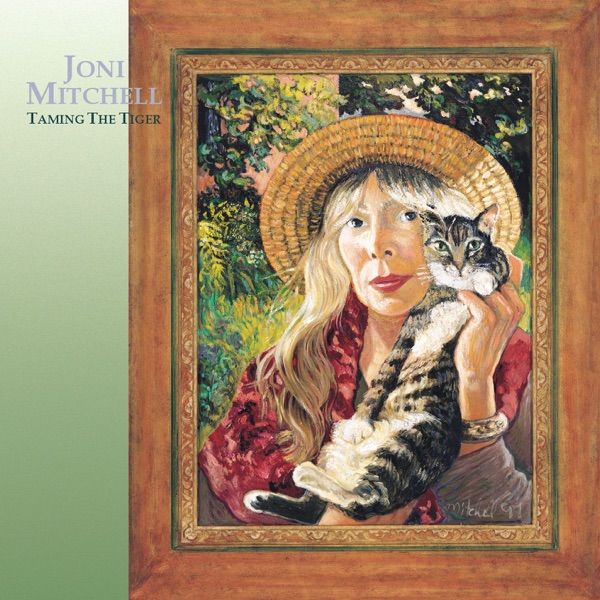
Taming the Tiger
1998 · 11 tracks

Both Sides Now
2000 · 12 tracks
- 1 You're My Thrill ↗ 3:52
- 2 At Last ↗ 4:27
- 3 Comes Love ↗ 4:29
- 4 You've Changed ↗ 5:01
- 5 Answer Me. My Love ↗ 3:23
- 6 A Case of You ↗ 5:52
- 7 Don't Go to Strangers ↗ 4:11
- 8 Sometimes I'm Happy ↗ 4:01
- 9 Don't Worry 'Bout Me ↗ 3:35
- 10 Stormy Weather ↗ 3:08
- 11 I Wish I Were In Love Again ↗ 3:31
- 12 Both Sides Now ↗ 5:43

Travelogue
2002 · 22 tracks
- 1 Otis and Marlena (Orchestral Version) ↗ 3:53
- 1 Be Cool (Orchestral Version) ↗ 5:09
- 2 Amelia (Orchestral Version) ↗ 6:47
- 2 Just Like This Train (Orchestral Version) ↗ 5:04
- 3 You Dream Flat Tires (Orchestral Version) ↗ 3:46
- 3 Sex Kills (Orchestral Version) ↗ 3:57
- 4 Love (Orchestral Version) ↗ 5:39
- 4 Refuge of the Roads (Orchestral Version) ↗ 7:56
- 5 Woodstock (Orchestral Version) ↗ 5:55
- 5 Hejira (Orchestral Version) ↗ 6:48
- 6 Slouching Towards Bethlehem (Orchestral Version) ↗ 7:10
- 6 Chinese Cafe / Unchained Melody (Orchestral Version) ↗ 5:42
- 7 Judgement of the Moon and Stars (Orchestral Version) ↗ 5:21
- 7 Cherokee Louise (Orchestral Version) ↗ 6:01
- 8 The Sire of Sorrow (Orchestral Version) ↗ 7:09
- 8 The Dawntreader (Orchestral Version) ↗ 5:38
- 9 For the Roses (Orchestral Version) ↗ 7:29
- 9 The Last Time I Saw Richard (Orchestral Version) ↗ 4:58
- 10 Trouble Child (Orchestral Version) ↗ 5:03
- 10 Borderline (Orchestral Version) ↗ 6:24
- 11 God Must Be a Boogie Man (Orchestral Version) ↗ 3:56
- 11 The Circle Game (Orchestral Version) ↗ 6:51

-
 CloudsJoni Mitchell196910 tracks
 -
 Ladies of the CanyonJoni Mitchell197012 tracks
 -
 BlueJoni Mitchell197110 tracks
 -
 For the RosesJoni Mitchell197212 tracks
 -
 Court and SparkJoni Mitchell197411 tracks
 -
 The Hissing of Summer LawnsJoni Mitchell197510 tracks
 -
 HejiraJoni Mitchell19769 tracks
 -
 Don Juan’s Reckless DaughterJoni Mitchell197710 tracks
 -
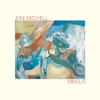 MingusJoni Mitchell197911 tracks
 -
 Wild Things Run FastJoni Mitchell198211 tracks
 -
 Dog Eat DogJoni Mitchell198510 tracks
 -
 Chalk Mark in a Rain StormJoni Mitchell198810 tracks
 -
 Night Ride HomeJoni Mitchell199110 tracks
 -
 Turbulent IndigoJoni Mitchell199410 tracks
 -
 Taming the TigerJoni Mitchell199811 tracks
 -
 Both Sides NowJoni Mitchell200012 tracks
 -
 TravelogueJoni Mitchell200222 tracks
 -
 ShineJoni Mitchell200710 tracks
Deep Dive
Overview
Joni Mitchell emerged from the 1960s folk circuit as a songwriter and performer whose influence extended far beyond the acoustic guitar traditions of her era. Born in Canada in 1943, she became one of the most consequential recording artists of the late twentieth century, translating a personal, introspective songwriting voice into work that incorporated elements of pop, jazz, rock, and world music. Her recordings across five decades established her as both a technical innovator on multiple instruments and a lyricist capable of rendering emotional and philosophical complexity with precision and wit. Mitchell’s induction into the Rock and Roll Hall of Fame in 1997 and her eleven Grammy Awards document a career of sustained artistic relevance and commercial recognition.
Formation Story
Roberta Joan Mitchell grew up in Saskatchewan and British Columbia during the post-war period, developing her skills as a painter and performer during the folk music revival of the late 1950s and early 1960s. She arrived on the folk circuit as a songwriter and guitarist in the mid-1960s, part of a generation that saw folk music as a vehicle for personal expression rather than purely traditional practice. Mitchell’s early work was rooted in the acoustic guitar-based singer-songwriter tradition, but from the beginning her compositions demonstrated an unusual harmonic sophistication and emotional directness that set her apart from her contemporaries. By the late 1960s, she had established herself as a significant voice in folk music, ready to chart her own artistic course.
Breakthrough Moment
Mitchell’s debut album, Song to a Seagull, appeared in 1968 and introduced her writing and voice to a broader audience. However, her commercial and critical breakthrough came with Clouds in 1969 and Ladies of the Canyon in 1970, albums that demonstrated her maturing compositional voice and began to establish her reputation as one of the most important songwriters of her generation. These early recordings brought her work to folk and rock audiences simultaneously, establishing Mitchell as a central figure in the singer-songwriter movement that was reshaping popular music in the early 1970s.
Peak Era
Mitchell’s most creatively essential and commercially successful period extended from 1971 to 1977. Blue (1971) is widely regarded as her masterwork—a stark, emotionally unguarded album built around her voice, acoustic guitar, and piano, featuring songwriting of remarkable emotional depth. She followed this with For the Roses (1972), Court and Spark (1974), which achieved her widest commercial success, The Hissing of Summer Lawns (1975), and Hejira (1976). These albums documented Mitchell’s evolution from folk singer to a multi-genre artist willing to embrace jazz harmonies, studio production, and complex orchestration. Mingus (1979), her collaboration with jazz bassist Charles Mingus, extended her reach into jazz idiom, though she continued recording across the 1980s and beyond.
Musical Style
Mitchell’s musical identity was defined by her approach to the acoustic guitar, which she tuned in unconventional open and altered tunings rather than standard tuning, allowing her to generate complex harmonic textures from a single instrument. Her voice—distinctive in its range, tone, and phrasing—became instantly recognizable, capable of both vulnerability and assertiveness. Her songwriting integrated folk’s narrative tradition with the harmonic vocabulary of jazz and classical music, creating compositions that defied easy categorization. Early albums emphasized acoustic guitar and voice; later work incorporated electric instruments, horn sections, and synthesizers, reflecting both the studio evolution of rock and her own expanding musical palette. Mitchell was also a skilled pianist and saxophonist, and she played multiple instruments on her recordings. Her lyrics were known for their emotional specificity, moving away from the political universalism of some folk peers toward personal observation and introspection.
Major Albums
Blue (1971)
Mitchell’s most celebrated recording, Blue stripped away production and accompaniment to focus on voice, guitar, and piano across ten emotionally direct songs. It established her as a major artistic voice and remains her most frequently cited work.
Court and Spark (1974)
Her most commercially successful album, Court and Spark paired sophisticated pop production with Mitchell’s intricate songwriting, reaching mainstream audiences while maintaining artistic integrity. The album demonstrated her ability to write both personal and hook-driven material.
For the Roses (1972)
Following the critical success of Blue, For the Roses saw Mitchell working with fuller arrangements and exploring themes of fame, artistic integrity, and romantic relationship with lyrical precision.
The Hissing of Summer Lawns (1975)
An ambitious, experimental album that incorporated world music influences, studio production techniques, and complex arrangements. It represents Mitchell’s willingness to move beyond singer-songwriter conventions into more abstract sonic territory.
Mingus (1979)
Mitchell’s sole album with jazz legend Charles Mingus, featuring her voice over orchestral jazz arrangements and her own saxophone playing. It remains a bold cross-genre collaboration that challenged both audiences and critics.
Signature Songs
- “River” — A deceptively simple piano and voice composition about longing and isolation from Blue.
- “Both Sides Now” — Her most widely performed song, a meditation on perception and loss that has been recorded by numerous artists.
- “A Case of You” — An introspective love song featuring her distinctive acoustic guitar tuning.
- “The River” — An earlier work exploring themes of escape and desire.
- “Court and Spark” — The title track from her 1974 album, balancing pop accessibility with emotional depth.
- “California” — A portrait of place and longing from Ladies of the Canyon.
Influence on Rock
Mitchell’s impact on rock and popular music extended across multiple dimensions. She established the confessional, personal songwriting mode that became central to 1970s singer-songwriter rock, directly influencing a generation of musicians who followed. Her willingness to move beyond folk and rock conventions into jazz, world music, and experimental production opened pathways for artists unwilling to be confined to genre boundaries. Women recording artists found in her work both a template for artistic ambition and a demonstration that commercial success and critical respect need not require compromise of vision. Her harmonic sophistication and unconventional guitar techniques influenced musicians across multiple genres. Mitchell also established the multi-instrumentalist singer-songwriter as a viable artistic model, demonstrating that a recording artist need not rely on session musicians or traditional band structures.
Legacy
Mitchell’s career has extended across more than five decades of continuous recording, from her 1968 debut through Shine (2007) and beyond. Her later albums and archival releases—including live recordings and alternate versions of earlier material—have ensured her work remains in circulation. Her 1997 Rock and Roll Hall of Fame induction placed her among the most honored artists in popular music history. Streaming services and reissue campaigns have kept her recordings available to successive generations of listeners. Mitchell continued performing and writing into the twenty-first century, though at a reduced pace. Her influence persists across folk, rock, jazz, and singer-songwriter traditions, with her songwriting taught in academic settings and her records remaining canonical within their respective genres. The combination of technical musicianship, emotional directness, and genre-crossing ambition that defined her peak years continues to serve as a model for artists seeking to balance accessibility with artistic exploration.
Fun Facts
- Mitchell is a skilled visual artist and painter whose aesthetic sensibility informed her album cover design and overall artistic vision.
- She performed at the Newport Folk Festival in 1969, a key venue for singer-songwriter music during the folk revival period.
- Her unconventional guitar tunings, which she developed independently, became a signature technique studied and adopted by subsequent generations of guitarists.
- Mitchell collaborated with producer Henry Lewy across multiple albums, establishing one of the most artistically productive partnerships in 1970s rock recording.