
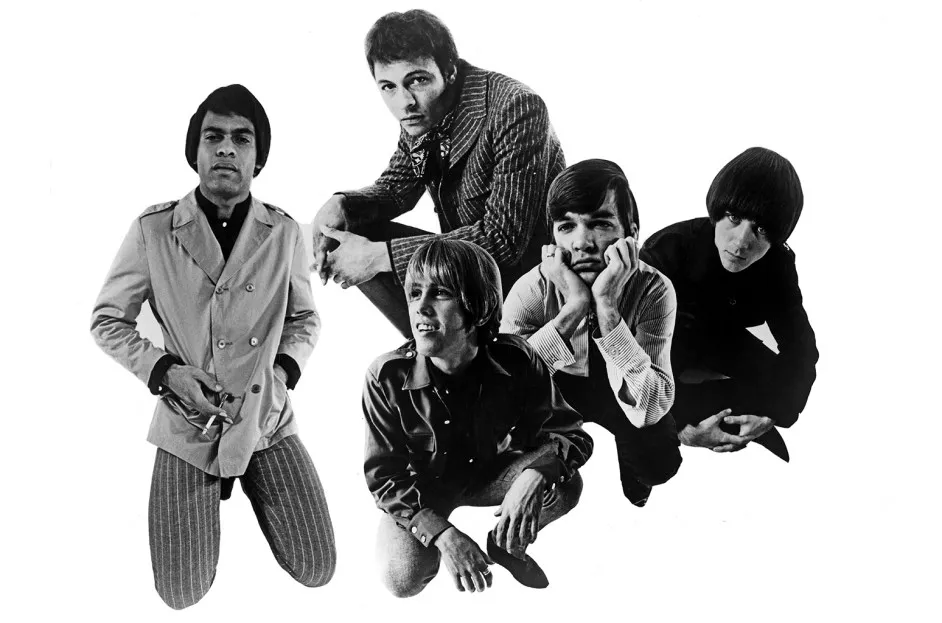
Photo by Elektra Records or the photographer(s) , licensed under Public domain · Wikimedia Commons
Rank #69
Love
From Wikipedia
Love is an American rock band formed in Los Angeles in 1965. Led by Arthur Lee, the band's primary songwriter, they were one of the first racially diverse American rock bands. Their sound incorporated styles including psychedelic rock, folk rock and garage. While finding only modest success on the music charts, firstly with the song "My Little Red Book," the first hit record released by Elektra Records, which reached number one on the LA charts and, in June 1966, peaked at number 52 on the Billboard Hot 100 and number 35 on the Cash Box Top 100. The group also peaked in the US singles chart with their No. 33 hit "7 and 7 Is". Love would come to be praised by critics as their third album, Forever Changes (1967), became generally regarded as one of the best albums of the 1960s.
Members
- Arthur Lee
Discography & Previews
Browse through and click an album to open and play 30-second previews streamed from Apple Music.
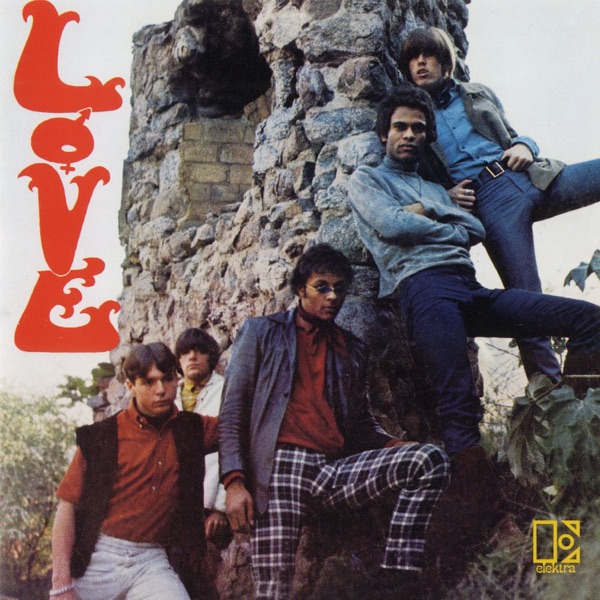
Love
1966 · 16 tracks
- 1 My Little Red Book ↗ 2:30
- 2 Can't Explain ↗ 2:39
- 3 A Message to Pretty ↗ 3:13
- 4 My Flash On You ↗ 2:07
- 5 Softly to Me ↗ 2:51
- 6 No Matter What You Do ↗ 2:45
- 7 Emotions ↗ 2:00
- 8 You I'll Be Following ↗ 2:24
- 9 Gazing ↗ 2:40
- 10 Hey Joe ↗ 2:41
- 11 Signed D.C. ↗ 2:45
- 12 Coloured Balls Falling ↗ 1:53
- 13 Mushroom Clouds ↗ 2:24
- 14 And More ↗ 2:58
- 15 No. Fourteen (B-Side) ↗ 1:44
- 16 Signed D.C. (Alternate Take) ↗ 2:50

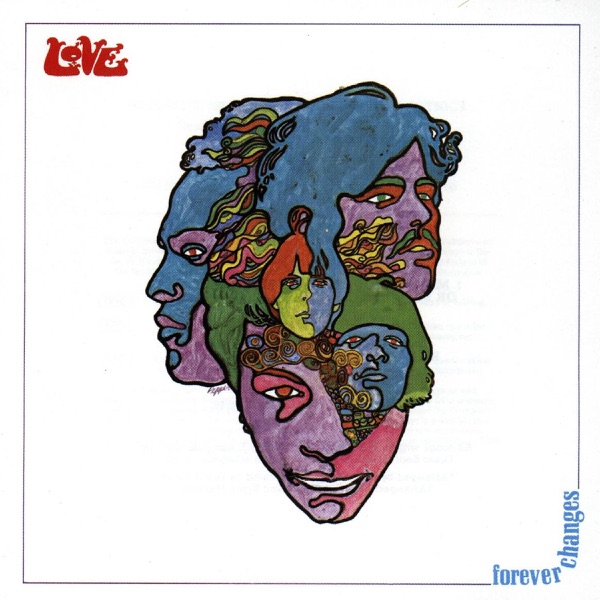
Forever Changes
1967 · 11 tracks
- 1 Alone Again Or ↗ 3:17
- 2 A House Is Not a Motel ↗ 3:32
- 3 Andmoreagain ↗ 3:21
- 4 The Daily Planet ↗ 3:31
- 5 Old Man ↗ 3:02
- 6 The Red Telephone ↗ 4:44
- 7 Maybe the People Would Be the Times or Between Clark and Hilldale ↗ 3:34
- 8 Live and Let Live ↗ 5:27
- 9 The Good Humor Man He Sees Everything Like This ↗ 3:08
- 10 Bummer In the Summer ↗ 2:24
- 11 You Set the Scene ↗ 6:49

Out Here
1969 · 17 tracks
- 1 I'll Pray for You ↗ 4:11
- 2 Abalony ↗ 1:47
- 3 Signed D.C. ↗ 5:09
- 4 Listen to My Song ↗ 2:19
- 5 I'm Down ↗ 3:43
- 6 Stand Out ↗ 3:01
- 7 Discharged ↗ 1:34
- 8 Doggone ↗ 11:59
- 9 I Still Wonder ↗ 3:07
- 10 Love Is More Than Words or Better Late Than Never ↗ 11:21
- 11 Nice to Be ↗ 1:54
- 12 Car Lights On In the Daytime Blues ↗ 1:10
- 13 Run to the Top ↗ 2:57
- 14 Willow Willow ↗ 3:16
- 15 Instra-Mental ↗ 2:57
- 16 You Are Something ↗ 2:03
- 17 Gather 'Round ↗ 4:44


Reel to Real
1974 · 23 tracks
- 1 Time Is Like a River ↗ 3:08
- 2 Stop the Music ↗ 3:02
- 3 Who Are You ↗ 3:08
- 4 Good Old Fashioned Dream ↗ 2:53
- 5 Which Witch Is Which ↗ 2:03
- 6 WITH a Little Energy ↗ 2:58
- 7 Singing Cowboy ↗ 3:09
- 8 Be Thankful for What You Got ↗ 4:33
- 9 You Said You Would ↗ 3:03
- 10 Busted Feet ↗ 2:42
- 11 Everybody's Gotta Live ↗ 3:24
- 12 Do It Yourself Outtake (Bonus Track) ↗ 3:37
- 13 I Gotta Remember Outtake (Bonus Track) ↗ 3:06
- 14 Somebody Outtake (Bonus Track) ↗ 2:43
- 15 You Gotta Feel It (Bonus Track) ↗ 3:38
- 16 WITH a Little Energy Alternative MIX (Bonus Track) ↗ 3:11
- 17 Busted Feet Alternative MIX (Bonus Track) ↗ 4:24
- 18 You Said You Would Single MIX (Bonus Track) ↗ 2:26
- 19 Stop the Music Alternative Take (Bonus Track) ↗ 3:38
- 20 Graveyard Hop Studio Rehearsal (Bonus Track) ↗ 1:50
- 21 Singing Cowboy Alternative Take (Bonus Track) ↗ 3:50
- 22 Everybody's Gotta Live Electric Version (Bonus Track) ↗ 3:43
- 23 Wonder People Studio Rehearsal (Bonus Track) ↗ 2:27

Black Beauty
2012 · 15 tracks
- 1 Young & Abel (Good & Evil) ↗ 3:25
- 2 Midnight Sun ↗ 3:34
- 3 Can't Find It ↗ 3:47
- 4 Walk Right In ↗ 3:23
- 5 Skid ↗ 2:52
- 6 Beep Beep ↗ 2:15
- 7 Stay Away ↗ 2:47
- 8 Lonely Pigs ↗ 4:25
- 9 See Myself in You ↗ 3:04
- 10 Product of the Times ↗ 4:11
- 11 Thomasine & Bushrod Main Title (Bonus Track) ↗ 2:27
- 12 Arthur Lee Interview Stephen Rosen 1974 (Bonus Track) ↗ 22:16
- 13 Every Time I Look up I'm Down (Live) [Bonus Track] ↗ 3:33
- 14 Nothing (Live) [Bonus Track] ↗ 3:06
- 15 L.a. Blues (Live 1996) [Bonus Track] ↗ 3:02
-
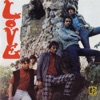 LoveLove196616 tracks
 -
 Da CapoLove19667 tracks
 -
 Forever ChangesLove196711 tracks
 -
 Out HereLove196917 tracks
 -
 Four SailLove196910 tracks
 -
 False StartLove197010 tracks
 -
 Reel to RealLove197423 tracks
 -
 Black BeautyLove201215 tracks
Deep Dive
Overview
Love was an American rock band formed in Los Angeles in 1965, led by songwriter and vocalist Arthur Lee. The group stands as one of the first racially diverse rock bands in American music, a distinction that reflected the broader cultural currents of their era. Though their chart presence remained modest by mainstream standards, Love produced a body of work—particularly the 1967 album Forever Changes—that transcended contemporary commercial metrics to become recognized as among the finest rock records of the 1960s.
Formation Story
Love emerged from Los Angeles in 1965, built around the creative vision of Arthur Lee. The band took shape during a moment when rock music was fracturing into distinct regional sounds and stylistic tributaries: the British Invasion, American folk-rock revival, and early experiments with psychedelia. Los Angeles, a sprawling city of competing musical scenes, provided fertile ground for Lee’s ambitions. The formation of Love reflected the musical ferment of Southern California at mid-decade, where musicians drew freely from folk, garage, soul, and the emerging psychedelic underground. Lee’s role as primary songwriter and bandleader established the band’s identity from the outset.
Breakthrough Moment
Love’s first commercial breakthrough came quickly. Their early single “My Little Red Book” became the first hit record released by Elektra Records, reaching number one on the Los Angeles charts and, in June 1966, climbing to number 52 on the Billboard Hot 100 and number 35 on the Cash Box Top 100. The track announced their arrival and validated Elektra’s investment in the young band. A subsequent single, “7 and 7 Is,” pushed further into the national consciousness, peaking at number 33 on the US singles chart. These successes came from their first two albums, Love (1966) and Da Capo (1966), released in rapid succession and establishing the band as a significant voice in the emerging Los Angeles rock scene.
Peak Era
Love’s creative and critical zenith arrived with the release of Forever Changes in 1967. The album synthesized the band’s blend of psychedelic rock, folk rock, and garage sensibilities into a cohesive artistic statement that resonated deeply with both critics and engaged listeners. Forever Changes became recognized as one of the best albums of the 1960s, a distinction that has only solidified over subsequent decades. The album’s success positioned Love as more than a chart-chasing pop group; they had proven themselves capable of substantial artistic vision. The period surrounding Forever Changes represented the band’s peak in terms of critical esteem and creative ambition, even as their commercial footprint remained smaller than contemporary acts who dominated radio playlists.
Musical Style
Love’s sound occupied a unique position within 1960s rock, synthesizing multiple strands of contemporary music into a distinctive whole. They drew from psychedelic rock’s experimental textures and exploratory song structures, folk rock’s emphasis on acoustic instrumentation and introspective lyricism, and garage rock’s raw energy and loose-limbed urgency. Arthur Lee’s songwriting and vocal presence anchored the group’s identity, bringing a sensibility that moved fluidly between introspection and exuberance. The band’s willingness to blend these styles without sacrificing cohesion set them apart from peers who often seemed locked into single generic frameworks. Their incorporation of diverse instrumental colors and production approaches reflected the broader moment in which rock musicians felt emboldened to experiment with recording technology and arrangement.
Major Albums
Love (1966)
The band’s debut introduced Arthur Lee’s songwriting and the group’s eclectic approach to rock, establishing the foundation upon which their reputation would build.
Da Capo (1966)
Released the same year as their debut, this follow-up continued their early momentum and refined their blend of psychedelic and folk-rock elements.
Forever Changes (1967)
The band’s masterpiece and the album that defined their legacy, Forever Changes achieved a synthesis of psychedelic ambition and pop accessibility that few bands managed during the 1960s.
Out Here (1969)
Released in 1969, this album represented the band’s continued output during the late 1960s, continuing their exploration of psychedelic and rock idioms.
Four Sail (1969)
Also released in 1969, Four Sail arrived during a prolific period for the group as they maintained their recording presence on Elektra.
Signature Songs
- “My Little Red Book” — Love’s breakthrough single and Elektra Records’ first major hit, reaching number 52 on the Billboard Hot 100 in June 1966.
- “7 and 7 Is” — A Top 40 hit that peaked at number 33 on the US charts and showcased the band’s gift for psychedelic pop hooks.
- “A House Is Not a Motel” — A standout track highlighting Arthur Lee’s songwriting sophistication.
- “The Red Telephone” — A signature psychedelic exploration demonstrating the band’s willingness to venture into complex, atmospheric territory.
Influence on Rock
Love’s influence on rock music extended beyond their modest chart placements, operating primarily through the respect of musicians and critics who recognized Forever Changes as a landmark statement. The album’s critical rehabilitation and ongoing recognition demonstrated that commercial success and artistic significance need not align; Forever Changes became a touchstone for musicians exploring psychedelic rock and the possibilities of blending folk-rock with experimental production. The band’s early diversity—reflected in their racial makeup and their refusal to lock themselves into a single genre—prefigured broader shifts in rock toward inclusivity and cross-genre experimentation. Artists investigating the intersection of psychedelia and pop sensibility could trace a line through Love’s recorded legacy.
Legacy
Love’s legacy rests primarily on Forever Changes, an album that has only grown in estimation since its 1967 release. What seemed undervalued at the time—a psychedelic rock album of artistic ambition but modest commercial performance—became understood as a foundational work of 1960s rock. Arthur Lee’s vision and the band’s execution on that album ensured their place in rock history, even as their subsequent releases failed to approach its achievement. The band’s continued presence on their official website and the periodicity of releases—including Love Lost in 2009, Black Beauty in 2012, and Live In England in 2021—indicated an ongoing connection to their recorded legacy. Reissues and retrospective appreciation have kept Forever Changes in circulation among serious rock listeners and have drawn renewed attention to the broader Love catalog.
Fun Facts
- Love was among the first racially diverse rock bands in American music, a distinction that reflected their Los Angeles origins during the 1960s.
- Arthur Lee’s tenure as bandleader and primary songwriter gave Love a singular creative voice unusual among rock groups of the era.
- The band’s recording output accelerated during 1969, with both Out Here and Four Sail released that same year.