
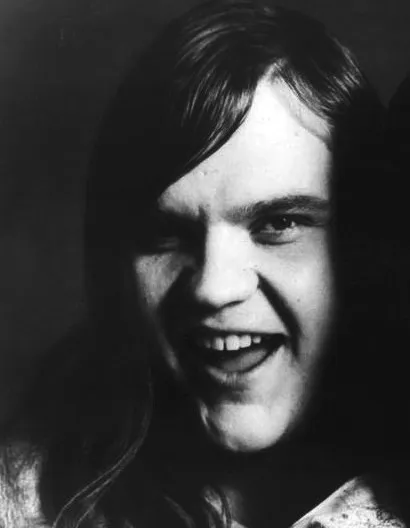
Photo by Ronden Talent Management , licensed under Public domain · Wikimedia Commons
Rank #218
Meat Loaf
From Wikipedia
Michael Lee Aday, better known by his stage name Meat Loaf, was an American singer and actor. He was known for his powerful, wide-ranging voice and theatrical live shows. His Bat Out of Hell album trilogy—Bat Out of Hell (1977), Bat Out of Hell II: Back into Hell (1993), and Bat Out of Hell III: The Monster Is Loose (2006)—has sold more than 100 million records worldwide, making him one of the best-selling music artists of all time. The first album stayed on the charts for over nine years and is one of the best-selling albums in history, still selling an estimated 200,000 copies annually as of 2016.
Discography & Previews
Browse through and click an album to open and play 30-second previews streamed from Apple Music.

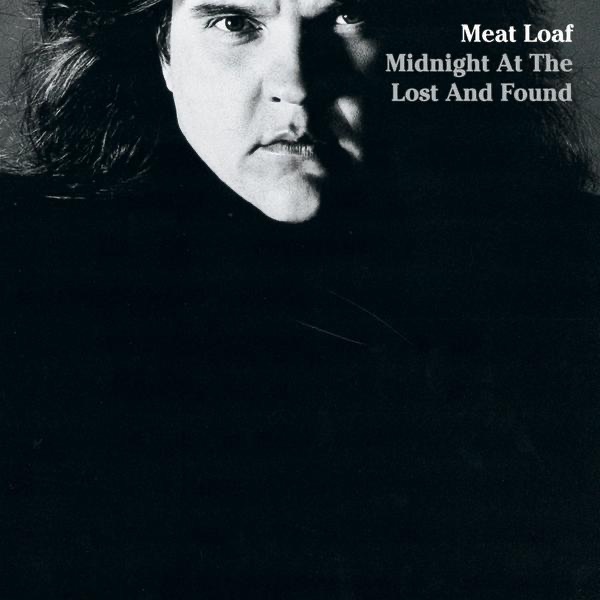
Midnight at the Lost and Found
1983 · 10 tracks
- 1 Razor's Edge ↗ 4:07
- 2 Midnight at the Lost and Found ↗ 3:30
- 3 Wolf at Your Door ↗ 4:07
- 4 Keep Driving ↗ 3:32
- 5 The Promised Land ↗ 2:45
- 6 You Never Can Be Too Sure About the Girl ↗ 4:29
- 7 Priscilla ↗ 3:34
- 8 Don't You Look at Me Like That ↗ 3:29
- 9 If You Really Want To ↗ 3:38
- 10 Fallen Angel ↗ 3:39

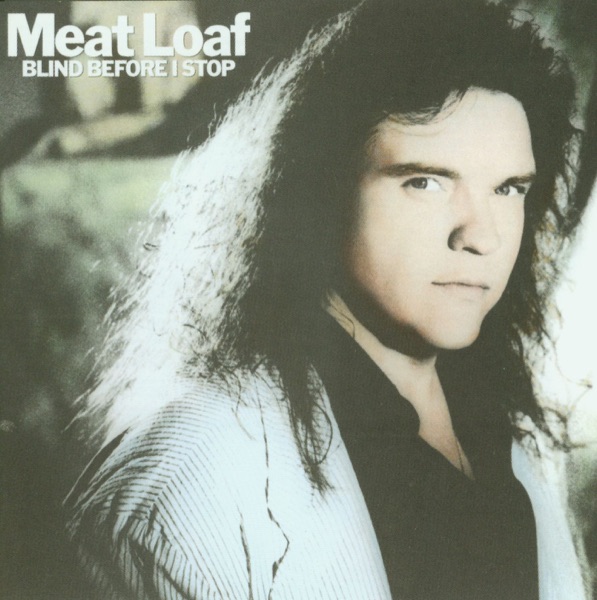
Blind Before I Stop
1986 · 11 tracks
- 1 Execution Day ↗ 6:31
- 2 Rock 'N' Roll Mercenaries ↗ 5:00
- 3 Getting Away with Murder ↗ 3:51
- 4 One More Kiss (Night of the Soft Parade) ↗ 5:38
- 5 Blind Before I Stop ↗ 3:39
- 6 Burning Down ↗ 5:11
- 7 Standing On the Outside ↗ 3:58
- 8 Masculine ↗ 4:23
- 9 Man and a Woman ↗ 4:11
- 10 Special Girl ↗ 3:56
- 11 Rock 'N' Roll Hero ↗ 4:29

Bat Out of Hell II: Back Into Hell…
1993 · 11 tracks
- 1 I'd Do Anything for Love (But I Won't Do That) ↗ 11:59
- 2 Life Is a Lemon and I Want My Money Back ↗ 7:59
- 3 Rock and Roll Dreams Come Through ↗ 5:49
- 4 It Just Won't Quit ↗ 7:20
- 5 Out of the Frying Pan (And Into the Fire) ↗ 7:21
- 6 Objects In the Rear View Mirror May Appear Closer Than They Are ↗ 10:16
- 7 Wasted Youth ↗ 2:42
- 8 Everything Louder Than Everything Else ↗ 7:59
- 9 Good Girls Go to Heaven (Bad Girls Go Everywhere) ↗ 6:53
- 10 Back Into Hell ↗ 2:45
- 11 Lost Boys and Golden Girls ↗ 4:30
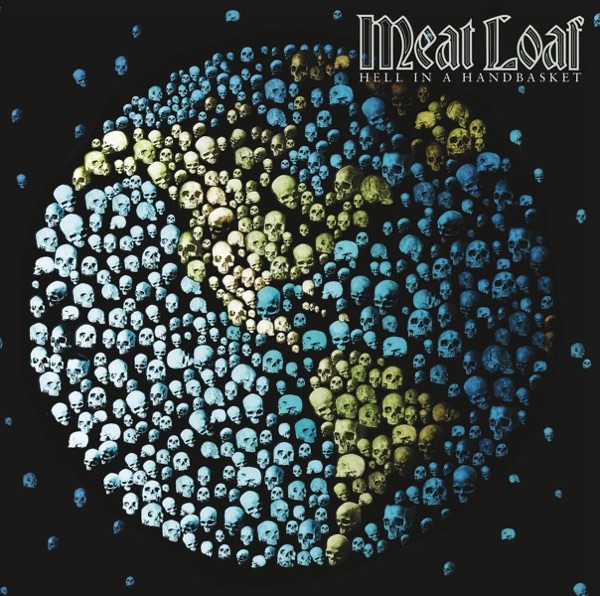
Hell in a Handbasket
2011 · 12 tracks
- 1 All of Me ↗ 5:16
- 2 The Giving Tree ↗ 4:53
- 3 Live or Die ↗ 4:27
- 4 Blue Sky / Mad Mad World / The Good God Is a Woman and She Don't Like Ugly ↗ 4:58
- 5 California Dreamin' ↗ 3:57
- 6 Party of One ↗ 3:58
- 7 Another Day ↗ 5:04
- 8 40 Days ↗ 5:21
- 9 Our Love and Our Souls ↗ 3:57
- 10 Stand In the Storm ↗ 4:36
- 11 Blue Sky ↗ 2:57
- 12 Fall from Grace ↗ 3:47

Braver Than We Are
2016 · 13 tracks
- 1 Who Needs the Young ↗ 5:27
- 2 Going All the Way (A Song In 6 Movements) [feat. Ellen Foley & Karla DeVito] ↗ 11:28
- 3 Speaking In Tongues ↗ 4:24
- 4 Loving You Is a Dirty Job (But Somebody's Gotta Do It) [feat. Stacy Michelle] ↗ 6:09
- 5 Souvenirs ↗ 8:17
- 6 Only When I Feel ↗ 1:57
- 7 More ↗ 6:07
- 8 Godz ↗ 3:34
- 9 Skull of Your Country (feat. Cian Coey) ↗ 3:35
- 10 Train of Love ↗ 4:23
- 11 For What It's Worth (feat. Stephen Stills) ↗ 3:18
- 12 Prize Fight Lover ↗ 5:35
- 13 I Would Do Anything for Love (But I Won't Do That) [feat. Imelda May] [Orchestral Version] ↗ 10:20

What You See Is What You Get: The Motown Recordings
2023 · 28 tracks
- 1 (I'd Love To Be) As Heavy As Jesus ↗ 2:52
- 1 Let Me Come Down Easy ↗ 2:50
- 2 She Waits By The Window ↗ 4:06
- 2 It’s Always Me ↗ 2:28
- 3 It Takes All Kinds Of People ↗ 2:28
- 3 Carry Me ↗ 3:24
- 4 Game Of Love ↗ 3:49
- 4 A Woman Left Lonely ↗ 4:46
- 5 Kiss Me Again ↗ 5:08
- 5 Mojo Hannah ↗ 3:35
- 6 What You See Is What You Get ↗ 2:17
- 6 Stone Liberty ↗ 2:56
- 7 Sunshine (Where's Heaven) ↗ 3:06
- 7 Sunshine (Where's Heaven) [Stoney Solo Version] ↗ 3:35
- 8 Jimmy Bell ↗ 4:05
- 8 Touch and Go ↗ 3:55
- 9 Lady Be Mine ↗ 4:43
- 9 The Way You Do The Things You Do (Alternate Mix) ↗ 3:41
- 10 Jessica White ↗ 2:46
- 10 Everything Under The Sun (Alternate Mix) ↗ 3:07
- 11 What You See Is What You Get (Mono Single Mix) ↗ 2:21
- 11 Stone Heart (Alternate Mix) ↗ 3:10
- 12 Lady Be Mine (Mono Single Mix) ↗ 3:18
- 12 Who Is The Leader Of The People (Alternate Mix) ↗ 4:20
- 13 It Takes All Kinds Of People (Mono Single Mix) ↗ 2:13
- 13 Jimmy Bell (Alternate Mix) ↗ 4:48
- 14 The Way You Do The Things You Do (Mono Single Mix) ↗ 3:07
- 14 It Takes All Kinds Of People (Alternate Mix) ↗ 4:06
-
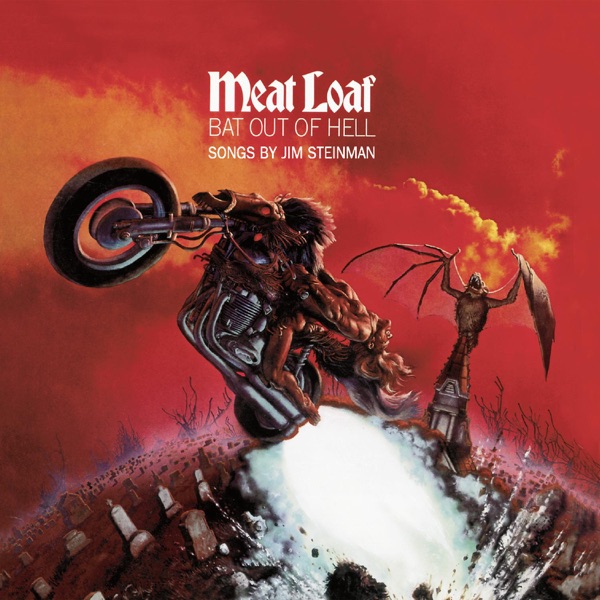
 Bat Out of HellMeat Loaf19777 tracks
 -
 Dead RingerMeat Loaf19818 tracks
 -
 Midnight at the Lost and FoundMeat Loaf198310 tracks
 -
 Bad AttitudeMeat Loaf19849 tracks
 -
 Blind Before I StopMeat Loaf198611 tracks
 -
 Bat Out of Hell II: Back Into Hell…Meat Loaf199311 tracks
 -
 Hell in a HandbasketMeat Loaf201112 tracks
 -
 Braver Than We AreMeat Loaf201613 tracks
 -
 What You See Is What You Get: The Motown RecordingsMeat Loaf202328 tracks
Deep Dive
Overview
Michael Lee Aday, known professionally as Meat Loaf, was an American singer and actor whose career spanned from the late 1970s until his death in 2022. He became one of the best-selling music artists in history, driven primarily by his Bat Out of Hell album trilogy—three landmark releases that sold more than 100 million records worldwide combined. Meat Loaf’s defining characteristic was a powerful, wide-ranging voice deployed with theatrical flair, delivering hard rock and progressive rock material with unmatched vocal command and dramatic presence.
Formation Story
Born in 1947, Meat Loaf emerged from a musical tradition that drew from rock, soul, and theatrical performance. He came of age during the 1960s and early 1970s, absorbing the expansionist ambitions of progressive rock alongside the raw energy of hard rock. His turn toward rock music was driven by an instinctive grasp of vocal power and stagecraft—the ability to sustain demanding melodies across extended compositions and to translate rock’s emotional extremes into something larger than life. By the mid-1970s, he had positioned himself as a vocalist willing to embrace both the technical demands of progressive arrangements and the visceral impact of hard rock delivery.
Breakthrough Moment
Meat Loaf’s arrival as a major artist came with the release of Bat Out of Hell in 1977. The album became one of the best-selling records in history, remaining on the charts for over nine years—a testament to its sustained cultural impact. By 2016, it was still selling an estimated 200,000 copies annually, decades after its initial release. The theatrical scope of the album, combined with Meat Loaf’s ability to anchor extended narrative-driven rock compositions, established a new template for hard rock that valued operatic ambition alongside visceral power. This debut album catapulted him from regional notability to international prominence and set the trajectory for his entire career.
Peak Era
The period from 1977 through the early 1980s marked Meat Loaf’s most commercially and artistically vital stretch. Following Bat Out of Hell, he released Dead Ringer in 1981, then Midnight at the Lost and Found in 1983 and Bad Attitude in 1984. These albums consolidated his position as hard rock’s preeminent vocal virtuoso, delivering songs structured around his capacity to shift between tender passages and explosive climaxes. Though no subsequent album matched the cultural phenomenon of the debut, his ability to command both radio airplay and devoted concert audiences remained constant throughout this period. A second revival came in 1993 with Bat Out of Hell II: Back Into Hell, which proved that his vocal authority and theatrical instinct had not diminished and reconnected him with a new generation of listeners.
Musical Style
Meat Loaf’s sound synthesized hard rock’s electric intensity with progressive rock’s structural ambition. His vocal approach was his primary instrument—a voice capable of operatic range, from intimate vulnerability to full-throated power, often within a single song. Rather than relying on a consistent tonal character, he used vocal dynamics as a compositional tool, sculpting narratives through delivery and intensity. The arrangements often featured the kind of layered instrumentation and extended passages favored by progressive rock, yet maintained the aggressive guitar-forward aesthetic of hard rock. Lyrically and sonically, his work emphasized theatrical storytelling—songs functioned as mini-dramas rather than three-minute pop confections. This hybrid approach made him distinct from both the precision-driven progressive rock of contemporary acts and the straightforward hard rock of his peers.
Major Albums
Bat Out of Hell (1977)
The debut that became a cultural landmark. Its nine-year chart run and continued annual sales of 200,000 copies as of 2016 established it as one of the best-selling albums in music history, defining Meat Loaf’s artistic identity and commercial trajectory.
Dead Ringer (1981)
Following immediately on the breakthrough, Dead Ringer sustained the theatrical hard rock template while exploring new compositional territory, maintaining his commercial momentum through the early 1980s.
Bat Out of Hell II: Back Into Hell (1993)
A return to the conceptual and sonic framework that defined his debut, the sequel proved Meat Loaf’s vocal powers had endured and reconnected him with both longtime fans and a generation discovering his work anew.
Bat Out of Hell III: The Monster Is Loose (2006)
The third installment of the trilogy continued the legacy, adding another significant entry to one of rock’s most sustained multi-album narratives and contributing to the 100 million records sold across all three Bat albums.
Signature Songs
- Paradise by the Dashboard Light — An extended, dialogue-driven composition that became Meat Loaf’s defining vehicle, showcasing his ability to sustain dramatic vocal performance across an extended narrative arc.
- Two Out of Three Ain’t Bad — A power ballad that demonstrated his range beyond full-throttle hard rock, reaching audiences through vulnerability and emotional directness.
- I’d Do Anything for Love (But I Won’t Do That) — The lead single from Bat Out of Hell II, it reestablished his commercial relevance in the 1990s and became a streaming-era standard.
- Bat Out of Hell — The album’s title track and an exemplar of his theatrical approach, merging horror-movie imagery with rock bombast.
Influence on Rock
Meat Loaf’s impact on rock music lay primarily in his demonstration that hard rock could absorb the structural and emotional ambitions of progressive rock without losing its fundamental power. He proved that extreme vocal range and theatrical presentation could coexist with credible rock authenticity. His influence extended across hard rock, heavy metal, and mainstream rock radio, where his willingness to embrace both operatic excess and intimate vulnerability opened pathways for subsequent generations of vocalists. The Bat Out of Hell trilogy became a template for concept-driven hard rock albums, influencing artists across multiple decades to prioritize narrative and vocal storytelling alongside instrumental prowess.
Legacy
Meat Loaf’s death in 2022 closed out a career that had spanned nearly five decades of recording and performing. The Bat Out of Hell trilogy remains his primary legacy—three albums that collectively sold over 100 million records and established him as one of the best-selling music artists of all time. The first album’s continued annual sales of 200,000 copies as of 2016 demonstrates the enduring appeal of his work across generations. His theatrical approach to hard rock, his vocal command, and his commitment to extended narrative compositions influenced how rock musicians approached spectacle and storytelling. Streaming platforms and continued physical sales ensure that his catalog remains accessible to audiences discovering him long after the peak of his commercial dominance.
Fun Facts
- Meat Loaf recorded across numerous major labels throughout his career, including Arista Records, RCA, Virgin Records, and Epic Records, reflecting both his commercial appeal and the changing landscape of the music industry.
- The extended chart life of Bat Out of Hell—remaining on the charts for over nine years—remains one of the longest chart runs for any rock album in history.
- His return to recording in 2010 with Hang Cool Teddy Bear demonstrated his commitment to new material even as the Bat Out of Hell trilogy continued to dominate his streaming presence and legacy.