
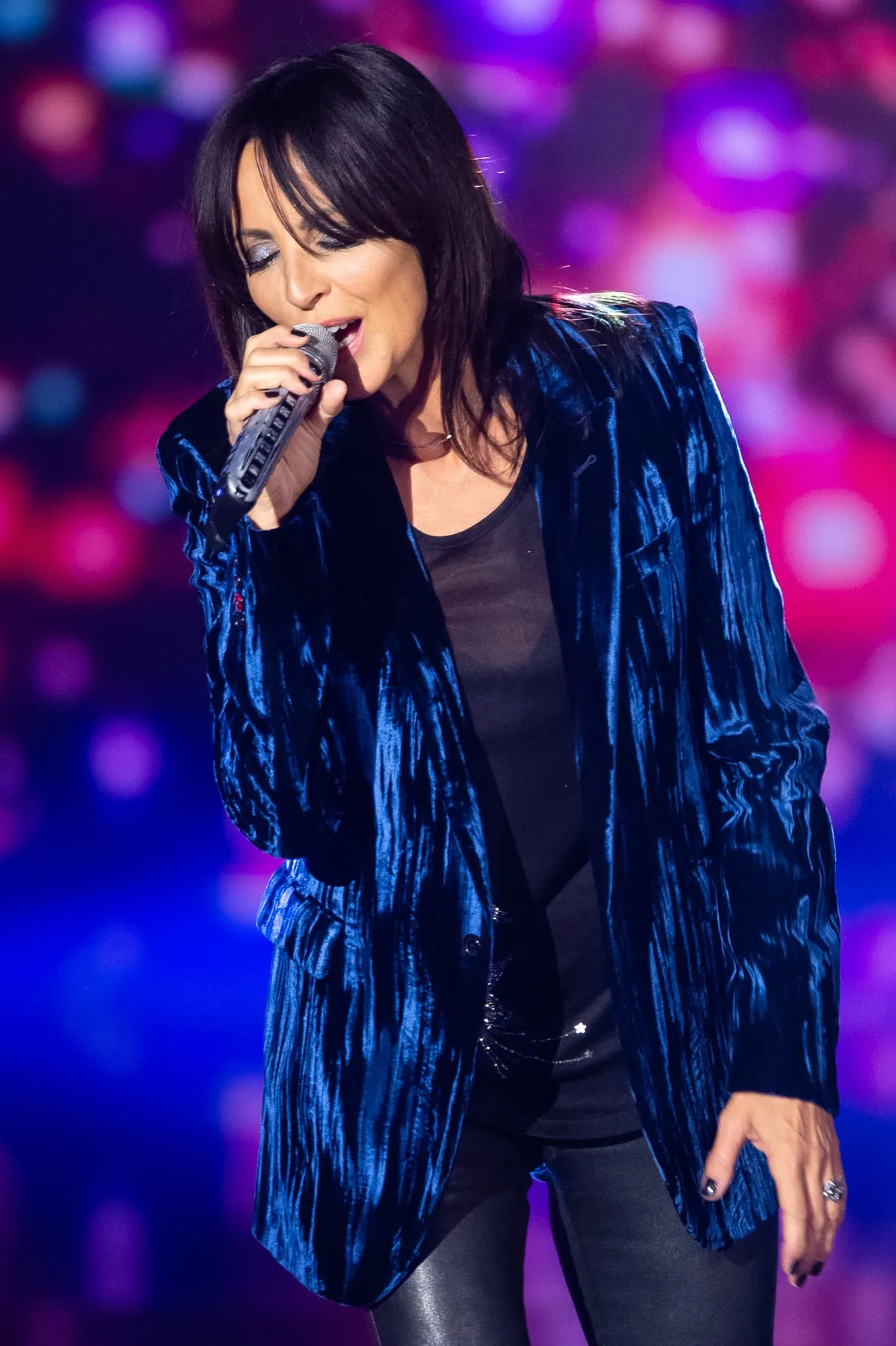
Photo by Stefan Brending ( 2eight ) , licensed under CC BY-SA 3.0 de · Wikimedia Commons
Rank #294
Nena
From Wikipedia
Gabriele Susanne Kerner, better known by her stage name Nena, is a German singer who rose to international fame in 1983 as the lead vocalist of the band Nena with the Neue Deutsche Welle song "99 Luftballons". In that same year, the band re-recorded this song in English as "99 Red Balloons". Nena's re-recording of some of the band's old hit songs as a solo artist, produced by the co-composer of most of them, her former Nena band colleague and keyboard player Uwe Fahrenkrog-Petersen, rekindled her solo career in 2002. Combined with the success of the Nena band years, she has sold over 25 million records, making her the most successful German pop singer in chart history.
Discography & Previews
Browse through and click an album to open and play 30-second previews streamed from Apple Music.


Bongo Girl
1992 · 14 tracks
- 1 Manchmal ist ein Tag ein ganzes Leben ↗ 4:03
- 2 Was dann ↗ 3:10
- 3 Ich kann nich' mehr ↗ 3:45
- 4 Mach Dir keine Sorgen ↗ 4:50
- 5 Ohne Ende ↗ 3:23
- 6 Alles viel zu schön ↗ 2:57
- 7 Was immer du tust ↗ 3:53
- 8 Conversation ↗ 4:16
- 9 Bongo Girl ↗ 3:47
- 10 You Don't Have to Cry ↗ 4:08
- 11 Mein König ↗ 4:04
- 12 Keine Lügen mehr ↗ 4:12
- 13 Weit über den Ozean ↗ 4:04
- 14 Outro ↗ 1:41

Jamma nich
1997 · 11 tracks

Nenas Weihnachtsreise
1997 · 28 tracks
- 1 Schneeflöckchen Weißröckchen ↗ 2:10
- 2 Hurra es schneit ↗ 2:13
- 3 Novemberlied ↗ 1:14
- 4 Der erste Advent ↗ 0:40
- 5 Adventslied ↗ 1:09
- 6 Hollerboller Rumpelsack ↗ 0:55
- 7 Lasst uns froh und munter sein ↗ 2:05
- 8 Die Geschichte vom Nikolaus ↗ 1:12
- 9 Kling Glöckchen ↗ 1:57
- 10 Der zweite Advent ↗ 0:44
- 11 Bastellied ↗ 1:49
- 12 Ich wünsch mir was ↗ 2:14
- 13 Der dritte Advent ↗ 0:29
- 14 Oh Tannenbaum ↗ 0:59
- 15 Unser Tannenbaum ↗ 2:06
- 16 Der vierte Advent ↗ 0:27
- 17 Alle Jahre wieder ↗ 1:34
- 18 Die Geschichte von Maria und Josef, Teil 1 ↗ 2:33
- 19 Wer klopfet an ↗ 1:35
- 20 Die Geschichte von Maria und Josef, Teil 2 ↗ 0:16
- 21 Kind singt vom Stall ↗ 1:29
- 22 Die Geschichte von Maria und Josef, Teil 3 ↗ 0:53
- 23 Still, still ↗ 2:14
- 24 Ihr Kinderlein kommet ↗ 1:53
- 25 Kommet ihr Hirten ↗ 0:44
- 26 Die Geschichte von Maria und Josef, Teil 4 ↗ 0:21
- 27 Stille Nacht ↗ 1:46
- 28 Oh du Fröhliche (Karaoke Version) ↗ 2:40

Wenn alles richtig ist, dann stimmt was nich
1998 · 12 tracks
- 1 Willkommen ↗ 0:07
- 2 Es ist in Ordnung ↗ 3:13
- 3 Was hast du in meinem Traum gemacht? ↗ 3:57
- 4 Wenn wenigstens Sommer wär ↗ 3:03
- 5 Dann Fiel Mir Auf ↗ 4:07
- 6 Meine kleine heile Welt ↗ 3:24
- 7 Das Ist Normal ↗ 3:54
- 8 Es Muss Raus ↗ 3:58
- 9 Todmüde ↗ 4:12
- 10 Wir Sind Modern ↗ 3:09
- 11 Heul Dich Bei Mir Aus ↗ 4:47
- 12 Wir machen keine Kunst ↗ 3:30
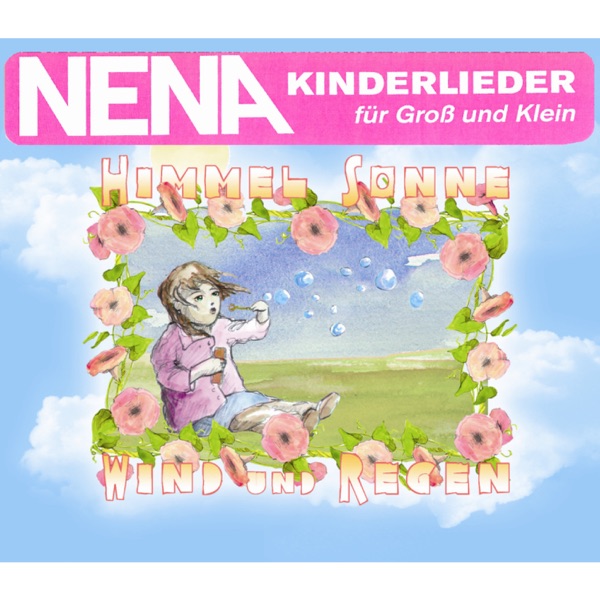
Himmel, Sonne, Wind und Regen
2008 · 15 tracks
- 1 Regen ↗ 2:49
- 2 Wind ↗ 3:03
- 3 Fragen (Duett mit Rolf Zuckowski) ↗ 3:15
- 4 Kirschen ↗ 1:34
- 5 Ameisen ↗ 3:08
- 6 Baum (Duett mit Philipp Palm) ↗ 3:16
- 7 Farben ↗ 3:23
- 8 Klein Häschen ↗ 1:24
- 9 Es Regnet ↗ 1:29
- 10 Mama (gesungen von Larissa) ↗ 2:47
- 11 Steine ↗ 3:21
- 12 Libellen ↗ 1:56
- 13 Himmel ↗ 2:22
- 14 Sonne ↗ 3:25
- 15 Von Kind zu Kind ↗ 3:32
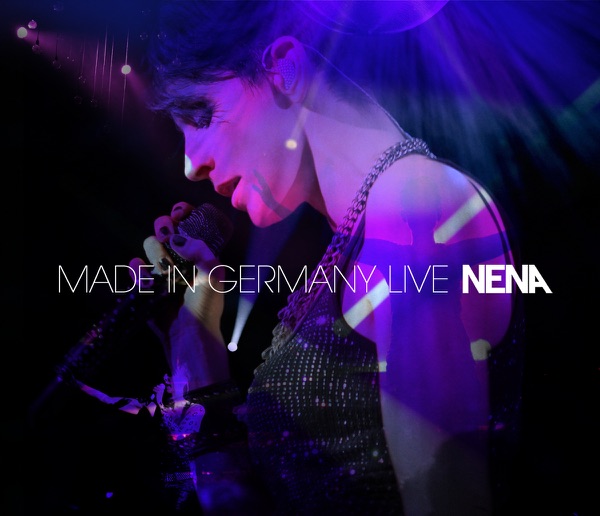
Made in Germany
2009 · 27 tracks
- 1 Made in Germany (Live) ↗ 5:10
- 1 Ganz viel Zeit (Live) ↗ 7:15
- 2 SchönSchönSchön (Live) ↗ 4:22
- 2 99 Luftballons (Live) ↗ 4:23
- 3 Nur geträumt (Live) ↗ 6:12
- 3 Leuchttum (Live) ↗ 7:04
- 4 Lass die Leinen los (Live) ↗ 4:54
- 4 Schmerzen (Live) ↗ 5:41
- 5 Wunder geschehn (Live) ↗ 5:56
- 5 In meinem Leben (Live) ↗ 7:27
- 6 Geheimnis (Live) ↗ 3:10
- 6 Nachts wenn es warm ist (Live) ↗ 5:51
- 7 Wir sind wahr (Live) ↗ 5:32
- 7 Irgendwie, irgendwo, irgendwann (Live) ↗ 4:34
- 8 Fragezeichen (Live) ↗ 4:27
- 8 Der Anfang (Live) ↗ 10:56
- 9 Tokyo (Live) ↗ 3:17
- 9 Strangers (Live) [Bonus Track] ↗ 2:58
- 10 Liebe ist (Live) ↗ 6:07
- 10 Ecstacy (Live) [Bonus Track] ↗ 3:11
- 11 Du bist so gut für mich (Live) ↗ 5:52
- 11 Engel der Nacht (Live) [Bonus Track] ↗ 2:57
- 12 Willst du mit mir gehn (Live) ↗ 5:14
- 12 Du hast dich entschieden (Live) [Bonus Track] ↗ 3:27
- 13 Ich bin hyperaktiv (Live) ↗ 6:38
- 13 Heute hab ich die Sonne mit dem Mond verwechselt (Live) [Bonus Track] ↗ 3:32
- 14 Liebe isch... (Live) [Bonus Track] ↗ 3:55

Oldschool
2015 · 17 tracks
- 1 Oldschool ↗ 2:43
- 2 Lieder von früher ↗ 3:00
- 3 Genau jetzt ↗ 3:05
- 4 Ja das wars ↗ 2:37
- 5 Betonblock ↗ 3:06
- 6 Mach doch was ich will ↗ 3:00
- 7 Berufsjugendlich ↗ 2:50
- 8 Sonnemond ↗ 3:07
- 9 Jeden Tag ↗ 2:57
- 10 Ein Wort ↗ 3:24
- 11 Magie ↗ 3:26
- 12 Kreis ↗ 4:14
- 13 PI ich rechne mit allem ↗ 5:11
- 14 Peter Pan ↗ 4:04
- 15 Bruder ↗ 3:41
- 16 Schicksal ↗ 4:14
- 17 Oldschool (feat. Samy Deluxe & Afrob) [ASD Remix] ↗ 2:42

-
 Wunder gescheh’nNena198910 tracks
 -
 Bongo GirlNena199214 tracks
 -
 Jamma nichNena199711 tracks
 -
 Nenas WeihnachtsreiseNena199728 tracks
 -
 Wenn alles richtig ist, dann stimmt was nichNena199812 tracks
 -
 Himmel, Sonne, Wind und RegenNena200815 tracks
 -
 Made in GermanyNena200927 tracks
 -
 OldschoolNena201517 tracks
 -
 LichtNena202011 tracks
Deep Dive
Overview
Nena is a German pop rock and new wave artist whose international breakthrough in 1983 established her as one of the most commercially successful performers in German music history. Born Gabriele Susanne Kerner in 1960, she emerged during the Neue Deutsche Welle movement, a distinctly German wave of new wave and synth-pop that blended punk energy with electronic production. Her global reach was cemented by a single song—“99 Luftballons” and its English-language counterpart “99 Red Balloons”—that transcended language and cultural boundaries to become an arena-rock staple and cultural touchstone of the 1980s.
Formation Story
Nena was born in 1960 in Hagen, Germany, during a period of cultural ferment in West German youth culture. The late 1970s and early 1980s saw a surge of experimental, electronic-based rock and pop emanating from Germany’s urban centers, blending the raw energy of punk with synthesizer-driven arrangements. It was within this creative ferment that Gabriele Kerner adopted the stage name Nena and began her career as a performer. She came to prominence initially as the lead vocalist of the band Nena, where she worked alongside keyboard player and co-composer Uwe Fahrenkrog-Petersen. This partnership would prove foundational to her artistic identity and would resurface decades later to revitalize her solo career.
Breakthrough Moment
Nena’s international breakthrough arrived in 1983 with “99 Luftballons,” a synth-driven new wave composition that captured both the playful absurdism and underlying Cold War anxieties of the era. The song’s whimsical concept—ninety-nine red balloons drifting across the Berlin Wall and triggering a military response—resonated globally in ways that transcended its German-language origin. That same year, the band released an English-language version, “99 Red Balloons,” which penetrated English-speaking markets with equal force. The dual-language strategy ensured that Nena’s voice became recognizable across continents and that her early 1980s moment defined a generation’s entry point to German pop music.
Peak Era
The early-to-mid 1980s represented Nena’s initial peak, driven by the international success of the Nena band project. However, her career experienced a renaissance beginning in 2002, when she returned to recording as a solo artist. Working once again with Uwe Fahrenkrog-Petersen, who produced re-recordings of some of the band’s earlier hit songs, Nena rekindled commercial interest in her catalog and established a new phase of her recording life. This strategic revisiting of familiar material, combined with original compositions, allowed her to extend her career well into the 21st century. Albums such as Nena feat. Nena (2002), Willst du mit mir gehn (2005), and Cover Me (2007) demonstrated her continued relevance as a recording artist beyond the nostalgia factor.
Musical Style
Nena’s sound is rooted in synth-pop and new wave, genres that emphasized synthesizers, drum machines, and programmed rhythms over traditional rock instrumentation. Her vocals carry a distinctive German inflection and directness, neither heavily trained in the classical sense nor affected by excessive vocal affectation. The production approach, particularly during her band years and her early solo albums, favored clean, electronically processed arrangements with prominent keyboard lines and rhythmic precision. As her solo career evolved across the 1990s and 2000s, her work incorporated a broader range of styles, from the electronic pop of her earlier output to more experimental and adult-contemporary approaches in later projects like Chokmah (2001). The collaboration with Fahrenkrog-Petersen remained central to her aesthetic consistency, as his keyboard work and production sensibility provided continuity across decades.
Major Albums
Wunder gescheh’n (1989)
Nena’s first major solo release established her as an independent recording artist separate from the band that had launched her fame, signaling her intention to pursue a parallel solo career.
Cover Me (2007)
A covers album that demonstrated Nena’s versatility by interpreting classic material, released as part of her sustained return to recording after the 2002 renaissance initiated by re-recordings.
Made in Germany (2009)
One of Nena’s most substantive solo efforts, reflecting her matured approach to songwriting and production during the 21st century phase of her career.
Nena feat. Nena (2002)
A landmark re-recording project in collaboration with Uwe Fahrenkrog-Petersen that successfully revived interest in her classic material and launched her extended solo renaissance.
Signature Songs
- “99 Luftballons” / “99 Red Balloons” — The monumental 1983 new wave anthem that defined her international career and remains her most recognizable work.
- “Kino” — A standout track from the band era that showcased the synth-pop sophistication of the Neue Deutsche Welle movement.
Influence on Rock
Nena’s primary impact on international rock and pop culture was as a gateway into German popular music for English-speaking audiences. “99 Red Balloons” demonstrated that a song could achieve massive commercial success while sung in a foreign language, paving the way for greater acceptance of non-English-language pop in Western markets. Her association with the Neue Deutsche Welle movement helped establish German pop and new wave as a distinct and influential branch of 1980s rock, displacing the prior perception of German rock as primarily a heavy-metal domain. The sonic influence of the band Nena—the electronic production style, the keyboard-forward arrangements—fed directly into the broader synth-pop movement that dominated the early 1980s globally.
Legacy
Nena holds the distinction of being the most successful German pop singer in chart history, with combined sales from her band and solo careers exceeding 25 million records worldwide. Her 2002 resurgence as a solo artist, driven by the re-recording of her classic material with Fahrenkrog-Petersen, demonstrated a model for legacy artists seeking to reconnect with audiences without pursuing a nostalgia-driven reunion format. Her continued recording activity well into the 2010s and 2020s—albums such as Du bist gut (2012) and Licht (2020)—ensured that she remained a working artist rather than a relic of the 1980s. “99 Red Balloons” endures as a staple of 1980s rock radio and streaming playlists, cementing her position as a permanent fixture in popular culture.
Fun Facts
- Nena recorded a Christmas album, Nenas Weihnachtsreise (1997), demonstrating her willingness to explore diverse genres beyond her synth-pop roots.
- Her album Die 1x1-CD mit den Hits von Nena (2014) took an educational approach, integrating her musical catalog with pedagogical content.
- The continued collaboration with Uwe Fahrenkrog-Petersen across multiple decades created one of the longest-lasting creative partnerships in German pop music, spanning from the 1980s band era through the 2000s solo renaissance and beyond.