

Photo by Marcelo Costa , licensed under CC BY 2.0 · Wikimedia Commons
Rank #389
Paul Weller
From Wikipedia
John William Weller is an English singer-songwriter and musician. Weller achieved fame in the late 1970s as the guitarist and principal singer and songwriter of the rock band the Jam, alongside Bruce Foxton and Rick Buckler. The band gained significant critical and commercial success in the United Kingdom, and were the most influential band of the mod revival of the late 1970s and early 1980s. Following the dissolution of the Jam at the end of 1982, Weller formed the Style Council with Mick Talbot, where he explored a wide variety of other musical styles, including pop, jazz, soul, hip hop, folk and classical. Although initially successful, the band's popularity declined in the late 1980s, leading them to break up in 1989. Weller began a solo career in the early 1990s, slowly re-establishing his commercial standing across his first four solo albums, Paul Weller (1992), Wild Wood (1993), Stanley Road (1995) and Heavy Soul (1997).
Discography & Previews
Browse through and click an album to open and play 30-second previews streamed from Apple Music.

Paul Weller
1992 · 12 tracks
- 1 Uh-Huh Oh Yeh ↗ 3:14
- 2 I Didn't Mean to Hurt You ↗ 3:27
- 3 Bull Rush ↗ 4:44
- 4 Round & Round ↗ 4:25
- 5 Remember How We Started ↗ 3:46
- 6 Above the Clouds (Single Version) ↗ 4:13
- 7 Clues ↗ 4:24
- 8 Into Tomorrow ↗ 3:07
- 9 Amongst Butterflies ↗ 3:14
- 10 The Strange Museum ↗ 3:16
- 11 Bitterness Rising ↗ 3:51
- 12 Kosmos ↗ 11:58

Wild Wood
1993 · 16 tracks
- 1 Sunflower ↗ 4:07
- 2 Can You Heal Us (Holy Man) ↗ 3:41
- 3 Wild Wood ↗ 3:22
- 4 Instrumental One, Pt. 1 ↗ 1:37
- 5 All the Pictures On the Wall ↗ 3:57
- 6 Has My Fire Really Gone Out? ↗ 3:52
- 7 Country ↗ 3:39
- 8 Instrumental Two ↗ 0:50
- 9 5th Season ↗ 4:54
- 10 The Weaver ↗ 3:43
- 11 Instrumental One, Pt. 2 ↗ 0:34
- 12 Foot of the Mountain ↗ 3:38
- 13 Shadow of the Sun ↗ 7:37
- 14 Holy Man(Reprise) ↗ 1:49
- 15 Moon on Your Pyjamas ↗ 3:59
- 16 Hung Up ↗ 2:42

Stanley Road
1995 · 12 tracks
- 1 The Changingman ↗ 4:02
- 2 Porcelain Gods, Pt. 1 ↗ 4:52
- 3 I Walk on Gilded Splinters (Incl. Hidden Track "Porcelain Gods, Pt. 2") ↗ 5:24
- 4 You Do Something to Me ↗ 3:39
- 5 Woodcutter's Son ↗ 4:44
- 6 Time Passes (Incl. Hidden Track "Steam") ↗ 4:57
- 7 Stanley Road ↗ 4:19
- 8 Broken Stones ↗ 3:17
- 9 Out of the Sinking ↗ 3:52
- 10 Pink on White Walls ↗ 2:39
- 11 Whirlpool's End ↗ 7:12
- 12 Wings of Speed ↗ 3:14
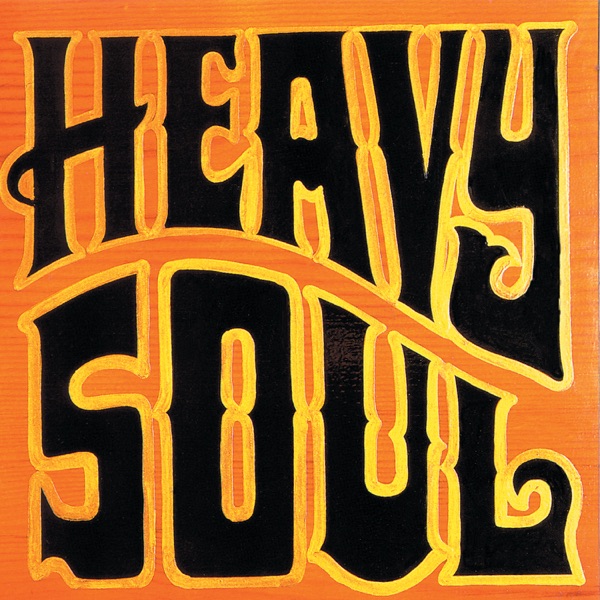
Heavy Soul
1997 · 12 tracks
- 1 Heavy Soul, Pt. 1 ↗ 3:55
- 2 Peacock Suit (Single) ↗ 3:12
- 3 Up in Suzes' Room ↗ 4:22
- 4 Brushed ↗ 3:27
- 5 Driving Nowhere ↗ 2:57
- 6 I Should Have Been There to Inspire You ↗ 5:14
- 7 Heavy Soul, Pt. 2 ↗ 3:10
- 8 Friday Street ↗ 2:18
- 9 Science ↗ 3:32
- 10 Golden Sands ↗ 2:55
- 11 As You Lean Into the Light ↗ 2:44
- 12 Mermaids ↗ 3:02

Illumination
2002 · 16 tracks
- 1 Going Places ↗ 3:34
- 2 A Bullet For Everyone ↗ 4:11
- 3 Leafy Mysteries ↗ 3:07
- 4 It’s Written In The Stars ↗ 3:11
- 5 Who Brings Joy ↗ 3:30
- 6 Now The Night Is Here ↗ 3:53
- 7 Spring (At Last) ↗ 2:28
- 8 One X One ↗ 5:35
- 9 Bag Man ↗ 3:22
- 10 All Good Books ↗ 3:25
- 11 Call Me No. 5 ↗ 3:28
- 12 Standing Out In The Universe ↗ 4:50
- 13 Illumination ↗ 3:07
- 14 Horseshoe Drama ↗ 3:38
- 15 Push Button, Automatic ↗ 3:22
- 16 Talisman ↗ 3:46

Studio 150
2004 · 18 tracks
- 1 If I Could Only Be Sure ↗ 3:41
- 1 Thinking of You (Live Radio Session - RBB Sendesaal) ↗ 3:30
- 2 Wishing On a Star ↗ 5:09
- 2 The Bottle (Live Radio Session - RBB Sendesaal) ↗ 3:31
- 3 Don't Make Promises ↗ 3:19
- 3 One Way Road (Live Radio Session - RBB Sendesaal) ↗ 3:59
- 4 The Bottle ↗ 3:03
- 4 Wishing On a Star (Live Radio Session - RBB Sendesaal) ↗ 4:56
- 5 Black Is the Colour ↗ 3:29
- 5 If I Could Only Be Sure (Live Radio Session - RBB Sendesaal) ↗ 3:50
- 6 Close to You ↗ 2:58
- 6 Come Together ↗ 3:40
- 7 Early Morning Rain ↗ 3:48
- 8 One Way Road ↗ 3:20
- 9 Hercules ↗ 3:28
- 10 Thinking of You ↗ 3:50
- 11 All Along the Watchtower ↗ 5:54
- 12 Birds ↗ 3:29
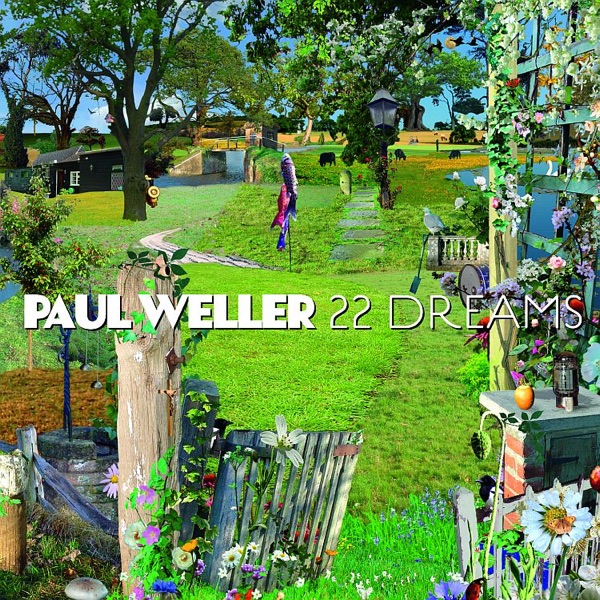
22 Dreams
2008 · 22 tracks
- 1 Light Nights ↗ 3:45
- 2 22 Dreams ↗ 2:48
- 3 All I Wanna Do (Is Be With You) ↗ 4:36
- 4 Have You Made Up Your Mind ↗ 3:15
- 5 Empty Ring ↗ 3:03
- 6 Invisible ↗ 4:07
- 7 Song for Alice ↗ 3:38
- 8 Cold Moments ↗ 5:00
- 9 The Dark Pages of September Lead to the New Leaves of Spring ↗ 0:45
- 10 Black River ↗ 3:48
- 11 Why Walk When You Can Run ↗ 4:14
- 12 Push It Along ↗ 2:53
- 13 A Dream Reprise ↗ 1:09
- 14 Echoes Round the Sun ↗ 3:09
- 15 One Bright Star ↗ 2:58
- 16 Lullaby Fur Kinder ↗ 2:23
- 17 Where'er Ye Go ↗ 2:47
- 18 God ↗ 2:03
- 19 111 ↗ 2:24
- 20 Sea Spray ↗ 3:55
- 21 Night Lights ↗ 6:07
- 22 Rip the Pages Up (Brendan Lynch Mix) ↗ 4:40

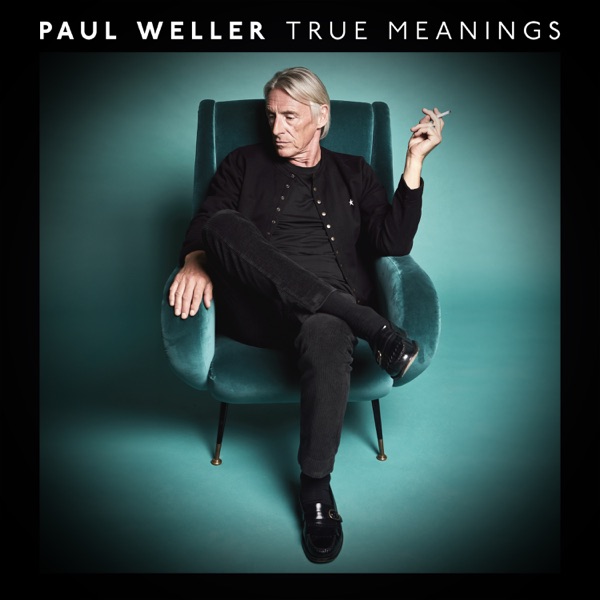
True Meanings
2018 · 14 tracks

Find El Dorado
2025 · 15 tracks
- 1 Handouts in the Rain ↗ 6:00
- 2 Small Town Talk ↗ 3:45
- 3 El Dorado ↗ 5:28
- 4 White Line Fever ↗ 3:12
- 5 One Last Cold Kiss ↗ 3:34
- 6 When you are a King ↗ 2:27
- 7 Pinball ↗ 3:08
- 8 Where There’s Smoke, There’s Fire ↗ 3:12
- 9 I Started a Joke ↗ 4:17
- 10 Never the Same ↗ 3:07
- 11 Lawdy Rolla ↗ 4:03
- 12 Nobody’s Fool ↗ 2:35
- 13 Journey ↗ 3:07
- 14 Daltry Street ↗ 3:43
- 15 Clive’s Song ↗ 4:03
-
 Paul WellerPaul Weller199212 tracks
 -
 Wild WoodPaul Weller199316 tracks
 -
 Stanley RoadPaul Weller199512 tracks
 -
 Heavy SoulPaul Weller199712 tracks
 -
 IlluminationPaul Weller200216 tracks
 -
 Studio 150Paul Weller200418 tracks
 -
 22 DreamsPaul Weller200822 tracks
 -
 Saturns PatternPaul Weller20159 tracks
 -
 A Kind RevolutionPaul Weller201710 tracks
 -
 True MeaningsPaul Weller201814 tracks
 -
 On SunsetPaul Weller202010 tracks
 -
 66Paul Weller202412 tracks
 -
 Find El DoradoPaul Weller202515 tracks
Deep Dive
Overview
Paul Weller is an English singer-songwriter and musician who emerged as a defining figure in British rock across four decades. Born John William Weller in 1958, he achieved initial fame in the late 1970s as the guitarist, principal vocalist, and primary songwriter of the Jam, a band that became the most influential act of the mod revival movement. Following the Jam’s dissolution in 1982, Weller co-founded the Style Council with keyboardist Mick Talbot, a venture that saw him explore jazz, soul, pop, hip hop, folk, and classical influences before launching an ambitious solo career in the early 1990s that would prove remarkably enduring and prolific.
Formation Story
Weller’s musical journey began in the British working-class landscape of the late 1970s, a period marked by social unrest and the emergence of punk and new wave as populist responses to mainstream rock excess. Alongside bassist Bruce Foxton and drummer Rick Buckler, Weller formed the Jam, a band rooted in the mod aesthetic of 1960s Britain but accelerated through a contemporary punk urgency. The three-piece emerged from the UK’s vibrant live circuit, channeling the energy of mod culture—sharp tailoring, Vespa scooters, and an obsession with 1960s soul and R&B—while adopting the raw, three-chord immediacy of punk rock. This fusion proved potent and timely, positioning Weller as a songwriter capable of blending nostalgic reference with immediate, urgent songcraft.
Breakthrough Moment
The Jam’s breakthrough arrived swiftly in the late 1970s, establishing themselves as the vanguard of the mod revival through a combination of unpolished live energy and increasingly sophisticated songwriting from Weller. The band’s commercial and critical ascent peaked in the early 1980s, when they became the most influential band of the mod revival movement in the United Kingdom. Their success culminated in a farewell at the end of 1982, when the trio dissolved at their commercial and creative zenith—a strategic departure that preserved their legacy and signaled Weller’s ambition to pursue new artistic directions rather than exhaust their core audience.
Peak Era
The decade spanning Weller’s work with the Jam and the Style Council represents his peak era in terms of cultural influence and critical prominence. The Jam’s mod revival dominance in the late 1970s and early 1980s positioned them as the most important band of their movement, while the Style Council’s formation with Mick Talbot in 1982 marked a dramatic stylistic pivot. Over the following seven years until the Style Council’s 1989 breakup, Weller and Talbot explored an expansive sonic palette—from dance-influenced pop to orchestrated soul arrangements, from experimental hip hop samples to acoustic folk textures. Though the Style Council’s popularity declined in the late 1980s before their dissolution, this period established Weller’s credentials as an artist willing to reinvent fundamentally rather than rest on established success.
Musical Style
Weller’s musicianship spans a spectrum far broader than his initial mod-revival reputation might suggest. During his Jam years, his guitar playing was propulsive and economical, anchored in three-chord punk-derived structures but informed by soul and R&B phrasing learned from his careful study of 1960s masters. His vocals carried a raw, urgent quality—neither polished nor technically elaborate, but emotionally direct and thematically focused on working-class experience and social observation. With the Style Council, Weller shifted into arrangements-driven pop and soul, stepping back from the lead guitar role and positioning himself as a vocalist and songwriter within more complex orchestral and rhythmic frameworks. His solo work from the 1990s onward demonstrates a restless eclecticism: songs built on acoustic guitar foundations, soul-influenced vocal phrasing, jazz-tinged harmonic progressions, and an increasingly sophisticated approach to production and arrangement. Across all phases, Weller’s songwriting maintains a focus on melodic craft and lyrical specificity, resisting genre purity in favor of a personal synthesis drawn from soul, rock, folk, and pop traditions.
Major Albums
Paul Weller (1992)
Weller’s debut solo album marked the beginning of his re-establishment as a solo artist following the Style Council’s breakup, setting the template for his decades-long solo career with a blend of introspective songwriting and varied instrumentation.
Wild Wood (1993)
Released a year after his debut, this album deepened Weller’s exploration of acoustic textures and folk-influenced songwriting, becoming a key stepping stone in his gradual reclamation of commercial and critical standing.
Stanley Road (1995)
Round out his first phase of solo albums, Stanley Road saw Weller’s commercial momentum building as he refined his approach to melody and arrangement, further establishing his identity as a mature solo artist distinct from his earlier band work.
Heliocentric (2000)
After a half-decade of solo establishment, Heliocentric marked Weller’s continued evolution, demonstrating his ability to absorb contemporary influences while maintaining his core songwriting voice and melodic sensibilities.
As Is Now (2005)
This album exemplified Weller’s sustained creative productivity during his solo years, part of an unbroken string of releases that kept him visible and relevant to multiple generations of listeners across two decades.
22 Dreams (2008)
Released eight years into his consistent solo output, 22 Dreams showcased Weller’s restless approach to album construction and his refusal to calcify into a predictable formula, continuing his pattern of stylistic fluidity.
Signature Songs
- “Going Underground” — A defining Jam track that captured the band’s urgent political voice and mod sensibility, becoming their statement on social alienation.
- “Town Called Malice” — One of the Jam’s most celebrated songs, demonstrating Weller’s gift for weaving narrative detail and melodic hooks into working-class social commentary.
- “Shout to the Top!” (The Style Council) — A showcase of the Style Council’s dance-pop ambitions and orchestral arrangements, featuring Weller’s vocal flexibility within elaborate production.
- “Broken Stones” — A representative solo-era track highlighting Weller’s ability to craft introspective, melodically sophisticated material away from the high-energy context of his earlier bands.
Influence on Rock
Weller’s influence operates across multiple registers. As the principal songwriter and voice of the Jam, he became synonymous with the mod revival movement of the late 1970s and early 1980s, shaping how subsequent British guitar bands understood the relationship between historical reference and contemporary urgency. The Jam’s fusion of 1960s mod culture with punk-era raw energy influenced countless post-punk and alternative rock acts, establishing a template for bands seeking to ground themselves in British working-class culture. The Style Council’s adventures in soul, jazz, and pop—unconventional moves for a rock credibility figure in the 1980s—demonstrated that stylistic reinvention remained possible for established artists and influenced the broader conversation around genre fluidity in popular music. His sustained solo career across subsequent decades, maintained without major commercial blockbusters or dramatic personnel shifts, established a model of long-term artistic autonomy and productive consistency that influenced the trajectory of independent and alternative artists.
Legacy
Paul Weller’s legacy rests on his role as a British rock figure of genuine historical significance spanning four decades. The Jam’s restoration of mod culture to contemporary relevance redefined how rock musicians engaged with historical reference and working-class identity, making them touchstones for generations of UK guitar bands that followed. His willingness to dissolve the Jam at their peak rather than exploit their success demonstrated artistic principle, while the Style Council’s experimental ambitions—however commercially uneven—expanded the vocabulary of what an established rock artist might attempt. His prolific solo output, beginning in 1992 and continuing through multiple albums into the 2020s, establishes Weller as an artist of remarkable stamina and consistent creative engagement. The breadth of his catalog—encompassing mod revival guitar rock, experimental pop and soul, and extended solo explorations—ensures his relevance across multiple constituencies within British rock culture, from heritage-focused listeners invested in 1970s new wave to contemporary fans discovering his solo work. His influence appears most directly in British guitar-led bands that prioritize both historical consciousness and immediate songcraft, a lineage that traces directly through his work with the Jam.
Fun Facts
- Weller formed the Jam in the late 1970s with the intention of reviving mod culture decades after its original 1960s peak, successfully positioning the band as the most influential act of the subsequent mod revival movement.
- His solo career began immediately after the Style Council’s 1989 breakup and has remained continuously productive across thirty years, accumulating over fifteen studio albums through 2024.
- Paul Weller’s birth name is John William Weller, though he has been professionally and publicly known as Paul Weller since his earliest days as a recording artist.