
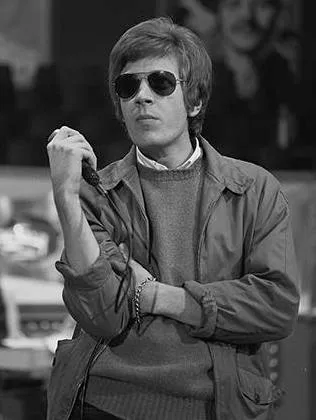
Photo by Unknown photographer , licensed under CC BY-SA 3.0 nl · Wikimedia Commons
Rank #286
Scott Walker
From Wikipedia
Noel Scott Engel, better known by his stage name Scott Walker, was an American-British singer-songwriter and record producer who resided in England. Walker was known for his emotive voice and his unorthodox stylistic path which took him from being a teen pop icon in the 1960s to an avant-garde musician from the 1990s to his death. Walker's success was largely in the United Kingdom, where he achieved fame as a member of pop trio the Walker Brothers, who scored several hit singles, including two number ones, during the mid-1960s, while his first four solo albums reached the top ten during the later part of the decade, with the second, Scott 2, reaching number one in 1968. He lived in the UK from 1965 onward and became a UK citizen in 1970.
Discography & Previews
Browse through and click an album to open and play 30-second previews streamed from Apple Music.
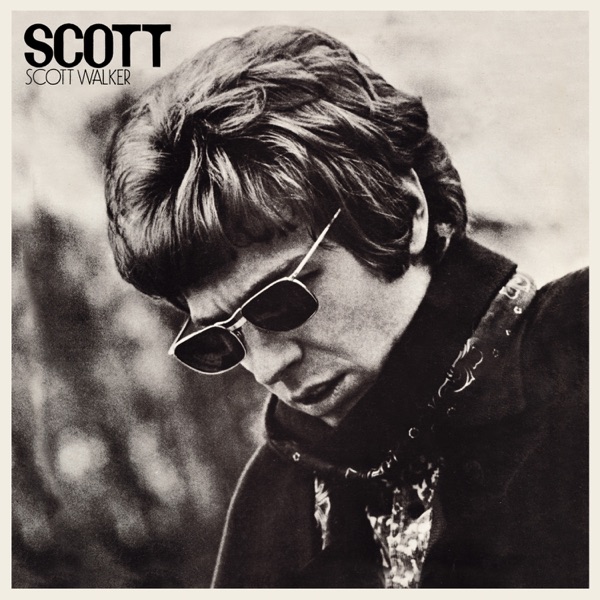
Scott
1967 · 12 tracks
- 1 Mathilde ↗ 2:36
- 2 Montague Terrace (In Blue) ↗ 3:27
- 3 Angelica ↗ 3:59
- 4 The Lady Came From Baltimore ↗ 1:57
- 5 When Joanna Loved Me ↗ 3:06
- 6 My Death ↗ 4:57
- 7 The Big Hurt ↗ 2:25
- 8 Such a Small Love ↗ 4:53
- 9 You're Gonna Hear From Me ↗ 2:52
- 10 Through a Long and Sleepless Night ↗ 4:10
- 11 Always Coming Back To You ↗ 2:40
- 12 Amsterdam ↗ 3:04
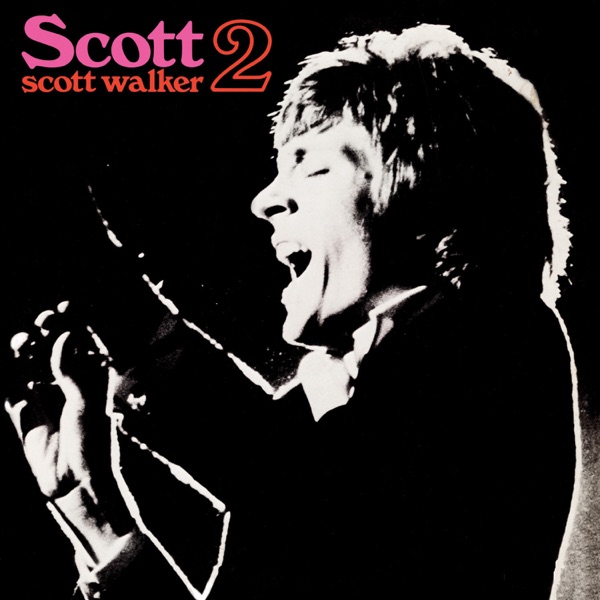
Scott 2
1968 · 12 tracks
- 1 Jackie ↗ 3:21
- 2 Best of Both Worlds ↗ 3:13
- 3 Black Sheep Boy ↗ 2:37
- 4 The Amorous Humphrey Plugg ↗ 4:29
- 5 Next ↗ 2:48
- 6 The Girls From the Streets ↗ 4:09
- 7 Plastic Palace People ↗ 6:04
- 8 Wait Until Dark ↗ 2:57
- 9 The Girls and the Dogs ↗ 3:08
- 10 Windows of the World ↗ 4:23
- 11 The Bridge ↗ 2:47
- 12 Come Next Spring ↗ 3:25
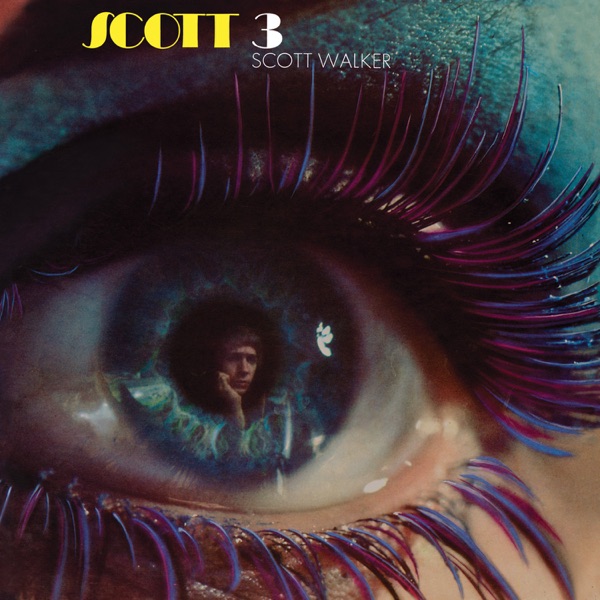
Scott 3
1969 · 13 tracks
- 1 It's Raining Today ↗ 3:58
- 2 Copenhagen ↗ 2:19
- 3 Rosemary ↗ 3:20
- 4 Big Louise ↗ 3:07
- 5 We Came Through ↗ 1:56
- 6 Butterfly ↗ 1:39
- 7 Two Ragged Soldiers ↗ 3:05
- 8 30 Century Man ↗ 1:26
- 9 Winter Night ↗ 1:42
- 10 Two Weeks Since You've Gone ↗ 2:45
- 11 Sons Of ↗ 3:42
- 12 Funeral Tango ↗ 2:53
- 13 If You Go Away ↗ 4:58
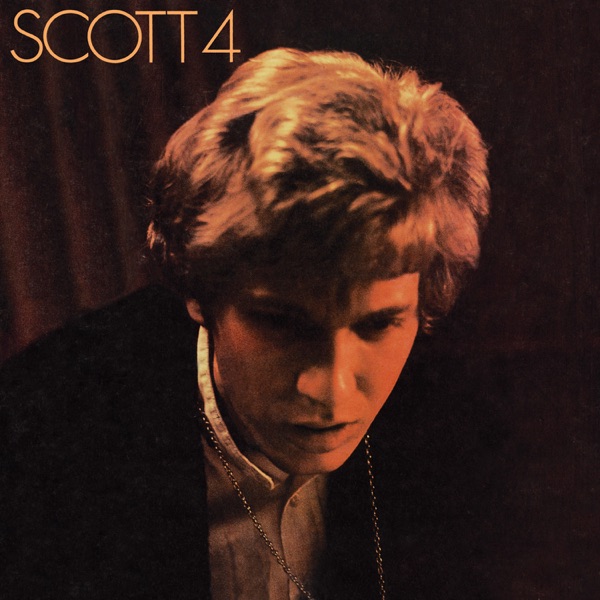
Scott 4
1969 · 10 tracks
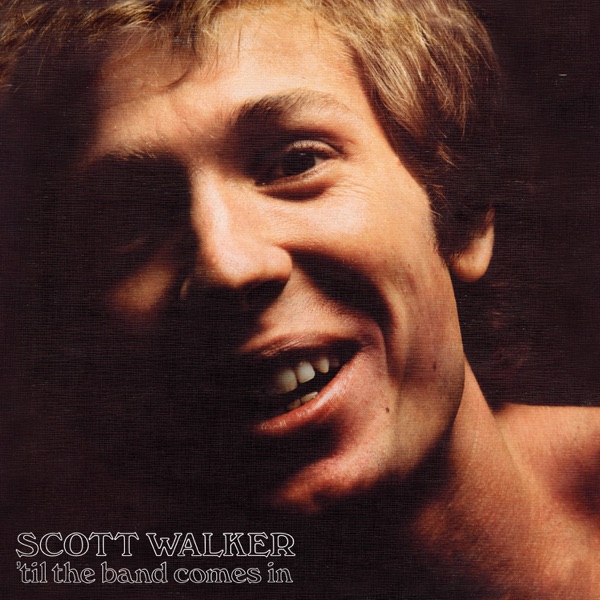
’Til the Band Comes In
1970 · 15 tracks
- 1 Prologue ↗ 1:23
- 2 Little Things (That Keep Us Together) ↗ 2:17
- 3 Joe ↗ 3:40
- 4 Thanks For Chicago Mr. James ↗ 2:16
- 5 Long About Now (feat. Esther Ofarim) ↗ 2:04
- 6 Time Operator ↗ 3:35
- 7 Jean the Machine ↗ 2:09
- 8 Cowbells Shakin' ↗ 1:03
- 9 Til the Band Comes In ↗ 3:50
- 10 The War Is Over (Sleepers - Epilogue) ↗ 3:34
- 11 Stormy ↗ 3:06
- 12 The Hills of Yesterday ↗ 2:43
- 13 Reuben James ↗ 3:01
- 14 What Are You Doing the Rest of Your Life ↗ 3:34
- 15 It's Over ↗ 2:24
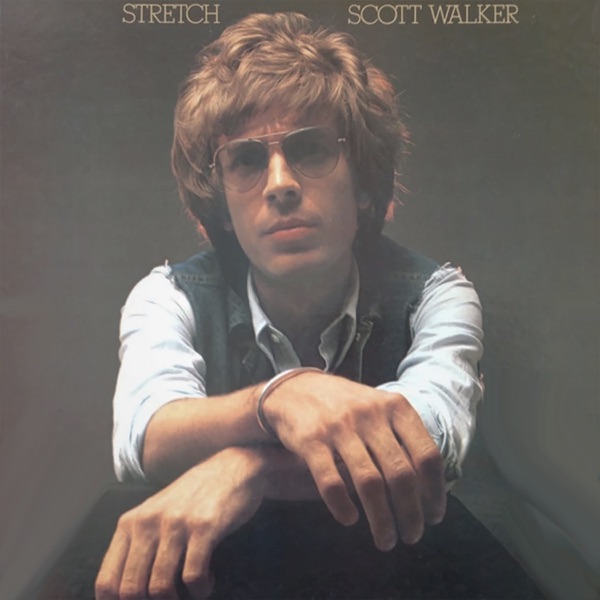
Stretch
1973 · 11 tracks
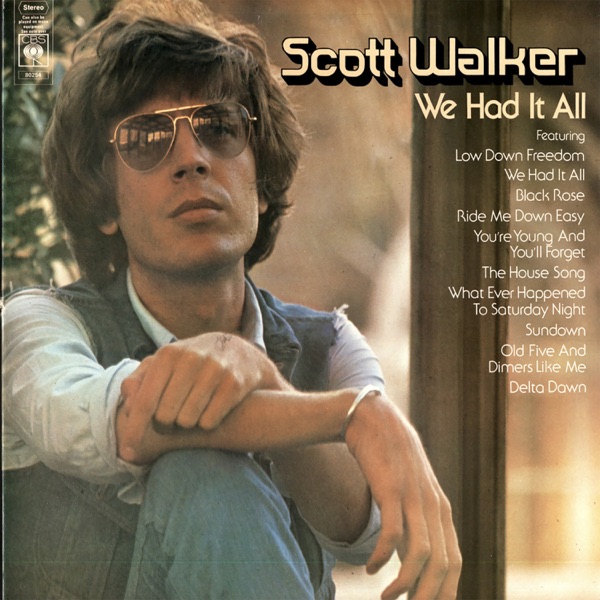
We Had It All
1974 · 10 tracks


-
 ScottScott Walker196712 tracks
 -
 Scott 2Scott Walker196812 tracks
 -
 Scott 3Scott Walker196913 tracks
 -
 Scott 4Scott Walker196910 tracks
 -
 ’Til the Band Comes InScott Walker197015 tracks
 -
 StretchScott Walker197311 tracks
 -
 We Had It AllScott Walker197410 tracks
 -
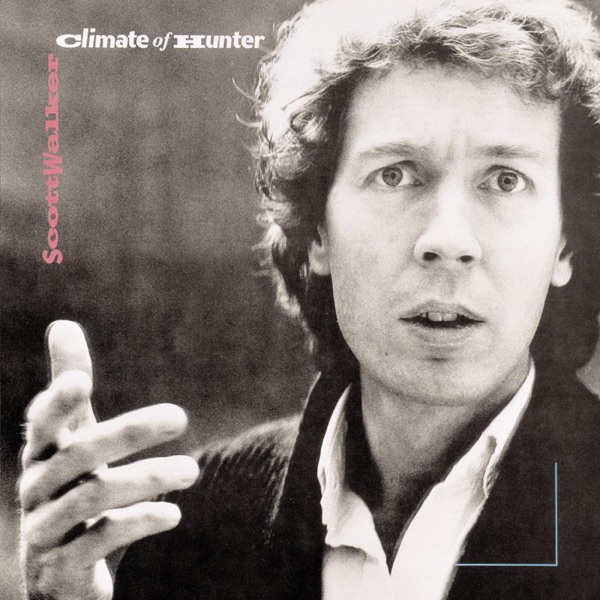
 Climate of HunterScott Walker19848 tracks
 -
 TiltScott Walker19959 tracks
 -
 The DriftScott Walker200610 tracks
 -
 Bish BoschScott Walker20129 tracks
 -
 SousedScott Walker20145 tracks
Deep Dive
Overview
Scott Walker—born Noel Scott Engel—was a British-American singer-songwriter and record producer whose career trajectory traced one of rock music’s most dramatic transformations. From teen pop sensation in the mid-1960s to uncompromising avant-garde artist in his later decades, Walker refused the standard narrative of ageing within a single style. Though his greatest commercial success came in the United Kingdom, where he achieved citizenship in 1970 after settling there in 1965, his influence rippled across both sides of the Atlantic. Walker’s four-decade recording arc—from his debut album in 1967 through experimental works into the 21st century—documented a restless artist perpetually in motion.
Formation Story
Noel Scott Engel was born in 1943 into a climate where American popular music was beginning to reshape the global soundscape. By the early 1960s, he emerged as part of the Walker Brothers, a pop trio that would become one of the defining acts of the mid-1960s British Invasion era. The trio, which included Gary Walker and John Walker, scored multiple hit singles across the UK charts, including two number-one records. This success as a member of a pop group established Walker’s vocal presence and commercial viability during the height of 1960s chart pop. By the later part of the 1960s, Walker transitioned to a solo career while maintaining his status in the Walker Brothers, beginning a dual trajectory that would define his initial years as a solo artist.
Breakthrough Moment
Walker’s solo career commenced in 1967 with the album Scott, immediately establishing him as a force beyond group pop. The breakthrough came swiftly: his second solo album, Scott 2, released in 1968, reached number one on the UK charts and cemented his status as a major solo artist. This rapid ascent demonstrated that Walker’s appeal transcended the pop trio formula and that audiences—particularly in Britain—were prepared to follow him into more sophisticated, adult-oriented material. The chart success of Scott 2, coupled with the commercial performance of Scott 3 and Scott 4, both arriving in 1969, secured him as one of the decade’s significant solo voices during a period when the British charts embraced both pop and rock idioms.
Peak Era
The years between 1967 and 1974 represented Walker’s commercial and artistic zenith. His first four solo albums—Scott, Scott 2, Scott 3, and Scott 4—all reached the top ten of the UK charts, an extraordinary run that placed him among the era’s most consistently successful recording artists. Beyond chart rankings, this period saw Walker establishing his distinctive artistic voice: increasingly orchestral arrangements, introspective songwriting, and a vocal approach that emphasized emotional restraint and dramatic dynamics. Albums including 1970’s ‘Til the Band Comes In, 1972’s The Moviegoer, and early 1970s releases such as Any Day Now and Stretch demonstrated an artist refusing to repeat himself while maintaining commercial relevance. By the mid-1970s, however, Walker’s active recording phase entered a prolonged dormancy, with no new studio albums appearing until 1984.
Musical Style
Walker’s sound evolved substantially across his decades of recording, but certain characteristics remained constant: a rich baritone vocal instrument capable of conveying intimate vulnerability and operatic grandeur, and an acute attention to arrangement and orchestration. In his 1960s solo work, Walker favored lush string arrangements, torch-song traditions, and a crooner’s sensibility applied to contemporary material—a deliberate positioning that set him apart from the guitar-driven rock mainstream. His voice possessed a unique melancholic timbre that seemed ideally suited to introspective material. As his career progressed, particularly from the 1990s onward, Walker embraced experimental production techniques, unconventional instrumentation, and avant-garde compositional approaches. His later albums incorporated elements of noise music, atonal passages, and deconstructed song structures, reflecting a complete departure from his pop origins while remaining recognizably his own artistic statement.
Major Albums
Scott (1967)
Walker’s debut solo album introduced his sophisticated, orchestrally-arranged approach and established him as a solo artist capable of sustaining a full-length work beyond the pop single format.
Scott 2 (1968)
His chart-topping second album solidified Walker’s solo commercial breakthrough and demonstrated that his audience extended beyond his Walker Brothers fanbase into adult contemporary listeners.
Climate of Hunter (1984)
After a decade without new studio material, this album marked Walker’s return to recording and signaled a willingness to explore darker, more textured sonic territory than his 1970s work.
Tilt (1995)
This avant-garde statement represented Walker’s full commitment to experimental composition, abandoning conventional song structures in favor of abstract, densely orchestrated soundscapes.
The Drift (2006)
Walker’s most uncompromising album showcased his progression into noise-inflected, orchestral experimentalism, with fragmented vocal passages and complex arrangements that bore little resemblance to his pop origins.
Bish Bosch (2012)
This late-career work continued Walker’s avant-garde trajectory while demonstrating his undiminished creative ambition well into his seventh decade of life.
Signature Songs
- “Make It Easy on Yourself” — A 1960s standard that showcased Walker’s sophisticated vocal approach and became a signature showcase for his interpretive gifts.
- “The Sun Ain’t Gonna Shine Anymore” — One of the Walker Brothers’ defining hits, this ballad highlighted the trio’s polished pop sensibility.
- “Jacky” — A mid-1960s hit single that demonstrated the commercial appeal of the Walker Brothers during the height of British pop.
- “Big Boots” — A solo composition that reflected Walker’s evolving artistic interests beyond covers of existing material.
Influence on Rock
Walker’s impact operated on two distinct levels. In the 1960s, his work as a solo artist influenced the sophisticated pop and ballad traditions of subsequent decades, demonstrating that a male vocalist could sustain a career outside of rock-and-roll guitar traditions. His emphasis on arrangement, orchestration, and lyrical introspection shaped approaches to art-pop and soft rock throughout the 1970s and beyond. More significantly, his transformation into an avant-garde artist from the 1990s onward influenced experimental musicians and challenged assumptions about career trajectories in rock music. Artists working in experimental, noise-inflected, and non-commercial idioms found validation in Walker’s refusal to remain confined by earlier commercial success, proving that reinvention at the highest artistic level remained possible for established figures.
Legacy
Scott Walker died in 2019, leaving behind one of rock music’s most unusual discographies: a body of work that shifted from accessible pop balladry to uncompromising experimental art without compromise in either direction. His lengthy recording career—spanning from 1967 to 2014—documented an artist in perpetual motion, uninterested in repeating past successes or courting nostalgia. The second act of his career, particularly the 1995 album Tilt onward, earned significant critical reevaluation from musicians and critics who recognized the integrity of his artistic vision. Major record labels, including 4AD Records, continued to maintain his catalog and release retrospectives, ensuring that new audiences discovered both his sophisticated 1960s work and his boundary-pushing later experiments. Walker’s career became a template for artistic longevity and uncompromising vision, proof that an artist could achieve early commercial success and later pursue radically different creative directions without contradiction.
Fun Facts
- Walker became a United Kingdom citizen in 1970 after settling in England in 1965, fully integrating into the British music scene despite his American birth.
- Between 1974 and 1984, Walker recorded no studio albums, effectively stepping away from the recording industry for an entire decade before returning with Climate of Hunter.
- His later experimental work on labels including Drag City and Challenge Records found particular resonance with avant-garde musicians and critics who had previously dismissed his 1960s pop career as commercial compromise.
- Walker recorded an album titled Sings Songs From His T.V. Series in 1969, reflecting his multimedia presence beyond the recording studio during the height of his commercial success.