

Photo by Ralph Arvesen , licensed under CC BY 2.0 · Wikimedia Commons
Rank #234
Stevie Nicks
From Wikipedia
Stephanie Lynn Nicks is an American singer-songwriter, known for her work with the band Fleetwood Mac and as a solo artist.
Discography & Previews
Browse through and click an album to open and play 30-second previews streamed from Apple Music.

Bella Donna
1981 · 10 tracks
- 1 Bella Donna ↗ 5:22
- 2 Kind of Woman ↗ 3:13
- 3 Stop Draggin' My Heart Around (with Tom Petty & the Heartbreakers) ↗ 4:04
- 4 Think About It ↗ 3:36
- 5 After the Glitter Fades ↗ 3:30
- 6 Edge of Seventeen ↗ 5:29
- 7 How Still My Love ↗ 3:55
- 8 Leather and Lace ↗ 3:46
- 9 Outside the Rain ↗ 4:20
- 10 The Highwayman ↗ 4:50

The Wild Heart
1983 · 10 tracks
- 1 Wild Heart (Remastered) ↗ 6:10
- 2 If Anyone Falls (Remastered) ↗ 4:09
- 3 Gate and Garden (Remastered) ↗ 4:07
- 4 Enchanted (Remastered) ↗ 3:06
- 5 Nightbird (Remastered) ↗ 5:01
- 6 Stand Back (Remastered) ↗ 4:51
- 7 I Will Run to You (Remastered) ↗ 3:22
- 8 Nothing Ever Changes (Remastered) ↗ 4:09
- 9 Sable on Blond (Remastered) ↗ 4:15
- 10 Beauty and the Beast (Remastered) ↗ 6:04

Rock a Little
1985 · 11 tracks
- 1 I Can't Wait ↗ 4:36
- 2 Rock a Little (Go Ahead Lily) ↗ 3:38
- 3 Sister Honey ↗ 3:51
- 4 I Sing for Things ↗ 3:45
- 5 Imperial Hotel ↗ 2:52
- 6 Some Become Strangers ↗ 3:28
- 7 Talk to Me ↗ 4:10
- 8 The Nightmare ↗ 5:23
- 9 If I Were You ↗ 4:11
- 10 No Spoken Word ↗ 4:15
- 11 Has Anyone Ever Written Anything for You ↗ 4:39

The Other Side of the Mirror
1989 · 12 tracks
- 1 Rooms On Fire ↗ 4:35
- 2 Long Way to Go ↗ 4:08
- 3 Two Kinds of Love ↗ 4:46
- 4 Ooh My Love ↗ 5:04
- 5 Ghosts ↗ 4:54
- 6 Whole Lotta Trouble ↗ 4:32
- 7 Fire Burning ↗ 3:16
- 8 Cry Wolf ↗ 4:10
- 9 Alice ↗ 5:47
- 10 Juliet ↗ 4:52
- 11 Doing the Best I Can (Escape from Berlin) ↗ 5:36
- 12 I Still Miss Someone (Blue Eyes) ↗ 4:09

Street Angel
1994 · 13 tracks
- 1 Blue Denim ↗ 4:24
- 2 Greta ↗ 4:21
- 3 Street Angel ↗ 4:11
- 4 Docklands ↗ 4:48
- 5 Listen to the Rain ↗ 4:34
- 6 Destiny ↗ 5:02
- 7 Unconditional Love ↗ 3:22
- 8 Love Is Like a River ↗ 4:45
- 9 Rose Garden ↗ 4:29
- 10 Maybe Love Will Change Your Mind ↗ 4:19
- 11 Just Like a Woman ↗ 3:52
- 12 Kick It ↗ 4:25
- 13 Jane ↗ 4:59

Trouble in Shangri‐La
2001 · 13 tracks
- 1 Trouble In Shangri-La ↗ 4:50
- 2 Candlebright ↗ 4:41
- 3 Sorcerer ↗ 4:55
- 4 Planets of the Universe ↗ 4:46
- 5 Every Day ↗ 3:36
- 6 Too Far from Texas ↗ 3:49
- 7 That Made Me Stronger ↗ 4:19
- 8 It's Only Love ↗ 3:32
- 9 Love Changes ↗ 4:24
- 10 I Miss You ↗ 4:15
- 11 Bombay Sapphires ↗ 4:05
- 12 Fall from Grace ↗ 4:32
- 13 Love Is ↗ 4:31

In Your Dreams
2011 · 13 tracks
- 1 Secret Love ↗ 3:16
- 2 For What It's Worth ↗ 4:32
- 3 In Your Dreams ↗ 3:59
- 4 Wide Sargasso Sea ↗ 5:36
- 5 New Orleans ↗ 5:35
- 6 Moonlight (A Vampire's Dream) ↗ 5:26
- 7 Annabel Lee ↗ 5:59
- 8 Soldier's Angel ↗ 5:16
- 9 Everybody Loves You ↗ 5:17
- 10 Ghosts Are Gone ↗ 6:06
- 11 You May Be the One ↗ 5:27
- 12 Italian Summer ↗ 4:39
- 13 Cheaper Than Free (feat. Dave Stewart) ↗ 3:38

24 Karat Gold: Songs From the Vault
2014 · 14 tracks
- 1 Starshine ↗ 4:06
- 2 The Dealer ↗ 4:38
- 3 Mabel Normand ↗ 4:54
- 4 Blue Water ↗ 4:26
- 5 Cathouse Blues ↗ 2:48
- 6 24 Karat Gold ↗ 4:09
- 7 Hard Advice ↗ 4:20
- 8 Lady ↗ 4:58
- 9 I Don't Care ↗ 6:10
- 10 All the Beautiful Worlds ↗ 5:01
- 11 Belle Fleur ↗ 5:37
- 12 If You Were My Love ↗ 5:00
- 13 Carousel ↗ 3:19
- 14 She Loves Him Still ↗ 4:29
-
 Bella DonnaStevie Nicks198110 tracks
 -
 The Wild HeartStevie Nicks198310 tracks
 -
 Rock a LittleStevie Nicks198511 tracks
 -
 The Other Side of the MirrorStevie Nicks198912 tracks
 -
 Street AngelStevie Nicks199413 tracks
 -
 Trouble in Shangri‐LaStevie Nicks200113 tracks
 -
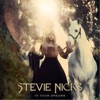 In Your DreamsStevie Nicks201113 tracks
 -
 24 Karat Gold: Songs From the VaultStevie Nicks201414 tracks
Deep Dive
Overview
Stevie Nicks is an American singer-songwriter born in 1948 whose artistic output spans both her foundational work with Fleetwood Mac and a substantial solo career beginning in the early 1980s. Known for her distinctive vocal character, mystical imagery, and songwriting that blends pop rock, soft rock, and country rock influences, Nicks carved out a dual career path that allowed her to explore material alongside the British-American rock band while maintaining a parallel identity as a solo recording artist. Her solo work has proven both commercially successful and artistically significant, establishing her as one of rock music’s most enduring and recognizable voices.
Formation Story
Nicks grew up within the American rock landscape of the 1960s, absorbing influences from folk, rock, and country music that would later define her writing and vocal approach. She entered the professional music sphere as a performer and songwriter, eventually joining forces with Fleetwood Mac in the mid-1970s—a partnership that would reshape her career trajectory and establish her as a major figure in mainstream rock. By the late 1970s, with Fleetwood Mac at the height of its commercial and critical success, Nicks began contemplating a solo outlet, a path she would pursue in earnest beginning in 1981.
Breakthrough Moment
Nicks’ solo debut, Bella Donna, arrived in 1981 and immediately demonstrated that her popularity transcended her band identity. The album’s commercial success marked the formal launch of her solo presence and proved that audiences were eager to hear her pursued songwriting and vocal approach outside the Fleetwood Mac framework. This debut established the template for her solo career: atmospheric pop-rock arrangements that foregrounded her narrative sensibility and the vocal techniques she had honed during her years with the band. The album’s reception opened doors for her to continue recording solo material while maintaining her involvement with Fleetwood Mac, effectively creating the dual-career structure that would define the remainder of her professional life.
Peak Era
The period from 1981 through the late 1980s represented Nicks’ most prolific and commercially robust era as a solo artist. The Wild Heart (1983) and Rock a Little (1985) consolidated the foundation established by Bella Donna, allowing her to refine her production aesthetics and deepen her thematic explorations. The Other Side of the Mirror (1989) continued this trajectory, demonstrating her ability to sustain listener interest across an extended run of solo records. During these years, Nicks balanced solo recording and touring commitments with periodic reunion and new recording activity with Fleetwood Mac, a juggling act that nonetheless resulted in a steady stream of material that kept her in the public consciousness across multiple decades.
Musical Style
Nicks’ solo work inhabits a sonic territory that blends pop rock accessibility with softer, more introspective soft rock and country rock underpinnings. Her vocals remain the primary vehicle for her artistry—a distinctive instrument characterized by a somewhat husky timbre, precise control, and an ability to convey emotional complexity through phrasing and inflection rather than technical display. Her songwriting tends toward narrative and image-driven lyrics that evoke mysticism, romance, and introspection, often delivered over arrangements that prioritize atmosphere and emotional resonance over instrumental virtuosity. The production of her solo albums reflects the prevailing studio trends of their respective eras, from the polished synth-inflected pop rock of the 1980s through the more guitar-forward approaches of subsequent decades, yet her fundamental approach—lyrical storytelling paired with carefully crafted vocal delivery—remains consistent across her catalog.
Major Albums
Bella Donna (1981)
Nicks’ solo debut announced the arrival of a fully realized artist capable of sustaining listener attention beyond her Fleetwood Mac identity, establishing the template for her solo aesthetic and proving the commercial viability of her individual project.
The Wild Heart (1983)
Following the success of Bella Donna, this album deepened Nicks’ exploration of her pop-rock and soft-rock foundation, consolidating her approach and demonstrating her capacity for sustained creative output.
Rock a Little (1985)
Released during the height of the mid-1980s production era, Rock a Little saw Nicks’ sound shift toward the more rock-oriented direction suggested by its title, broadening her musical palette while maintaining her recognizable vocal and songwriting identity.
The Other Side of the Mirror (1989)
This album sustained Nicks’ solo momentum into a new decade, continuing her exploration of pop-rock and rock-inflected material and confirming her status as a significant solo artist independent of her Fleetwood Mac affiliation.
Trouble in Shangri‐La (2001)
After a nearly decade-long gap in solo recording, this album marked Nicks’ return to solo studio work, demonstrating her continued relevance and ability to craft material that reflected contemporary production sensibilities while retaining her core artistic identity.
Signature Songs
- “Bella Donna” — The title track of her solo debut, establishing her solo vocal persona and songwriting approach from the outset of her independent recording career.
- “Edge of Seventeen” — One of Nicks’ most recognizable solo compositions, which became a staple of her concert repertoire and FM radio presence throughout the 1980s and beyond.
- “Leather and Lace” — A solo track that demonstrates the softer, more intimate dimensions of her songwriting and vocal approach.
- “Rooms on Fire” — A track that exemplifies Nicks’ ability to craft commercially viable pop-rock material without sacrificing her core artistic identity.
- “Nightbird” — Representative of Nicks’ mystically inflected songwriting and her atmospheric approach to production.
Influence on Rock
Nicks’ solo career extended and deepened the influence she had already cultivated during her years with Fleetwood Mac. Her approach to pop rock—emphasizing atmospheric production, narrative lyricism, and distinctive vocal character—provided a blueprint that influenced countless subsequent female rock and pop artists. The success of her dual career path, maintaining both band and solo identities simultaneously, established a model that other artists in similar situations would later follow. Her comfort inhabiting the softer reaches of rock music and her refusal to compromise her artistic identity in pursuit of harder-edged credibility helped legitimize soft rock and pop-rock approaches within the broader rock musical discourse, opening space for subsequent artists to explore similar territory without fear of critical dismissal.
Legacy
Stevie Nicks’ sustained presence as both a solo artist and member of Fleetwood Mac has cemented her place as one of rock music’s most significant figures. Her solo discography, spanning from 1981 through the 2010s and 2020s, demonstrates a remarkable longevity and consistent commitment to recording and performing. The continuing availability of her work across streaming platforms and the periodic release of archival material, including live recordings and vault tracks, ensures her ongoing presence in contemporary music culture. Her influence extends beyond her own work to encompass the broader acceptance of female-led rock music and the legitimacy of pop-rock approaches within serious musical discourse. Nicks remains a touring and recording artist whose work continues to resonate across generations of listeners, her voice and songwriting maintaining their recognizability and emotional resonance across decades of cultural change.
Fun Facts
- Nicks began her professional music career before joining Fleetwood Mac, performing in bands during the 1960s and establishing herself as a performer and songwriter prior to her association with the group.
- Her solo work has been released across multiple major record labels, including Atlantic Records, Polydor, and Atco Records, reflecting the evolution of the recording industry across her decades-long career.
- Nicks has released live recordings and archival material alongside her studio albums, including broadcast recordings and reissued sessions that document her performances and musical explorations across different eras.
- Her songwriting often incorporates autobiographical elements and introspective themes, establishing her as one of rock’s more personally revealing lyricists within the pop-rock and soft-rock traditions.