
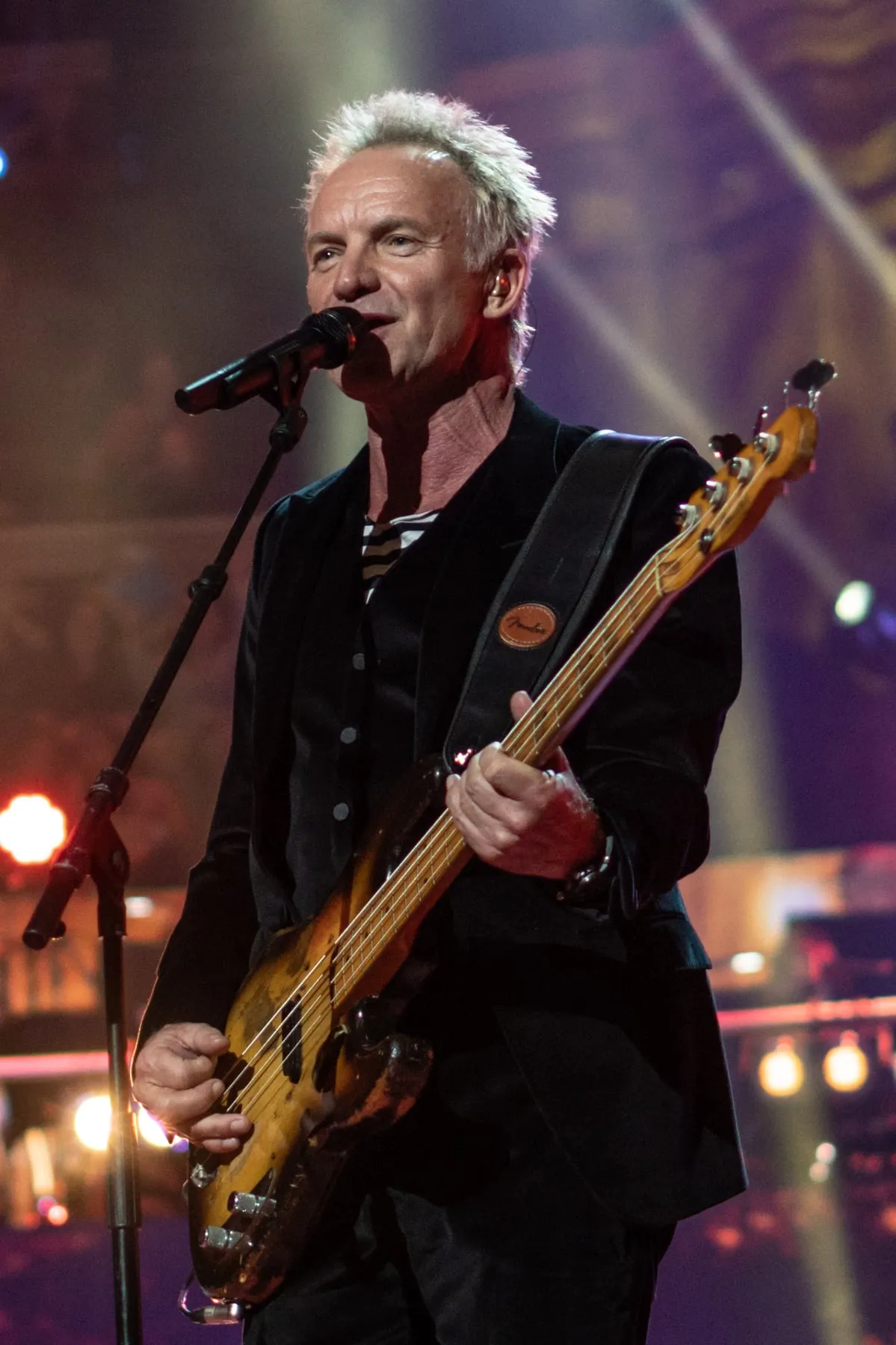
Photo by Raph_PH , licensed under CC BY 2.0 · Wikimedia Commons
Rank #374
Sting
From Wikipedia
Gordon Matthew Thomas Sumner, known as Sting, is an English musician and actor. He was the frontman, principal songwriter and bassist for the rock band the Police from 1977 until their break-up in 1986. He launched a solo career in 1985 and has included elements of rock, jazz, reggae, classical, new-age, and worldbeat in his music.
Discography & Previews
Browse through and click an album to open and play 30-second previews streamed from Apple Music.

The Dream of the Blue Turtles
1985 · 10 tracks
- 1 If You Love Somebody Set Them Free ↗ 4:16
- 2 Love Is the Seventh Wave ↗ 3:32
- 3 Russians ↗ 3:58
- 4 Children's Crusade ↗ 5:02
- 5 Shadows In the Rain ↗ 4:50
- 6 We Work the Black Seam ↗ 5:42
- 7 Consider Me Gone ↗ 4:20
- 8 The Dream of the Blue Turtles ↗ 1:18
- 9 Moon Over Bourbon Street ↗ 4:00
- 10 Fortress Around Your Heart ↗ 4:40

…Nothing Like the Sun
1987 · 12 tracks
- 1 The Lazarus Heart ↗ 4:35
- 2 Be Still My Beating Heart ↗ 5:32
- 3 Englishman In New York ↗ 4:27
- 4 History Will Teach Us Nothing ↗ 4:59
- 5 They Dance Alone (Gueca Solo) ↗ 7:14
- 6 Fragile ↗ 3:55
- 7 We'll Be Together ↗ 4:53
- 8 Straight to My Heart ↗ 3:54
- 9 Rock Steady ↗ 4:27
- 10 Sister Moon ↗ 3:47
- 11 Little Wing ↗ 5:04
- 12 The Secret Marriage ↗ 2:04


Ten Summoner’s Tales
1993 · 12 tracks
- 1 If I Ever Lose My Faith In You ↗ 4:31
- 2 Love Is Stronger Than Justice (The Munificent Seven) ↗ 5:11
- 3 Fields of Gold ↗ 3:42
- 4 Heavy Cloud No Rain ↗ 3:48
- 5 She's Too Good for Me ↗ 2:30
- 6 Seven Days ↗ 4:38
- 7 Saint Augustine In Hell ↗ 5:19
- 8 It's Probably Me ↗ 5:08
- 9 Everybody Laughed But You ↗ 3:55
- 10 Shape of My Heart ↗ 4:39
- 11 Something the Boy Said ↗ 5:29
- 12 Epilogue (Nothing 'Bout Me) ↗ 3:42
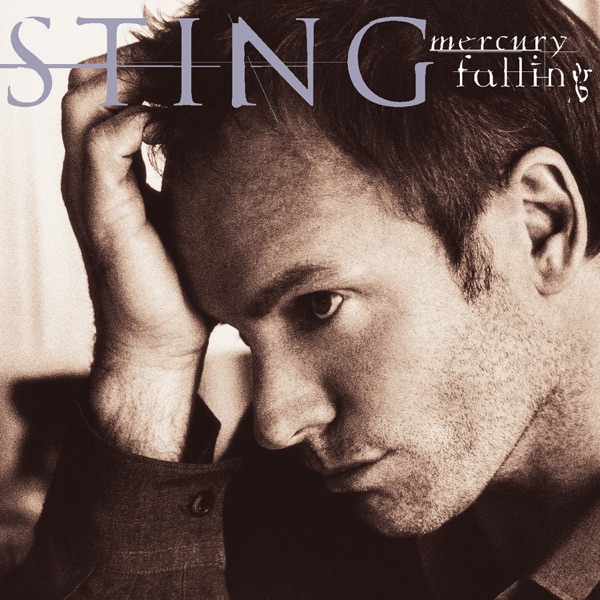
Mercury Falling
1996 · 11 tracks
- 1 The Hounds Of Winter ↗ 5:27
- 2 I Hung My Head ↗ 4:41
- 3 Let Your Soul Be Your Pilot ↗ 6:44
- 4 I Was Brought To My Senses ↗ 5:50
- 5 You Still Touch Me ↗ 3:47
- 6 I'm So Happy I Can't Stop Crying ↗ 3:57
- 7 All Four Seasons ↗ 4:28
- 8 Twenty Five To Midnight ↗ 4:08
- 9 La Belle Dame Sans Regrets ↗ 5:17
- 10 Valparaiso ↗ 5:25
- 11 Lithium Sunset ↗ 2:37
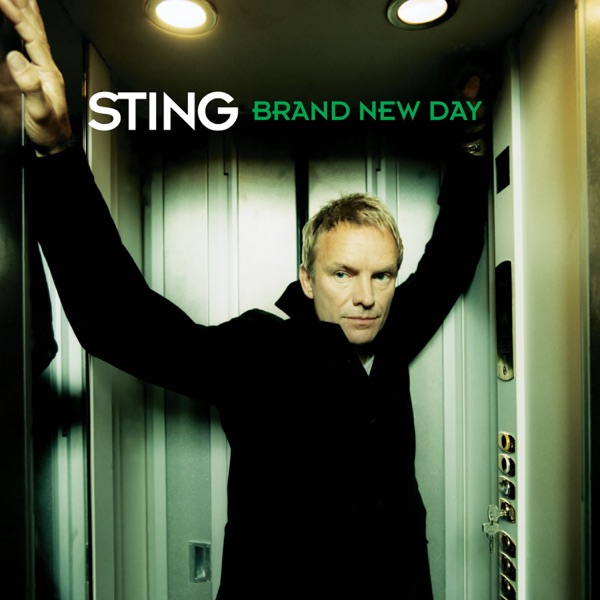
Brand New Day
1999 · 10 tracks
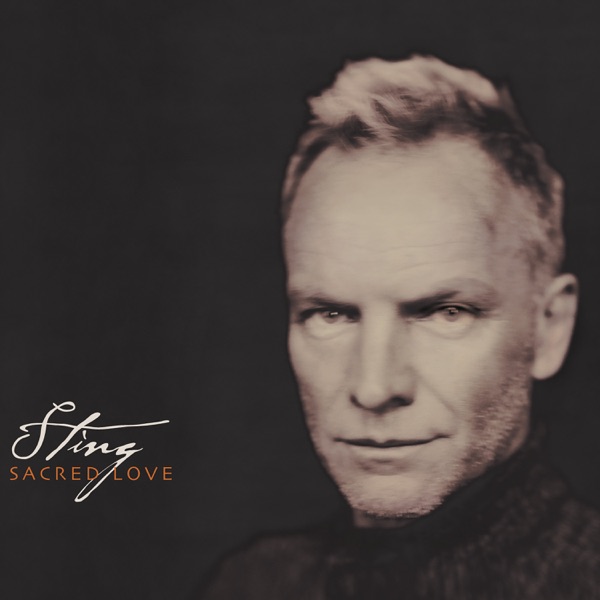
Sacred Love
2003 · 11 tracks
- 1 Inside ↗ 4:48
- 2 Send Your Love (feat. Vicente Amigo) ↗ 4:43
- 3 Whenever I Say Your Name (feat. Mary J. Blige) ↗ 5:28
- 4 Dead Man's Rope ↗ 5:44
- 5 Never Coming Home ↗ 4:58
- 6 Stolen Car (Take Me Dancing) ↗ 3:59
- 7 Forget About the Future ↗ 5:11
- 8 This War ↗ 5:32
- 9 The Book of My Life (feat. Anoushka Shankar) ↗ 6:14
- 10 Sacred Love ↗ 5:56
- 11 Send Your Love (Dave Aude Remix Edit Version) ↗ 3:18

Songs From the Labyrinth
2006 · 23 tracks
- 1 Walsingham ↗ 0:38
- 2 Can She Excuse My Wrongs? ↗ 2:36
- 3 "Ryght Honorable: As I Have Bin Most Bounde Unto Your Honor." ↗ 0:41
- 4 Flow My Tears ↗ 4:42
- 5 Have You Seen the Bright Lily Grow ↗ 2:36
- 6 ".Then in Time Passing One Mr. Johnson Died." ↗ 0:32
- 7 The Most High and Mighty Christianus the Forth, King of Denmark, His Galliard ↗ 3:01
- 8 The Lowest Trees Have Tops ↗ 2:16
- 9 ".And Accordinge As I Desired Ther Cam a Letter." ↗ 0:56
- 10 Fine Knacks for Ladies ↗ 1:51
- 11 ".From Thence I Went to the Landgrave of Hessen." ↗ 0:25
- 12 Fantasy ↗ 2:43
- 13 Come Heavy Sleep ↗ 3:46
- 14 Forlorn Hope Fancy ↗ 3:08
- 15 ".And from Thence I Had Great Desire to See Italy." ↗ 0:29
- 16 Come Again ↗ 2:56
- 17 Wilt Thou Unkind Thus Reave Me ↗ 2:40
- 18 ".After My Departure I Caled to Mynde Our Conference." ↗ 0:30
- 19 Weep You No. More, Sad Fountains ↗ 2:39
- 20 My Lord Willoughby's Welcome Home ↗ 1:35
- 21 Clear or Cloudy ↗ 2:48
- 22 ".Men Say That the Kinge of Spain Is Making Gret Preparation." ↗ 1:01
- 23 In Darkness Let Me Dwell ↗ 4:12
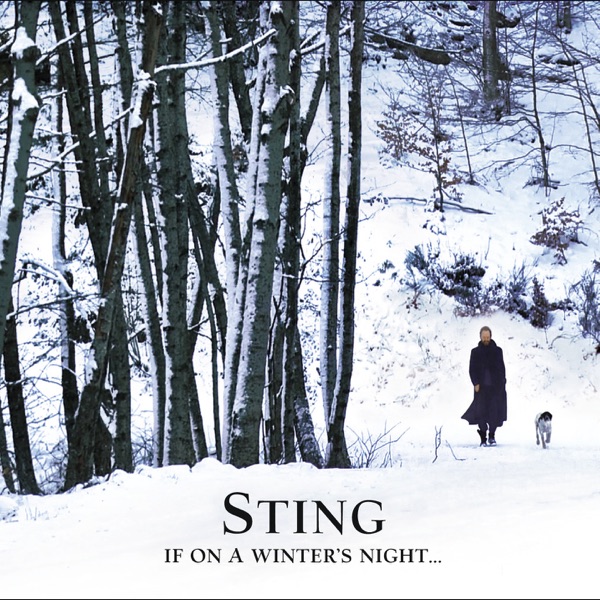
If on a Winter’s Night…
2009 · 16 tracks
- 1 Gabriel's Message ↗ 2:33
- 2 Soul Cake ↗ 3:27
- 3 There Is No Rose of Such Virtue ↗ 4:03
- 4 The Snow It Melts the Soonest ↗ 3:43
- 5 Christmas At Sea ↗ 4:37
- 6 Lo How a Rose E'er Blooming ↗ 2:42
- 7 Cold Song ↗ 3:16
- 8 The Burning Babe ↗ 2:43
- 9 Now Winter Comes Slowly ↗ 3:05
- 10 The Hounds of Winter ↗ 5:49
- 11 Balulalow ↗ 3:10
- 12 Cherry Tree Carol ↗ 3:11
- 13 Lullaby for an Anxious Child ↗ 2:50
- 14 Hurdy Gurdy Man ↗ 2:49
- 15 You Only Cross My Mind In Winter ↗ 2:35
- 16 Bethlehem Down (Bonus Track) ↗ 2:54
Symphonicities
2010 · 13 tracks
- 1 Next To You ↗ 2:30
- 2 Englishman In New York (feat. Royal Philharmonic Concert Orchestra) [Symphonicities Version] ↗ 4:23
- 3 Every Little Thing She Does Is Magic ↗ 4:57
- 4 I Hung My Head ↗ 5:32
- 5 You Will Be My Ain True Love ↗ 3:44
- 6 Roxanne ↗ 3:38
- 7 When We Dance ↗ 5:27
- 8 The End of the Game ↗ 6:07
- 9 I Burn For You ↗ 4:04
- 10 We Work the Black Seam ↗ 7:19
- 11 She's Too Good For Me ↗ 3:03
- 12 The Pirate's Bride ↗ 5:03
- 13 Why Should I Cry For You? ↗ 5:47

The Last Ship
2013 · 12 tracks
- 1 The Last Ship ↗ 3:50
- 2 Dead Man's Boots ↗ 3:30
- 3 And Yet ↗ 3:53
- 4 August Winds ↗ 3:18
- 5 Language of Birds ↗ 3:30
- 6 Practical Arrangement ↗ 3:20
- 7 The Night the Pugilist Learned How to Dance ↗ 4:13
- 8 Ballad of the Great Eastern ↗ 5:14
- 9 What Have We Got? (feat. Jimmy Nail) ↗ 3:34
- 10 I Love Her But She Loves Someone Else ↗ 3:42
- 11 So to Speak (feat. Becky Unthank) ↗ 4:07
- 12 The Last Ship (Reprise) ↗ 3:19
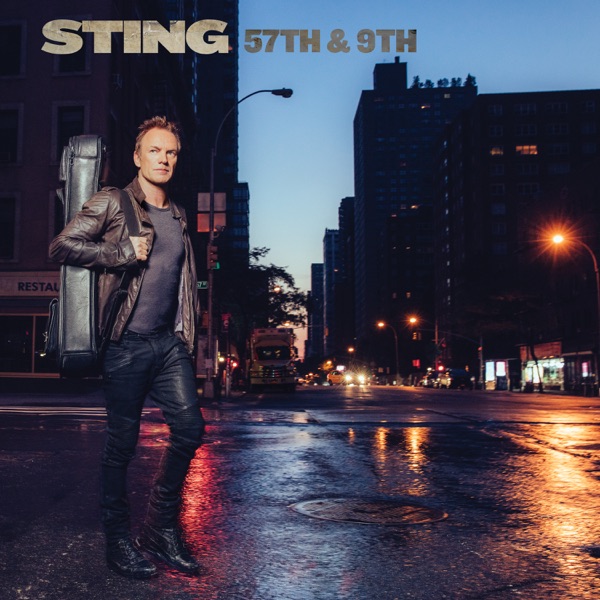
57th & 9th
2016 · 10 tracks

44/876
2018 · 12 tracks
- 1 Don't Make Me Wait (Dave Audé Rhythmic Radio Remix) ↗ 3:47
- 2 Dreaming in the U.S.A. (Chris Baio Remix) ↗ 5:23
- 3 Morning Is Coming (Rory Stone Love Black Dub Day Remix) ↗ 3:06
- 4 Don't Make Me Wait (Tropkillaz Remix) ↗ 3:22
- 5 Just One Lifetime (Cherry Cherry Boom Boom Remix) ↗ 2:56
- 6 Don't Make Me Wait (Jungle Josh x JROB Remix) ↗ 4:23
- 7 Don't Make Me Wait (iLL Wayno Remix) ↗ 3:26
- 8 Don't Make Me Wait (One Drop Remix) ↗ 3:39
- 9 Gotta Get Back My Baby (Dave Audé Radio Remix) ↗ 2:46
- 10 Don't Make Me Wait (Dave Audé Club Mix) ↗ 5:19
- 11 Don't Make Me Wait (Madison Mars Remix) ↗ 3:04
- 12 Don't Make Me Wait (Tom Stephan Club Mix) ↗ 6:07


All We Get Is Life
2024 · 18 tracks
- 1 Song Books: Solo for Voice No. 49. The Year Begins to Be Ripe ↗ 1:12
- 2 The Second Book of Songes: No. 4, Die not before thy day ↗ 1:51
- 3 The Second Book of Songes: No. 5, Mourn, mourn, day is with darkness fled ↗ 1:50
- 4 The Second Book of Songes: No. 3, Sorrow, sorrow, stay, lend true repentant tears ↗ 3:04
- 5 Five ↗ 5:00
- 6 Song Books: Solo for Voice No. 91 ↗ 6:07
- 7 Lady if you So Spight mee ↗ 2:22
- 8 Eight Whiskus ↗ 5:38
- 9 Dream ↗ 5:58
- 10 The Second Book of Songes: No. 1, I saw my lady weep ↗ 4:58
- 11 The Second Book of Songes: No. 2, Flow my tears ↗ 3:53
- 12 A Dream ↗ 3:46
- 13 She Is Asleep ↗ 8:01
- 14 A Room ↗ 2:26
- 15 The Second Book of Songes: No. 6, Time's eldest son, old age, the heir of ease (First Part) ↗ 1:15
- 16 The Second Book of Songes: No. 7, Then sit thee down and say thy "Nunc dimittis" (Second Part) ↗ 1:04
- 17 The Second Book of Songes: No. 8, When others sing "Venite exultemus" (Third Part) ↗ 1:20
- 18 Shape Of My Heart ↗ 4:18
-
 The Dream of the Blue TurtlesSting198510 tracks
 -
 …Nothing Like the SunSting198712 tracks
 -
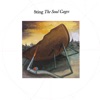 The Soul CagesSting19919 tracks
 -
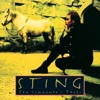 Ten Summoner’s TalesSting199312 tracks
 -
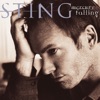 Mercury FallingSting199611 tracks
 -
 Brand New DaySting199910 tracks
 -
 Sacred LoveSting200311 tracks
 -
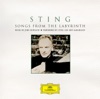 Songs From the LabyrinthSting200623 tracks
 -
 If on a Winter’s Night…Sting200916 tracks
 -
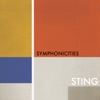 SymphonicitiesSting201013 tracks
 -
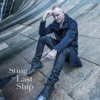 The Last ShipSting201312 tracks
 -
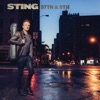 57th & 9thSting201610 tracks
 -
 44/876Sting201812 tracks
 -
 The BridgeSting202110 tracks
 -
 All We Get Is LifeSting202418 tracks
Deep Dive
Overview
Gordon Matthew Thomas Sumner, known professionally as Sting, emerged in the late 1970s as the bassist, frontman, and principal songwriter of the Police—one of rock’s most commercially dominant and critically restless acts. While the Police defined a generation’s relationship to new-wave minimalism and reggae-inflected rock, Sting’s solo career, launched in 1985, proved equally far-ranging, encompassing jazz, classical, new-age, world music, and soul across nearly four decades of prolific recording. His trajectory from post-punk innovator to genre-spanning virtuoso marks one of rock music’s most sustained explorations of musical boundaries.
Formation Story
Stirling Gordon Sumner was born in 1951 in Newcastle upon Tyne, England, during the postwar era that would shape British rock. He came of age during the cultural upheaval of the 1970s, when punk’s raw challenge to rock orthodoxy and reggae’s rise as a global force were remaking popular music. Before becoming the most visible face of the Police, Sting worked as a primary school teacher and performed in smaller bands, absorbing the sonic vocabulary of punk, soul, and Caribbean music. This eclectic foundation would prove essential to his later work: he brought not only instrumental virtuosity but also a restless intellectual curiosity about where rock music could venture.
Breakthrough Moment
Stung formed the Police in 1977 with guitarist Andy Summers and drummer Stewart Copeland. The band’s tightly arranged, minimalist approach—built on Sting’s melodic bass lines, Summers’ textured guitar work, and Copeland’s military-precision drumming—quickly set them apart from the punk scene from which they emerged. By the early 1980s, the Police had become one of the world’s biggest rock acts, with albums like Synchronicity cementing their place in the mainstream. However, the band’s creative tensions and Sting’s ambitions beyond the Police’s tight three-piece format led to a split in 1986. This dissolution, rather than ending his career, liberated him to pursue the musical experiments he had long contemplated.
Peak Era
Stings’s solo peak extended across the late 1980s and 1990s. His debut solo album, The Dream of the Blue Turtles (1985), released while the Police were still active, announced a dramatically expanded sonic palette: jazz instrumentation, worldbeat percussion, and introspective songwriting replaced the band’s minimalism. Subsequent albums like …Nothing Like the Sun (1987) and The Soul Cages (1991) deepened this fusion approach, drawing on classical composition, reggae rhythm, and African music. By the 1990s, albums such as Ten Summoner’s Tales (1993) and Mercury Falling (1996) had established him as a major solo force whose commercial appeal rivaled his Police-era fame. This period cemented his reputation as both a serious musician unafraid of experimentation and a sophisticated pop craftsman able to craft radio-friendly songs from structurally complex arrangements.
Musical Style
Stings’s musicianship is defined by technical precision and restless genre-crossing. As a bass player, he moved beyond the instrument’s traditional rhythmic anchor role, using it as a melodic and harmonic voice—a legacy carried forward into his solo work. His voice, a warm baritone capable of both aggressive attack and lyrical sensitivity, became the focal point of his solo arrangements. Across his discography, he has integrated rock’s electric intensity with jazz’s harmonic sophistication, reggae’s offbeat syncopation, classical orchestration, and the instrumentation of world music traditions. His songwriting, whether in the Police or solo, favored intellectual themes—spirituality, love, loss, politics—delivered through densely layered arrangements that reward close listening. Unlike many rock artists, Sting never retreated into nostalgia; each album attempted new sonic territory, from the orchestral ambitions of Brand New Day (1999) to the unplugged intimacy captured on live recordings, to his late-career engagement with jazz standards and collaborations.
Major Albums
The Dream of the Blue Turtles (1985)
Stings’s solo debut announced his departure from the Police’s minimalism, featuring jazz fusion arrangements, African percussion, and introspective songwriting that introduced both longtime fans and new audiences to his expanded artistic vision.
The Soul Cages (1991)
This album deepened his exploration of classical and jazz influences while maintaining strong melodic songwriting, showcasing his ability to balance sophistication with accessibility across a wide range of instrumental textures.
Ten Summoner’s Tales (1993)
Among his most commercially successful solo works, this album distilled his fusion approach into sharper focus, combining rock energy with jazz fluency and pop sensibility across memorable, radio-friendly arrangements.
Brand New Day (1999)
Stings invested in orchestral production and complex harmonic arrangements, demonstrating his continued evolution as a composer unafraid of ambitious studio ambitions well into his solo career.
The Last Ship (2013)
This album marked a return to thematic cohesion and storytelling, featuring maritime imagery and traditional British folk elements alongside his characteristic genre-blending production.
Signature Songs
- “Fields of Gold” — A haunting meditation on memory and loss, featuring acoustic guitar and subtle worldbeat elements that became one of his most enduring compositions.
- “If You Love Somebody Set Them Free” — The first solo single, blending new-wave rhythm with deeply personal lyrics about relationships and agency.
- “The Russians” — A politically engaged, reggae-inflected track from the Police era that exemplified his commitment to thematic depth in popular song.
- “An Englishman in New York” — A witty, sophisticated solo composition reflecting on exile and identity through jazz-influenced instrumentation.
- “Shape of My Heart” — A contemplative, classically influenced arrangement showcasing his skills as both melodist and arranger.
Influence on Rock
Stings’s solo career demonstrated that progressive artistic ambition and mainstream commercial success were not mutually exclusive. He showed rock and pop musicians that integrating jazz harmonies, world music instrumentation, and classical composition need not result in commercial alienation—a lesson that influenced countless artists in subsequent decades. His willingness to tour orchestrally and explore unplugged arrangements presaged broader shifts in how rock artists approached production and presentation. Beyond music, his willingness to address political and spiritual themes in sophisticated language, without descending into didacticism, influenced how rock artists could engage contemporary issues. His legacy also extends to the validation of career longevity as artistic statement: by refusing to trade on past glories and instead continuing to record new material across changing musical landscapes, Sting established a model of sustained creative engagement that challenged the rock industry’s obsession with early triumph.
Legacy
By the 2020s, Sting had released over twenty studio albums and remained a touring presence, with live recordings from different eras capturing his evolution across decades. His body of work—stretching from the Police’s taut post-punk innovations through decades of genre-blending solo exploration—occupies a unique position in rock history: neither art-rock purist nor unambiguous mainstream entertainer, but a musician who insisted on the possibility of both. Streaming platforms and reissues have ensured that both his Police catalog and his solo discography remain accessible to successive generations, while his touring continues to draw audiences eager to witness his technical command and interpretive depth. The breadth of his recorded work, from The Dream of the Blue Turtles through recent releases like All We Get Is Life (2024), stands as testimony to an artist who treated each album as an opportunity for genuine artistic evolution rather than repetition or comfortable formula.
Fun Facts
- Before achieving fame, Sting worked as a primary school teacher in England, an experience that informed his later commitment to music education and philanthropic work.
- The Police were initially labeled a punk band despite drawing heavily from reggae and new-wave influences, a categorization Sting resisted throughout the band’s existence.
- In addition to his music career, Sting has pursued acting and environmental activism, expanding his cultural footprint beyond the recording studio and concert stage.
- His adoption of the stage name “Sting” reportedly came from a striped jersey he wore during early performances, a minor detail that belied the seriousness of his artistic intentions.
- His solo album The Soldier’s Tale (1988) was based on a classical composition by Igor Stravinsky, reflecting his deep engagement with classical music traditions throughout his career.