

Photo by Ralph Arvesen , licensed under CC BY 2.0 · Wikimedia Commons
Rank #357
Styx
From Wikipedia
Styx is an American rock band formed in Chicago, Illinois, in 1972. They are known for blending melodic hard rock guitar with acoustic guitar, synthesizers mixed with acoustic piano, upbeat tracks with power ballads, and incorporating elements of international musical theatre. The band established themselves with a progressive rock sound during the 1970s and began to incorporate pop rock and soft rock elements in the 1980s.
Members
- Chuck Panozzo
Discography & Previews
Browse through and click an album to open and play 30-second previews streamed from Apple Music.


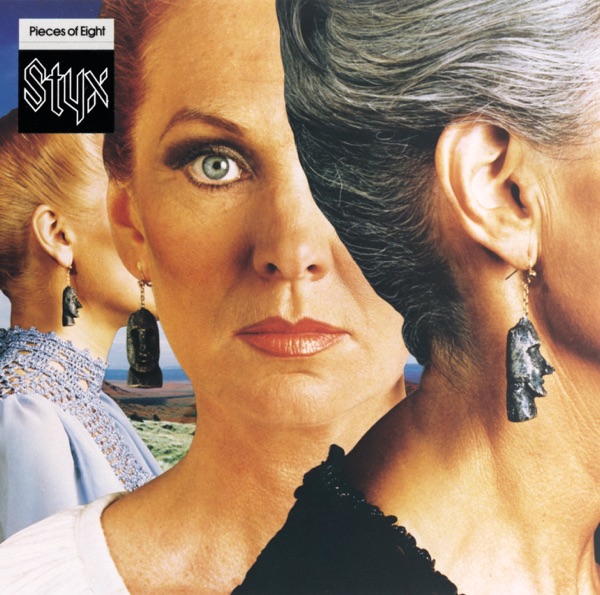


Paradise Theatre
1981 · 11 tracks


Brave New World
1999 · 14 tracks
- 1 I Will Be Your Witness ↗ 4:31
- 2 Brave New World ↗ 5:15
- 3 While There's Still Time ↗ 3:53
- 4 Number One ↗ 4:33
- 5 Best New Face ↗ 3:36
- 6 What Have They Done to You ↗ 4:34
- 7 Fallen Angel ↗ 4:49
- 8 Everything Is Cool ↗ 5:20
- 9 Great Expectations ↗ 4:44
- 10 Heavy Water ↗ 4:29
- 11 High Crimes & Misdemeanors (Hip Hop-Cracy) ↗ 3:26
- 12 Just Fell In ↗ 3:25
- 13 Goodbye Roseland ↗ 3:49
- 14 Brave New World (Reprise) ↗ 3:31

Cyclorama
2003 · 14 tracks
- 1 Do Things My Way ↗ 4:57
- 2 Waiting for Our Time ↗ 4:13
- 3 Fields of the Brave ↗ 3:24
- 4 Bourgeois Pig ↗ 0:49
- 5 Kiss Your Ass Goodbye ↗ 3:14
- 6 These Are the Times ↗ 6:45
- 7 Yes I Can ↗ 3:51
- 8 More Love for the Money ↗ 3:48
- 9 Together ↗ 4:47
- 10 Fooling Yourself (Palm of Your Hands) ↗ 0:39
- 11 Captain America ↗ 3:54
- 12 Killing the Thing That You Love ↗ 5:36
- 13 One With Everything ↗ 5:56
- 14 Genki Desu Ka ↗ 6:13

Big Bang Theory
2005 · 14 tracks
- 1 I Am the Walrus ↗ 4:41
- 2 I Can See for Miles ↗ 4:29
- 3 Can't Find My Way Home ↗ 3:25
- 4 It Don't Make Sense - You Can't Make Peace ↗ 4:10
- 5 I Don't Need No Doctor ↗ 4:23
- 6 One Way Out ↗ 4:42
- 7 A Salty Dog ↗ 4:02
- 8 Summer In the City ↗ 3:25
- 9 Manic Depression ↗ 4:00
- 10 Talkin' About the Good Times ↗ 3:57
- 11 Locomotive Breath ↗ 3:33
- 12 Find the Cost of Freedom ↗ 1:04
- 13 Wishing Well ↗ 3:39
- 14 Blue Collar Man At 2120 ↗ 6:30

The Mission
2017 · 14 tracks
- 1 Overture ↗ 1:23
- 2 Gone Gone Gone ↗ 2:08
- 3 Hundred Million Miles from Home ↗ 3:40
- 4 Trouble at the Big Show ↗ 2:30
- 5 Locomotive ↗ 5:04
- 6 Radio Silence ↗ 4:19
- 7 The Greater Good ↗ 4:10
- 8 Time May Bend ↗ 2:36
- 9 Ten Thousand Ways ↗ 1:27
- 10 Red Storm ↗ 5:54
- 11 All Systems Stable ↗ 0:18
- 12 Khedive ↗ 2:04
- 13 The Outpost ↗ 3:51
- 14 Mission to Mars ↗ 2:46

Crash of the Crown
2021 · 15 tracks
- 1 The Fight Of Our Lives ↗ 1:55
- 2 A Monster ↗ 3:28
- 3 Reveries ↗ 3:04
- 4 Hold Back The Darkness ↗ 3:59
- 5 Save Us From Ourselves ↗ 3:03
- 6 Crash Of The Crown ↗ 3:46
- 7 Our Wonderful Lives ↗ 3:07
- 8 Common Ground ↗ 4:00
- 9 Sound The Alarm ↗ 3:25
- 10 Long Live The King ↗ 2:34
- 11 Lost At Sea ↗ 0:38
- 12 Coming Out The Other Side ↗ 3:48
- 13 To Those ↗ 3:01
- 14 Another Farewell ↗ 0:27
- 15 Stream ↗ 2:57
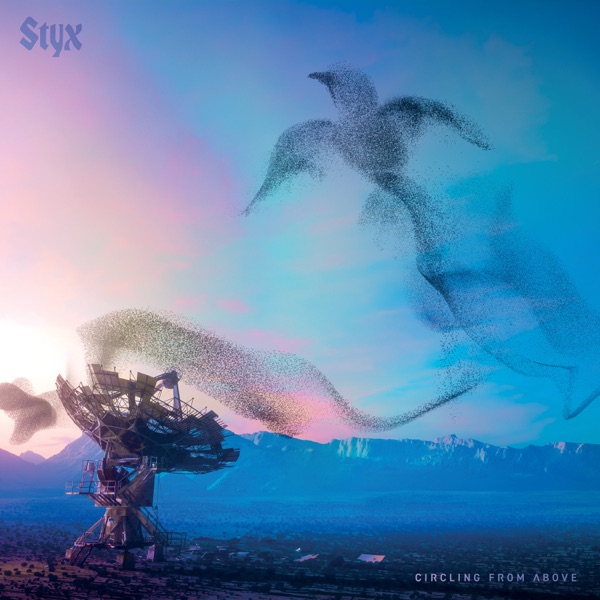
Circling From Above
2025 · 13 tracks
- 1 Circling From Above ↗ 1:57
- 2 Build And Destroy ↗ 3:52
- 3 Michigan ↗ 3:04
- 4 King Of Love ↗ 3:30
- 5 It’s Clear ↗ 3:29
- 6 Forgive ↗ 3:54
- 7 Everybody Raise A Glass ↗ 3:31
- 8 Blue Eyed Raven ↗ 3:51
- 9 She Knows ↗ 3:36
- 10 Ease Your Mind ↗ 0:46
- 11 The Things That You Said ↗ 3:29
- 12 We Lost The Wheel Again ↗ 2:57
- 13 Only You Can Decide ↗ 3:14
-
 StyxStyx19726 tracks
 -
 The Serpent Is RisingStyx197310 tracks
 -
 Styx IIStyx19739 tracks
 -
 Man of MiraclesStyx197410 tracks
 -
 EquinoxStyx19758 tracks
 -
 Crystal BallStyx19767 tracks
 -
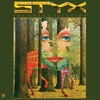 The Grand IllusionStyx19778 tracks
 -
 Pieces of EightStyx197810 tracks
 -
 CornerstoneStyx19799 tracks
 -
 Paradise TheatreStyx198111 tracks
 -
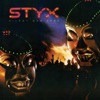 Kilroy Was HereStyx19839 tracks
 -
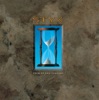 Edge of the CenturyStyx199010 tracks
 - Edge of the CenturyStyx199010 tracks
-
 Brave New WorldStyx199914 tracks
 -
 CycloramaStyx200314 tracks
 -
 Big Bang TheoryStyx200514 tracks
 -
 The MissionStyx201714 tracks
 -
 Crash of the CrownStyx202115 tracks
 -
 Circling From AboveStyx202513 tracks
Deep Dive
Overview
Styx is an American rock band formed in Chicago in 1972. Over more than five decades of activity, they have established themselves as a major force in progressive hard rock, pioneering a distinctive sound that weaves together melodic hard rock guitar with acoustic guitar, synthesizers paired with acoustic piano, and theatrical arrangements drawn from international musical theatre traditions. The band emerged during the height of progressive rock’s experimentation and became instrumental in defining how American rock could absorb both complexity and accessibility.
Formation Story
Styx took shape in Chicago, Illinois, in 1972, arriving at a moment when rock music was fracturing into increasingly specialized subgenres. The band drew from the city’s strong rock tradition and began their career on Wooden Nickel Records before securing a deal with A&M Records, one of the era’s most progressive major labels. Their early lineup would develop the foundational approach that became their trademark: the integration of both hard rock intensity and softer, more introspective passages, supported by expanding use of synthesizers and keyboard arrangements that moved beyond simple accompaniment to become structural elements of their compositions.
Breakthrough Moment
Styx’s commercial and critical breakthrough arrived in the mid-to-late 1970s with The Grand Illusion (1977) and Pieces of Eight (1978). These albums showcased a band in full command of their melodic and progressive ambitions, balancing power ballads with upbeat rock tracks and longer, more elaborate compositions. The Grand Illusion in particular demonstrated their ability to write radio-friendly songs without sacrificing musical sophistication, establishing them as more than a cult progressive band and positioning them for sustained mainstream success. The follow-up, Pieces of Eight, deepened this reputation by further refining their blend of hard rock aggression and progressive structure.
Peak Era
The late 1970s and early 1980s represented Styx’s peak period of both commercial success and creative prominence. Following Cornerstone (1979), the band released Paradise Theatre (1981) and Kilroy Was Here (1983), albums that confirmed their willingness to expand beyond standard rock formats into more theatrical and conceptual territory. During this window, Styx commanded significant radio and album chart presence, their mixture of accessible melodies and ambitious arrangements appealing to both mainstream rock audiences and listeners drawn to more complex, progressive work. The band’s ability to shift between these registers—from intimate acoustic passages to explosive electric sections—became increasingly refined across these records.
Musical Style
Styx’s sound is fundamentally defined by contrast and layering. Hard rock guitar work meets acoustic guitar fingerpicking; synthesizers blend with acoustic piano; upbeat rock songs sit alongside extended power ballads. This combination of elements drawn from hard rock, progressive rock, and soft rock created a template that influenced how bands approached dynamics and arrangement. Their incorporation of theatrical and musical theatre elements set them apart from purely technical progressive bands, introducing narrative and dramatic arc alongside harmonic sophistication. The band’s approach suggested that rock music could accommodate both intellectual and emotional accessibility, that complexity and singalong melody were not mutually exclusive. Over time, particularly from the 1980s onward, they increasingly incorporated pop rock and soft rock elements, broadening their sonic palette while maintaining the core identity built on blended acoustic and electric textures.
Major Albums
The Grand Illusion (1977)
A landmark album that established Styx as major artists, balancing memorable melodies with progressive rock ambition and marking their transition to broader commercial success.
Pieces of Eight (1978)
Following up their breakthrough, this album deepened their exploration of complex song structures and theatrical arrangements, solidifying their place in the progressive rock landscape.
Cornerstone (1979)
Completing their 1970s run, Cornerstone continued their trajectory of merging hard rock accessibility with progressive sophistication and arrangement innovation.
Paradise Theatre (1981)
Demonstrating their continued evolution and willingness to explore conceptual frameworks, this album expanded their theatrical ambitions and confirmed their staying power beyond the 1970s.
Kilroy Was Here (1983)
Showing the band’s adaptability and their integration of pop rock sensibilities alongside their hard rock and progressive roots.
Signature Songs
- “The Grand Illusion” — The title track that helped launch the band into mainstream recognition, exemplifying their ability to write memorable, singable rock songs with progressive underpinnings.
- “Come Sail Away” — A power ballad that showcases the band’s gift for emotional melodic songwriting across extended form.
- “Rocking the Boat” — An uptempo track that captures the band’s energetic hard rock approach.
Influence on Rock
Styx’s deliberate blending of accessible melody with progressive complexity and their integration of theatrical elements helped reshape expectations for what rock music could be structurally and thematically. They proved that progressive rock did not require difficulty for its own sake, that challenging arrangements and compelling singalong moments could coexist. Their approach influenced how subsequent rock bands approached dynamic contrast and arrangement—the idea that a single song could contain multiple textures and emotional registers without losing coherence. The band’s use of synthesizers as compositional tools rather than mere effects also contributed to the broader acceptance of keyboard-driven rock in the mainstream. Their theatrical ambitions helped open doors for concept albums and more narrative-driven rock works.
Legacy
Styx remained active through subsequent decades, releasing new material including Edge of the Century (1990), Brave New World (1999), Cyclorama (2003), Big Bang Theory (2005), and The Mission (2017), demonstrating sustained creative engagement. Their 2021 album Crash of the Crown continued this pattern, followed by Circling From Above in 2025, confirming their ongoing presence in rock music. The band’s longevity and continued output have secured their position as important figures in the history of American rock, with their 1970s and early 1980s work remaining central to how progressive hard rock is understood and taught. Their influence extends across multiple generations of rock musicians who learned from their demonstration that complexity and accessibility were not opposing forces.
Fun Facts
- Chuck Panozzo was a consistent presence throughout the band’s history, contributing to their long-term creative identity.
- The band’s formation in Chicago positioned them in a major rock city with a strong tradition spanning blues and rock heritage.
- Styx’s career arc from progressive experimenters to mainstream success mirrors broader industry trends of the 1970s and early 1980s, when art rock and pop crossover became increasingly viable commercial strategies.