
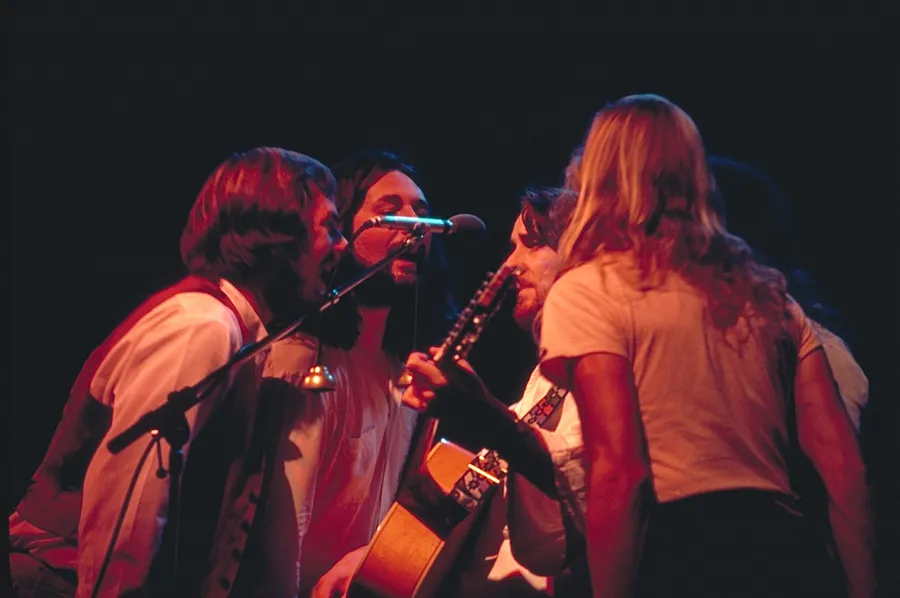
Photo by Rs3 , licensed under CC BY-SA 3.0 · Wikimedia Commons
Rank #129
Supertramp
From Wikipedia
Supertramp were a British rock band formed in London in 1970. Marked by the individual songwriting of founders Roger Hodgson and Rick Davies, the group were distinguished for blending progressive rock and pop styles. The classic lineup, which lasted ten years from 1973 to 1983, consisted of Davies, Hodgson, Dougie Thomson (bass), Bob Siebenberg (drums) and John Helliwell (saxophone), after which the group's lineup changed numerous times, with Davies being the only constant member throughout its history.
Members
- Keith Baker (1969–1970)
- Richard Palmer-James (1969–1970)
- Rick Davies (1969–2003)
- Roger Hodgson (1969–1983)
- Robert Millar (1970–1971)
- Frank Farrell (1971–1972)
- Bob Siebenberg (1973–1983)
- Dougie Thomson (1973–1988)
- John Helliwell (1973–2011)
- Carl Verheyen (1985–2011)
- Mark Hart (1985–2002)
- Lee Thornburg (1996–2012)
- Cliff Hugo (1997–2010)
- Jesse Siebenberg (2002–2012)
Discography & Previews
Browse through and click an album to open and play 30-second previews streamed from Apple Music.
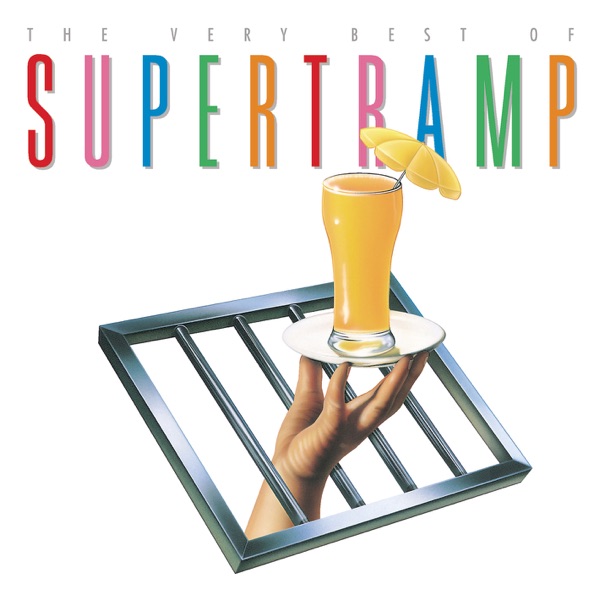
Supertramp
1970 · 15 tracks
- 1 School ↗ 5:34
- 2 Goodbye Stranger ↗ 5:48
- 3 The Logical Song ↗ 4:10
- 4 Bloody Well Right ↗ 4:32
- 5 Breakfast In America ↗ 2:39
- 6 Rudy ↗ 7:20
- 7 Take the Long Way Home ↗ 5:06
- 8 Crime of the Century ↗ 5:32
- 9 Dreamer ↗ 3:30
- 10 Ain't Nobody But Me ↗ 5:10
- 11 Hide In Your Shell ↗ 6:49
- 12 From Now On ↗ 6:20
- 13 Give a Little Bit ↗ 4:09
- 14 It's Raining Again ↗ 4:26
- 15 Cannonball ↗ 7:38


Crisis? What Crisis?
1975 · 10 tracks
- 1 Easy Does It (Remastered 2025) ↗ 2:19
- 2 Sister Moonshine (Remastered 2025) ↗ 5:16
- 3 Ain't Nobody But Me (Remastered 2025) ↗ 5:15
- 4 A Soapbox Opera (Remastered 2025) ↗ 4:53
- 5 Another Man's Woman (Remastered 2025) ↗ 6:28
- 6 Lady (Remastered 2025) ↗ 5:25
- 7 Poor Boy (Remastered 2025) ↗ 5:08
- 8 Just A Normal Day (Remastered 2025) ↗ 4:03
- 9 The Meaning (Remastered 2025) ↗ 5:24
- 10 Two Of Us (Remastered 2025) ↗ 3:29


Breakfast in America
1979 · 10 tracks
- 1 Gone Hollywood (Remastered 2026) ↗ 5:18
- 2 The Logical Song (Remastered 2026) ↗ 4:12
- 3 Goodbye Stranger (Remastered 2026) ↗ 5:51
- 4 Breakfast In America (Remastered 2026) ↗ 2:39
- 5 Oh Darling (Remastered 2026) ↗ 3:46
- 6 Take The Long Way Home (Remastered 2026) ↗ 5:09
- 7 Lord Is It Mine (Remastered 2026) ↗ 4:10
- 8 Just Another Nervous Wreck (Remastered 2026) ↗ 4:26
- 9 Casual Conversations (Remastered 2026) ↗ 2:59
- 10 Child Of Vision (Remastered 2026) ↗ 7:31


-
 SupertrampSupertramp197015 tracks
 -
 Crime of the CenturySupertramp19748 tracks
 -
 Crisis? What Crisis?Supertramp197510 tracks
 -
 Even in the Quietest Moments…Supertramp19777 tracks
 -
 Breakfast in AmericaSupertramp197910 tracks
 -
 “…Famous Last Words…”Supertramp19829 tracks
 -
 Brother Where You BoundSupertramp19856 tracks
 -
 Free as a BirdSupertramp19879 tracks
Deep Dive
Overview
Supertramp were a British rock band formed in London in 1969, emerging from the progressive rock movement of the early 1970s. Built on the songwriting partnership of founders Rick Davies and Roger Hodgson, the band distinguished themselves by fusing progressive rock’s instrumental complexity and conceptual ambition with the accessibility and melodic sensibility of pop music. This hybrid approach, refined across a string of meticulously crafted albums, positioned them as one of the major commercial forces in rock during the mid-to-late 1970s and early 1980s.
Formation Story
Rick Davies and Roger Hodgson established Supertramp in London in 1969, building the early iteration with Robert Millar and Keith Baker. The group went through significant personnel changes in its first few years, with Frank Farrell joining on bass in 1971 before the arrival of the classic lineup. By 1973, the band had crystallized into its most enduring form: Davies and Hodgson on vocals and keyboards, Dougie Thomson on bass, Bob Siebenberg on drums, and John Helliwell on saxophone and woodwinds. This five-piece configuration remained stable for a full decade, becoming synonymous with the Supertramp sound and the group’s period of greatest commercial and critical success.
Breakthrough Moment
Supertramp’s early albums—the self-titled debut in 1970 and Indelibly Stamped in 1971—established the band’s instrumental prowess and compositional sophistication but reached only a modest audience. The breakthrough came with Crime of the Century in 1974, an album that crystallized the band’s signature blend of intricate arrangement and pop-inflected melody. The record’s commercial performance and critical reception elevated Supertramp from cult progressive act to a band with mainstream potential, setting the stage for the era that would define their legacy.
Peak Era
From 1975 through the early 1980s, Supertramp achieved their highest level of creative and commercial output. Crisis? What Crisis? (1975) and Even in the Quietest Moments… (1977) solidified their position in the rock hierarchy, but it was Breakfast in America (1979) that transformed them into a global phenomenon. Released at the height of their powers, the album became their most successful work both critically and commercially, spawning major radio hits and selling in enormous quantities across multiple continents. The band continued this momentum with ”…Famous Last Words…” in 1982, an album that proved their ability to sustain commercial success while maintaining artistic credibility. The classic lineup disbanded in 1983, marking the end of a ten-year period that defined the band’s historical significance.
Musical Style
Supertramp’s music synthesized the progessive rock inheritance of the early 1970s—complex time signatures, extended instrumental passages, conceptual depth—with the direct melodic appeal and production sophistication of mainstream pop and rock. Hodgson and Davies contributed distinctive vocal characteristics: Hodgson’s higher, more plaintive tenor and Davies’s gruffer baritone often intertwined in harmony, creating an immediate textural signature. John Helliwell’s saxophone became a defining instrumental voice, deployed with classical precision and emotional directness rather than the raw expressivity of blues-rock players. The rhythm section of Thomson and Siebenberg provided a tight, propulsive foundation built on intricate cymbal work and syncopated bass lines. Production-wise, the band favored clarity of arrangement and studio craftsmanship, allowing each instrument to occupy its own space in the mix. Lyrically, their work ranged from existential meditations on modern life to more personal and emotional territory, a balance that elevated their pop accessibility without sacrificing intellectual content.
Major Albums
Crime of the Century (1974)
The album that announced Supertramp as serious contenders, Crime of the Century displayed the full range of their compositional and arrangement skills, from extended instrumental passages to tightly constructed pop moments.
Crisis? What Crisis? (1975)
A follow-up that deepened their thematic interests and further refined their studio craft, consolidating the gains made by Crime of the Century while expanding their emotional range.
Even in the Quietest Moments… (1977)
A showcase for their ability to balance introspection with broad commercial appeal, the album demonstrated the band’s maturity both as musicians and as songwriters.
Breakfast in America (1979)
Their masterwork and commercial peak, Breakfast in America remains their best-known album, achieving sustained success across radio, charts, and streaming platforms while maintaining the sophistication of their earlier work.
”…Famous Last Words…” (1982)
A final statement from the classic lineup, the album proved the band could sustain creative relevance while operating at maximum commercial visibility.
Signature Songs
- “Dreamer” — A showcase for the band’s melodic gift and production finesse, built on a propulsive rhythm and Helliwell’s prominent saxophone.
- “The Logical Song” — One of their most recognizable compositions, balancing philosophical lyrical content with infectious pop structure.
- “Take the Long Way Home” — A sprawling meditation on urban life that exemplifies their ability to merge length and complexity with broad accessibility.
- “Breakfast in America” — The title track from their most successful album, a sarcastic commentary on American culture wrapped in an irresistible melodic package.
- “Goodbye Stranger” — A showcase for the dual-lead-vocal interplay between Davies and Hodgson, built on sophisticated harmonic structures.
- “Crime of the Century” — The title track that announced their arrival, an extended composition balancing multiple movements and thematic concerns.
Influence on Rock
Supertramp demonstrated that progressive rock need not remain imprisoned in art-rock purism or cult status. By grafting pop melody and commercial accessibility onto the technical foundations and conceptual ambitions of progressive rock, they opened a pathway that influenced how rock bands would balance complexity with mainstream appeal in subsequent decades. Their success in the 1970s and 1980s helped establish the viability of the “progressive pop” hybrid—a sound that other acts would develop and refine. The precision of their arrangements and the clarity of their production values influenced producers and studio musicians across multiple genres, while their songwriting approach—pairing intellectual or satirical lyrical content with immediate melodic gratification—became a template other bands would adopt.
Legacy
Supertramp’s commercial visibility remains substantial, with Breakfast in America continuing to achieve hundreds of millions of streams across digital platforms. The album and its associated tracks have become part of the background music of late-twentieth-century culture, surfacing regularly in films, television, and advertising. The band continued to record and tour after the classic lineup’s dissolution in 1983, though Rick Davies remained the only original member. Their output from 1985 onward—including Brother Where You Bound (1985), Free as a Bird (1987), Some Things Never Change (1997), and Slow Motion (2002)—maintained a presence but did not generate the cultural force of their 1970s work. The classic era, however, secured their place as significant figures in rock history: a band that proved the commercial viability of technical sophistication and musical intelligence, and that expanded the definition of what progressive rock could achieve in the mainstream.
Fun Facts
- The band’s name was chosen from a dictionary definition referring to someone who is better at something than they pretend to be—reflecting their initial goal of making their technical virtuosity accessible rather than ostentatious.
- John Helliwell’s saxophone work was so integral to the band’s signature sound that his departure from the classic lineup was a significant factor in the group’s 1983 dissolution.
- Breakfast in America became one of the best-selling albums of the 1980s, a remarkable achievement for a work of progressive rock at a time when the genre had fallen from mainstream favor.
- Rick Davies remained the band’s continuous member throughout all lineup changes, serving as the anchor point that defined Supertramp’s identity across different eras.