
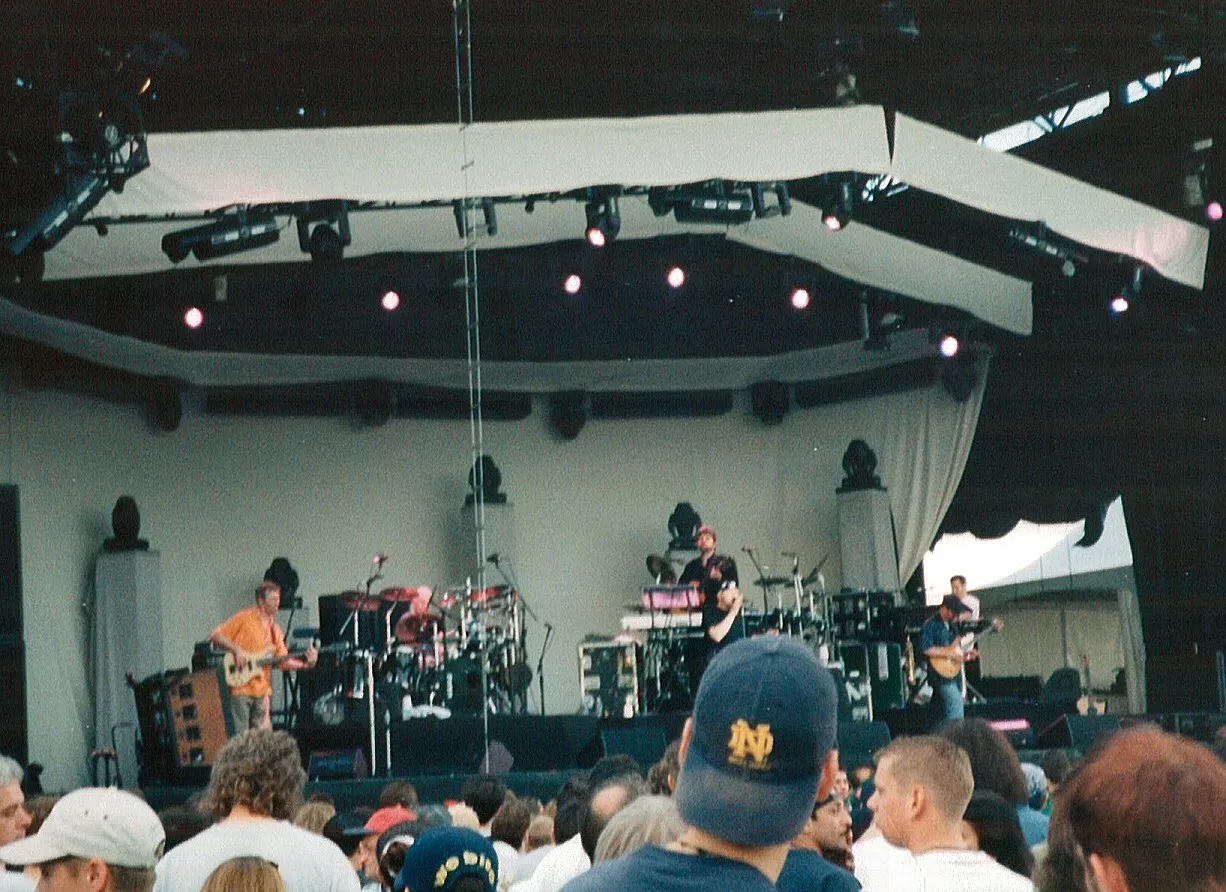
Photo by P199 , licensed under CC BY-SA 3.0 · Wikimedia Commons
Rank #269
The Alan Parsons Project
From Wikipedia
The Alan Parsons Project were a British rock duo formed in London in 1975. Its official membership consisted of producer, audio engineer, musician and composer Alan Parsons, and singer, songwriter and pianist Eric Woolfson. They shared writing credits on almost all of their songs, with Parsons producing or co-producing all of the recordings, while being accompanied by various session musicians, some relatively consistently to the point that they are considered as members by many fans.
Members
- Alan Parsons
- Eric Woolfson
Discography & Previews
Browse through and click an album to open and play 30-second previews streamed from Apple Music.

Tales of Mystery and Imagination: Edgar Allan Poe
1976 · 11 tracks
- 1 A Dream Within a Dream (1987 Remix) ↗ 4:14
- 2 The Raven (1987 Remix) ↗ 3:58
- 3 The Tell-Tale Heart (1987 Remix) ↗ 4:39
- 4 The Cask of Amontillado (1987 Remix) ↗ 4:34
- 5 (The System Of) Doctor Tarr and Professor Fether (1987 Remix) ↗ 4:21
- 6 The Fall of the House of Usher: Prelude (1987 Remix) ↗ 7:02
- 7 The Fall of the House of Usher: Arrival (1987 Remix) ↗ 2:40
- 8 The Fall of the House of Usher: Intermezzo (1987 Remix) ↗ 1:00
- 9 The Fall of the House of Usher: Pavane (1987 Remix) ↗ 4:36
- 10 The Fall of the House of Usher: Fall (1987 Remix) ↗ 0:51
- 11 To One in Paradise (1987 Remix) ↗ 4:47


The Turn of a Friendly Card
1980 · 10 tracks


Vulture Culture
1985 · 7 tracks
- 1 No Answers Only Questions (Final Version) ↗ 2:10
- 2 Separate Lives (Alternative Mix) ↗ 4:17
- 3 Hawkeye (Demo) ↗ 3:17
- 4 The Naked Vulture ↗ 10:42
- 5 No Answers Only Questions (The First Attempt) ↗ 2:57
- 6 Let's Talk About Me (Single Version) ↗ 3:39
- 7 Days Are Numbers (The Traveller) [Single Version] ↗ 4:09
Gaudi
1987 · 14 tracks
- 1 La Sagrada Familia ↗ 8:48
- 2 Too Late ↗ 4:31
- 3 Closer to Heaven ↗ 5:53
- 4 Standing On Higher Ground ↗ 5:49
- 5 Money Talks ↗ 4:26
- 6 Inside Looking Out ↗ 6:27
- 7 Paseo de Gracia (Instrumental) ↗ 3:43
- 8 Too Late (Alternate Version - Eric Woolfson Guide Vocal) ↗ 4:11
- 9 Standing On Higher Ground / Losing Proposition (Vocal Experiments) ↗ 3:56
- 10 Money Talks (Chris Rainbow / Percussion Overdubs) ↗ 0:35
- 11 Money Talks (Rough Mix Backing Track) ↗ 4:26
- 12 Closer to Heaven (Sax / Chris Rainbow Overdub section) ↗ 0:47
- 13 Paseo de Gracia (Rough Mix) ↗ 3:44
- 14 La Sagrada Familia (Rough Mix) ↗ 7:25

-
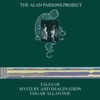 Tales of Mystery and Imagination: Edgar Allan PoeThe Alan Parsons Project197611 tracks
 -
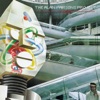 I RobotThe Alan Parsons Project197710 tracks
 -
 PyramidThe Alan Parsons Project19789 tracks
 -
 EveThe Alan Parsons Project19799 tracks
 -
 The Turn of a Friendly CardThe Alan Parsons Project198010 tracks
 -
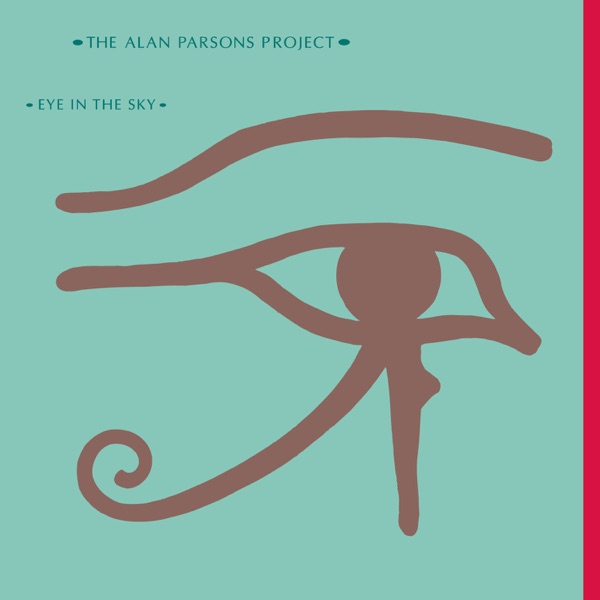
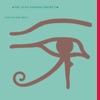 Eye in the SkyThe Alan Parsons Project198210 tracks
 -
 Ammonia AvenueThe Alan Parsons Project19849 tracks
 -
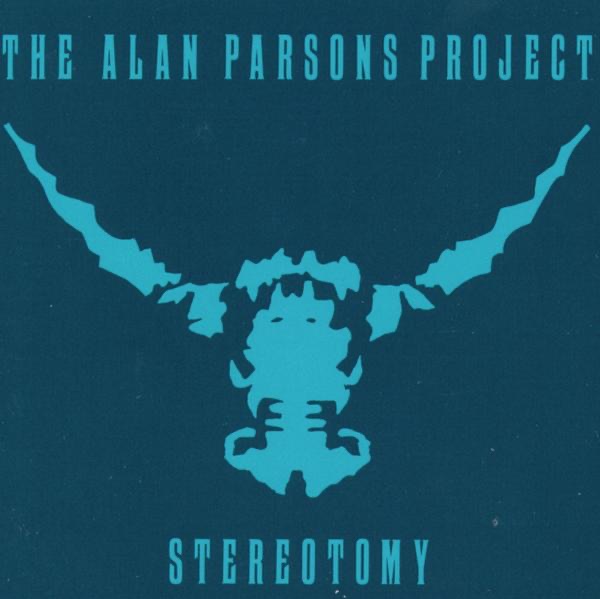
 StereotomyThe Alan Parsons Project19859 tracks
 -
 Vulture CultureThe Alan Parsons Project19857 tracks
 -
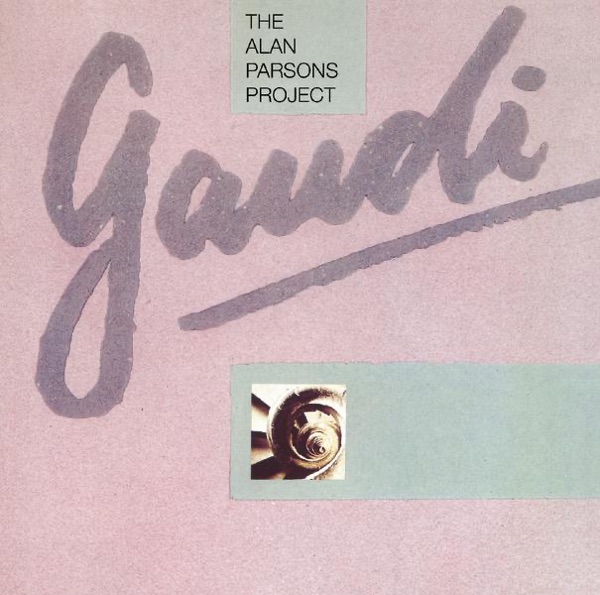
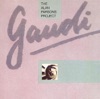 GaudiThe Alan Parsons Project198714 tracks
 -
 The Sicilian DefenceThe Alan Parsons Project201410 tracks
Deep Dive
Overview
The Alan Parsons Project were a British rock duo formed in London in 1975, operating as a creative partnership between producer, audio engineer, and composer Alan Parsons and singer, songwriter, and pianist Eric Woolfson. Emerging from Glasgow and rooted in the art rock and progressive rock traditions of the era, the band became known for meticulously crafted concept albums and sophisticated studio production. Working across more than a decade and a half, Parsons and Woolfson established themselves as architects of a distinctive sound that blended progressive rock’s ambition with pop sensibility, supported by a rotating cast of session musicians who became integral to the band’s sonic identity.
Formation Story
The Alan Parsons Project crystallized in 1975 when Alan Parsons and Eric Woolfson joined forces in London. Parsons brought credentials as an engineer and producer; Woolfson contributed songwriting and vocal work alongside piano arrangements. The two shared writing credits on nearly all of their material, with Parsons helming production duties across the band’s output. Rather than operating as a traditional fixed lineup, they enlisted various session musicians to realize their increasingly ambitious orchestral and electronic arrangements, some of whom appeared so frequently on recordings that they became synonymous with the project’s sound. This fluid approach allowed Parsons and Woolfson to expand and contract their ensemble as each new concept demanded, freeing them from the constraints of a locked touring band while maintaining artistic coherence through their dual creative vision.
Breakthrough Moment
The Alan Parsons Project’s first album, Tales of Mystery and Imagination: Edgar Allan Poe (1976), announced their arrival as serious album artists. Built around literary adaptations of Poe’s works, the record demonstrated their willingness to construct thematic, narrative-driven collections rather than simple song collections. However, it was I Robot (1977) that firmly established them within progressive rock’s mainstream. Released on the strength of Charisma Records and later reissued through Arista Records, the album married Poe-influenced storytelling sensibility with a full-fledged science fiction concept, solidifying the band’s reputation for detail-oriented concept work and studio craftsmanship that would sustain their career through the early 1980s.
Peak Era
The band’s creative and commercial zenith spanned the early 1980s, anchored by Eye in the Sky (1982). Arriving when progressive rock had begun its commercial decline in mainstream radio, the album nevertheless achieved substantial success by integrating the Project’s art-rock foundation with more accessible melodies and production sheen. The period from Pyramid (1978) through The Turn of a Friendly Card (1980) and continuing into Eye in the Sky saw Parsons and Woolfson refining a house style marked by lush orchestrations, conceptual coherence, and technical precision. By the early-to-mid 1980s, with the release of Ammonia Avenue (1984), Stereotomy (1985), and Vulture Culture (1985), the Project had become one of art rock’s most prolific and commercially visible entities, their album cycles arriving with regularity and their studio standards never compromised.
Musical Style
The Alan Parsons Project occupied a distinctive corner of progressive rock defined by symphonic arrangement, meticulous production, and a taste for narrative or thematic coherence. Their sound drew on the lush orchestrations of progressive rock’s early 1970s peak while incorporating the melodic and structural accessibility that separated them from more avant-garde peers. Woolfson’s vocals—often employed as one color among many in a densely layered mix rather than as a focal point—served the songs’ emotional content without demanding dominance. Parsons’ production philosophy prioritized clarity and separation; each element, from string arrangements to electronic textures, occupied its own sonic space. The band’s use of synthesizers and studio effects was never gimmicky but rather deployed to reinforce thematic material or expand the emotional range of compositions that often exceeded five minutes and frequently occupied entire album sides. This marriage of orchestral tradition and modern studio technology remained their signature throughout their active period.
Major Albums
I Robot (1977)
A science-fiction concept album that cemented the band’s reputation for ambitious thematic work, I Robot presented a dystopian narrative through song while maintaining melodic accessibility and sophisticated production that made progressive rock palatable to a broader audience.
The Turn of a Friendly Card (1980)
Structured around a gambling narrative, this album showcased Parsons and Woolfson’s mature approach to concept design, interweaving recurring musical motifs and character development across twelve interlocking tracks.
Eye in the Sky (1982)
The band’s most commercially successful album, Eye in the Sky balanced their art-rock foundations with radio-friendly production and accessibility, becoming their most widely heard work and demonstrating that progressive rock could achieve chart success.
Ammonia Avenue (1984)
Continuing the band’s run of concept albums, Ammonia Avenue explored urban and social themes through orchestral arrangements that marked the band’s ongoing technical and compositional ambition in the mid-1980s.
Stereotony (1985)
Released alongside Vulture Culture in 1985, Stereotony illustrated the band’s prolific output during their peak era while maintaining the high production standards and thematic coherence that defined their catalog.
Gaudi (1987)
An architectural concept album inspired by the work of Antoni Gaudí, Gaudi represented the band’s continued investment in thematic albums and demonstrated their staying power as concept-album practitioners well into the late 1980s.
Signature Songs
- “I’d Rather Go Blind” — A dramatic vocal showcase that exemplified Woolfson’s emotional delivery and the band’s gift for turning character studies into unforgettable hook-driven compositions.
- “Games People Play” — A Turn of a Friendly Card centerpiece that merged narrative sophistication with accessible melody, becoming one of their most recognizable pieces.
- “Eye in the Sky” — The title track of their breakthrough album, a meticulously arranged meditation on surveillance and omniscience that became their signature instrumental and production achievement.
- “Damned If I Do” — A showcase for the band’s orchestral sensibility and Woolfson’s nuanced vocal phrasing, exemplifying their fusion of pop appeal and progressive complexity.
Influence on Rock
The Alan Parsons Project demonstrated that progressive rock could coexist with pop accessibility and high production values, influencing the subsequent wave of art-rock acts who sought middle ground between avant-garde ambition and commercial viability. Their emphasis on the album as a unified artistic statement—rather than a collection of singles—reinforced progressive rock’s conceptual traditions during a decade when the form was losing radio support. The band’s studio-first approach, with Parsons’ production work taking center stage, elevated engineering and sonic design as compositional tools rather than mere documentation devices. While not foundational figures in progressive rock’s early development, they proved that the form could sustain a successful, long-running career into the 1980s by remaining true to its architectural principles while accepting the era’s pop sensibilities.
Legacy
The Alan Parsons Project remained active from 1975 until 1990, releasing nine studio albums across that span and establishing themselves as one of the era’s most consistent art-rock practitioners. Their catalog has maintained presence in progressive rock circles, with I Robot and Eye in the Sky particularly enduring as exemplars of 1970s and early-1980s studio rock. The band reunited and continued recording in the 2010s, releasing The Sicilian Defence in 2014 and beginning work on I Robot “Work In Progress” (2025), demonstrating sustained interest in their catalog and continued creative engagement. Parsons’ production work and engineering contributions influenced how subsequent art-rock and progressive acts approached studio aesthetics, while the band’s catalog remains streamed regularly by listeners drawn to intelligent, orchestrally ambitious rock music.
Fun Facts
- The Alan Parsons Project drew on diverse literary sources for their concept albums, with Tales of Mystery and Imagination adapting Edgar Allan Poe stories and Gaudi centering entirely on the architectural vision of Antoni Gaudí, demonstrating the band’s cross-disciplinary creative interests.
- Alan Parsons and Eric Woolfson maintained their creative partnership across fifteen years of studio recording, sharing writing credits on nearly all material and allowing their artistic vision to remain coherent despite the band’s fluid ensemble membership.
- The band operated primarily as a studio entity, with their live performances relying on recruited musicians, a business model that allowed them to pursue ambitious conceptual work without the constraints of touring a fixed lineup.