

Photo by KevinPatrickLaw , licensed under CC BY-SA 4.0 · Wikimedia Commons
Rank #101
The B-52's
From Wikipedia
The B-52s are an American post-punk band formed in Athens, Georgia, in 1976. The original lineup consisted of Fred Schneider, Kate Pierson, Cindy Wilson, Ricky Wilson, and Keith Strickland. Ricky Wilson died of AIDS-related illness in 1985, and Strickland permanently switched from drums to lead guitar. The band has also added various auxiliary members for albums and live performances.
Discography & Previews
Browse through and click an album to open and play 30-second previews streamed from Apple Music.


Bouncing Off the Satellites
1986 · 10 tracks

-
 The B‐52’sThe B-52's19799 tracks
 -
 Wild PlanetThe B-52's19809 tracks
 -
 Whammy!The B-52's19839 tracks
 -
 Bouncing Off the SatellitesThe B-52's198610 tracks
 -
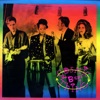 Cosmic ThingThe B-52's198910 tracks
 -
 Good StuffThe B-52's199210 tracks
 -
 FunplexThe B-52's200811 tracks
Deep Dive
Overview
The B-52’s are an American post-punk and new wave band that emerged from Athens, Georgia, in 1976 and became one of the decade’s most distinctive voices in rock music. With their blend of surf-rock guitars, robotic synthesizers, bouffant-styled vocals, and campy theatrical presentation, the band carved out a unique space between punk’s aggression and pop’s accessibility. They proved that rock could be strange, fun, and commercially viable all at once—a lesson that would ripple through new wave, art-rock, and alternative music for decades to come.
Formation Story
The B-52’s coalesced in Athens, a college town that was becoming an unexpected creative hotbed in the mid-1970s. The original lineup—Fred Schneider on vocals and percussion, Kate Pierson on keyboards and vocals, Cindy Wilson on vocals and percussion, Ricky Wilson on guitar, and Keith Strickland on drums—formed in 1976 and quickly became fixtures in the local scene. The band drew inspiration from 1960s surf rock, Motown grooves, and the emerging punk and new wave movements, but filtered everything through a kaleidoscopic sensibility that was entirely their own. Their name itself—a playful reference to the Beehive hairstyle—signaled their refusal to be earnest or conventional.
Breakthrough Moment
The B-52’s first album, The B-52’s, arrived in 1979 and announced the band as a fully formed creative force. The record’s gleaming production, propulsive rhythms, and uninhibited vocal interplay between Schneider, Pierson, and Wilson gave the band immediate presence on college radio and in dance clubs. They followed this debut with Wild Planet in 1980, which deepened their catalog and cemented their status as leaders of the new wave movement. Both albums showcased the band’s ability to write instantly memorable hooks wrapped in unconventional arrangements—a formula that would define their approach throughout the 1980s.
Peak Era
The band’s commercial and creative peak came in the late 1980s and early 1990s. Cosmic Thing, released in 1989, became their most successful album to date, reaching mainstream audiences while preserving the idiosyncratic spirit that had always defined them. This era represented a refinement of the B-52’s sound: tighter production, sharper hooks, and a confident embrace of their place in rock history. Good Stuff, released in 1992, continued this trajectory, proving the band could sustain relevance and creativity across more than a decade of recording. By this point, the band had navigated significant personal losses—notably the death of guitarist Ricky Wilson in 1985 from AIDS-related illness—and adapted their lineup accordingly, with Keith Strickland moving permanently from drums to lead guitar.
Musical Style
The B-52’s sound is instantly recognizable, built on the foundation of surf-rock guitars meeting synthesizer textures that range from spooky to euphoric. Ricky Wilson’s jangly, beach-inflected guitar work sat in stark contrast to the synthetic keyboards of Kate Pierson, creating a dialogue between analog and digital that felt both retro and futuristic. Fred Schneider’s vocals—detached, rhythmic, and occasionally processed—and the multi-layered interplay between the singers gave the band a vocal texture closer to 1960s girl groups than to punk frontmen. Their instrumentation, combined with unconventional song structures and playful, often absurdist lyrics, made them difficult to categorize: not quite punk, not quite pop, not quite funk, but all of these things at once. The band’s evolution across their studio albums showed them becoming more polished and mainstream-oriented without surrendering their essential weirdness.
Major Albums
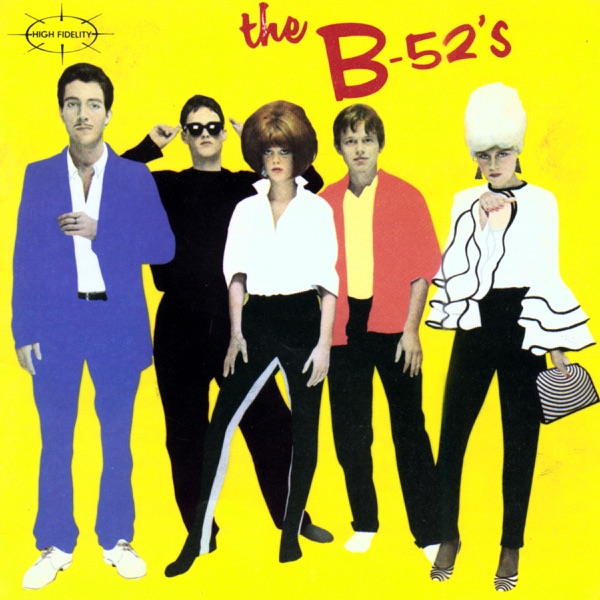
The B-52’s (1979)
The band’s debut established their signature sound in its purest form: surf-rock guitar, bouncing keyboards, and vocal harmonies that sounded like no other new wave act. The album announced a major new voice in post-punk rock.
Wild Planet (1980)
Following up their debut with a second album that deepened rather than diluted their concept, Wild Planet proved the B-52’s were not a one-album phenomenon and strengthened their foothold in the new wave hierarchy.
Whammy! (1983)
Released three years after Wild Planet, this album showed the band’s continued evolution toward more refined production and sharper songwriting while maintaining their theatrical edge.
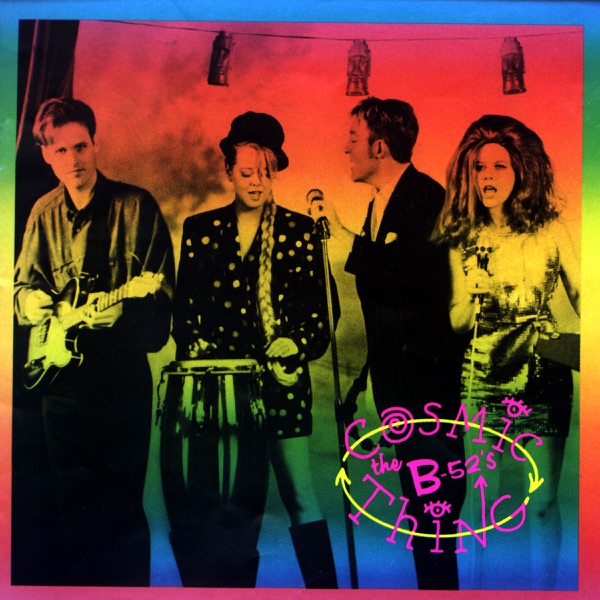
Cosmic Thing (1989)
The band’s biggest commercial success, this album married their cult appeal to mainstream production values, introducing the B-52’s to audiences well beyond college radio and art-house venues.
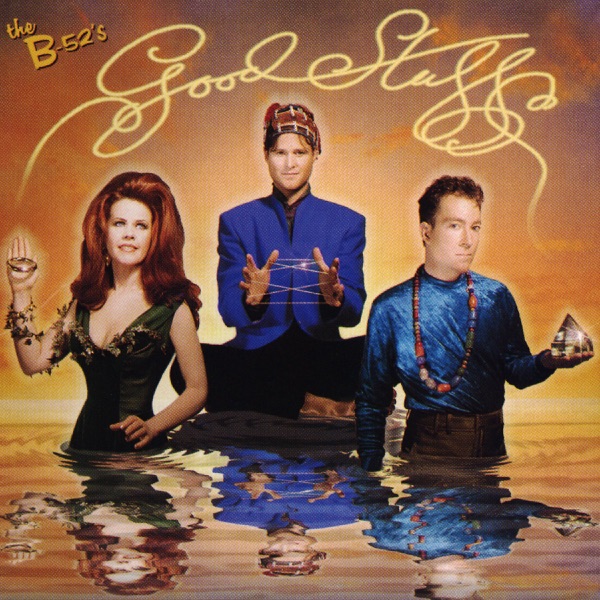
Good Stuff (1992)
Proving their staying power in the early 1990s, Good Stuff maintained the energy and inventiveness of Cosmic Thing while continuing to refine their sound.
Signature Songs
- “Rock Lobster” — The debut single that introduced the world to the band’s surf-rock-meets-synthesizer vision and became their first major hit.
- “Planet Claire” — An otherworldly, funk-inflected track that showcased the band’s ability to blend dance grooves with art-rock weirdness.
- “Private Idaho” — A later single that demonstrated the band’s evolution toward more accessible pop structures without sacrificing their distinctive character.
- “Love Shack” — Their biggest mainstream hit, proving the B-52’s could create infectious, radio-friendly pop that still sounded like no one else.
Influence on Rock
The B-52’s expanded the boundaries of what rock music could be in the post-punk era. By treating rock guitar, synthesizers, vocal harmony, and dance grooves as equal and interchangeable tools, they created a template that countless new wave, post-punk revival, and alternative bands would follow. Their embrace of camp, humor, and visual spectacle in rock—a stance inherited from glam and punk but taken in distinctly new directions—influenced how rock bands thought about presentation and attitude. The fact that they could be both critically respected and genuinely fun, both avant-garde and commercially viable, changed assumptions about what successful rock music needed to be. Later acts from the 1980s new wave scene through contemporary art-rock bands owe a debt to the B-52’s example.
Legacy
The B-52’s remain active and continue to tour, maintaining a presence in live performance across multiple decades. Their albums have remained in print and continue to be discovered by new listeners through streaming platforms and reissues. The band’s influence on new wave, alternative rock, and pop music remains substantial, with their records serving as touchstones for musicians working across genres. Their ability to balance artistic ambition with genuine accessibility—to be simultaneously weird and fun—has secured their place in rock history as one of the most important acts of the new wave era.
Fun Facts
- The band’s name references the Beehive hairstyle, reflecting their visual aesthetic and sense of humor about rock star clichés.
- Despite their success with synthesizers, the B-52’s’ sound began in the surf-rock tradition, with Ricky Wilson’s guitar serving as a constant anchor to their roots.
- Keith Strickland’s transition from drums to lead guitar in 1985 forced the band to reinvent their rhythm section while maintaining their signature sound.
- The B-52’s emerged from Athens, Georgia, which would become a significant center for alternative rock during the 1980s, alongside bands like R.E.M.