
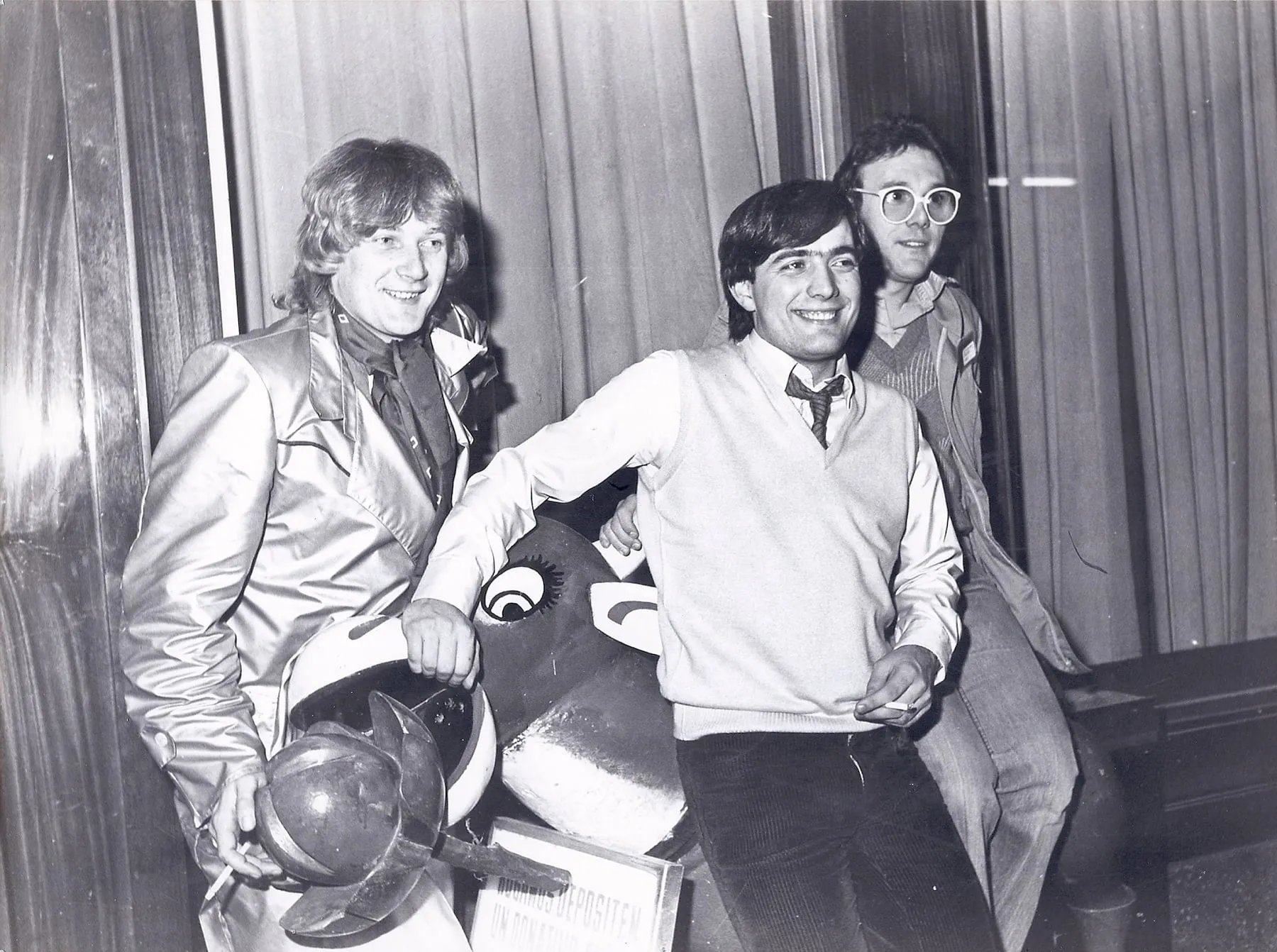
Photo by Rouserouse , licensed under CC BY-SA 4.0 · Wikimedia Commons
Rank #433
The Buggles
From Wikipedia
The Buggles are an English new wave band formed in London in 1977. Their best-known lineup was as a duo of singer and bassist Trevor Horn and keyboardist Geoff Downes, with Bruce Woolley briefly contributing as a member from 1977 to 1979. They are best known for their 1979 debut single, "Video Killed the Radio Star", which topped the UK singles chart and reached number one in 15 other countries.
Members
- Bruce Woolley
- Geoff Downes
- Trevor Horn
Discography & Previews
Browse through and click an album to open and play 30-second previews streamed from Apple Music.

-
 The Age of PlasticThe Buggles19808 tracks
Deep Dive
Overview
The Buggles are an English new wave band formed in London in 1977 who achieved worldwide recognition with a single that became one of the decade’s defining moments. Fronted by singer and bassist Trevor Horn and keyboardist Geoff Downes, the band synthesized the electronic experimentation and art-school sensibility of new wave with a pop sensibility that proved immediately accessible. Though their recording career spanned only two albums released in the early 1980s, their impact on the visual and sonic language of popular music proved enduring, primarily through one song that captured the anxieties and fascinations of the MTV era before MTV even existed.
Formation Story
The Buggles emerged from London in 1977 at a moment when punk had fractured into a dozen competing directions and synthesizer technology was becoming more affordable and creatively viable. Trevor Horn and Geoff Downes formed the core of the project, bringing together Horn’s distinctive vocal approach and bass work with Downes’s synthesis and keyboard sophistication. Bruce Woolley joined briefly as an additional creative force from 1977 to 1979, contributing to the band’s formative sound during their early years. The Wimbledon-based outfit arrived during new wave’s commercial ascendancy, when bands like Blondie, Talking Heads, and Devo were proving that post-punk’s experimental impulses could coexist with chart success. The Buggles positioned themselves within this landscape as pop mechanists, interested in the marriage of technology and song craft.
Breakthrough Moment
The Buggles’ breakthrough came with their 1979 debut single “Video Killed the Radio Star,” a song that ascended to number one on the UK singles chart and claimed the top position in 15 additional countries worldwide. The track became a cultural phenomenon, arriving at precisely the moment when music video technology was beginning to reshape how the industry promoted and distributed songs. Its prescient title and synth-driven arrangement, combined with Horn’s distinctive vocal delivery, captured both the novelty and genuine cultural anxiety around the replacement of one medium by another. The song’s commercial dominance provided the band with an immediate global profile and set the stage for their debut album.
Peak Era
The Buggles’ peak era centered on the early 1980s release cycle of their two studio albums. The Age of Plastic arrived in 1980, capitalizing on the momentum from “Video Killed the Radio Star” and establishing the band’s studio approach to new wave production. A second album, Adventures in Modern Recording, followed in 1981, suggesting the band’s commitment to the album format and their desire to expand beyond the novelty-single narrative that had attached itself to their bigger hit. During this period, the duo of Horn and Downes was the primary creative force, with their partnership defining the band’s sonic identity. The early 1980s represented both their commercial peak and the timeframe in which they would lay down the bulk of their recorded legacy.
Musical Style
The Buggles specialized in synthesizer-driven new wave that balanced mechanical precision with melodic sophistication. Their sound centered on the interplay between Trevor Horn’s distinctive vocals—often processed and layered to create an almost android quality—and Geoff Downes’s fluent keyboard arrangements, which drew on both the emerging electronic aesthetic and traditional pop songwriting structures. The band’s production aesthetic was cleanly digital, favoring synthesis over live instrumentation and reflecting the contemporary belief that technology represented pop music’s future. Lyrically, they were fascinated by the intersection of technology and human life, a thematic preoccupation that manifested most famously in “Video Killed the Radio Star” but extended through their broader catalog. Their approach sat at the intersection of pop accessibility and art-school conceptualism, similar to contemporaries like Kraftwerk and Orchestral Manoeuvres in the Dark, though oriented more consistently toward radio-friendly song structures.
Major Albums
The Age of Plastic (1980)
The Buggles’ debut album capitalized on the success of “Video Killed the Radio Star” while establishing a broader vision of synthesizer-based new wave pop, featuring the band’s signature electronic production and layered vocal arrangements.
Adventures in Modern Recording (1981)
The second and final Buggles studio album continued their exploration of digital-age themes and electronic production, demonstrating the duo’s sustained commitment to the album format beyond their signature hit single.
Signature Songs
- “Video Killed the Radio Star” (1979) — The definitive Buggles track, a number-one global hit that became synonymous with the MTV age and the anxieties surrounding technological disruption.
- “Living in the Plastic Age” — A thematic companion to their debut single, examining consumer culture through the lens of synthesizer-era new wave.
- “Clean Clean” — A showcase for the band’s precision production and synth-pop sophistication.
Influence on Rock
The Buggles’ primary influence on rock and popular music came through their demonstration that synthesizer-based new wave could achieve massive commercial success without compromising sonic coherence or conceptual integrity. “Video Killed the Radio Star” became a cultural marker for the transition into the MTV era, and the song’s prescience—its themes would be vindicated by the industry’s subsequent visual turn—lent the band a prophetic quality that persists in retrospective accounts of 1970s and 1980s rock. Their approach to combining technology and pop melody influenced subsequent synth-pop and electronic acts who sought to balance commercial accessibility with formal experimentation. The band’s work also contributed to the broader legitimization of the synthesizer as a primary songwriting instrument within rock and pop contexts, during a period when some traditionalists still viewed electronic instruments with skepticism.
Legacy
The Buggles remain primarily known for a single track, yet that track’s cultural permanence ensures the band’s continued visibility within rock and pop history. “Video Killed the Radio Star” has been reissued, sampled, and referenced countless times across subsequent decades, appearing in films, documentaries, and cultural analyses of the MTV transition. Their two studio albums from 1980 and 1981 represent a concise but coherent body of work that captures the optimism and experimental impulse of early 1980s synthesizer pop. The band’s influence extends beyond their recorded output to Trevor Horn’s later production career, which would place him at the center of 1980s pop and rock production. While The Buggles themselves did not sustain a lengthy recording career, their foundational moment in new wave history ensures their presence in any serious account of 1970s and 1980s rock music.
Fun Facts
- Trevor Horn and Geoff Downes later became prominent producers and songwriters, with Horn in particular becoming one of the decade’s most sought-after production talents.
- “Video Killed the Radio Star” was notably the first music video broadcast on MTV when the channel launched in 1981, cementing the song’s symbolic connection to the birth of music television.
- The Buggles operated during a period of rapid synthesizer innovation and adoption, their music documenting the exact moment when electronic instruments transitioned from novelty to mainstream production staple.