
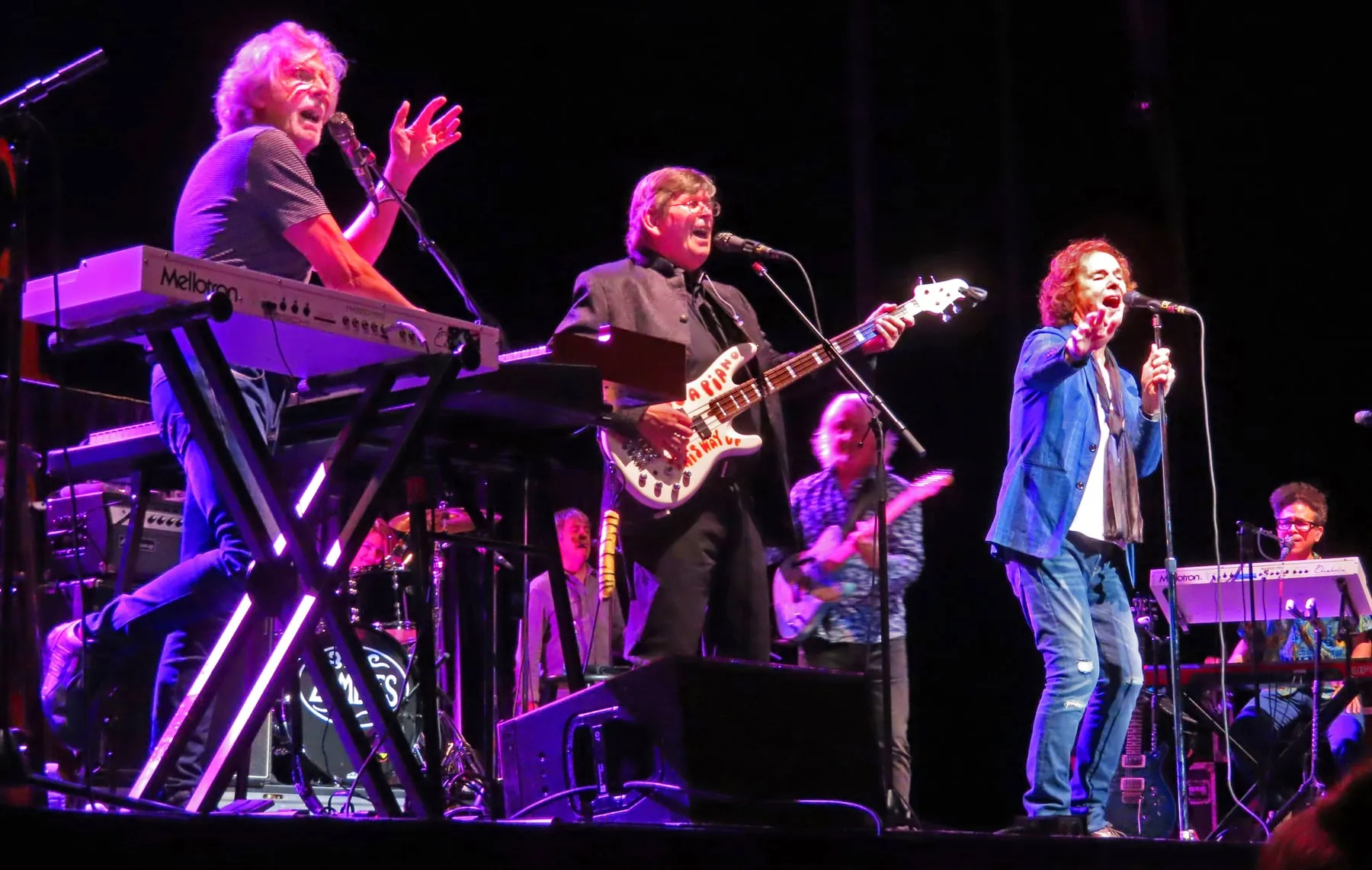
Photo by J-Ham2000 , licensed under CC BY-SA 4.0 · Wikimedia Commons
Rank #87
The Zombies
From Wikipedia
The Zombies are an English rock band formed in St Albans in 1962. Led by keyboardist/vocalist Rod Argent and lead vocalist Colin Blunstone, the group had their first British and American hit in 1964 with "She's Not There". In the US, two further singles—"Tell Her No" in 1965 and "Time of the Season" in 1968—were also successful.
Members
- Bob Henrit
- Chris White
- Colin Blunstone
- Darian Sahanaja
- Hugh Grundy
- Jim Rodford
- Paul Atkinson
- Rod Argent
- Russ Ballard
- Sebastián Santa María
Discography & Previews
Browse through and click an album to open and play 30-second previews streamed from Apple Music.

Begin Here
1965 · 14 tracks
- 1 Road Runner ↗ 2:07
- 2 Summertime ↗ 2:18
- 3 I Can't Make up My Mind ↗ 2:33
- 4 The Way I Feel Inside ↗ 1:52
- 5 Work 'n' Play ↗ 2:10
- 6 You've Really Got a Hold on Me / Bring It on Home to Me ↗ 3:41
- 7 She's Not There ↗ 2:26
- 8 Sticks and Stones ↗ 2:57
- 9 Can't Nobody Love You ↗ 2:16
- 10 Woman ↗ 2:27
- 11 I Don't Want to Know ↗ 2:07
- 12 I Remember When I Loved Her ↗ 2:01
- 13 What More Can I Do ↗ 1:39
- 14 I Got My Mojo Working ↗ 3:36

The Zombies
1965 · 6 tracks

Odessey and Oracle
1968 · 12 tracks
- 1 Care of Cell 44 (Mono Remastered) ↗ 3:16
- 2 A Rose for Emily (Mono Remastered) ↗ 2:23
- 3 Maybe After He’s Gone (Mono Remastered) ↗ 2:37
- 4 Beechwood Park (Mono Remastered) ↗ 2:47
- 5 Brief Candles (Mono Remastered) ↗ 3:30
- 6 Hung up on a Dream (Mono Remastered) ↗ 3:02
- 7 Changes (Mono Remastered) ↗ 3:19
- 8 I Want Her She Wants Me (Mono Remastered) ↗ 2:59
- 9 This Will Be Our Year (Mono Remastered) ↗ 2:14
- 10 Butcher’s Tale (Western Front 1914) [Mono Remastered] ↗ 2:54
- 11 Friends of Mine (Mono Remastered) ↗ 2:21
- 12 Time of the Season (Mono Remastered) ↗ 3:31

As Far as I Can See.....
2004 · 11 tracks


Still Got That Hunger
2015 · 10 tracks

-
 Begin HereThe Zombies196514 tracks
 -
 The ZombiesThe Zombies19656 tracks
 -
 Odessey and OracleThe Zombies196812 tracks
 -
 As Far as I Can See.....The Zombies200411 tracks
 -
 Breathe Out, Breathe InThe Zombies201110 tracks
 -
 Still Got That HungerThe Zombies201510 tracks
 -
 Different GameThe Zombies202310 tracks
Deep Dive
Overview
The Zombies are an English rock band formed in St Albans in 1961, emerging from the beat-music explosion of the early 1960s with a sophisticated blend of pop sensibility and baroque-pop instrumentation. Led by keyboardist and vocalist Rod Argent and vocalist Colin Blunstone, the group achieved international recognition through a succession of charting singles in the mid-to-late 1960s, most notably “She’s Not There” (1964), “Tell Her No” (1965), and “Time of the Season” (1968). Though their original run was brief, The Zombies left an indelible mark on rock music through their melodic instincts, harmonic complexity, and psychedelic arrangements—qualities that sustained their reputation decades after their initial dissolution and contributed to a resurrection of their career in later years.
Formation Story
The Zombies coalesced in St Albans during 1961 from the collision of existing school and local bands. The foundational lineup featured Rod Argent on keyboards and vocals, Colin Blunstone on lead vocals, Chris White on bass, Paul Atkinson on guitar, and Hugh Grundy on drums. St Albans, a market town north of London, provided fertile ground for young musicians entering the beat-music scene that had begun to sweep Britain in the early 1960s. The band’s combination of melodic pop vocals with Argent’s jazz-inflected keyboard work distinguished them from the guitar-driven groups that dominated the era’s commercial landscape. This fusion of influences—pop melody, rhythm-and-blues rhythm section, and art-school sophistication—became their signature from the outset.
Breakthrough Moment
The Zombies’ breakthrough arrived swiftly with “She’s Not There,” released in 1964, which became a hit on both sides of the Atlantic and established the band as a major commercial force. The track’s combination of snappy vocal hook, driving beat, and Argent’s distinctive organ work became the template for the group’s early success. The momentum carried into 1965 with “Tell Her No,” another transatlantic chart entry that cemented their status as a viable singles act. These early victories, driven by the release of their debut album Begin Here in 1965 and a second self-titled album, The Zombies, also in 1965, positioned the band as one of Britain’s export acts capable of rivaling American rock and pop acts for global attention.
Peak Era
The Zombies reached their creative and commercial apex during the mid-to-late 1960s, a period when pop music was rapidly assimilating psychedelic and baroque influences. This evolution culminated in their masterwork, Odessey and Oracle, released in 1968. By this point, Chris White had emerged as a crucial songwriter alongside Argent, and the album showcased the full maturation of the band’s vision: lush orchestration, intricate vocal harmonies, and compositional ambition that transcended the three-minute single format. “Time of the Season,” released from the album, became their third major hit and demonstrated the band’s ability to craft radio-friendly songs with genuine artistic depth. Though the band’s original period of activity remained relatively brief, the work of the mid-to-late 1960s represented rock music at a juncture where pop hooks and avant-garde studio technique could coexist without compromise.
Musical Style
The Zombies’ musical signature rested on a distinctive interplay between pop melody and harmonic sophistication. Rod Argent’s keyboard work—whether on organ, piano, or the nascent synthesizers of the late 1960s—provided lush textures that set the band apart from guitar-centric peers. Colin Blunstone’s voice, warm and precise, delivered lyrics with clarity and emotional directness, while Chris White’s bass lines demonstrated jazz-influenced counterpoint rather than simple rhythm-section support. The arrangement philosophy evolved from relatively straightforward beat-music lineups in their earliest work toward increasingly baroque and psychedelic textures by 1968. Influences traced to British pop traditions, American rhythm and blues, and the emerging art-rock and psychedelic movements. The Zombies occupied a middle ground between commercial pop accessibility and experimental studio production—a balance that would influence countless artists in subsequent decades.
Major Albums
Begin Here (1965)
The Zombies’ debut introduced the band’s melodic pop sensibility and Argent’s keyboard-driven arrangements to a broad audience, establishing them as commercial contenders from their first album release.
The Zombies (1965)
Released the same year as Begin Here, this self-titled second album reinforced the band’s hit-making credentials while deepening their instrumental sophistication and expanding their songwriting palette.
Odessey and Oracle (1968)
The band’s final studio album of their original era and their masterpiece, Odessey and Oracle synthesized everything The Zombies had learned about harmony, orchestration, and songcraft, featuring “Time of the Season” and establishing their legacy as architects of sophisticated 1960s pop.
New World (1990)
Released over two decades after the original band’s dissolution, New World marked The Zombies’ return to recording, demonstrating that their melodic instincts and compositional approach remained vital.
Signature Songs
- “She’s Not There” (1964) — The breakthrough single that introduced The Zombies to the world with its infectious hook and organ-driven arrangement.
- “Tell Her No” (1965) — A transatlantic chart hit that showcased the band’s ability to craft memorable pop songs with harmonic sophistication.
- “Time of the Season” (1968) — The band’s third major hit, released from Odessey and Oracle, combining baroque instrumentation with pop accessibility.
Influence on Rock
The Zombies’ fusion of pop melody with baroque and psychedelic production techniques established a template that influenced rock musicians across multiple subsequent generations. Their demonstration that commercial success and artistic ambition need not conflict provided a model for artists seeking to balance mainstream appeal with sonic experimentation. The sophisticated harmonies and orchestration of Odessey and Oracle anticipated progressive rock and art-pop movements of the 1970s and beyond. Bands engaging with neo-psychedelia, chamber pop, and studio-centric arrangements in later decades found precedent in The Zombies’ work. Their influence extended beyond rock proper into pop music’s upper echelons, where melodic craftsmanship and production artistry remained paramount.
Legacy
The Zombies’ original run proved brief, but their cultural footprint expanded considerably in the decades following their dissolution. The band reunited and resumed recording and touring activities in the 1990s onward, introducing their music to new audiences through live performance and studio work including albums such as Breathe Out, Breathe In (2011) and Still Got That Hunger (2015). “Time of the Season” in particular experienced sustained radio play and streaming presence across generations, becoming one of the most recognizable pop-rock songs of the 1960s. The continued vitality of The Zombies as a touring and recording entity into the 2020s—notably with the 2023 album Different Game—testified to the enduring appeal of their melodic sensibility and the persistent hunger for 1960s-era psychedelic pop. Their catalogue remains a touchstone for understanding how British pop musicians absorbed American influences while creating a distinctly art-conscious approach to rock music during the genre’s foundational decade.
Fun Facts
- Rod Argent and Chris White formed a lasting songwriting partnership that extended beyond The Zombies’ original 1960s period into their reunited incarnations.
- “Time of the Season” was recorded in 1967 but not released until 1968, and its delayed arrival contributed to its fresh impact when it finally charted internationally.
- The spelling of the 1968 album Odessey and Oracle employed an intentional misspelling, distinguishing it from Homer’s classical Odyssey.
- The Zombies’ comeback in the 1990s proved so successful that the band became as active in touring and recording during the 2010s and 2020s as they were in their original peak era.