

Photo by GraceKelly , licensed under CC BY-SA 3.0 · Wikimedia Commons
Rank #497
Ultravox
From Wikipedia
Ultravox were a British new wave band, formed in London in April 1974 as Tiger Lily. Between 1980 and 1986, they scored seven top ten albums and seventeen top 40 singles in the UK, the most successful of which was their 1981 hit "Vienna".
Members
- Midge Ure
Discography & Previews
Browse through and click an album to open and play 30-second previews streamed from Apple Music.

Ultravox!
1977 · 13 tracks
- 1 Saturday Night In the City of the Dead ↗ 2:36
- 2 Life At Rainbow's End (For All the Tax Exiles On Main Street) ↗ 3:44
- 3 Slip Away ↗ 4:19
- 4 I Want to Be a Machine ↗ 7:22
- 5 Wide Boys ↗ 3:16
- 6 Dangerous Rhythm ↗ 4:18
- 7 The Lonely Hunter ↗ 3:43
- 8 The Wild, the Beautiful & the Damned ↗ 5:48
- 9 My Sex ↗ 3:03
- 10 Slip Away (Live) ↗ 4:13
- 11 Modern Love (Live) ↗ 2:32
- 12 The Wild, the Beautiful & the Damned (Live) ↗ 5:18
- 13 My Sex (Live) ↗ 3:05

Ha! Ha! Ha!
1977 · 14 tracks
- 1 ROckWrok ↗ 3:34
- 2 The Frozen Ones ↗ 4:07
- 3 Fear In the Western World ↗ 4:01
- 4 Distant Smile ↗ 5:21
- 5 The Man Who Dies Every Day ↗ 4:12
- 6 Artificial Life ↗ 4:59
- 7 While I'm Still Alive ↗ 3:16
- 8 Hiroshima Mon Amour ↗ 5:14
- 9 Young Savage (Single Version) ↗ 3:00
- 10 The Man Who Dies Every Day (Remix) ↗ 4:19
- 11 Hiroshima Mon Amour (Alternate Version) ↗ 4:57
- 12 Quirks ↗ 1:41
- 13 The Man Who Dies Every Day (Live) ↗ 3:54
- 14 Young Savage (Live) ↗ 3:22

Systems of Romance
1978 · 12 tracks
- 1 Slow Motion ↗ 3:28
- 2 I Can't Stay Long ↗ 4:17
- 3 Someone Else's Clothes ↗ 4:27
- 4 Blue Light ↗ 3:09
- 5 Some of Them ↗ 2:29
- 6 Quiet Men ↗ 4:11
- 7 Dislocation ↗ 2:56
- 8 Maximum Acceleration ↗ 3:53
- 9 When You Walk Through Me ↗ 4:18
- 10 Just for a Moment ↗ 3:12
- 11 Cross Fade ↗ 2:56
- 12 Quiet Men (Full Version) ↗ 3:58

Vienna
1980 · 20 tracks
- 1 Astradyne (2008 Remaster) ↗ 7:09
- 1 Sleepwalk (Early Version) ↗ 3:23
- 2 New Europeans (2008 Remaster) ↗ 4:05
- 2 Waiting (2008 Remsater) ↗ 3:53
- 3 Private Lives (2008 Remaster) ↗ 4:09
- 3 Face to Face (Live at St. Albans, Hertfordshire, 16 Aug 1980) ↗ 6:04
- 4 Passing Strangers (2008 Remaster) ↗ 3:51
- 4 King's Lead Hat (Live at the Lyceum, London, 17 Aug 1980) ↗ 4:07
- 5 Sleepwalk (2008 Remaster) ↗ 3:13
- 5 Passionate Reply (2008 Remaster) ↗ 4:46
- 6 Mr. X (2008 Remaster) ↗ 6:35
- 6 Herr X (2008 Remaster) ↗ 5:52
- 7 Western Promise (2008 Remaster) ↗ 5:19
- 7 All Stood Still (12" Version) ↗ 5:07
- 8 Vienna (2008 Remaster) ↗ 4:56
- 8 Alles Klar (2008 Remaster) ↗ 4:56
- 9 All Stood Still (2008 Remaster) ↗ 4:26
- 9 Keep Talking (Cassette Recording During Rehearsals) ↗ 6:23
- 10 Sleepwalk (Soundcheck, the Lyceum 17 / 8 / 80) ↗ 3:43
- 11 All Stood Still (Soundcheck, the Lyceum 17 / 8 / 80) ↗ 4:35

Rage in Eden
1981 · 22 tracks
- 1 The Voice ↗ 6:01
- 1 I Never Wanted to Begin ↗ 3:33
- 2 We Stand Alone ↗ 5:40
- 2 Paths and Angles ↗ 4:23
- 3 Rage In Eden ↗ 4:13
- 3 I Never Wanted to Begin (Extended Version) ↗ 6:19
- 4 I Remember (Death In the Afternoon) ↗ 4:57
- 4 Private Lives (Live at Crystal Palace, 13 June 1981) ↗ 4:51
- 5 The Thin Wall ↗ 5:42
- 5 All Stood Still (Live at Crystal Palace, 13 June 1981) ↗ 4:22
- 6 Stranger Within ↗ 7:29
- 6 I Remember (Death In the Afternoon) [Live at Hammersmith Odeon, 1981] ↗ 5:47
- 7 Accent On Youth ↗ 4:45
- 7 Stranger Within (Live at Hammersmith Odeon, 1981) ↗ 8:02
- 8 The Ascent ↗ 2:20
- 8 Rage In Eden (Live at Hammersmith Odeon, 1981) ↗ 4:27
- 9 Your Name (Has Slipped My Mind Again) ↗ 4:33
- 9 Accent On Youth (Live at Hammersmith Odeon, 1981) ↗ 4:46
- 10 The Ascent (Live at Hammersmith Odeon, 1981) ↗ 2:28
- 11 Your Name (Has Slipped My Mind Again) [Live at Hammersmith Odeon, 1981] ↗ 4:45
- 12 Stranger Within (Work In Progress Mix) ↗ 7:12
- 13 The Thin Wall (Work In Progress Mix) ↗ 5:17
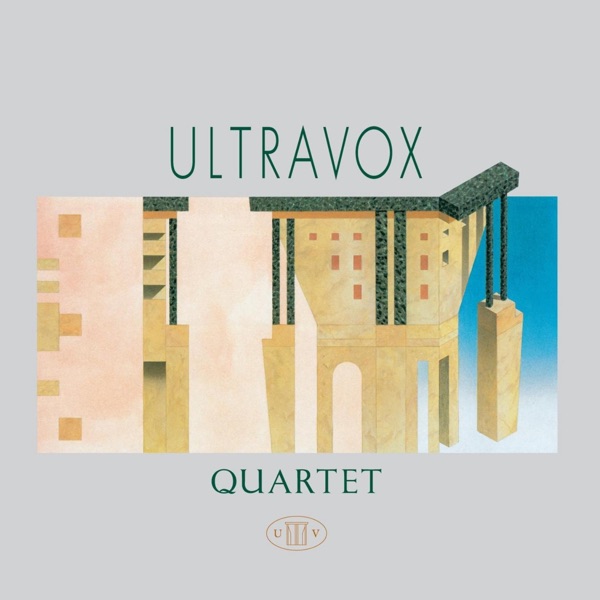
Quartet
1982 · 9 tracks
- 1 Reap the Wild Wind (2009 Remaster) ↗ 3:49
- 2 Serenade (2009 Remaster) ↗ 5:06
- 3 Mine for Life (2009 Remaster) ↗ 4:47
- 4 Hymn (2009 Remaster) ↗ 5:49
- 5 Visions in Blue (2009 Remaster) ↗ 4:40
- 6 When the Scream Subsides (2009 Remaster) ↗ 4:17
- 7 We Came to Dance (2009 Remaster) ↗ 4:14
- 8 Cut and Run (2009 Remaster) ↗ 4:18
- 9 The Song (We Go) [2009 Remaster] ↗ 4:00


U‐Vox
1986 · 24 tracks
- 1 Same Old Story (2009 Remaster) ↗ 4:39
- 1 Same Old Story (Extended Version) ↗ 7:00
- 2 Sweet Surrender (2009 Remaster) ↗ 4:35
- 2 3 (2009 Remaster) ↗ 4:01
- 3 Dream On (2009 Remaster) ↗ 4:48
- 3 All in One Day (Instrumental) ↗ 6:13
- 4 The Prize (2009 Remaster) ↗ 5:37
- 4 All Fall Down (Extended Mix) ↗ 7:41
- 5 All Fall Down (2009 Remaster) ↗ 5:09
- 5 Dreams? (2009 Remaster) ↗ 2:31
- 6 Time to Kill (2009 Remaster) ↗ 4:26
- 6 All Fall Down (Instrumental) ↗ 5:36
- 7 Moon Madness (2009 Remaster) ↗ 3:28
- 7 Dream On (Live at Wembley Arena, 6 November 1986) ↗ 3:50
- 8 Follow Your Heart (2009 Remaster) ↗ 4:52
- 8 The Prize (Live at Wembley Arena, 6 November 1986) ↗ 4:58
- 9 All in One Day (Instrumental) ↗ 5:13
- 9 All Fall Down (Live at Wembley Arena, 6 November 1986) ↗ 5:41
- 10 Stateless (2009 Remaster) ↗ 2:52
- 11 Same Old Story (Live at Glasgow Barrowlands, 1 November 1986) ↗ 4:32
- 12 Sweet Surrender (Live at Glasgow Barrowlands, 1 November 1986) ↗ 3:02
- 13 All in One Day (Live at Glasgow Barrowlands, 1 November 1986) ↗ 6:46
- 14 Time to Kill (Live at Glasgow Barrowlands, 1 November 1986) ↗ 2:53
- 15 All in One Day (Work in Progress Mix) ↗ 6:31


-
 Ultravox!Ultravox197713 tracks
 -
 Ha! Ha! Ha!Ultravox197714 tracks
 -
 Systems of RomanceUltravox197812 tracks
 -
 ViennaUltravox198020 tracks
 -
 Rage in EdenUltravox198122 tracks
 -
 QuartetUltravox19829 tracks
 -
 LamentUltravox19843 tracks
 -
 U‐VoxUltravox198624 tracks
 -
 RevelationUltravox199310 tracks
 -
 BrilliantUltravox20126 tracks
Deep Dive
Overview
Ultravox were a British new wave and synth-rock band that emerged from London in the mid-1970s and came to define a strand of intelligent, orchestrated electronic rock in the 1980s. Between 1980 and 1986, the band released seven top ten albums and seventeen top 40 singles in the UK, with their 1981 album Vienna standing as their commercial and artistic peak. That record and its title track captured the aesthetic ambitions of the New Romantic movement—lavish synthesizer arrangements married to introspective lyrics and art-school sensibilities—and positioned Ultravox as one of the era’s most distinctive voices.
Formation Story
Ultravox began as Tiger Lily in April 1974 in London before adopting the name Ultravox. The band’s early years were marked by a gradual shift toward synthesizer-driven new wave. By the mid-to-late 1970s, they were establishing themselves as part of the emerging British post-punk and synth-pop underground. The group’s foundation was built around electronic instrumentation and a commitment to experimental production, distinguishing them from the pub rock and glam rock movements that had immediately preceded them.
Breakthrough Moment
Ultravox’s commercial breakthrough came with the release of Vienna in 1980, an album that crystallized the band’s artistic vision and introduced them to a mainstream audience. The title track from the album became their signature song and highest-charting hit, receiving significant radio and MTV play. The album’s success established the template that would define their most commercially successful period: lush, layered synthesizer arrangements combined with sophisticated pop songwriting. Following Vienna, the band issued Rage in Eden in 1981, consolidating their position as one of the UK’s most commercially successful new wave acts.
Peak Era
The years from 1980 to 1986 represented Ultravox’s zenith in terms of both chart success and cultural visibility. During this six-year span, the band released six studio albums—Vienna (1980), Rage in Eden (1981), Quartet (1982), Lament (1984), and U‐Vox (1986)—each achieving top ten placement in the UK albums chart. The consistency of their output and commercial success during this period was remarkable; they maintained a presence in the British charts while the wider new wave and synth-pop movements evolved around them. Midge Ure became the public face of the band, and the Ultravox sound—characterized by crystalline synthesizers, dramatic dynamic shifts, and theatrical production values—became iconic to the 1980s.
Musical Style
Ultravox operated at the intersection of new wave and art rock, blending the electronic instrumentation that defined synth-pop with the conceptual ambitions and orchestral arrangements more commonly associated with progressive rock. Their music was marked by prominent use of synthesizers and electronic textures, yet maintained strong melody and pop sensibility. The band employed dynamic song structures that shifted between sparse, intimate verses and lush, orchestrated choruses, creating a sense of drama and scale. Lyrically, they favored introspection and artistic themes over the humor or pure escapism that characterized some of their contemporaries. This combination—sophisticated production, emotional restraint, and visual grandeur—set them apart from other new wave acts and contributed to their appeal to both pop audiences and critics who valued musical substance.
Major Albums
Vienna (1980)
Ultravox’s third studio album and breakthrough success, Vienna introduced the band’s fully realized synth-rock vision to the mainstream. The title track became emblematic of the New Romantic movement’s aesthetic ambitions and remains the band’s most recognizable work.
Rage in Eden (1981)
Released shortly after Vienna’s success, Rage in Eden demonstrated the band’s ability to maintain creative momentum while consolidating their commercial gains. The album further refined the orchestral synth-rock formula established by its predecessor.
Quartet (1982)
Ultravox continued their chart dominance with Quartet, an album that sustained their status as one of the UK’s most successful new wave acts. The record affirmed their position in the early 1980s mainstream.
Lament (1984)
Released in the mid-1980s, Lament continued to explore the sophisticated synth-rock territory the band had established, maintaining their presence in the UK charts and demonstrating their enduring commercial appeal.
U‐Vox (1986)
The final album of their initial peak period, U‐Vox represented the culmination of their 1980s success, closing out a remarkable six-year run of consistent chart success.
Revelation (1993)
Ultravox returned after a period of reduced visibility with Revelation, signaling a reunion and continuation of their musical career into the 1990s.
Signature Songs
- Vienna — The band’s most celebrated song and a defining moment in 1980s new wave music, characterized by its sweeping synthesizer arrangement and melancholic atmosphere.
- Sleepwalk — An art rock piece from their early catalogue that showcased the band’s progressive and experimental sensibilities.
- Dancing with Tears in My Eyes — A major single from their peak era that demonstrated their ability to balance electronic sophistication with emotional directness.
- The Voice — A significant single from the Lament album that exemplified the band’s refined synth-rock approach in the mid-1980s.
Influence on Rock
Ultravox’s synthesis of new wave immediacy with art rock ambition influenced subsequent generations of synth-rock and electronic artists. Their approach to synthesizer arrangement—treating the instrument not merely as a sound-making tool but as an orchestral component capable of creating texture and drama—informed the production values of 1980s new wave and synth-pop more broadly. The band’s commitment to artistic presentation and sophisticated songwriting validated synth-based rock as a vehicle for serious musical expression, helping to establish electronic instruments as central to rock music rather than peripheral or novelty additions. Their influence extended beyond the new wave movement into the wider rock canon, particularly among artists who valued production artistry and emotional subtlety.
Legacy
Ultravox’s commercial success in the 1980s has been sustained through ongoing streaming and reissue activity. The band continued to record and perform into the 2010s, with albums such as Ingenuity (1994), Revelation (1993), and Brilliant (2012) documenting their continued creative engagement with music. Vienna in particular has maintained cultural relevance as a touchstone of 1980s new wave and New Romantic music, frequently cited in retrospectives of the era. The band’s longevity—active from 1973 through 2012 and beyond—speaks to the durability of their musical foundation and their ability to maintain artistic credibility across multiple decades.
Fun Facts
- Ultravox began their career under the name Tiger Lily before adopting the Ultravox name in 1974.
- The band was formed and based in London, placing them at the center of the 1970s and 1980s British new wave and synth-pop scenes.
- Between 1980 and 1986, Ultravox achieved seventeen top 40 singles in the UK, demonstrating remarkable consistency in the singles market during their peak period.
- The band’s visual presentation and conceptual approach to albums aligned them with art rock traditions, distinguishing them from more straightforwardly pop-oriented new wave acts.