
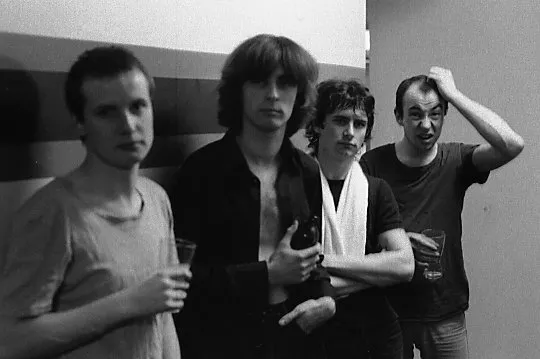
Photo by Jean-Luc Ourlin , licensed under CC BY-SA 2.0 · Wikimedia Commons
Rank #415
XTC
From Wikipedia
XTC were an English rock band formed in Swindon in 1972. Fronted by songwriters Andy Partridge and Colin Moulding, the band gained popularity during the rise of punk and new wave in the 1970s, later playing in a variety of styles that ranged from angular guitar riffs to elaborately arranged pop. Partly because the group did not fit into contemporary trends, they achieved only sporadic commercial success in the UK and US, but attracted a considerable cult following. They have since been recognised for their influence on Britpop and later power pop acts.
Members
- Andy Partridge
- Colin Moulding
Discography & Previews
Browse through and click an album to open and play 30-second previews streamed from Apple Music.

Go 2
1978 · 13 tracks
- 1 Meccanik Dancing (Oh We Go!) ↗ 2:36
- 2 Battery Brides (Andy Paints Brian) ↗ 4:37
- 3 Buzzcity Talking ↗ 2:41
- 4 Crowded Room ↗ 2:53
- 5 The Rhythm ↗ 3:00
- 6 Red ↗ 3:02
- 7 Beatown ↗ 4:37
- 8 Life Is Good In the Greenhouse ↗ 4:41
- 9 Jumping In Gomorrah ↗ 2:04
- 10 My Weapon ↗ 2:20
- 11 Super-Tuff ↗ 4:27
- 12 I Am the Audience ↗ 3:48
- 13 Are You Receiving Me? ↗ 3:06

White Music
1978 · 19 tracks
- 1 Radios In Motion ↗ 2:55
- 2 Cross Wires ↗ 2:07
- 3 This Is Pop? ↗ 2:41
- 4 Do What You Do ↗ 1:17
- 5 Statue of Liberty ↗ 2:56
- 6 All Along the Watchtower ↗ 5:43
- 7 Into the Atomic Age ↗ 2:33
- 8 I'll Set Myself On Fire ↗ 3:05
- 9 I'm Bugged ↗ 4:00
- 10 New Town Animal In a Furnished Cage ↗ 1:53
- 11 Spinning Top ↗ 2:41
- 12 Neon Shuffle ↗ 4:38
- 13 Science Friction ↗ 3:13
- 14 She's So Square ↗ 3:07
- 15 Dance Band ↗ 2:41
- 16 Hang Onto the Night ↗ 2:10
- 17 Heatwave ↗ 2:12
- 18 Traffic Light Rock ↗ 1:40
- 19 Instant Tunes ↗ 2:34

Drums and Wires
1979 · 15 tracks
- 1 Making Plans for Nigel ↗ 4:14
- 2 Helicopter ↗ 3:55
- 3 Day In Day Out ↗ 3:08
- 4 When You're Near Me I Have Difficulty ↗ 3:22
- 5 Ten Feet Tall ↗ 3:17
- 6 Roads Girdle the Globe ↗ 4:51
- 7 Real By Reel ↗ 3:47
- 8 Millions ↗ 5:39
- 9 That Is the Way ↗ 2:57
- 10 Outside World ↗ 2:41
- 11 Scissor Man ↗ 4:00
- 12 Complicated Game ↗ 5:05
- 13 Life Begins at the Hop ↗ 3:49
- 14 Chain of Command ↗ 2:34
- 15 Limelight ↗ 2:27
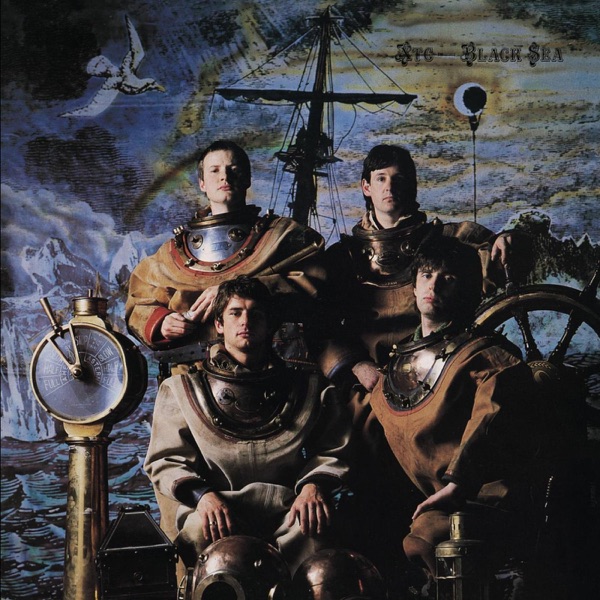
Black Sea
1980 · 14 tracks
- 1 Respectable Street ↗ 3:38
- 2 Generals and Majors ↗ 4:05
- 3 Living Through Another Cuba ↗ 4:44
- 4 Love at First Sight ↗ 3:08
- 5 Rocket from a Bottle ↗ 3:30
- 6 No Language In Our Lungs ↗ 4:53
- 7 Towers of London ↗ 5:24
- 8 Paper and Iron (Notes and Coins) ↗ 4:17
- 9 Burning with Optimism's Flames ↗ 4:16
- 10 Sgt. Rock (Is Going to Help Me) ↗ 3:57
- 11 Travels In Nihilon ↗ 7:04
- 12 Smokeless Zone ↗ 3:51
- 13 Don't Lose Your Temper ↗ 2:33
- 14 The Somnambulist ↗ 4:38

English Settlement
1982 · 15 tracks
- 1 Runaways ↗ 4:35
- 2 Ball and Chain ↗ 4:33
- 3 Senses Working Overtime ↗ 4:51
- 4 Jason and the Argonauts ↗ 6:07
- 5 No Thugs In Our House ↗ 5:10
- 6 Yacht Dance ↗ 3:56
- 7 All of a Sudden (It's Too Late) ↗ 5:22
- 8 Melt the Guns ↗ 6:34
- 9 Leisure ↗ 5:02
- 10 It's Nearly Africa ↗ 3:55
- 11 Knuckle Down ↗ 4:28
- 12 Fly On the Wall ↗ 3:19
- 13 Down In the Cockpit ↗ 5:27
- 14 English Roundabout ↗ 4:00
- 15 Snowman ↗ 5:04

Mummer
1983 · 16 tracks
- 1 Beating of Hearts ↗ 3:57
- 2 Wonderland ↗ 4:50
- 3 Love On a Farmboy's Wages ↗ 3:58
- 4 Great Fire ↗ 3:48
- 5 Deliver Us from the Elements ↗ 4:36
- 6 Human Alchemy ↗ 5:11
- 7 Ladybird ↗ 4:33
- 8 In Loving Memory of a Name ↗ 3:16
- 9 Me and the Wind ↗ 4:17
- 10 Funk Pop a Roll ↗ 3:14
- 11 Frost Circus ↗ 3:53
- 12 Jump ↗ 4:39
- 13 Toys ↗ 4:21
- 14 Gold ↗ 3:33
- 15 Procession Towards Learning Land ↗ 3:46
- 16 Desert Island ↗ 4:53

The Big Express
1984 · 14 tracks
- 1 Wake Up ↗ 4:41
- 2 All You Pretty Girls ↗ 3:40
- 3 Shake You Donkey Up ↗ 4:20
- 4 Seagulls Screaming Kiss Her, Kiss Her ↗ 3:51
- 5 This World Over ↗ 5:38
- 6 The Everyday Story of Smalltown ↗ 3:54
- 7 I Bought Myself a Liarbird ↗ 2:49
- 8 Reign of Blows ↗ 3:28
- 9 You're the Wish You Are I Had ↗ 3:17
- 10 I Remember the Sun ↗ 3:10
- 11 Train Running Low On Soul Coal ↗ 5:19
- 12 Red Brick Dream ↗ 2:03
- 13 Wash Away ↗ 3:02
- 14 Blue Overall ↗ 4:33

Skylarking
1986 · 15 tracks
- 1 Summer's Cauldron ↗ 3:20
- 2 Grass ↗ 3:06
- 3 The Meeting Place ↗ 3:14
- 4 That's Really Super, Supergirl ↗ 3:21
- 5 Ballet for a Rainy Day ↗ 2:50
- 6 1000 Umbrellas ↗ 3:44
- 7 Season Cycle ↗ 3:22
- 8 Earn Enough for Us ↗ 2:54
- 9 Big Day ↗ 3:32
- 10 Another Satellite ↗ 4:16
- 11 Mermaid Smiled ↗ 2:26
- 12 The Man Who Sailed Around His Soul ↗ 3:24
- 13 Dying ↗ 2:31
- 14 Sacrificial Bonfire ↗ 3:50
- 15 Dear God ↗ 3:39

Oranges & Lemons
1989 · 15 tracks
- 1 Garden of Earthly Delights ↗ 5:04
- 2 The Mayor of Simpleton ↗ 3:58
- 3 King for a Day ↗ 3:38
- 4 Here Comes President Kill Again ↗ 3:35
- 5 The Loving ↗ 4:11
- 6 Poor Skeleton Steps Out ↗ 3:33
- 7 One of the Millions ↗ 4:37
- 8 Scarecrow People ↗ 4:13
- 9 Merely a Man ↗ 3:27
- 10 Cynical Days ↗ 3:18
- 11 Across This Antheap ↗ 4:52
- 12 Hold Me My Daddy ↗ 3:48
- 13 Pink Thing ↗ 3:48
- 14 Miniature Sun ↗ 3:57
- 15 Chalkhills and Children ↗ 4:58

Nonsuch
1992 · 17 tracks
- 1 The Ballad of Peter Pumpkinhead ↗ 5:02
- 2 My Bird Performs ↗ 3:51
- 3 Dear Madam Barnum ↗ 2:49
- 4 Humble Daisy ↗ 3:37
- 5 The Smartest Monkeys ↗ 4:18
- 6 The Disappointed ↗ 3:23
- 7 Holly Up On Poppy ↗ 3:05
- 8 Crocodile ↗ 3:57
- 9 Rook ↗ 3:47
- 10 Omnibus ↗ 3:20
- 11 That Wave ↗ 3:34
- 12 Then She Appeared ↗ 3:52
- 13 War Dance ↗ 3:23
- 14 Wrapped In Grey ↗ 3:46
- 15 The Ugly Underneath ↗ 3:51
- 16 Bungalow ↗ 2:49
- 17 Books Are Burning ↗ 4:54
-
 Go 2XTC197813 tracks
 -
 White MusicXTC197819 tracks
 -
 Drums and WiresXTC197915 tracks
 -
 Black SeaXTC198014 tracks
 -
 English SettlementXTC198215 tracks
 -
 MummerXTC198316 tracks
 -
 The Big ExpressXTC198414 tracks
 -
 SkylarkingXTC198615 tracks
 -
 Oranges & LemonsXTC198915 tracks
 -
 NonsuchXTC199217 tracks
Deep Dive
Overview
XTC were an English rock band formed in Swindon in 1972, fronted by songwriters Andy Partridge and Colin Moulding. Emerging during the rise of punk and new wave, they carved out a distinctive path that refused easy categorization, moving through angular guitar-driven arrangements to elaborately produced pop. Despite achieving only sporadic commercial success in mainstream markets, XTC developed a devoted cult following and ultimately exerted significant influence on Britpop and subsequent power pop acts, establishing themselves as architects of intelligent, genre-defiant rock.
Formation Story
XTC came together in Swindon, a railway town in Wiltshire, England, in 1972. The band was built around the songwriting partnership of Andy Partridge and Colin Moulding, whose complementary compositional voices and instrumental prowess became the foundation of the group’s identity. Emerging from the Swindon rock scene at the dawn of punk and new wave, XTC absorbed the energy and structural innovation of those movements while maintaining a more complex harmonic sensibility than their punk contemporaries. By the time they recorded their first material, they had already begun experimenting with arrangements that would set them apart from the stripped-down aesthetic that dominated the era.
Breakthrough Moment
XTC released their debut album White Music in 1978, swiftly followed by Go 2 the same year, establishing their presence as inventive power pop craftsmen at the height of new wave’s ascendancy. Neither album achieved massive commercial breakthrough, but they signaled a band uninterested in punk’s simplified approach. The release of Drums and Wires in 1979 and Black Sea in 1980 deepened their cult status, showcasing Partridge and Moulding’s evolving songwriting and the band’s increasingly sophisticated arrangements. While mainstream chart success eluded them, these albums earned respect from critics and musicians who recognized the group’s technical ambition and melodic intelligence.
Peak Era
XTC’s most creatively expansive and commercially resonant period arrived with English Settlement (1982) and Mummer (1983), albums that showcased the band’s growing willingness to layer production and experiment with diverse instrumental textures. The Big Express (1984) and Skylarking (1986) represented the zenith of their artistic reach, with Skylarking in particular becoming the album that most solidly cemented their influence. These mid-1980s releases demonstrated that XTC could sustain creative momentum across multiple records while continuously evolving their sound. The band’s refusal to chase trends or simplify their approach meant they never achieved the stadium success of their new wave contemporaries, but this outsider status ultimately secured their legacy as purists of intelligent rock composition.
Musical Style
XTC’s sound drew from power pop and new wave foundations but rapidly developed into something far more complex. The band’s hallmark was the interplay between Partridge and Moulding’s contrasting songwriting styles: Partridge’s compositions often favored angular, rhythmically intricate guitar work and chromatic harmonic movement, while Moulding’s writing leaned toward more straightforward but meticulously crafted pop melodies. Across their catalog, XTC moved from relatively direct new wave arrangements toward increasingly elaborate orchestration, incorporating elements of progressive rock, art pop, and classical music without ever abandoning rock instrumentation or song structure. Their production evolved significantly across the 1980s, moving from relatively spare guitar-driven records toward densely layered, almost orchestral arrangements that placed melody and harmonic sophistication at the center. Vocally, both Partridge and Moulding delivered precise, often conversational delivery that emphasized lyrical clarity and wit over vocal pyrotechnics.
Major Albums
Drums and Wires (1979)
This third album solidified XTC’s status as sharp, technically accomplished power pop composers, blending punk-era energy with increasingly ornate production and harmonic sophistication.
Black Sea (1980)
Following close on Drums and Wires, this album demonstrated the band’s ability to maintain creative momentum, deepening the layered, guitar-forward approach that was becoming their signature.
Skylarking (1986)
Often regarded as XTC’s artistic peak, Skylarking showcased fully realized arrangements and a cohesive vision across its tracklist, becoming the album most responsible for their lasting influence on later power pop and Britpop acts.
Oranges & Lemons (1989)
Released after a gap in their output, this album reasserted XTC’s creative vitality with further refinement of their elaborate pop sensibility and continued genre-crossing ambition.
Apple Venus, Volume 1 (1999) and Apple Venus, Volume 2: Wasp Star (2000)
These companion albums, released a year apart, represented XTC’s return after a lengthy recording hiatus and demonstrated their enduring commitment to complex, meticulously crafted pop despite vastly changed musical landscape.
Signature Songs
- “Dear God” — A satirical critique of religious orthodoxy from Skylarking that became one of XTC’s most recognizable compositions.
- “Making Plans for Nigel” — A rhythmically propulsive track from Drums and Wires that balanced clever wordplay with memorable pop construction.
- “English Settlement” — The title track of their 1982 album, exemplifying the band’s ability to combine intricate arrangements with accessible melody.
- “Senses Working Overtime” — A kinetic new wave composition showcasing the band’s gift for building tension and release through production and arrangement.
- “Wrapped in Gray” — A showcase for the band’s ability to craft sophisticated pop songs with layered production and harmonic depth.
Influence on Rock
Although XTC never achieved the mainstream dominance of their peers, their influence on the development of intelligent pop and rock music proved substantial and enduring. The band’s refusal to simplify their compositions or chase commercial trends established a template for later Britpop acts who valued songcraft and harmonic sophistication. Bands emerging in the 1990s and beyond recognized in XTC a band that had proven a credible alternative to both punk minimalism and stadium rock excess existed, demonstrating that complex arrangements, intricate melodies, and genre-crossing experimentation could coexist within a fundamentally rock-based framework. Their influence extended beyond direct musical imitation; XTC modeled an approach to artistic integrity in which commercial failure was outweighed by creative satisfaction and fan devotion.
Legacy
XTC’s recognition has grown considerably since their initial commercial struggles, particularly following their extended recording hiatus and eventual return with the Apple Venus albums. The band’s catalog remained in print through multiple reissue campaigns and the digital era, ensuring accessibility to both longtime fans and subsequent generations discovering their work. Critical reassessment has positioned Skylarking and Oranges & Lemons among the significant artistic statements of their respective decades, and the band’s influence on Britpop—particularly on acts seeking to balance melodic accessibility with compositional complexity—became more explicitly acknowledged as those movements themselves entered the historical record. XTC’s journey from obscure Swindon punk experimenters to recognized architects of intelligent rock demonstrated that commercial marginalisation during an artist’s career need not determine long-term influence or artistic relevance.
Fun Facts
- XTC released two studio albums in 1978—White Music and Go 2—establishing themselves as prolific early in their career.
- The band’s creative relationship between Andy Partridge and Colin Moulding provided XTC with two distinct but complementary compositional voices across their entire career.
- XTC recorded across multiple major labels including Virgin Records, Geffen Records, and Cooking Vinyl, navigating the shifting economics of the music industry across three decades.
- The band maintained an official web presence at http://www.ape.uk.net/, remaining engaged with their fanbase during and after their recording hiatus.