
Photo , licensed under CC BY 3.0 · Wikimedia Commons
Rank #48
Arctic Monkeys
Sheffield indie-rockers whose internet-fueled rise rewrote breakthrough playbooks.
From Wikipedia
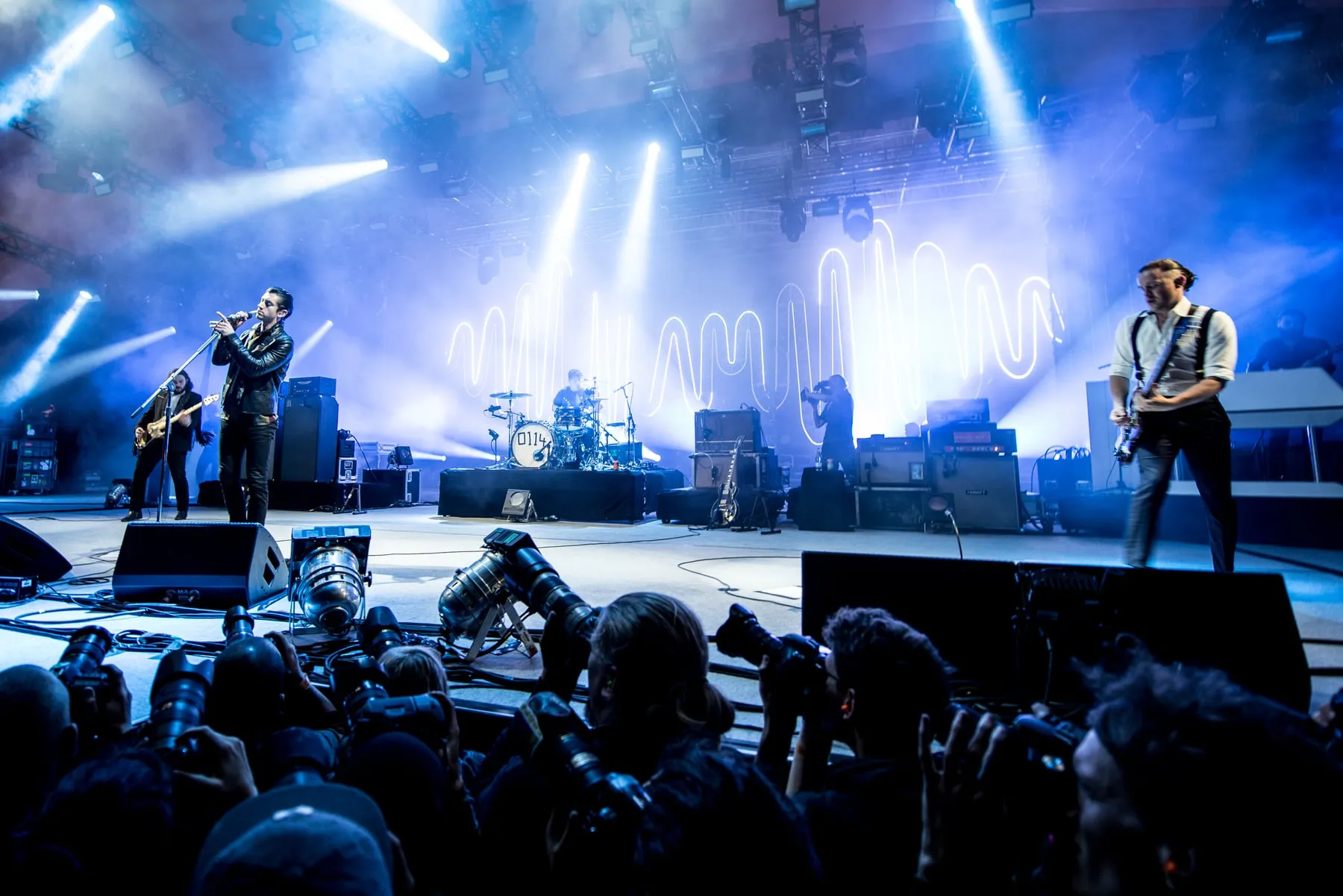
Arctic Monkeys are an English rock band formed in Sheffield in 2002. They comprise lead singer and guitarist Alex Turner, drummer Matt Helders, guitarist Jamie Cook and bassist Nick O'Malley, who replaced co-founder and original bassist Andy Nicholson in 2006. Though initially associated with the short-lived landfill indie movement, Arctic Monkeys were one of the earliest bands to come to public attention via the Internet, during the emerging "blog rock" era. Commentators have suggested that this period marked a shift in how new bands were promoted and marketed.
Members
- Andy Nicholson (2002–2006)
- Nick O'Malley (2006–present)
- Alex Turner
- Jamie Cook
- Matt Helders
Studio Albums
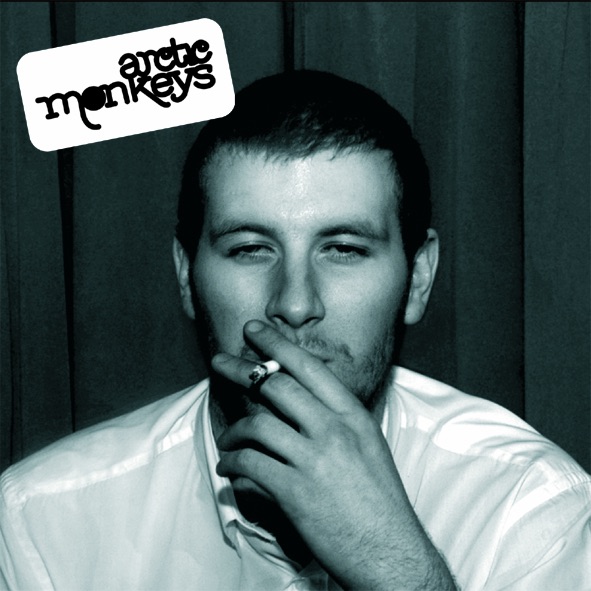
- 2005 Whatever People Say I Am, That’s What I’m Not
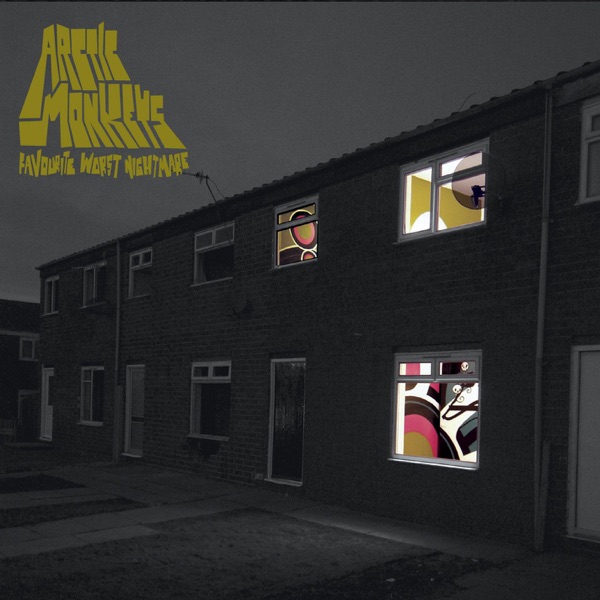
- 2007 Favourite Worst Nightmare
- 2008 Covers Mixtape
- 2009 Humbug
- 2011 Suck It and See
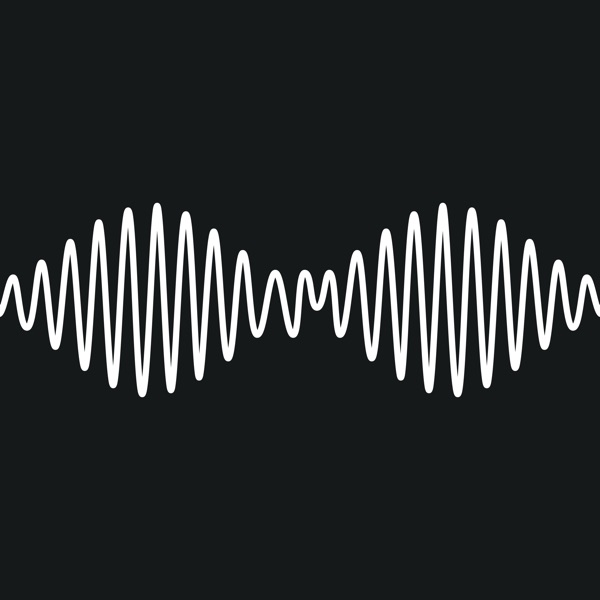
- 2013 AM
- 2018 Tranquility Base Hotel & Casino
- 2022 The Car
Source: MusicBrainz
Deep Dive
Overview
Arctic Monkeys are an English rock band formed in Sheffield in 2002 who emerged as one of the earliest acts to leverage internet promotion and “blog rock” momentum for mainstream breakthrough. Fronted by lead singer and guitarist Alex Turner, with drummer Matt Helders, guitarist Jamie Cook, and bassist Nick O’Malley, the group arrived during a cultural moment when music blogs and file-sharing networks were beginning to bypass traditional industry gatekeeping. Their rapid ascent marked a watershed in how rock bands could be discovered, promoted, and scaled to international relevance without requiring radio hits or legacy label machinery.
Formation Story
Arctic Monkeys coalesced in Sheffield in 2002 from a tight circle of teenage musicians. The founding lineup included Alex Turner on lead vocals and guitar, Matt Helders on drums, Jamie Cook on guitar, and Andy Nicholson on bass. The band developed their craft in the Yorkshire city, which had a dormant but historically rich rock tradition. Helders, Cook, and Turner had known each other since school, and their chemistry proved immediate and durable. Nicholson completed the original quartet, though he would depart the band in 2006, replaced by Nick O’Malley, who has remained the group’s bassist since.
Breakthrough Moment
Arctic Monkeys’ debut studio album, Whatever People Say I Am, That’s What I’m Not, arrived in 2005 and became a phenomenon in the blog-driven media ecosystem of the mid-2000s. The record spread rapidly through internet communities, music blogs, and file-sharing networks before reaching mainstream press awareness. This grassroots-then-mainstream trajectory demonstrated a new pathway for rock bands to achieve relevance: rather than securing radio play or MTV rotation, they could build a fervent audience through digital channels and then convert that underground momentum into commercial success. The album’s success established Arctic Monkeys as more than a local Sheffield act and cemented their position as key figures in the “blog rock” moment that would define much of the 2000s indie landscape.
Peak Era
The period from 2005 to 2013 represents Arctic Monkeys’ most creatively fertile and commercially dominant stretch. Favourite Worst Nightmare followed in 2007, consolidating their initial breakthrough with a tighter, more confident set of songs. Humbug in 2009 showed a band willing to explore darker, more experimental textures. Suck It and See in 2011 returned to more immediate melodic sensibilities, while AM in 2013 marked an evolution toward trap-influenced production and hip-hop rhythmic patterns, broadening their sonic palette while maintaining the intensity and lyrical sharpness that defined their earlier work. Throughout this period, Arctic Monkeys operated at peak cultural visibility within rock music, influencing both their peers and the broader conversation about how new bands should sound and present themselves.
Musical Style
Arctic Monkeys’ sound draws from garage rock revival, post-punk, and indie rock lineages, anchored by Turner’s distinctive vocal delivery—rapid-fire, often laconic, with a Sheffield accent that became a defining trademark. Jamie Cook’s guitar work typically balances jangly, angular riffs with moments of melodic clarity, while Matt Helders’ drumming provides propulsive, often intricate rhythmic frameworks. The band’s early records emphasized raw energy and sharp hooks; as they progressed, they incorporated elements of psychedelic rock, soul-influenced production, and electronic textures. By the AM era, their sound had shifted noticeably toward trap-influenced beats and R&B-adjacent sonics, demonstrating an openness to contemporary production trends while retaining their core identity as a guitar-led rock ensemble.
Major Albums
Whatever People Say I Am, That’s What I’m Not (2005)
Arctic Monkeys’ debut album became a landmark of the blog-rock era, spreading through internet communities and establishing the band as avatars of a new promotional paradigm for rock bands entering the 2000s.
Favourite Worst Nightmare (2007)
The follow-up consolidated their breakthrough with a more controlled, polished production approach while maintaining the sharp lyricism and hook-driven songwriting that defined their appeal.
Humbug (2009)
This third album marked a deliberate shift toward darker, more psychedelic and experimental territory, showing a band unafraid to challenge expectations after their initial commercial success.
AM (2013)
Arctic Monkeys’ fifth studio album incorporated trap beats, hip-hop rhythmic patterns, and contemporary R&B influences, demonstrating their willingness to absorb contemporary production trends while maintaining their rock-band foundation.
Tranquility Base Hotel & Casino (2018)
A departure from the band’s guitar-centric identity, this album embraced lounge-pop sensibilities and orchestral arrangements, positioning Turner as a solo artist working within a full-band context.
The Car (2022)
Arctic Monkeys’ most recent album continued the exploratory trajectory begun in the late 2010s, maintaining distance from their early 2000s sonic signature while exploring art-rock and jazz influences.
Signature Songs
- “I Bet You Look Good on the Dancefloor” — A defining early single whose sharp hooks and swagger introduced Arctic Monkeys to mainstream radio audiences.
- “505” — A mid-tempo emotional centerpiece from Favourite Worst Nightmare that showcased Turner’s lyrical depth and the band’s melodic sophistication.
- “Do I Wanna Know?” — The driving, hypnotic opener of AM that became their biggest-reaching single, built on trap-influenced production and infectious bass work.
- “R U Mine?” — An AM-era track that epitomized the band’s incorporation of contemporary hip-hop production and streetwise attitude.
- “Cornerstone” — A Suck It and See standout demonstrating the band’s ability to craft intimate, guitar-forward arrangements amid their broader sonic evolution.
Influence on Rock
Arctic Monkeys’ primary cultural contribution lies not in inventing a new sound but in demonstrating how internet infrastructure and blog communities could replace traditional media gatekeeping as the pathway to rock-band stardom. Their rise during the mid-2000s proved that grassroots digital promotion could launch a band to mainstream success, fundamentally shifting how major labels approached artist development and how audiences discovered new rock music. Subsequent indie and alternative rock bands—from The Strokes to Tame Impala to newer acts—emerged within an ecosystem that Arctic Monkeys helped pioneer. Beyond marketing, their willingness to shift sounds across albums (from garage rock to psychedelia to trap-influenced alt-rock to art-pop) gave younger bands permission to evolve and experiment rather than calcify into a single recognizable formula.
Legacy
Arctic Monkeys have maintained steady touring and recording activity well into the 2020s, with The Car in 2022 representing their latest studio statement. Their early albums remain touchstones of 2000s indie rock, streaming reliably across digital platforms and remaining canonical reference points in discussions of post-2000 rock history. The band’s trajectory from Sheffield teenagers to internet phenomena to arena-sized rock act encapsulates the transformation of music industry mechanics in the digital age. While their recent output has polarized longtime fans—particularly the departure from guitar-centric arrangements—they remain culturally visible and critically engaged, a rare feat for bands formed in the 2000s.
Fun Facts
- Arctic Monkeys released Covers Mixtape in 2008, a collection of cover songs that demonstrated their admiration for earlier influences and their willingness to step outside original material.
- The band’s longevity as a functioning unit—with the same core four members since 2006—is notable in an era when lineup changes and hiatuses plague many rock bands.
- Sheffield’s Arctic Monkeys helped revitalize international interest in British indie rock at a moment when American garage-rock revival bands were dominant in indie-rock discourse.
- Nick O’Malley’s arrival in 2006, replacing original bassist Andy Nicholson, coincided with the band’s consolidation into their most stable and productive lineup.
Discography & Previews
Click any album to expand its track list. Each track plays a 30-second preview streamed from Apple Music. Tap the link icon next to a track to open it in Apple Music for full playback.
- 1 The View from the Afternoon ↗ 3:38
- 2 I Bet You Look Good on the Dancefloor ↗ 2:54
- 3 Fake Tales of San Francisco ↗ 2:58
- 4 Dancing Shoes ↗ 2:21
- 5 You Probably Couldn't See for the Lights but You Were Staring Straight At Me ↗ 2:11
- 6 Still Take You Home ↗ 2:54
- 7 Riot Van ↗ 2:15
- 8 Red Light Indicates Doors Are Secured ↗ 2:24
- 9 Mardy Bum ↗ 2:55
- 10 Perhaps Vampires Is a Bit Strong But… ↗ 4:29
- 11 When the Sun Goes Down ↗ 3:20
- 12 From the Ritz to the Rubble ↗ 3:13
- 13 A Certain Romance ↗ 5:31
- 1 Brianstorm ↗ 2:52
- 2 Teddy Picker ↗ 2:41
- 3 D Is for Dangerous ↗ 2:15
- 4 Balaclava ↗ 2:47
- 5 Fluorescent Adolescent ↗ 2:53
- 6 Only Ones Who Know ↗ 3:01
- 7 Do Me a Favour ↗ 3:25
- 8 This House Is a Circus ↗ 3:10
- 9 If You Were There, Beware ↗ 4:34
- 10 The Bad Thing ↗ 2:23
- 11 Old Yellow Bricks ↗ 3:07
- 12 505 ↗ 4:14


- 1 Do I Wanna Know? ↗ 4:32
- 2 R U Mine? ↗ 3:22
- 3 One for the Road ↗ 3:26
- 4 Arabella ↗ 3:27
- 5 I Want It All ↗ 3:04
- 6 No. 1 Party Anthem ↗ 4:03
- 7 Mad Sounds ↗ 3:35
- 8 Fireside ↗ 3:01
- 9 Why'd You Only Call Me When You're High? ↗ 2:41
- 10 Snap Out of It ↗ 3:13
- 11 Knee Socks ↗ 4:18
- 12 I Wanna Be Yours ↗ 3:04

